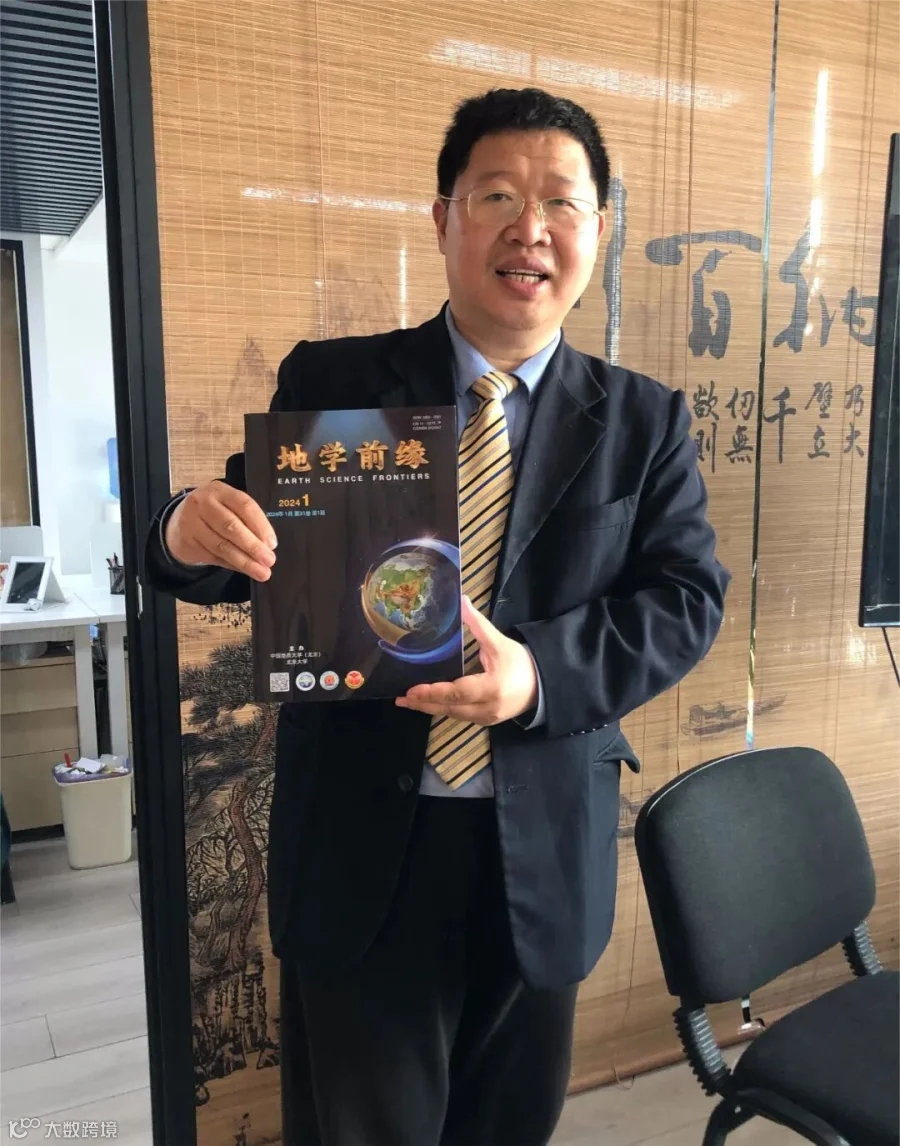
 董事长吕国博士Chairman of suntrans Dr. Lyu Guo
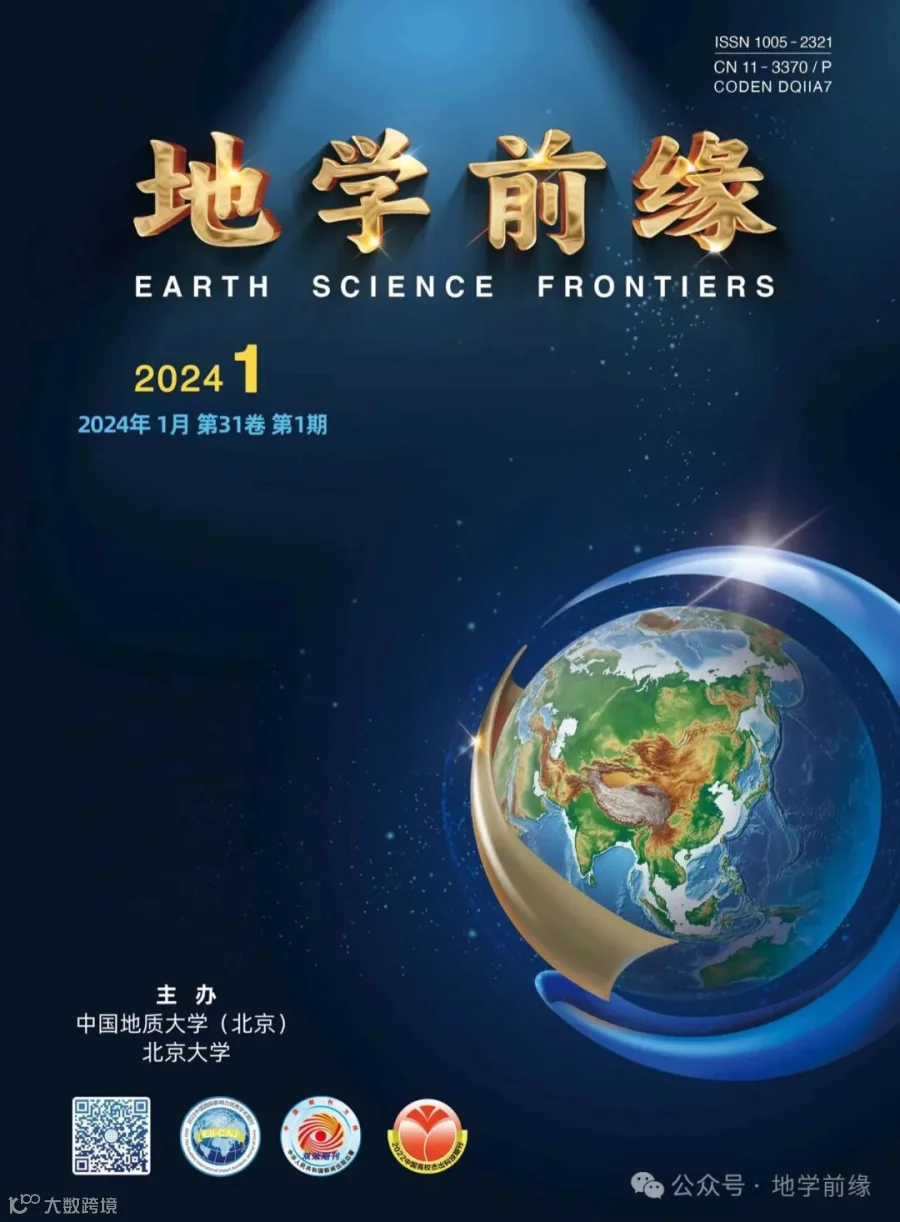 《地学前缘》2024年第1期封面地图是由中国科学院青藏高原研究所张衡博士根据 Generic Mapping Tools 软件绘制的新图。
王成善 邓 军 董云鹏
地球科学作为自然科学六大门类之一,不仅探索地球起源、演化和发展趋势,而且为人类认识、利用和改造自然提供科学知识、认知途径和研究方法。随着科学技术的不断进步和人类社会重大需求的日益增长,当前地球科学已进入地球系统科学研究的新阶段,成为指导人类社会可持续发展的科学基础。地球系统科学是以固体地球层圈及其外部生物圈、水圈和大气圈为研究对象,研究各层圈发生、发展及其相互作用过程与机理,探索“宜居地球”形成演化以及地球环境生命协同演化等重大科学前沿,为解决人类生存与可持续发展中的资源供给、环境保护、地质灾害防治等重大问题提供科学依据与技术支撑。在地球系统演化过程中,深部地质过程控制着浅表构造地貌,驱动着气候环境变化,进而诱发生物多样性演变,从而深刻影响着“宜居地球”的发生与发展。深部地质过程及其动力学不仅决定着地球早期大陆的形成和克拉通化,而且始终控制着地球表面大洋和大陆、造山带和盆地等构造单元的耦合演变,并由于地球系统演变过程中的物质和能量交换,形成了大量的资源能源;同时,深部地质过程控制着浅表构造地貌,进而驱动着地球系统的气候环境变化,不仅控制着盆地沉积充填和化石能源富集成藏,而且决定了地球系统外部层圈形成演化和相互作用,尤其是控制着环境和生物的协同演变;进入人类世以来,地球过程和人类活动共同作用诱发自然系统功能失调,导致气候变化、环境污染、水资源短缺、生物多样性减少等一系列事件,加之日益活跃的人类活动和高速发展的经济社会,使得化石燃料和可利用土地不断枯竭。面向国际地球科学前沿,立足“宜居地球”和人类社会可持续发展,未来的地球科学研究,亟待以地球系统科学思想为指导,聚焦“深部地质过程浅表构造地貌气候环境变化生物多样性演变”,不仅研究固体地球深部和浅部物理化学过程,而且重视地质过程中的资源能源形成及气候效应及其诱发的生态系统变化和人地关系等地球宜居性问题。遵循地球系统科学思想,本专辑共34篇文章,分6个栏目,分别为“地球动力学与深部过程”、“华北克拉通演化及其效应”、“青藏高原结构构造及成矿效应”、“陆内成矿作用与成矿系统”、“沉积盆地分析与多种能源勘探”和“环境变化与生物圈层相互作用”。
Earth science, as one of the six categories of natural sciences, not only explores the origin, evolution, and development trends of the Earth, but also provides scientific knowledge, cognitive approaches, and research methods for human understanding, utilization, and transformation of nature. With the continuous progress of science and technology and the increasing demands of human society, current Earth science has entered a new stage of Earth system science research, becoming the scientific basis for guiding sustainable development of human society. Earth system science focuses on the solid Earth’s lithosphere and its external biosphere, hydrosphere, and atmosphere, studying the processes, development, interactions, and mechanisms of these spheres. It explores the major scientific frontiers such as the formation and evolution of a habitable Earth and the co-evolution of Earth’s environment and life. It provides scientific basis and technological support for solving major problems in human survival and sustainable development, such as resource supply, environmental protection, and geological hazard prevention. In the process of Earth system evolution, deep geological processes control surface tectonic landforms, drive climate and environmental changes, and induce biodiversity evolution, deeply impacting the occurrence and development of a habitable Earth. Deep geological processes and their dynamics not only determine the formation and cratonization of early continents, but also continuously control the coupled evolution of surface tectonic landforms such as oceans and continents, orogenic belts, and basins. Due to material and energy exchange during Earth system evolution, they form a large amount of resource energy. At the same time, deep geological processes control surface tectonic landforms, driving climate and environmental changes in the Earth system. They not only control basin sedimentation and fossil energy accumulation and preservation, but also determine the formation, evolution, and interaction of external lithosphere of the Earth system, especially controlling the co-evolution of environment and life. Since the Anthropocene, the interaction of Earth processes and human activities has led to the dysfunction of natural system functions, resulting in a series of events such as climate change, environmental pollution, water resource shortage, and biodiversity loss. In addition, the increasingly active human activities and rapid development of the economy and society have led to the continuous depletion of fossil fuels and available land. Facing the international forefront of Earth science and based on the concept of a habitable Earth and sustainable development of human society, future Earth science research urgently needs to be guided by the concept of Earth system science, focusing on “deep geological processes, surface tectonic landforms, climate and environmental changes, and biodiversity evolution”. It should not only study the physical and chemical processes of the solid Earth’s deep and shallow parts, but also pay attention to the formation of resource energy and the climate effects in geological processes, as well as the induced ecosystem changes and human-environment relationships. Following the concept of Earth system science, this special issue includes 34 articles divided into 6 sections: “Earth dynamics and deep processes,” “Evolution and effects of the North China craton,” “Structural tectonics and mineralization effects of the Tibetan Plateau,” “Intracontinental mineralization and mineralizing systems,” “Analysis of sedimentary basins and exploration of multiple energy sources,” and “Environmental change and interaction between the biosphere and lithosphere.”
“地球动力学与深部过程”
“Geodynamics and Deep Processes”
“地球动力学与深部过程”栏目收录5篇文章,主要瞄准地球系统科学的核心科学问题——固体地球深部过程和动力学及其定量表述和模拟方法。《洋中脊动力学与俯冲带地震岩浆成矿事件远程效应》(成秋明等,2024)瞄准洋中脊动力学、板块俯冲带和大陆岩浆弧的深部过程及其与极端地质事件之间的密切关系,从分析洋中脊性质、地质结构和地质过程入手,讨论新生洋壳的差异型如何影响深部岩石圈部分熔融、俯冲带岩浆活动以及俯冲过程中的地震、火山、成矿等事件的聚集分布规律。《大地幔楔的两个深部碳循环圈:差异及宜居效应》(李曙光等,2024)聚焦板块俯冲过程与深部碳循环前沿问题,总结评述了西太平洋板块深俯冲、晚白垩世和新生代东亚地幔过渡带岩浆记录及其深部碳循环圈的证据,探讨了大地幔楔板内碳循环圈与岛弧系统碳循环圈的差异及其对显生宙大气氧含量保持稳定及温室效应周期性变化的影响。《大陆下地壳》(张艳斌等,2024) 聚焦壳幔相互作用最活跃的大陆下地壳,分析了下地壳的类型、转换过程及其底垫、拆沉、深熔、高级变质等作用,强调其在壳幔相互作用及其动力学研究中的重要地位。《元地球与数字孪生:思想突破、技术变革与范式转换》 (李三忠等,2024)基于深时数字地球的科学理念,介绍了元地球与数字地球、虚拟地球、玻璃地球、智慧地球的区别,创新性提出元地球理念,倡议构建跨越地球各圈层的实时、全天候、立体观测感知和模拟系统,开启人类认识、探测和开发地球的全新技术。《基于DEW模型的地球深部流体组成与水岩相互作用计算方法综述》 (兰春元等,2024)瞄准地球层圈相互作用及地球动力学过程中深部流体组成和水岩相互作用,系统介绍了Deep Earth Water(DEW)模型计算深部流体和水岩相互作用的基本原理及其应用软件(FluidsLab)以及软件应用案例与研究现状,为定量表征深部流体和水岩相互作用提供了新的技术方法。
The “Geodynamics and Deep Processes” section includes five articles that mainly focus on the core scientific issues of Earth System Science - the deep processes and dynamics of the solid Earth and their quantitative representation and simulation methods. “Remote Effects of Mid-Ocean Ridge Dynamics and Subduction Zone Seismic Magmatic Ore-Forming Events” (Cheng Qiuming, et al., 2024) targets the deep processes of mid-ocean ridges, subduction zones, and continental magmatic arcs, as well as their close relationship with extreme geological events. Starting from the analysis of the nature, geological structure, and geological processes of mid-ocean ridges, it discusses how different types of newborn oceanic crust affect the partial melting of the deep lithosphere, magmatic activity in subduction zones, and the distribution patterns of seismic, volcanic, and ore-forming events during the subduction process. “Two Deep Carbon Cycling Circles in the Mantle Wedge: Differences and Habitable Effects” (Li Shuguang, et al., 2024) focuses on the forefront issues of plate subduction processes and deep carbon cycling. It summarizes and reviews the evidence of deep subduction of the Western Pacific Plate, Late Cretaceous and Cenozoic East Asian mantle transition zone magmatic records, and their deep carbon cycling circles. It explores the differences between the deep carbon cycling circles in the mantle wedge and the carbon cycling circles in the arc system, as well as their impact on maintaining stable atmospheric oxygen content and the periodic variations of greenhouse effects in the Phanerozoic. “The Continental Lower Crust” (Zhang Yanbin, et al., 2024) focuses on the most active continental lower crust in the interaction between the crust and mantle. It analyzes the types, transformation processes, and actions of the lower crust, such as basement, delamination, deep melting, and high-grade metamorphism, emphasizing its important position in the study of crust-mantle interaction and dynamics. “Meta-Earth and Digital Twin: Breakthroughs in Thought, Technological Transformation, and Paradigm Shift” (Li Sanzhong, et al., 2024) introduces the differences between the meta-earth, digital earth, virtual earth, glass earth, and smart earth based on the scientific concept of deep-time digital earth. It innovatively proposes the concept of a meta-earth and advocates the construction of a real-time, all-weather, three-dimensional observation, perception, and simulation system that spans all spheres of the Earth, opening up new technologies for human understanding, exploration, and development of the Earth. “A Review of Calculation Methods for Deep Earth Fluid Composition and Water-Rock Interaction Based on the DEW Model” (Lan Chunyuan, et al., 2024) targets the deep fluid composition and water-rock interaction in the interaction between the Earth’s layers and the geodynamic processes. It systematically introduces the basic principles of the Deep Earth Water (DEW) model for calculating deep fluids and water-rock interactions, as well as its application software (FluidsLab) and application cases and research status, providing new technical methods for quantitatively characterizing deep fluid and water-rock interactions.
“Evolution and Effects of the North China Craton”
“华北克拉通演化及其效应” 栏目收录5篇文章,主要围绕早期大陆的形成演化和克拉通化、后期的构造改造及其动力学。25亿年前的克拉通化是地球演化历史上史无前例的构造事件,它不仅形成稳定大陆,而且分异出固体地球的层圈结构,并开始出现板块构造及其诱发的一系列地质、环境和生命演化事件。华北克拉通是全球最复杂的克拉通,不仅经历了新太古代晚期的克拉通化、古元古代多陆块俯冲碰撞,而且遭受了强烈的中生代克拉通破坏以及晚中生代—新生代太平洋板块俯冲影响。中生代的构造过程深刻地控制和影响着中国东部盆地的沉积充填和化石能源的富集成藏。《华北克拉通新太古代晚期岩浆作用:对构造体制和克拉通化的启示》(万渝生等,2024)系统总结了华北克拉通新太古代晚期(主要为2.55~2.5 Ga期间)岩浆岩的锆石年龄分布模式、地球化学和Nd-Hf-O同位素组成特征,证明中太古代晚期—新太古代早期是华北克拉通陆壳增生最重要时期,并于新太古代晚期完成初始克拉通化,启动了类似于现代板块运动的构造体制,形成了规模巨大的BIF(条带状铁建造)。《冀北红旗营杂岩多期变质作用:古元古代俯冲/碰撞—晚古生代伸展—早中生代挤压的记录》(魏春景等,2024)瞄准华北克拉通多陆块拼合及其后期复杂改造过程,总结了近年来对红旗营杂岩变质作用和年代学研究进展,阐明其多期变质作用特征和大地构造属性,揭示出红旗营杂岩5期变质作用,分别记录了古元古代碰撞俯冲碰撞、晚古生代伸展和早中生代挤压的复杂构造过程。《条带状铁建造消失之谜:铁硅互层机制研究进展与展望》(王瑞敏、沈冰,2024)概括介绍了BIF的地质特征,深入论述了BIF中富铁富硅层的沉积模式,并从Fe(II)的来源差异、Fe(II)的氧化差异和Fe(III)的保存差异三方面全面综述了BIF “铁硅互层”机制的研究进展,对BIF的成因机制所承载的前寒武纪铁硅生物地球化学循环、早期地球演化过程、早期生命信息等方面提出展望。《内蒙古大青山盘羊山晚中生代早新生代构造事件及其对华北北缘构造演化的启示》(张进江等,2024)瞄准晚中生带华北克拉通破坏的动力机制,以位于华北克拉通北缘中段的大青山和盘羊山为解剖区,系统总结了有关大青山和盘羊山主要构造的几何学、运动学和年代学成果,结合蒙古鄂霍次克洋和太平洋板块的演化,探讨了大青山盘羊山晚中生代—新生代构造演化过程与动力学,为华北克拉通破坏的大陆动力学提供线索。《中国东部中生代上叠造山系》(任纪舜等,2024)认为在中生代古太平洋动力体系作用下,在中国东部大陆地壳之上形成了上叠造山系,其与俄罗斯东北部—锡霍特阿林—日本—琉球—中国台湾—巴拉望一带的亚洲东缘造山系同步发展,共同组成亚洲东部规模宏大的巨型中生代造山系。
The section “Evolution and Effects of the North China Craton” includes five articles, mainly focusing on the formation and evolution of the early continent, cratonization, and later tectonic reconstruction and its dynamics. The cratonization 2.5 billion years ago was an unprecedented tectonic event in the history of Earth’s evolution. It not only formed stable continents but also differentiated the solid Earth’s lithosphere, leading to a series of geological, environmental, and biological evolution events triggered by plate tectonics. The North China Craton is the most complex craton in the world. It has experienced cratonization in the late Neoarchean, multiple terrane subduction and collision in the Paleoproterozoic, intense destruction during the Mesozoic, and the influence of Pacific plate subduction in the Late Mesozoic-Cenozoic. The tectonic processes during the Mesozoic profoundly controlled and influenced the sedimentary filling and accumulation of fossil energy in the eastern basins of China. “Late Neoarchean Magmatism in the North China Craton: Insights into Tectonic Regime and Cratonization” (Wan Yusheng et al., 2024) systematically summarizes the zircon age distribution patterns, geochemical characteristics, and Nd-Hf-O isotopic compositions of late Neoarchean (mainly 2.55-2.5 Ga) magmatic rocks in the North China Craton. It demonstrates that the late Neoarchean to early Paleoproterozoic was the most important period of continental crustal growth in the North China Craton and completed the initial cratonization during the late Paleoproterozoic, initiating a tectonic regime similar to modern plate motions and forming the giant banded iron formations (BIFs). “Multi-stage Metamorphism of the Hongqiying Complex in North Hebei: Records of Paleoproterozoic Subduction/Collision, Late Paleozoic Extension, and Early Mesozoic Compression” (Wei Chunjing et al., 2024) targets the multiple terrane amalgamation and late-stage complex transformation processes in the North China Craton. It summarizes the recent progress in the study of metamorphism and chronology of the Hongqiying Complex, elucidates its characteristics of multi-stage metamorphism and tectonic attributes, and reveals five periods of metamorphism in the Hongqiying Complex, recording the complex tectonic processes of Paleoproterozoic collision, late Paleozoic extension, and early Mesozoic compression. “The Mystery of Banded Iron Formations: Research Progress and Prospects of the Fe-Si Interlayer Mechanism” (Wang Ruimin, Shen Bing, 2024) summarizes the geological characteristics of BIFs and discusses the sedimentation patterns of iron-rich and silicon-rich layers in BIFs. It comprehensively reviews the research progress of the Fe-Si interlayer mechanism in BIFs from three aspects: the difference in Fe(II) sources, the difference in Fe(II) oxidation, and the difference in Fe(III) preservation. It provides prospects for the iron-silicon biogeochemical cycle, early Earth evolution, and early life information carried by BIFs. “Late Mesozoic-Early Cenozoic Tectonic Events in the Daqingshan and Panyangshan of Inner Mongolia and their Implications for the Tectonic Evolution of the Northern Margin of the North China Craton” (Zhang Jinjiang et al., 2024) targets the dynamic mechanism of the destruction of the North China Craton in the Late Mesozoic. Using the Daqingshan and Panyangshan in the middle section of the northern margin of the North China Craton as the study area, it systematically summarizes the geometric, kinematic, and chronological achievements of the main structures in the Daqingshan and Panyangshan. Combining the evolution of the Mongol-Okhotsk Ocean and the Pacific Plate, it discusses the late Mesozoic-Cenozoic tectonic evolution and dynamics of the Daqingshan and Panyangshan, providing clues for the continental dynamics of the destruction of the North China Craton. “Late Mesozoic Overlapping Orogenic Belts in Eastern China” (Ren Jishun et al., 2024) believes that under the influence of the Paleopacific tectonic regime during the Mesozoic, overlapping orogenic belts formed on the continental crust in eastern China. These belts developed synchronously with the eastern Asian margin orogenic belts in northeastern Russia-Sikhote-Alin-Japan-Ryukyu-China Taiwan-Palawan, forming a large-scale Mesozoic orogenic system in eastern Asia.
“Structure, Tectonics, and Metallogenic Effects of the Qinghai-Tibet Plateau”
“青藏高原结构构造及成矿效应” 栏目收录5篇文章,主要研究青藏高原结构构造、形成演化、动力学机制及其成矿效应。《青藏高原形成演化动力机制及其远程效应》(刘德民等,2024)从青藏高原的构造地貌范围出发,划分了青藏高原内部构造单元结构,归纳总结其构造演化及热隆演化机制,综述其隆升及远程效应。《基于短周期密集台阵接收函数揭示的藏南错那洞穹窿地壳结构》(蔡蔚等,2024)利用短周期密集台阵观测,通过远震P波接收函数共转换叠加成像方法获取了错那洞穹窿区域地壳结构,认为印度欧亚板块持续碰撞使喜马拉雅东南缘岩石圈经历了地壳尺度拉伸变形,并对藏南拆离系和错那洞穹窿的成因给出了解释。《大地电磁法的应用综述:以川滇地区为例》(邓琰等,2024)以青藏高原内部物质东流、块体侧向挤出的重要通道——川滇地区为例,介绍了大地电磁法在地震孕育、火山和地热活动、成矿活动、构造与动力学以及电磁同震效应等研究方面的应用。《西藏南部极低级变质岩及其地质与资源意义》(毕先梅等,2024)基于极低级变质作用在盆地构造、中低温成矿、石油与天然气富集成藏、工程地质稳定性、环境保护等方面的重要意义,研究了西藏南部地区的极低级变质岩的分布规律、成岩作用、极低级变质低级变质作用特征,探讨其构造环境以及对石油与天然气成藏的意义。《深部过程和物质架构对大陆碰撞带Cu-REE成矿系统的控制:以冈底斯和三江碰撞带为例》(王瑞等,2024)瞄准大陆碰撞带Cu-REE成矿机制,利用近年来发表的地质、地球物理和地球化学资料,探讨了青藏高原冈底斯和三江碰撞带的深部过程和物质架构,讨论了岩石圈组成、岩浆系统演化与Cu-REE成矿的关系。
“Structural Tectonics and Metallogenic Effects of the Qinghai-Tibet Plateau” section includes 5 articles that primarily study the structural tectonics, formation and evolution, dynamic mechanisms, and metallogenic effects of the Qinghai-Tibet Plateau. “Formation and Evolutionary Dynamic Mechanisms of the Qinghai-Tibet Plateau and its Remote Effects” (Liu Demin et al., 2024) starts from the scope of the structural geomorphology of the Qinghai-Tibet Plateau, divides the internal structural units of the plateau, summarizes the structural evolution and thermal uplift mechanisms, and provides an overview of its uplift and remote effects. “Crustal Structure of the Cangnan Dome in Southern Tibet Revealed by Short-Period Dense Array Receiver Functions” (Cai Wei et al., 2024) utilizes short-period dense array observations and the method of imaging the converted stacked seismic P-wave receiver functions to obtain the crustal structure of the Cangnan Dome region, suggesting that the continuous collision between the Indian and Eurasian plates has caused crustal-scale extensional deformation of the lithosphere in the southeastern margin of the Himalayas, and provides an explanation for the formation of the South Tibetan Detachment System and the Cangnan Dome. “A Review of the Application of Magnetotellurics: A Case Study of the Sichuan-Yunnan Region” (Deng Yan et al., 2024) takes the Sichuan-Yunnan region, an important channel for the eastward flow of materials and lateral extrusion of blocks within the Qinghai-Tibet Plateau, as an example to introduce the application of magnetotellurics in areas such as earthquake generation, volcanic and geothermal activities, mineralization, tectonics and dynamics, and electromagnetic coseismic effects. “Ultralow-Grade Metamorphic Rocks in Southern Tibet and Their Geological and Resource Significance” (Bi Xianmei et al., 2024) studies the distribution pattern, diagenetic process, characteristics of ultralow-grade metamorphism in the southern region of Tibet based on the important significance of ultralow-grade metamorphism in basin tectonics, medium-low temperature mineralization, petroleum and natural gas accumulation, engineering geological stability, and environmental protection, and discusses their tectonic environment and significance for the accumulation of petroleum and natural gas. “Control of Deep Processes and Material Architecture on the Cu-REE Metallogenic System in Continental Collision Zones: A Case Study of the Gangdese and Sanjiang Collision Zones” (Wang Rui et al., 2024) focuses on the Cu-REE metallogenic mechanisms in continental collision zones, utilizing geological, geophysical, and geochemical data published in recent years to explore the deep processes and material architecture of the Gangdese and Sanjiang collision zones in the Qinghai-Tibet Plateau and discuss the relationship between lithospheric composition, magmatic system evolution, and Cu-REE mineralization.
“Intracrustal Ore Genesis and Oreforming Systems”
“陆内成矿作用与成矿系统”栏目收录3篇文章,主要研究华南中生代陆内成矿作用和热液成矿系统构造控矿理论。20世纪60年代以来,以板块构造理论为指导思想的洋中脊、俯冲带和陆陆碰撞带等板块边缘成矿作用得到了迅速发展,推动了矿床学和找矿勘查的大发展。然而,发生在大陆板块内部、远离活动大陆边缘的成矿作用仍然是全球性科学难题。华南大陆内部中生代成矿大爆发,成矿作用远离活动大陆边缘,形成西部金锑铅锌低温成矿省和东部钨锡多金属高温成矿省,是研究陆内成矿的理想场所。《华南中生代陆内成矿作用》(胡瑞忠等,2024)基于西部低温成矿与东部高温成矿一致的时代和类似的地球化学指纹特征,揭示出两个成矿省是具有成因联系的整体且共同构成面状展布的巨型多金属陆内成矿区,提出印支期陆内造山和燕山期软流圈上涌是两者共有的成矿驱动机制,进而建立了华南陆内成矿新理论。《右江盆地卡林型金矿成矿年代学研究进展》(高伟等,2024)梳理了近40年来右江盆地卡林型金矿成矿年代学研究取得的主要进展,揭示出215~200 Ma和155~140 Ma两期卡林型金矿成矿作用,其与华南中生代两期陆内金锑铅锌钨锡多金属成矿系统高度一致。《热液成矿系统构造控矿理论》(杨立强等,2024)提出构造是热液成矿系统的一级控矿因素,构造流体耦合成矿机理和定位规律是前沿研究命题,其关键在于:查明控矿构造格架与背景、构造变形机制与变形相序列、成矿流体性质与运移通道,恢复成矿构造应力场和应力状态,模拟水岩反应过程,反演金属沉淀机制和成矿部位,确定成矿中心和矿体空间定位。
The “Intracontinental Metallogenic Processes and Metallogenic Systems” section includes three articles that mainly study the intracontinental metallogenic processes and tectonic control of hydrothermal metallogenic systems in the Mesozoic in South China. Since the 1960s, plate tectonic theory-guided studies on plate margin metallogenic processes such as mid-ocean ridges, subduction zones, and continent-continent collision zones have rapidly developed, promoting the advancement of ore deposit geology and mineral exploration. However, metallogenic processes occurring within continental plates, far away from active continental margins, remain a global scientific challenge. The explosive Mesozoic metallogenic activity in the interior of South China, which is far from active continental margins, has formed the Western Low-Temperature Metallogenic Province rich in gold, antimony, lead, and zinc, and the Eastern High-Temperature Metallogenic Province rich in tungsten and tin polymetallic deposits. These provinces provide an ideal place to study intracontinental metallogenic processes. “Mesozoic Intracontinental Metallogenic Processes in South China” (Hu Ruizhong, et al., 2024) reveals that the two metallogenic provinces are genetically related and collectively form a large-scale polymetallic intracontinental metallogenic region based on their similar ages and geochemical fingerprints. It proposes that the Indosinian orogeny and the Yanshanian period asthenospheric upwelling are common ore-forming mechanisms for both provinces, thus establishing a new theory for intracontinental metallogeny in South China. “Research Progress on the Metallogenic Chronology of Carlin-Type Gold Deposits in the Youjiang Basin” (Gao Wei, et al., 2024) reviews the major advances in the metallogenic chronology research of Carlin-type gold deposits in the Youjiang Basin over the past 40 years. It reveals two periods of Carlin-type gold mineralization at 215-200 Ma and 155-140 Ma, which are highly consistent with the two periods of Mesozoic intracontinental polymetallic metallogenic systems in South China. “Structural Control Theory of Hydrothermal Metallogenic Systems” (Yang Liqiang, et al., 2024) proposes that structures are the primary controlling factors of hydrothermal metallogenic systems. The coupling mechanism and localization rules of structural-fluid interactions are frontier research topics. The key lies in determining the controlling structural framework and background, structural deformation mechanisms and deformation phase sequences, ore-forming fluid properties and migration pathways, restoring the stress field and stress state of the metallogenic structures, simulating water-rock reaction processes, inverting metal precipitation mechanisms and ore localization, and determining the spatial positioning of metallogenic centers and ore bodies.
“沉积盆地分析与多种能源勘探”
“Depositional Basin Analysis and Exploration of Multiple Energy Sources”
“沉积盆地分析与多种能源勘探”栏目收录9篇文章,主要聚焦沉积盆地动力学、页岩油气、氦气、砂岩铀矿和地热等多种能源研究。随着地球系统科学的发展,沉积盆地和多种能源地质学已进入了地球圈层相互作用与资源环境协同演化研究的新时代,建立地球系统演化与沉积盆地和多种能源形成之间的内在关系,揭示全球不同地质环境中的多种能源富集规律,是当前的前沿科学问题。《沉积盆地波动过程分析:研究现状与展望》(金之钧等,2024)聚焦沉积盆地波动过程及其控油规律,概述了盆地波动过程分析的基本内涵和主要研究内容,总结了盆地波动过程对油气形成与富集的控制作用,展望了盆地波动研究的未来发展方向。《页岩储层非构造裂缝研究进展与思考》(丁文龙等,2024)针对页岩油气富集、高产、稳产关键制约因素的裂缝问题,分析了近年来国内外页岩非构造裂缝研究成果,重点梳理了非构造裂缝的分类、识别与表征、主控因素、期次及演化序列等方面的研究进展,提出页岩储层非构造裂缝研究的关键问题及未来发展趋势。《页岩含气量现场测试技术进展与发展趋势》(张金川等,2024)概括总结了页岩含气特点、含气量测试技术进展以及页岩含气量现场解析技术发展趋势。《美国典型富氦无机成因气田中氦气地质特征与聚集机制》(杨怡青等,2024)聚焦美国西南部科罗拉多高原及其附近落基山脉典型富氦无机成因气田,系统分析该气藏的地质背景、氦气成藏条件、富集规律及其与CO2和N2的关系,为我国氦气勘探开发提供借鉴与支持。《壳源氦气成藏主控因素及资源评价方法研究》(吴义平等,2024)针对氦气资源评价方法、资源评价参数等系列难题,概述了壳源氦气成藏主控因素,构建了基于源储同生关系的4类10种氦气资源分级分类评价方法体系,解决了氦气资源评价的技术瓶颈。《氦气地质理论认识、资源勘查评价与全产业链一体化评价关键技术》(陶士振等,2024)揭示出氦气富集受控于优质氦源、高效输导、适宜载体三大要素,揭示氦气分布于近氦源、低压区、高部位的地质规律,构建了氦气含量和稀有气体同位素准确检测技术、多尺度断裂智能识别技术和全产业链一体化评价关键技术。《砂岩型铀矿形成的新模式:来自深部有机流体的成矿作用》(刘池洋等,2024)聚焦我国最大的砂岩型铀矿矿集区——鄂尔多斯盆地北部伊盟隆起铀矿物质来源,系统分析代表性矿物铀石(形成于强还原环境)及其共生矿物的地球化学特征、矿化环境、成矿年龄,结合盆地煤系气源岩富铀特征等,提出了铀源来自深部的铀成矿新模式,拓展了盆地铀矿勘探思路和领域。《陕北靖边高铬地下水中硝酸根分布及来源》(郭华明等,2024)针对鄂尔多斯盆地北部靖边地区地下水高铬特征,测试了地下水和沉积物样品中关键地球化学组分,厘定了高浓度硝酸根的分布规律和来源,揭示高铬地下水中硝酸根对铬富集的贡献。《地热资源勘探开发技术与发展方向》(孙焕泉等,2024)强调了地热资源科学高效开发利用对保障国家能源安全、加快构建清洁低碳安全高效的能源体系的战略和现实意义,分析了我国地热资源分布特征和开发利用现状与技术,建议加强基础理论研究和原始技术创新,尽快摸清我国深层地热资源家底,攻关高温钻完井、复杂结构井、深层热储改造、井下换热、干热岩EGS工程等关键技术。
The “Analysis of Sedimentary Basins and Multiple Energy Exploration” section includes nine articles, focusing mainly on the dynamics of sedimentary basins, shale oil and gas, helium gas, sandstone uranium deposits, and geothermal energy research. With the development of Earth System Science, the study of sedimentary basins and multiple energy geology has entered a new era of research on the interaction between the Earth’s spheres and the coordinated evolution of resources and the environment. Establishing the intrinsic relationship between the evolution of the Earth system and the formation of sedimentary basins and multiple energy sources, and revealing the enrichment laws of multiple energy sources in different geological environments globally, are current cutting-edge scientific issues. “Analysis of Fluctuation Processes in Sedimentary Basins: Current Status and Prospects” (Jin Zhijun, et al., 2024) focuses on the fluctuation processes in sedimentary basins and their control on oil accumulation, outlining the basic connotation and main research contents of basin fluctuation process analysis, summarizing the control of basin fluctuation processes on the formation and accumulation of oil and gas, and looking forward to the future development direction of basin fluctuation research. “Research Progress and Reflection on Non-structural Fractures in Shale Reservoirs” (Ding Wenlong, et al., 2024) analyzes the issue of fractures, which are key factors limiting the enrichment, high production, and stable production of shale oil and gas. It analyzes the research achievements of non-structural fractures in shale reservoirs in recent years in China and abroad, focusing on the classification, identification and characterization, main controlling factors, stages, and evolution sequences of non-structural fractures. It also proposes key issues and future development trends in the study of non-structural fractures in shale reservoirs. “Advances and Development Trends in Field Testing Techniques for Shale Gas Content” (Zhang Jinchuan, et al., 2024) summarizes the characteristics of shale gas content, the progress of testing techniques for shale gas content, and the development trends of on-site analysis techniques for shale gas content. “Geological Characteristics and Accumulation Mechanism of Helium Gas in Typical Enriched Inorganic Helium Fields in the United States” (Yang Yiqing, et al., 2024) focuses on typical enriched inorganic helium fields in the Colorado Plateau and adjacent Rocky Mountains in the southwestern United States. It systematically analyzes the geological background, helium gas accumulation conditions, enrichment laws, and their relationship with CO2 and N2 in this gas reservoir, providing reference and support for helium exploration and development in China. “Study on the Main Controlling Factors and Resource Evaluation Methods of Crustal Helium Gas Accumulation” (Wu Yiping, et al., 2024) addresses a series of difficult problems related to helium resource evaluation methods and parameters. It outlines the main controlling factors of crustal helium gas accumulation and establishes a hierarchical classification and evaluation method system for helium gas resources based on the source-reservoir coexistence relationship, overcoming the technical bottleneck of helium resource evaluation. “Geological Understanding, Exploration and Evaluation Key Technologies for Helium Gas, and Integrated Evaluation of the Entire Industry Chain” (Tao Shizhen, et al., 2024) reveals that helium gas enrichment is controlled by three major factors: high-quality helium sources, efficient transport, and suitable carriers. It reveals the geological laws of helium distribution in the vicinity of helium sources, low-pressure areas, and high positions. It establishes key technologies for accurate detection of helium content and rare gas isotope, intelligent identification of multi-scale faults, and integrated evaluation of the entire industry chain. “A New Model for the Formation of Sandstone-Type Uranium Deposits: Ore-Forming Processes from Deep Organic Fluids” (Liu Chiyang, et al., 2024) focuses on the material source of the largest sandstone-type uranium deposit cluster in China, the Yimeng Uplift in the northern part of the Ordos Basin. It systematically analyzes the geochemical characteristics, mineralization environment, and ore-forming age of representative minerals such as uraninite (formed in a strong reducing environment) and associated minerals, and combines the rich uranium characteristics of coal-bearing source rocks in the basin, proposing a new model for uranium mineralization sourced from the deep Earth. This expands the exploration ideas and scope of uranium deposits in the basin. “Distribution and Source of Nitrate in High Chromium Groundwater in Jingbian, Northern Shaanxi” (Guo Huaming, et al., 2024) focuses on the characteristics of high chromium groundwater in the Jingbian area in the northern part of the Ordos Basin. It tests key geochemical components in groundwater and sediment samples, determines the distribution patterns and sources of high concentration nitrate, and reveals the contribution of nitrate to chromium enrichment in high chromium groundwater. “Techniques and Development Direction of Geothermal Resource Exploration and Development” (Sun Huanquan, et al., 2024) emphasizes the strategic and practical significance of the scientific and efficient development and utilization of geothermal resources for ensuring national energy security and accelerating the construction of a clean, low-carbon, safe, and efficient energy system. It analyzes the distribution characteristics and current status of geothermal resources in China and suggests strengthening basic theoretical research and original technological innovation, quickly understanding the deep geothermal resources in China, and tackling key technologies such as high-temperature drilling and completion, complex structure wells, deep heat storage transformation, downhole heat exchange, and dry hot rock EGS engineering.
“环境变化与生物圈层相互作用”
“Interaction between Environmental Changes and Biosphere Layers”
“环境变化与生物圈层相互作用”栏目收录7篇文章,主要包括近年来有关晚中生代—新生代全球气候环境变化、生物地球化学循环、微生物圈层相互作用等创新性研究成果与进展。《松辽盆地国际大陆科学钻探:白垩纪恐龙时代陆相地质记录》(王成善等,2024)概括介绍了松辽盆地国际大陆科学钻探所获得的成果:实现了研究白垩纪陆地气候与环境演变、探索大规模陆相有机质富集机理的科学目标,取得了一系列创新性研究成果,建立了松辽盆地陆相白垩系高分辨率、高精度年代地层框架,揭示了白垩纪陆地气候演变规律,构建了松辽盆地演化的新机制,加深了对温室气候的科学认识,为预测未来气候变化趋势提供了科学依据,同时,为松辽盆地油气勘探可持续发展提供了重要科学支撑,产生了显著的社会效益和重大的国际与国内影响。《松辽盆地白垩纪综合年代地层格架》(吴怀春等,2024)系统地总结了松辽盆地白垩纪大陆科学钻探岩石地层学、生物地层学、磁性地层学、同位素年代学和旋回地层学的研究成果,建立了松辽盆地白垩纪高分辨率综合年代地层格架,为理解白垩纪陆地生命环境演变及其对重大地质事件的响应提供了高精度地质年代约束。《末次间冰期全球气候瞬变模拟与平衡态模拟的对比研究》(江南萱等,2024)瞄准国内外古气候研究热点之一的末次间冰期,利用约1°水平分辨率的全球气候模式CESM(Community Earth System Model)开展末次间冰期瞬变模拟(129~124 ka)与平衡态切片(127 ka)模拟试验,量化数值试验方案对模拟的末次间冰期气候的影响,为深入认识末次间冰期气候变化及机理提供重要的科学依据。《重建南海27 Ma以来高分辨率碳酸盐补偿深度》(王家昊等,2024)综合分析大洋钻探(ODP,IODP)南海相关航次获取的14个站位20个钻孔的岩心物质数据和年龄深度模型,重建了南海古水深,绘制了27 Ma以来的南海海洋碳酸盐补偿深度(CCD)演化曲线,重点讨论了南海构造事件与气候事件作用下CCD的响应,以及演化过程中太平洋深水团与南海深部海水之间的联系。《人类世生物地球化学循环及其科学》(刘丛强等,2024)基于地球系统科学的最新进展,全面综述了人类世全球变化的特征、生物地球化学循环在地球系统各圈层演化中的作用及其变化规律,特别关注了自然资源开发利用、生产和消费模式变化等人类活动对生物地球化学循环的影响,以及由此产生的气候、生态和环境效应,提出了人类世生物地球化学研究的优先领域和方向。《小小地质微生物演绎跨圈层的相互作用》(谢树成等,2024)瞄准地球系统科学层圈相互作用,聚焦地质微生物对于地球系统过程的响应,介绍了地质微生物对火山活动、气候环境变化、动植物演化灵敏的响应能力,提出未来有望在地球系统内外层圈联动、表层系统层圈相互作用和生物圈内部相互作用3个层次上取得突破。《黏土矿物微生物相互作用机理以及在环境领域中的应用》(董海良等,2024)系统总结了前人在微生物黏土矿物相互作用方面取得的成果,揭示两者互作用的微观机理,提出黏土矿物为微生物提供保护、营养与能量,而微生物调控黏土矿物相变,指出黏土矿物微生物相互作用对于碳、氮、磷、硅等元素地球化学循环具有重要作用并在重金属污染修复、有机污染物降解、有效杀菌等环境治理中具有良好的应用潜力。
The “Interaction between Environmental Changes and the Biosphere” section includes 7 articles, mainly focusing on innovative research achievements and progress in global climate and environmental changes, biogeochemical cycles, and interactions within the microbial sphere during the Late Mesozoic-Cenozoic period. “International Continental Scientific Drilling in the Songliao Basin: Continental Geological Records of the Cretaceous Dinosaur Era” (Wang Chengshan, et al., 2024) provides an overview of the achievements obtained from the International Continental Scientific Drilling in the Songliao Basin. It has achieved scientific objectives in studying the climate and environmental evolution of the Cretaceous land, exploring the mechanisms of large-scale organic matter enrichment in continental settings, and has established a high-resolution and high-precision stratigraphic framework for the Cretaceous in the Songliao Basin. It reveals the rules of climate evolution on land during the Cretaceous, constructs new mechanisms for the evolution of the Songliao Basin, deepens the scientific understanding of greenhouse climates, and provides a scientific basis for predicting future climate change trends. At the same time, it provides important scientific support for the sustainable development of oil and gas exploration in the Songliao Basin, and has significant social benefits and major international and domestic impact. “Comprehensive Chronostratigraphic Framework of the Cretaceous in the Songliao Basin” (Wu Huaichun, et al., 2024) systematically summarizes the research achievements of lithostratigraphy, biostratigraphy, magnetostratigraphy, isotope chronology, and orbital stratigraphy in the Cretaceous Continental Scientific Drilling in the Songliao Basin. It establishes a high-resolution comprehensive chronostratigraphic framework for the Cretaceous in the Songliao Basin, providing high-precision geological age constraints for understanding the evolution of terrestrial life environments during the Cretaceous and its response to major geological events. “Comparison of Simulations of Global Climate Transients and Equilibrium States during the Last Interglacial Period” (Jiang Nanxuan, et al., 2024) focuses on the Last Interglacial period, which is one of the hot topics in paleoclimate research. Using the Community Earth System Model (CESM) with a resolution of approximately 1°, the study conducts simulations of climate transients (129-124 ka) and equilibrium states (127 ka) during the Last Interglacial period, quantifying the influence of numerical experiment plans on the simulation of Last Interglacial climate. It provides important scientific evidence for a better understanding of the climate change and mechanisms during the Last Interglacial period. “Reconstruction of High-Resolution Carbonate Compensation Depth in the South China Sea since 27 Ma” (Wang Jiahao, et al., 2024) comprehensively analyzes the core material data and age-depth models obtained from 14 sites and 20 boreholes from the Ocean Drilling Program (ODP, IODP) in the South China Sea. It reconstructs the paleo-water depth in the South China Sea and draws the evolution curve of the carbonate compensation depth (CCD) in the South China Sea since 27 Ma. This study focuses on the response of CCD to tectonic and climatic events in the South China Sea, as well as the connection between the Pacific deep water mass and the deep seawater in the South China Sea during the evolutionary process. “Biogeochemical Cycles in the Anthropocene and Their Science” (Liu Congqiang, et al., 2024) comprehensively reviews the characteristics of global changes in the Anthropocene, the role of biogeochemical cycles in the evolution of various spheres in the Earth system, and their variations based on the latest progress in Earth System Science. It focuses on the impacts of human activities such as natural resource development and utilization, changes in production and consumption patterns, on biogeochemical cycles, and the resulting climate, ecological, and environmental effects. It proposes priority areas and directions for research on biogeochemical cycles in the Anthropocene. “Microbial Interactions Spanning Different Spheres” (Xie Shucheng, et al., 2024) aims at the interactions between different spheres in the Earth system and focuses on the response of geological microorganisms to Earth system processes. It introduces the sensitive response ability of geological microorganisms to volcanic activity, climate and environmental changes, and the evolution of plants and animals. It proposes breakthroughs that are expected to be achieved in the linkage between the inner and outer spheres of the Earth system, the interaction between the surface system and the lithosphere, and the interaction within the biosphere in the future. “Mechanisms of Clay Mineral-Microorganism Interactions and their Applications in the Environmental Field” (Dong Hailiang, et al., 2024) systematically summarizes the achievements made by previous researchers in the interaction between microorganisms and clay minerals, reveals the microscopic mechanisms of their interaction, and points out that clay minerals provide protection, nutrition, and energy to microorganisms, while microorganisms regulate the phase transition of clay minerals. It emphasizes the important role of clay mineral-microorganism interactions in the geochemical cycles of carbon, nitrogen, phosphorus, silicon, and other elements, and has great application potential in environmental remediation of heavy metal pollution, degradation of organic pollutants, effective sterilization, and other environmental governance fields.
本专辑以地球系统科学为主线, 研究内容涵盖了地球系统层圈相互作用的诸多方面,包括地球系统内部壳幔相互作用、内外部层圈相互作用、外部层圈相互作用。在空间上,从地球深部地质作用过程与动力学到浅表盆山构造响应及其资源能源效应,从全球到聚焦青藏高原、东亚、南海、美国;在时间上,从太古宙克拉通到中新生代构造改造;在内容上,涵盖了地球物理、构造地质、矿床、石油与天然气地质学、古生物、古气候与古环境等方向。希望本专辑能够为广大读者提供新的思路、借鉴和启示,推动地球系统科学的深入研究和快速发展。
This album focuses on Earth system science, covering various aspects of the interactions between Earth’s system layers. This includes interactions between the Earth’s internal crust and mantle, interactions between internal and external layers, and interactions between external layers. In terms of spatial coverage, it ranges from deep geological processes and dynamics to the response of shallow basin-mountain structures and their resource and energy effects, from global scale to focused studies on the Qinghai-Tibet Plateau, East Asia, South China Sea, and the United States. In terms of time, it covers the transformation from the Paleoarchean craton to the Mesozoic-Cenozoic tectonic reformation. In terms of content, it includes directions such as geophysics, structural geology, ore deposits, petroleum and natural gas geology, paleobiology, and paleoclimatology and paleoenvironment. It is hoped that this album can provide new ideas, references, and inspiration for readers, and promote in-depth research and rapid development of Earth system science.
1.北京阳光创译翻译公司 董事长
2.美国 Suntrans Consulting LLC CEO
3.资深矿业同传翻译和谈判专家,曾为很多总统级和部级领导服务
4.国际矿业咨询专家,参与矿业投资并购项目足迹遍及30多个国家
5.中国矿业大学(北京)MTI翻译校外硕导
6.曾就职于世界最大国际矿业公司—必和必拓(BHP Billiton)
7.曾工作于中国地质调查局境外矿产战略研究室
8.中国地质大学(北京)、美国迈阿密大学以及中国科学院联合培养博士
9.北京大学 地质学博士后
10.组织并主持了系列“中国国际矿业发展高峰论坛”和“中国国际翻译高峰论坛”
An Introduction to Dr. Lyu Guo
The Founder and Chairman at Beijing Suntrans Language Translation Co., Ltd.,
2.The Founder and CEO at Suntrans Consulting LLC in New York
3. A supervisor for MTI Students at China University of Mining and Technology (Beijing)
4.A senior simultaneous interpreter in geology, mining and petroleum industries
5. A director in International mining consulting Sector of Suntrans
6. An assistant general manager at Yanliao International (Beijing) gold development company
7.A geologist & translator in the world's largest international mineral company - BHP Billiton (BHP)
8. A geologist in overseas mineral Strategy Research Office of China Geological Survey
9.A PhD in geology jointly cultivated by China University of
Geosciences (Beijing), Miami University in the United States and the Chinese Academy of Sciences
10. A posdoc in geology at Peking University
北京阳光创译语言翻译有限公司简介
北京阳光创译语言翻译有限公司(Suntrans)成立于 2008 年 2 月。公司总部设立在北京,在美国纽约设有分公司,并在乌干达和巴基斯设有办事处。在董事长吕国博士的带领下,历时14年,阳光创译由最初只有6人的翻译团队发展至今成为拥有50 余名全职管理人员、1024 名兼职译员和 68 名核心译审人员的专业队伍。
阳光创译是中国领先的专业领域多语服务提供商,是中国专业地质矿业语言服务领军品牌。目前是中国翻译协会成员、中国语言服务产业技术创新联盟成员和中国矿业联合会全球地质信息共享委员会理事会成员。阳光创译致力于为中国地质、矿业以及石油领域企业国际化和本地化提供整体语言解决方案,主要从语言翻译服务、人才培养和咨询服务三方面推进企业的国际化进程。
会展业务:阳光创译先后举办了六届国际矿业发展高峰论坛和三届国际翻译高峰论坛,对境内外矿业投资企业的发展和转型起到了促进作用,受到了广泛关注与好评。
客户:阳光创译自成立以来先后为中国自然资源部、中国地质调查局发展研究中心、中国商务部、发改委、银监会、美国地质调查局、加拿大财政部、巴西卫生部、巴布亚新几内亚政府、欧盟委员会、20国集团等国内外政府部门和组织、PDAC(加拿大勘探与开发者协会)、中国国际矿业大会、中国-东盟矿业大会、HIMSS(美国医疗信息和管理系统协会)、京交会、广交会、博鳌论坛以及达沃斯论坛等重要会议和全球100多个国家的2500多家事业单位和企业单位提供了大量优质翻译服务,已累计完成各领域翻译3亿多字,口译服务3万多小时,积累专业词汇超过100万。
阳光创译的核心定位已经由最初的“阳光创译=矿业翻译”——中国地质矿业翻译领军品牌逐渐延伸扩展成“阳光创译=中国国际矿业服务大平台”,涵盖矿业翻译、矿业会展、矿业咨询、矿业猎头、“一带一路”矿业商会、矿业媒体等国际矿业服务板块。
热文推荐:
●矿业投资33条铁律,您同意几条?!
●史上最牛地矿院校!8年培养出22位地矿院士!
●地球最大采矿项目有进展了!只剩中国点头了
●影响你我10大矿业政策出炉,您觉得哪条最大?
●非洲最大的五大铜矿山,中国霸占前两席!
●《中国矿业报》专访阳光创译吕国博士
●阳光创译 | 矿业翻译服务
●专业矿业能源翻译服务,帮您开启全球合作之门
相关业务需求即可致电下方相关责任人
| 吕国博士 |
董事长 |
1127203572@qq.com |
| 电话:13401184506 |
微信:suntrans-mining |
| 孙玉梅 |
总经理 |
853495100@qq.com |
| 电话:010-82865216 |
微信:853495100 |
| Gary |
矿业外语猎头 |
582934973@qq.com |
| 电话:13311203631 |
微信:suntrans222 |
| 刘乾勇 |
英语翻译 |
1935014417@qq.com |
| 电话:13693672413 |
微信:13693672413 |
| 刘鑫 |
论文翻译 |
1749173384@qq.com |
| 电话:13683660873 |
微信:lvy_09260312 |
| 苗菁 |
地矿报告翻译 |
2534271235@qq.com |
| 电话:13683661813 |
微信:zyy-suntrans |
| Jerry |
口译 |
2268356581@qq.com |
| 电话:13681439112 |
微信:miningtranslation |
| 范瑞瑞 |
媒体合作 |
1985130191@qq.com |
| 电话:17310253590 |
微信:suntrans2014 |
| Tom |
全职招聘 |
347562171@qq.com |
| 电话:13661190472 |
微信:13661190472 |
| 赵宏 |
矿业咨询部主任 |
1583289628@qq.com |
| 电话:13683660397 |
微信:suntrans_1543 |
| Mary |
矿业咨询部副主任 |
3073107861@qq.com |
| 电话:15210897852 |
微信:suntrans-1938 |
| Mary |
矿产贸易总监 |
1529169438@qq.com |
| 电话:17310657953 |
微信:ha15313128283 |
| Bruce |
海外市场总监 |
3602237436@qq.com |
| 电话:15701297623 |
微信:suntrans_6787
|
阳光创译的核心定位已经由最初的“阳光创译=矿业翻译”——中国地质矿业翻译领军品牌逐渐延伸扩展成“阳光创译=中国国际矿业服务大平台”,涵盖矿业翻译、矿业会展、矿业咨询、矿业猎头、“一带一路”矿业商会、矿业媒体等国际矿业服务板块。