


原文链接:
https://www.sciencedirect.com/science/article/pii/S0921344917304470#fig0040
电子废弃物(WEEE)的回收利用是当下学术界和行业的热点问题。其中一个重要的环节便是收集和运输。WEEE的收集运输方式众多。那么选取怎样的方式,才能降低成本并减少其中的环境污染,更具有可持续性呢?这篇文章选取波兰不同地区的案例进行研究,使用人工免疫系统(AIS)为WEEE的移动收集线路和容器放置做出了优化分析,对三种最常见的WEEE收集方法进行了比较。

文章亮点
1. 使用人工免疫系统(AIS)为WEEE的移动收集线路和容器放置进行优化设计。
2. 比较了三种常见的WEEE收集和运输方式。
3. 提供了农村和城市住区的WEEE收集案例研究。
4. 为找到最有效的、最可持续的WEEE收集方法,对排放因素和成本进行了评估。

摘 要
循环经济需要可持续的且有效的资源管理的方法。废物管理的一个关键过程是废物的收集和运输。WEEE是废物回收中最有价值的一种。对此居民有多种处置方法,公司也有不同的收集方法。
本研究运用人工免疫系统理论在WEEE的移动收集线路和固定收集容器布置设计上进行了优化比较。目的是通过最优化设计,比较不同废物收集和运输方法的可持续性,从而创造一个公平的竞争环境。
本文包含对三种最常见的WEEE收集方法的比较。通过对城市和农村地区的案例分析,进行了成本和汽车排放的比较。结果显示了合理规划收集路线的重要性。移动收集是最可持续的WEEE收集方法。另一方面,由于高排放和高运营成本,通过市政收集以期减少居民浪费则是最糟糕的手段。研究结果和模型为评价城市和农村地区现有的WEEE收集方法提供了理论支持,并对垃圾收集公司提出了一些改进建议。

图1. Tychy郊区地图

图2.从相邻节点到放置容器的节点的优化长度

图3. 农村(a)和城市(b)地区的HC、PM、CO和NOx的排放水平
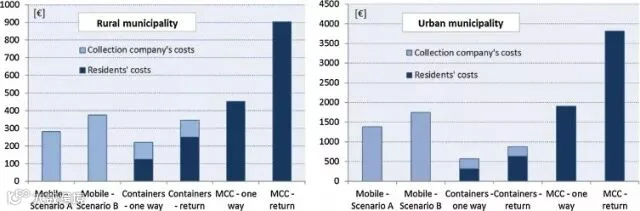
图4.城市和农村WEEE收集费用比较

原文信息
标题:
Towards sustainable WEEE collection and transportation methods in circular economy - Comparative study for rural and urban settlements
作者:
Piotr Nowakowski, Bogna Mrówczyńska
单位:
Silesian University of Technology, Faculty of Transport, ul. Krasińskiego 8, 40-019 Katowice, Poland
摘要:
A circular economy approach requires methods of resource management that are sustainable and efficient. A crucial process in waste management is collection and transportation of waste. One of the most valuable streams is waste electrical and electronic equipment (WEEE). There is a variety of disposal methods available for residents and a variety of collection methods for companies.
The scope of this study includes the application of artificial immune systems in planning routes of vehicles in a mobile program and in placement of containers in stationary collections of WEEE. The intent is to create a level playing field by comparing sustainability of the waste collections and transportation methods in optimal designs.
The analysis includes a comparison of the three most common methods of WEEE collection including cost analysis and vehicle emission using case studies for urban and rural areas. The results show the importance of properly planned collection routes. Mobile collection is the most sustainable method of WEEE collection while drop off of waste by residents at municipal collection centers is the worst case due to high emissions and operation costs. The results and the proposed model give an opportunity to evaluate existing WEEE collection methods in urban and rural areas and propose some improvements for waste collecting companies.

本期编辑
关雨琦,北京工业大学循环经济研究院,资源环境与循环经济交叉专业。

icRS2018会议 大幕将启
长按二维码 抢先参会
www.icrsconf.com
2018.6.27--2018.6.29 北京
更多优秀论文
尽在RCR
Resources 丨 Conservation 丨 Recycling
欢迎加入公众号编辑团队,简历请投至邮箱:
rcr-office@umich.edu
谈笑有鸿儒:请留言!
都说点赞会变美!不信你试试
