


原文链接:
https://www.sciencedirect.com/science/article/pii/S0921344918301381

图片来源于网络,侵删
文章导读
石油和天然气是现代工业的基石,其需求与经济发展联系密切。中国自改革开放以来经济快速发展,同时石油和天然气需求大幅增长。为满足日益增长的油气需求,中国一方面积极推动国内油气产业的发展,另一方面从国外进口油气资源。然而,未来国内油气生产和消费需求间的差距还将扩大。据BP预测,到2035年中国油气进口量将增加一倍,达到8.36亿吨油当量,年增长率接近5.5%。
为弥补油气资源的巨大供需缺口,中国需一方面挖掘国内资源潜力,另一方面充分利用国际油气市场。在此背景下,本文采用能源投资回报分析(EROI)方法,从能源投入与产出角度对国内油气产业和进口油气资源的历史EROI值进行估测。研究过程中不仅从物质角度分析了国内供给和国外进口油气的效益,还对不同进口国的能源投资回报进行了对比,为优化进口结构提供决策依据。除此之外,本文还将环境外部性影响考虑进EROI方法中,拓展了EROI方法的应用领域。
注:EROI用于测算能源生产或利用过程中单位能源投入所带来的能源产出。
文章亮点
1.相比于进口油气,国内油气的能源投资回报更高。
2.能源投资回报的变化趋势受天然气的开采影响。
3.液化气和管道气的能源投资回报高于进口原油。
4.环境投入降低了国内和进口油气的能源投资回报。
中文摘要
中国经济快速增长带来了巨大的能源消费需求,而国内生产及进口石油和天然气是两种对满足中国巨大的油气需求的重要途径。然而,国内生产和进口油气资源,哪种方式效益更高?为了解决这个问题,本文采用了能源投资回报(EROI)方法进行分析,能源投资回报(EROI)分析是一种测算能源生产或利用过程中物质效益的有力工具。本文首先测算了国内海上和陆上油气的能源投资回报的时间序列,并分析了能源投资回报时间序列变动趋势的成因。然后分别测算了不同进口国的能源投资回报,从EROI角度为优化进口结构提供了依据。此外,还研究了能源生产或利用过程中的外部环境投入。
结果表明,国内油气和进口油气的EROI分别在8.5-12和2.9-9.5之间波动。根据测算结果,我们得出以下结论:(1)国内油气的EROI高于进口油气,这表明国内油气的投入产出效益更高;(2)EROI的变化趋势受天然气的开采的影响。此外,进口油气的EROI还跟油气价格有关;(3)从EROI角度来看,液化气和管道气要优于进口原油。就进口来源而言,可优先考虑从澳大利亚、哈萨克斯坦和美国分别进口液化气、管道气和原油;(4)环境投入降低了能源投资回报。因此,应更加谨慎地减少环境投入。
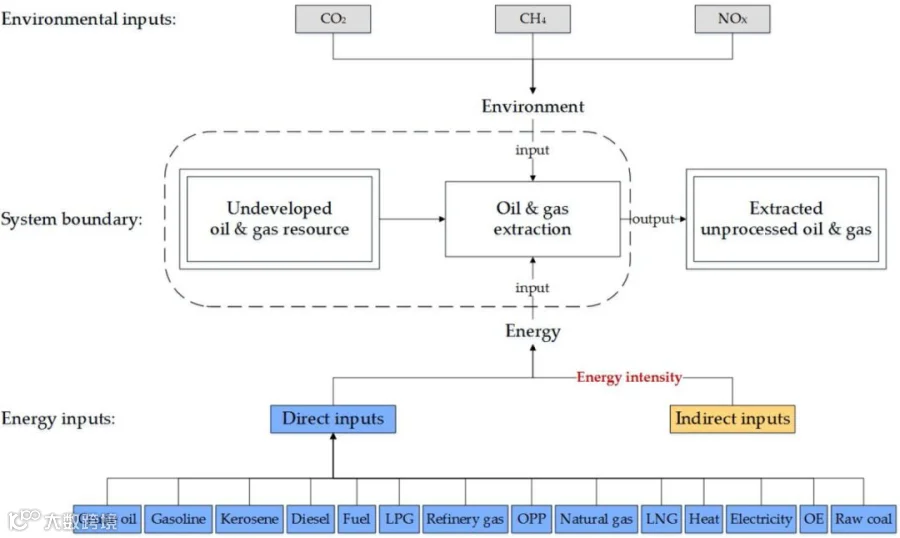
图1 国内油气开采过程的系统边界
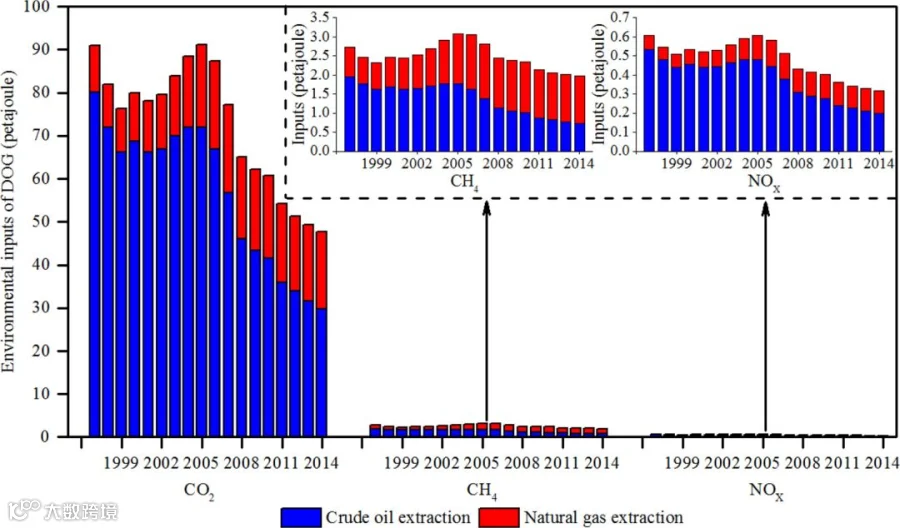
图2 国内油气开采的环境投入

图3 国内油气、国内海上油气、国内陆上油气和进口油气的能源投资回报
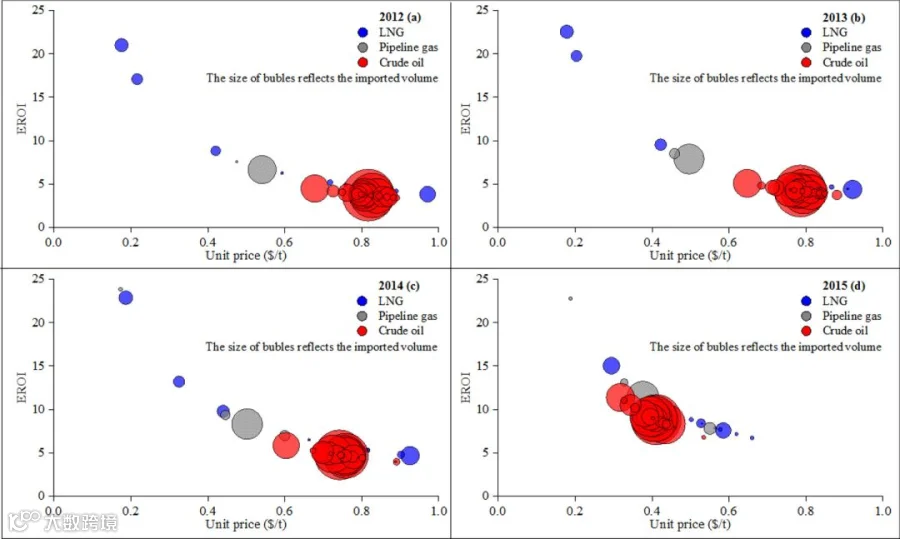
图4 不同进口油气产品的能源投资回报
原文信息

英文摘要:
Both domestic oil and gas and imported oil and gas are essential to meet the enormous energy demand in China, which is incurred by its rapid economic growth. However, which is better than another? To address this issue, an energy return on investment (EROI) analysis, which is a useful method to evaluate the physical performance of an energy process, is applied. Besides, the EROIs time series of offshore domestic oil and gas and onshore domestic oil and gas are calculated, and the causes of the change tendency of EROIs time series are studied. The EROIs of imported oil and gas from different import countries are also calculated, laying the foundation for optimization of the import structure from an EROI perspective. Moreover, environmental inputs, which cause the externality of an energy process, are also studied. The results show that the EROIs of the entire domestic oil and gas fluctuate between 8.5 and 12, and the EROIs of the imported oil and gas lie in the range between 2.9 and 9.5. We conclude that: 1) The EROIs of domestic oil and gas is higher than those of imported oil and gas, indicating that domestic oil and gas has a higher physical efficiency than imported oil and gas. 2) The change tendency of EROIs is influenced by the extractions of natural gas. Moreover, the EROIs of imported oil and gas are additionally related to oil and gas prices. 3) From an EROI perspective, LNG and pipeline gas are better than imported crude oil. Australia, Kazakhstan, and the USA should be prioritized for China to import LNG, pipelinegas, and crude oil respectively. 4) Environmental inputs reduce the EROIs. Therefore more caution should bepaid on the reduction of environmental inputs.
本期编辑
刘振华,中国矿业大学管理科学与工程专业博士研究生,研究方向为能源经济与管理。

icRS2018会议 大幕将启
长按二维码 抢先参会
www.icrsconf.com
2018.6.27--2018.6.29 北京
更多优秀论文
尽在RCR
Resources 丨 Conservation 丨 Recycling
欢迎加入公众号编辑团队,简历请投至邮箱:
rcr-office@umich.edu
谈笑有鸿儒:请留言!
都说点赞会变美!不信你试试


更多精彩内容,尽在阅读原文