


原文链接: https://www.sciencedirect.com/science/article/pii/S0921344918301897


文章导读
资源税是对自然资源开采所征收的费用,与高度依赖自然资源开采的资源型经济密切相关。本文以山西省为例,运用可计算一般均衡(CGE)模型,通过实证研究考察了资源税改革对资源型经济转型的影响。

文章亮点
(1) 在中国,自然生态空间将正式进行统一登记,并逐步对生态空间的占用全面征收资源税。
(2) 山西省是全国资源型经济转型综合改革试点地区,全省有11个资源型城市,119个乡镇中有94个拥有煤炭资源。
(3) 资源税改革有利于资源型经济转型,降低生态占用率,促进就业和经济增长。
(4) 通过完善不同占用类型的生态足迹和各种服务功能的生态价值核算方法,实现生态空间的全面有偿使用。

摘要
中国将对自然生态空间的占用征收资源税,本文以山西省为例,计算了能源消费的生态足迹和生态服务价值。然后构建了生态占用税的可计算一般均衡模型,从要素、产出和贸易结构三方面分析了资源税改革对资源型经济的影响。结果表明,税收方案在静态情况下对促进经济转型具有显著的促进作用,但也有较大的负面影响。在动态情况下,负面影响虽然不大,但会影响长期经济增长。在要素结构方面,生态足迹稳步下降,投资增长迅速。从产值结构看,第二产业比重增加,但增长速度在减缓,而第三产业增速有所提高。在贸易结构方面,尽管煤炭工业出口增加,但增长速度在下降,第三产业净出口增加。因此,税收计划具有促进资源型经济转型的作用。我们提出以生态占用为基础征收资源税,有利于保护自然资源的生态服务功能,降低资本和劳动要素税,促进非资源型产业的发展。


图1. 三大行业不同税率下的要素投入率

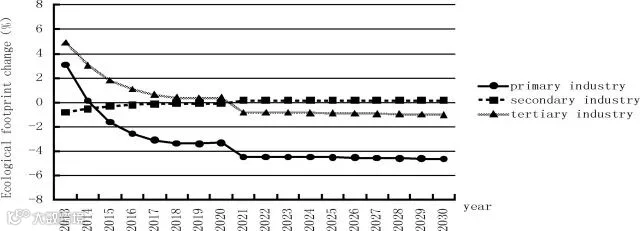
图2. 动态情景下三大行业生态占用情况的变化

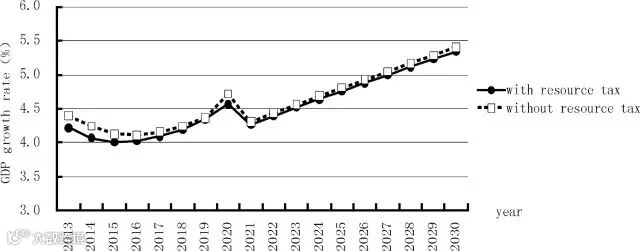
图3. 资源税对经济增长率变动的影响

原文信息
Title:Resource tax reform and economic structure transition of resource-based economies
Authors:Hong Li(a)(b), Zhenxing Xiong(a)(b), Yuantao Xie(c)
(a) School of Economics, Peking University, No.5 Yiheyuan Road, Haidian District, Beijing, 100871, PR China
(b) Center for National Resource Economy Studies, Peking University, Beijing, 100871, PR China
(c) School of Insurance and Economics, University of International Business and Economics, No.10 Huixin Dongjie, Chaoyang District, Beijing, 100029, PR China
Abstract
As the resource tax will be extended to the occupation of natural ecological space in China, this paper takes Shanxi Province as an example to calculate the ecological footprint and ecological service value of energy consumption; it then constructs a Computable General Equilibrium model of tax on ecological occupation and analyzes the impact of resource tax reform on a resource-based economy from the structure of factor, output, and trade. The results show that the tax scheme has an obvious effect on promoting economic transition under a static situation, but it also has a greater negative impact. In a dynamic scenario, the negative effect is small, but it affects long-term economic growth. In terms of factor structure, ecological footprint steadily declines, while investment growth is rapid. In terms of output structure, the proportion of the secondary industry increases, but the growth rate is slower, and the growth rate of the tertiary industry continues to improve. In terms of trade structure, although the coal mining industry shows increased export, the growth rate is declining, and there is increase in net exports of tertiary industry. Thus, the tax scheme has the effect of promoting the transformation of a resource-based economy. We propose levying a resource tax based on ecological occupation to protect the ecological service function of natural resources, reduce the capital and labor factor tax, and promote the development of non-resource type industry.

本期编辑:蒋金星,中国社会科学院研究生院,可持续发展经济学专业。

icRS2018会议 大幕将启
长按二维码 抢先参会
www.icrsconf.com
2018.6.27--2018.6.29 北京
更多优秀论文
尽在RCR
Resources 丨 Conservation 丨 Recycling
欢迎加入公众号编辑团队,简历请投至邮箱:
rcr-office@umich.edu
谈笑有鸿儒:请留言!
都说点赞会变美!不信你试试
