原文链接:
https://www.sciencedirect.com/science/article/pii/S0921344919302770

图片源于网络(侵删)
文章导读
随着汽车生产技术的不断发展,铝合金逐渐作为替代铁合金的首选材料以实现汽车轻量化的目标,进而有效提高汽车的燃油经济性。通过改变铝合金材料中的铬、钒、锰等多种关键金属的不同配比能够显著改变合金性质,使其满足不同的汽车部件所需的功能。因此,越来越多的关键金属被用于车用铝合金材料当中。然而,在报废回收阶段,这些关键金属由于用量少而回收价值低,在再生铝生产过程中逐渐成为杂质金属,阻碍了铝的高效回收。在此背景下,定量分析这些关键金属的耗散损失及其在再生铝流中的累积,将有助于提出针对性的改进措施以减少材料和经济损失,进而提升循环经济发展水平。
文章亮点
1.用物质流分析的方法量化了汽车铝合金中关键金属的耗散损失;
2.通过情景分析预测了北美轻型汽车总材料使用量和由此产生的耗散损失;
3.以福特F-150为案例,研究了其表面合金中关键金属使用情况的时间变化趋势;
4.提出了减少关键金属耗散损耗的有效策略。
原文摘要
随着美国对产品和服务的需求和消费的不断增长,人们对于可持续材料使用的关注也在日益增加。在汽车产业中,主要的可持续发展途径是倡导改善燃油经济性和使用可回收性更高的材料以减少温室气体(GHG)的排放。为了实现这些目标,一种流行的做法是汽车轻量化。该领域的许多研究都聚焦于汽车轻量化的环境效益上,例如,研究用铝替代汽车产业中的传统钢材将有助于向环境中减排多少温室气体。越来越多的铝被用于生产汽车产业中不同的部件,使合金元素的范围不断扩大。不幸的是,这些元素中的许多元素都是耗散性的,同时也被认为是关键的。此外,一些合金元素在再生铝流动中积聚为杂质元素,因此阻碍了材料的有效循环利用,进而导致材料和经济损失。我们量化了材料损失并分析了由于关键金属耗散导致的经济损失,并且还检测了再生铝流中伴随的杂质元素的累积。我们的研究结果表明,要实现更加循环的经济,需要在以下两方面加强投资和研发a)操作层面上改善混合和配料策略,主要根据合金添加物和其实际成分的固有变异性,以及b)经济上可行的材料识别和分选技术,这将有助于减少这些物质损失和相关的经济损失。

图1 北美地区平均汽车整备质量及其含铝量
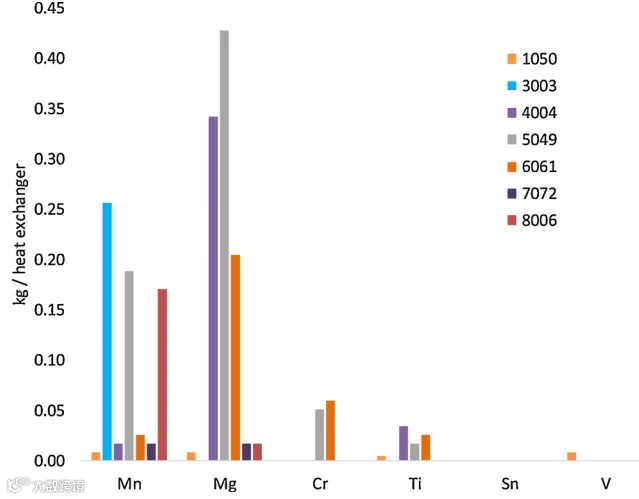
图2 汽车热交换器合金中元素含量的多样性

图3 代表性轻型车辆关键金属含量的预测范围
(右轴为总关键金属范围)
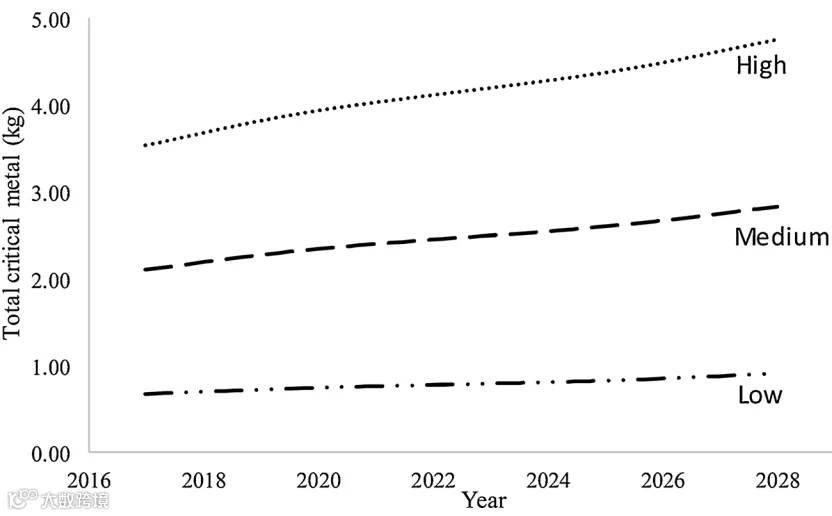
图4 不同情景下每辆车的关键金属总含量趋势
原文信息
Abstract
As the demand for and consumption of products and services grow in the US, so does the concern for sustainable material usage. In the automotive industry, major sustainability issues revolve around advocating for improved fuel economy and the incorporation of materials with higher recyclability in order to reduce greenhouse gas (GHG) emissions. A popular strategy to achieve this in the automotive industry is light-weighting. Many studies in this field are focused on the environmental benefits of light-weighting, that is, how replacement of traditional steel in the automotive industry with aluminum, for instance, will help reduce the amount of CO2-eq emissions in the environment. The increasing use of aluminum in the industry for differing automotive applications broadens the range of alloying elements. Unfortunately, many of these elements are dissipatively lost and also deemed critical. Furthermore, some of the alloying elements accumulate as tramp (unwanted) elements in the secondary aluminum stream, hence posing as a barrier to effective recycling, thus leading to material and economic losses. We quantified the material losses and analyzed the economic losses attributed to the dissipation of critical metals and also examined the attendant accumulation of tramp elements in the recycled aluminum stream. Our results indicate that to achieve a more circular economy requires investment and further development of a) operational blending and batching strategies that comprehend alloying additions and the inherent variability of their actual composition, and b) economically feasible material identification and sorting technologies that will help in abating these material losses and associated economic losses.
本期编辑
段临林,中国科学院城市环境研究所,博士研究生,研究方向:资源代谢及其环境效应
更多优秀论文
尽在RCR
Resources 丨 Conservation 丨 Recycling
欢迎加入公众号编辑团队,简历请投至邮箱:
rcr-office@umich.edu
谈笑有鸿儒:请留言!
都说点赞会变美!不信你试试