


原文链接:
https://www.sciencedirect.com/science/article/pii/S0921344921000690

图片来源于网络(侵删)
文章导读
废铜与再生铜之间的路径可能漫长而复杂。一般来说,这些途径可以简化为三个步骤:废物收集、分类与分离以及冶金金属的回收。尽管铜的内在价值很高,但回收铜可能并不是链上每一步的主要目标。因此,似乎有必要检查整个回收链,以找到有希望改进的方面,这些方面既可以使链中前端处理的投入更加稳健,又不会与后续处理相冲突。
虽然回收链中的各个环节通过它们之间的物料流直接相连,但它们是由完全不同的参与者进行的。不仅不同的参与者与回收链中的不同环节相关联,而且寻求可能的流程改进也会涉及到不同的参与者:与技术研究、开发和商业化、法规、物料流分析和环境影响评估有关的公司和机构。这种复杂性使得难以一次评估整个系统。在本篇文章中,作者聚焦于回收链的技术方面,从废料产生到冶金回收进行了全面的分析。
原文摘要
本文研究了从废料产生到冶金回收的铜回收链,以寻找目前的挑战和改进的技术机会。我们分析了对全球的铜流量,结果表明回收铜的量基本保持不变,与不那么具有挑战性的制造阶段废料相比,复杂报废铜产品的重要性在不断提高。报废产品的源头分离被认为能够解决废物的复杂性,但经本研究检验认为并不可行。有关分选和分离技术发展的文献综述揭示了通过基于传感器的技术可能有希望解决这一问题。但是,将其特定地用于铜回收任务的例子很少,并且远未达到能够投放市场的标准。铜的冶金回收在最近几年中没有经历重大的发展。特别地,在重熔铜合金时,没有简单的解决方案来去除铅。铜回收行业专家的访谈显示,各公司之间以及欧洲和北美之间的废铜处理和加工差异很大。尽管大量的废料测试和负荷优化是欧洲铜业的普遍做法,但北美的铜废料经销商与回收商之间正在就废料成分的责任以及由此产生的废料分析负担进行讨论。废料的可用性和整个回收链的优化也是重要的主题。沿着回收链的参与者们采取更协调的优化方法可能会降低总体成本并提高铜及其合金的回收率。
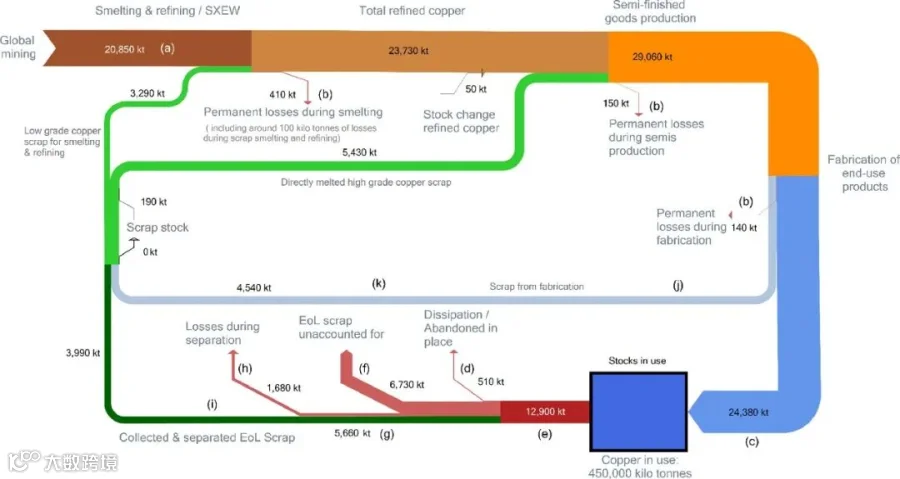
图1 2018年全球铜的物质流

图2 历史原生铜和再生铜供应量(上图为绝对量,下图为相对量)

图3 根据全球铜流量模型估算的可回收利用的废料量

图4 铜合金家族及其使用结构

图5 通过专家访谈获取的回收链各个层面的结果
原文信息

Abstract
This paper examines the copper recycling chain - from scrap generation through to metallurgical recovery - in search for current challenges and technological opportunities for improvement. We provide an analysis of global copper flows, showing largely constant amounts of recycled copper and a rise in importance of the complex end-of-life (EoL) scrap compared to the less challenging manufacturing scrap. Source separation of EoL scrap as an answer to waste complexity is examined but dismissed as not viable. A literature review on developments in sorting and separation technology revealed new promising possibilities through sensor-based technologies. However, examples for their use for tasks specific to copper recycling are rare and far from market-ready. Metallurgical recovery of copper has not experienced major developments in the last years. In particular, there is no easy solution for the removal of lead when remelting copper alloys. Interviews with experts from the copper recycling industry revealed that the handling and processing of copper scrap differs widely between companies but also between Europe and North America. While extensive scrap testing and load optimization is common practice for the copper industry in Europe, a discussion on the responsibility for scrap composition and consequently for the burden of scrap analysis is underway between scrap dealers and copper recyclers in North America. Scrap availability and optimization of the recycling chain as a whole are also important topics. A more coordinated optimization approach between actors along the recycling chain could potentially reduce overall costs and increase recovery of copper and its alloys.
本期编辑
段临林,中国科学院城市环境研究所,博士研究生,研究方向:资源代谢及其环境效应
更多优秀论文
尽在RCR
Resources 丨 Conservation 丨 Recycling
2019年影响因子:8.086
欢迎加入公众号编辑团队,简历请投至邮箱:
rcr-office@umich.edu
谈笑有鸿儒:请留言!
都说点赞会变美!不信你试试

由于近期微信更改了订阅号的推送规则,很多朋友不能快速找到我们,其实我们每天都在推送!您可以将RCR期刊设置为星标,就能在微信订阅号中快速找到我们,查看每天订阅。

点击蓝字
关注我们
球分享
球点赞

球在看