


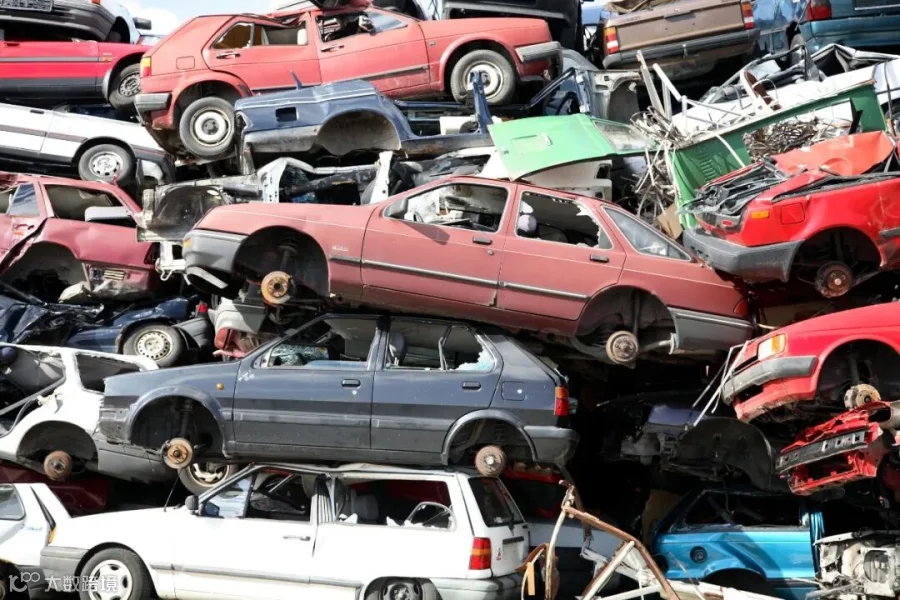
图片来源于网络(侵删)
01
文章信息
原文标题:The coming wave of aluminum sheet scrap from vehicle recycling in the United States
原文作者(*通讯):Yongxian Zhu, Laurent B.Chappuis, Robert De Kleine, Hyung Chul Kim, Timothy J.Wallington, George Luckey, Daniel R.Cooper*
作者单位: 美国密歇根大学George G. Brown研究室,美国轻金属咨询公司,美国福特汽车公司研究与创新中心
关键词:回收;铝合金车身板(ABS);汽车寿命分布;汽车留存率;二手车出口
原文链接:
https://www.sciencedirect.com/science/article/pii/S0921344920305255
02
文章信息
长期以来,铝被认为是钢铁的轻质替代品,可以大大节省运输燃料。但缺点是原铝生产消耗大量的能量,是钢铁生产的9倍。随着铝合金车身板在汽车里使用的增多,在未来,将会有更多的汽车铝制废料进入市场。回收铝板密集型车辆为回收商提供了进入更高价值市场的机会,即销售锻造合金而非铸造合金,也为汽车制造商提供了闭环和使用回收铝板组件的机会。
03
文章信息
大量生产的铝板密集型车辆为回收商提供了一个机会:转向锻造合金的高价值回收。此研究使用了动态物质流分析(2015年-2050年)估算美国销量最高的铝合金车身板(ABS)密集型车辆(福特F-150、Super Duty、Expedition和Lincoln Navigator)产生的铝制ABS废料的时间、规模和成分。我们推导了汽车的寿命分布模型,并且根据铜和镁含量对5xxx和6xxx系列薄板合金进行划分统计。马尔可夫链模型用于估计国内报废的注销车辆与出口车辆的比例。此研究发现,2020年上述四种汽车中含有120万吨的铝制ABS。这些车辆的铝制ABS密集结构为美国回收商提供了独特的机会。如果按目前的产量继续生产,这些车辆的铝制ABS废料将在2035年增加到约12.5 万吨/年,在2050年增加到24.6 万吨/年。大部分废料将用于美国加工,出口的注销车辆或达到老化状态的车辆不到10%。相比之下,2017年美国国内仅消耗了12.1万吨汽车铝粉碎片(含可忽略不计的铝制ABS)。此研究分析了未来潜在废弃物料的组成,揭示了如果要实现铝制ABS闭环回收,则需要进行合金分离和去除杂质元素。

图1. 2018年美国汽车铝制ABS的品牌比例(铝ABS的销售)。来源于 Chappuis (2018),数据在品牌匿名的条件下提供。

图2. 用于估算公路上铝制ABS存量和未来废弃汽车产生的铝制ABS废料的方法。
表1. 福特F-150、Super Duty、Expedition和Lincoln Navigator四种汽车里的平均铝制ABS含量。


图3. 基于美国车辆登记的汽车留存率(一些注销车辆出口到国外)。

图4. 基于美国车辆登记的汽车寿命分布(一些注销车辆出口到国外)。


图5. 美国汽车和合金的年销售额,库存水平,和注销情况。灰色区域对应2015年-2020年已销售的车辆。F系列由F-150 和 Super Duty 组成。

图6. 铝密集型车辆的马尔可夫链转变图(左);车辆寿命和目的地的桑基图(以100辆车为基准)表示源自表2所示的 F-150 基准数据(右)。
表2. 车辆寿命基准情景,悲观情景(短),和乐观情景(长)假设平均特征的马尔可夫链转移图(图 6(左))的过渡概率值。


图7. 2035年(基准方案)铝制ABS的成分限制以及本研究中四种车辆的混合废料和新合金成分及数量的估算总结。蓝色X轴代表不同的废料混合物,蓝色环形雷达图代表五种关键合金元素的成分下限和上限。绿色Y轴代表新的铝制ABS合金的需求,绿色环形雷达图代表这五种关键合金元素的成分下限和上限。
04
原文信息

The emergence of mass-produced aluminum sheet intensive vehicles presents an opportunity for recyclers to shift towards high value recycling into wrought alloys. We use dynamic material flow analyses (2015–2050) to estimate the timing, scale, and composition of U.S. aluminum automotive body sheet (ABS) scrap generated from the aluminum ABS intensive vehicles with the highest U.S. sales: Ford F-150, Super Duty, Expedition, and Lincoln Navigator. Lifespan distribution models are derived for each vehicle, and 5xxx and 6xxx series sheet alloys are aggregated according to their copper and magnesium content. A Markov chain model is used to estimate the fraction of deregistered vehicles scrapped domestically versus exported. It is found that the above four vehicles account for around 1,200 kt of aluminum ABS embedded within the 2020 U.S. fleet. The aluminum ABS intensive construction of these vehicles presents a unique opportunity to U.S. recyclers. If production continues at the current volumes, aluminum ABS scrap from these vehicles will increase to approximately 125 kt/year in 2035 and 246 kt/year in 2050. The majority of this scrap will be available for U.S. processing with <<10% of deregistered vehicles exported or achieving vintage status. For comparison, only 121 kt of aluminum auto shred (containing negligible aluminum ABS) was domestically consumed in the U.S. in 2017. We analyze the composition of the future potential scrap streams, revealing the need for alloy separation and tramp element removal if closed loop aluminum ABS recycling is to be achieved.
本期编辑
王彬泽,日本东北大学 环境科学研究科 博士研究生
研究方向:基于新能源汽车的金属物质流分析和生命周期评价。

由于近期微信更改了订阅号的推送规则,很多朋友不能快速找到我们,其实我们每天都在推送!您可以将RCR期刊设置为星标,就能在微信订阅号中快速找到我们,查看每天订阅。
