
The Carbon Border Adjustment Mechanism (CBAM) is a key policy initiative by the European Union (EU) aimed at reducing carbon emissions and combating climate change. It levels the playing field for EU producers by imposing a carbon cost on imports of certain goods from non-EU countries, preventing "carbon leakage"—the shift of production to regions with weaker environmental regulations. In this article, Thanh Tran and Nora Zhang of TERAÖ outline what businesses must do to prepare for CBAM compliance.
CBAM Overview and Scope
The EU’s CBAM will be fully implemented in 2026, ensuring that imported goods face the same carbon pricing as those produced within the EU. It applies to EU importers bringing in products from targeted sectors and to non-EU exporters shipping these goods to the EU. Industries such as automotive manufacturing, aerospace, and capital goods—particularly reliant on steel and aluminium—are significantly affected.
These companies must adapt by potentially switching to low-carbon suppliers or investing in cleaner technologies. They also need to prepare for increased costs due to the mandatory purchase of CBAM certificates and ensure accurate emissions reporting.
Transitional Phase and Compliance Requirements
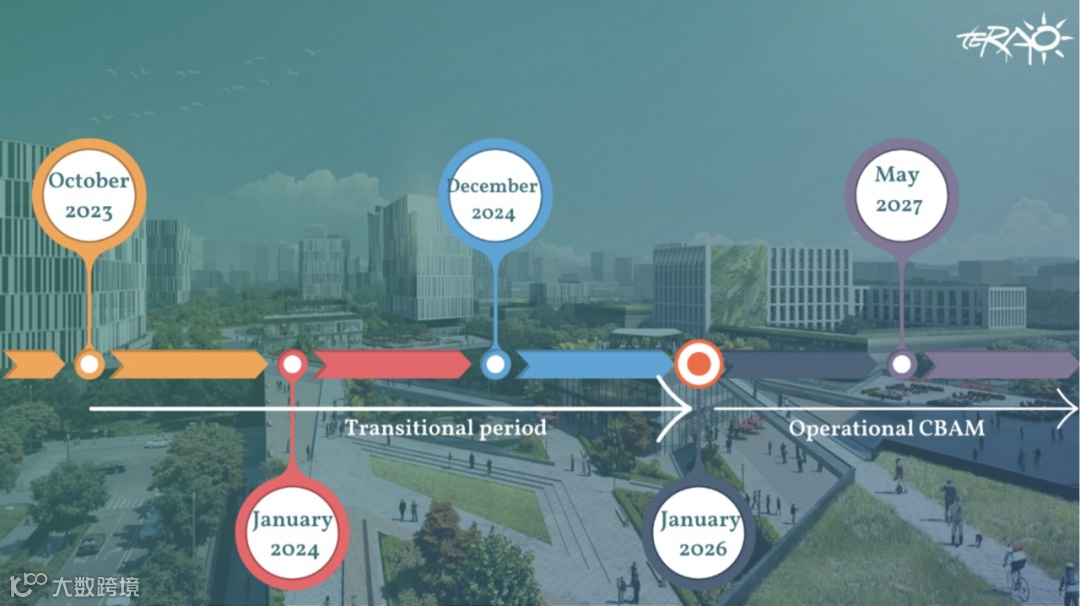
The CBAM transitional phase runs from 1 October 2023 to 31 December 2025. During this period, businesses are required to report the embedded carbon emissions of their imported goods without paying financial adjustments. This phase allows time for supply chain adjustments ahead of full enforcement.
Starting in 2026, importers must declare annual emissions and purchase an equivalent number of CBAM certificates, priced based on the weekly average auction price of EU Emissions Trading System (ETS) allowances. Importers can deduct any carbon costs already paid in the country of origin. Failure to comply may result in penalties, customs delays, and negative regulatory records.
Calculating CBAM Obligations
CBAM charges are calculated based on the embedded emissions in imported goods. Affected products typically include high-carbon-intensity materials. Companies must collect emissions data from suppliers—either actual measurements or EU-provided default values. If actual data is unavailable, emissions are estimated by multiplying the product weight (in tonnes) by the standard emissions factor.
This calculation is critical for determining the number of CBAM certificates required and managing future financial liabilities under the system.
Key Challenges for Businesses
The CBAM presents several challenges, including increased operational costs, supply chain disruptions, market access risks, and added compliance burdens—especially for European companies sourcing from China.
To remain competitive, firms must establish robust systems to monitor and report both direct and indirect greenhouse gas emissions across their supply chains. Proactive engagement with CBAM requirements is essential to avoid fines, maintain market share, and ensure long-term sustainability in the EU market.