


The 2025 China-Europe Seminar on Human Rights concluded in Madrid
About 120 experts, scholars, government officials, and industry representatives from China and Europe convened in Madrid for the 2025 China-Europe Seminar on Human Rights, focusing on human rights protection in the digital intelligence era. The event concluded with the adoption of a consensus document emphasizing cooperation and shared responsibility.
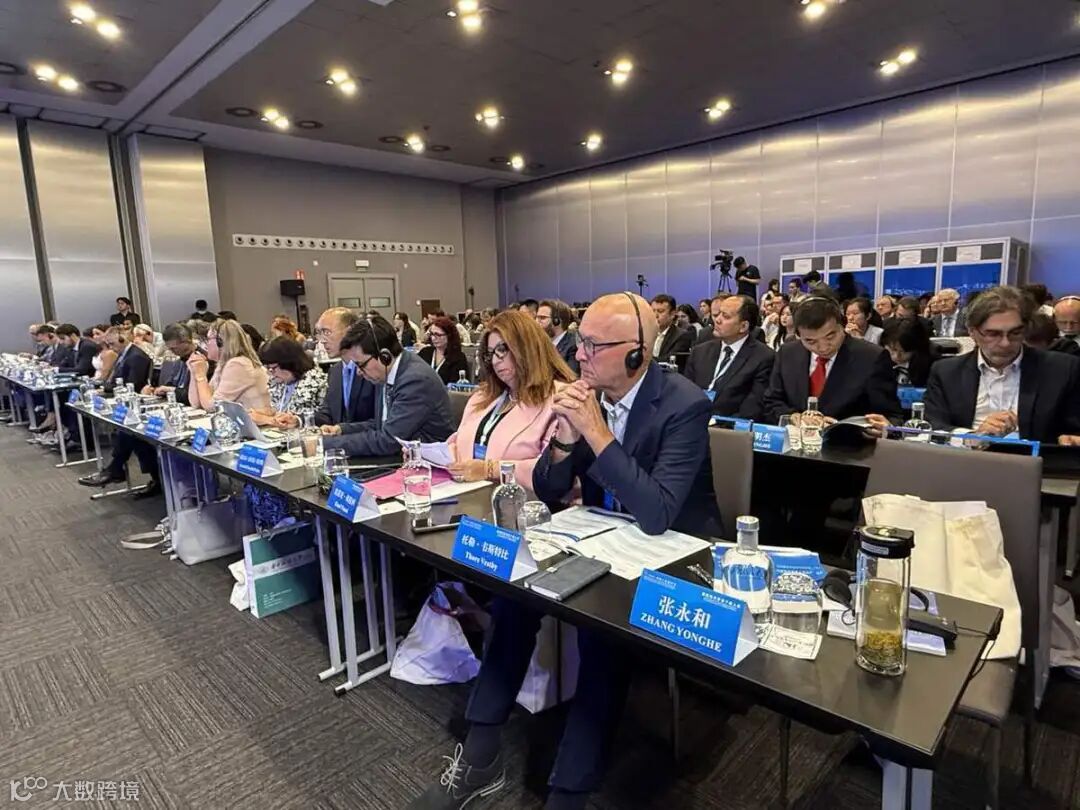
Consensus calls for ethical development of digital intelligence technologies
The consensus document underscores the need to uphold human rights values in advancing digital intelligence technologies. Key principles include ensuring a secure and trustworthy digital environment, promoting open global sharing of benefits, guaranteeing universal access through development, preventing discrimination, ensuring transparent rights protection, and fostering international cooperation to build a cyberspace community with a shared future.
Strengthening human rights in the AI era
Marta Montoro, vice-president and general director of the Catedra China Foundation, stated that the seminar marks a milestone in China-Europe relations. She emphasized that humanity’s future must include China and called for a digital era guided by dialogue, fairness, and inclusive development. According to Montoro, human rights must be strengthened and adapted—not weakened—in the face of AI and automation. She commended China's approach to international cooperation based on mutual respect, noninterference, and solidarity-driven development.
Lu Guangjin, vice-president of the China Society for Human Rights Studies, delivered a video address highlighting the seminar’s significance in China-Europe human rights exchanges. Initiated in 2015, the seminar has been hosted alternately in China and Europe. The 2025 edition was jointly organized by the China Society for Human Rights Studies and the Catedra China Foundation.
AI development must serve fairness and transparency
Gerardo Pisarello, first secretary of Spain’s Congress of Deputies and professor of constitutional law at the University of Barcelona, stressed the importance of developing AI in a fair and transparent manner rather than avoiding its use altogether. He noted China’s strong capabilities in AI and its consistent commitment to environmental protection and green development throughout technological advancement.
China’s AI model challenges existing monopolies
Pisarello added that resistance from U.S. companies toward China’s AI development stems from its challenge to established business and military models, disrupting previous technological monopolies.
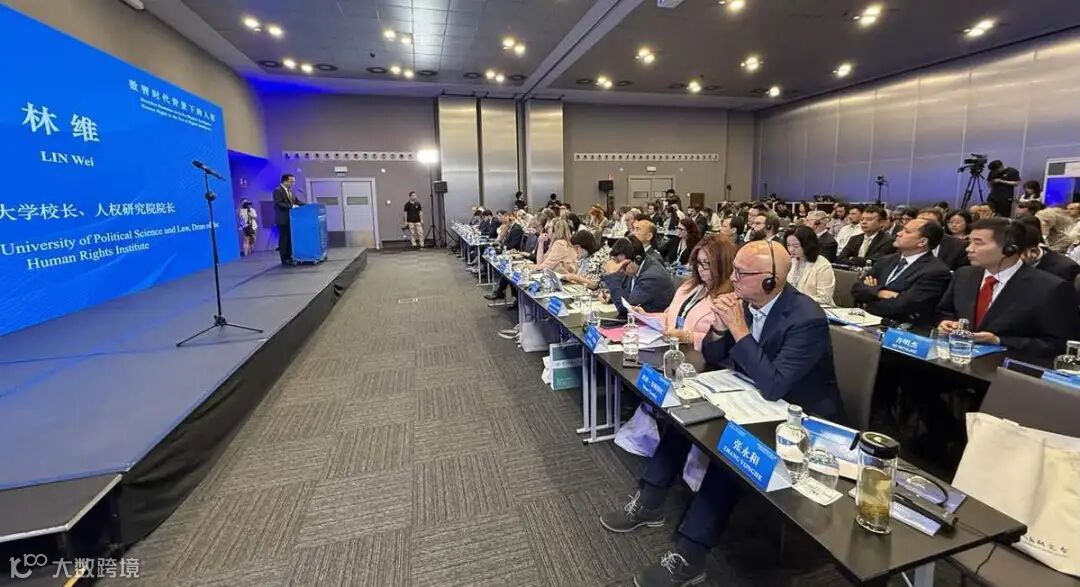
Preserving human dignity in the digital age
Lin Wei, president of Southwest University of Political Science and Law and dean of its Human Rights Institute, pointed out that while digital intelligence enhances human rights protection, it also poses unprecedented challenges to human subjectivity. Safeguarding human dignity and rights in this new era remains a shared responsibility between China and European nations.
Confucian thought and universal human rights
Giuseppina Merchionne, Sinologist and president of the Italy-China Center for Collaboration and Cultural Exchanges of the Silk Road, highlighted Confucius’ concept of universal brotherhood as foundational to a culturally rooted understanding of human rights. She argued that this vision—shared with Buddhist philosophy—elevates the idea of human rights to its highest universal expression within Chinese tradition.
Unregulated AI poses global risks
Helga Zepp-LaRouche, founder and president of Germany’s Schiller Institute, warned that unregulated and unsupervised AI applications pose serious threats globally. She expressed concern that current trends in intelligent technology development often conflict with human-centered progress, particularly when AI is weaponized, citing recent conflicts such as those between Israel and Iran.
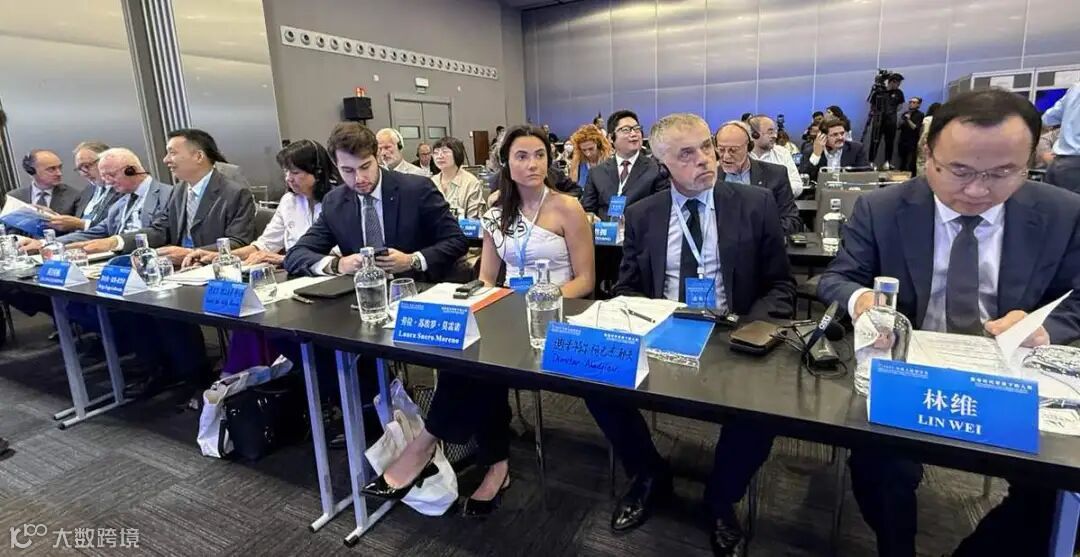 ▲ The 2025 China-Europe Seminar on Human Rights is held in Madrid, Spain, on Wednesday. Chen Weihua/China Daily
China’s people-centered human rights path
Chinese Ambassador to Spain Yao Jing affirmed that as the world’s largest developing country, China adheres to a people-centered development philosophy. He emphasized the right to survival and development as fundamental, striving for balanced advancement of economic, social, cultural, civil, and political rights. “We have embarked on a human rights development path suited to China’s national conditions—one supported by the people and aligned with the times,” he said.
