


This document, compiled from the perspective of China Customs, provides key regulatory, statistical, and procedural information for businesses engaging in trade between the Chinese Mainland and Australia. It focuses on Chinese policies and requirements.
In 2025, the total value of imports and exports between the Chinese Mainland and Australia reached 1.48 trillion RMB, a decrease of 1.8%. Australia ranked as the Chinese Mainland’s 9th largest trading partner (excluding economies such as ASEAN and the EU, same below), unchanged from 2024.
Australia remains the Chinese Mainland’s largest trading partner in Oceania.
In 2025, the Chinese Mainland exported 546.059 billion RMB worth of goods to Australia, an increase of 8.5%. Australia was the Chinese Mainland’s 17th largest export market, rising by one place compared to 2024.
In 2025, the Chinese Mainland imported 932.064 billion RMB worth of goods from Australia, a decrease of 6.9%. Australia was the Chinese Mainland’s 5th largest import source, unchanged from 2024.
In 2025, the Chinese Mainland’s goods trade deficit with Australia was 386 billion RMB, a reduction of 110.968 billion RMB from the 2024 deficit. Australia maintained its position as the second-largest source of deficit after Taiwan, China (1.05 trillion RMB).
Historical Annual Trade Data:
●2024: Total trade value: 1.5 trillion RMB, growth: -7%, rank: 9.
●2023: Total trade value: 1.61 trillion RMB, growth: 9.8%, rank: 8.
●2022: Total trade value: 1.47 trillion RMB, growth: -0.9%, rank: 8.
●2021: Total trade value: 1.49 trillion RMB, growth: 26%, rank: 7.
Additionally, Australia ranked 4th in the Chinese Mainland’s cross-border e-commerce export value and 5th in import value in 2022. In 2023, Australia surpassed Taiwan, China to become the Chinese Mainland’s 10th largest services trade partner, maintaining this position in 2024.
The China-Australia Free Trade Agreement (ChAFTA) entered into force on December 20, 2015. Under the agreement, 96.8% of China’s tariff lines have been liberalized, while Australia has fully eliminated tariffs on all products for China, achieving 100% liberalization.
Since May 20, 2019, Certificates of Origin under ChAFTA can be self-printed.
In June 2024, China and Australia signed a Memorandum of Understanding on Further Promoting the Implementation of ChAFTA, which helps both sides deepen cooperation under the FTA framework, continue to tap the agreement’s potential, and promote stable and healthy development of bilateral economic and trade relations.
Australia and China are both members of RCEP, which entered into force for both on January 1, 2022. Certificates of Origin under RCEP can be self-printed.
The “Authorized Exporter” system of China Customs applies to RCEP members.
Australia is one of the three countries that still grant the Generalized System of Preferences (GSP) treatment to China.
China and Australia signed an AEO Mutual Recognition Arrangement in 2017. Mutual recognition of AEO has been implemented since December 14, 2023.
Since January 1, 2023, China Customs has implemented electronic data verification for the “Agricultural Product Import Tariff Quota Certificate” required for wool imports from Australia.
In August 2025, Chinese fresh jujubes were approved for export to Australia, and Australian fresh apples were granted access to the Chinese Mainland market.
The following Australian animal products are prohibited from entering the Chinese Mainland due to disease outbreaks:
●Poultry and related products due to Highly Pathogenic Avian Influenza (HPAI).
●Poultry and related products from the state of Victoria due to Low Pathogenic Avian Influenza (LPAI).
●Poultry and related products from outside the state of Victoria due to Newcastle Disease.
According to the “Country (Region) Name and Code Table for Customs Statistics” effective January 1, 2023:
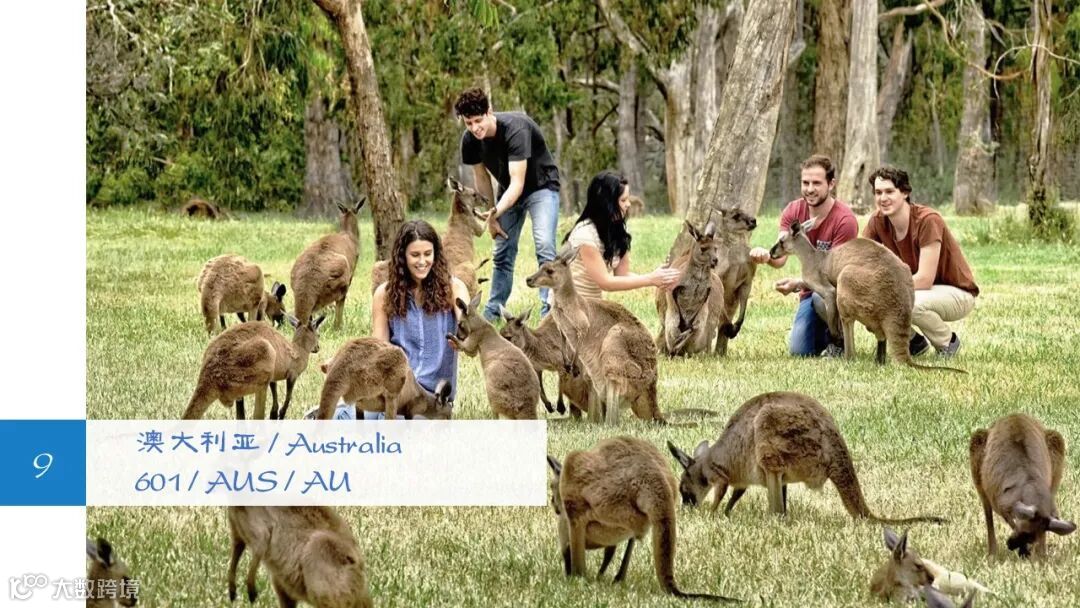
●English Name: Australia
●Numeric Code: 601
●Three-Letter Alpha Code: AUS
●Two-Letter Alpha Code: AU
Tariff Information:
●Imported goods are subject to Most-Favored-Nation (MFN) rates. Some goods are eligible for Agreement rates.
●Special safeguard measures apply to beef (HS codes 02011000, 02012000, 02013000, 02021000, 02022000, 02023000; 2025 trigger level: 208,307 tons) and milk powder (HS codes 04022100, 04022900; 2025 trigger level: 28,506 tons) from Australia. When the cumulative import volume of these two categories of agricultural products reaches the annual trigger level, additional tariffs will be levied according to relevant regulations.
●According to MOFCOM Announcement No. 87 (2025), a safeguard measure in the form of “country-specific quotas with additional tariffs beyond the quota” will be applied to beef imports from January 1, 2026, to December 31, 2028. During the implementation of this safeguard measure, the special safeguard measures for beef stipulated in ChAFTA will be suspended. The annual quotas for Australian beef are: 2026: 205,000 tons; 2027: 209,000 tons; 2028: 213,000 tons. Beef imported within the quota is subject to the current applicable tariff rates. Unused quota from the previous year does not carry over. For beef imports exceeding the quota, an additional 55% tariff will be imposed on top of the current applicable tariff rate, effective from the 3rd day (inclusive) the quota is filled.
●For wool originating from Australia (HS codes 51011100, 51011900, 51012100, 51012900, 51013000, 51031010), tariff-rate quota (TRQ) management is implemented according to the FTA, with corresponding Agreement rates applied. The TRQ for 2026 is 44,324 tons.
This translation was completed by DeepSeek.