
The logistics industry is undergoing significant transformation driven by geopolitical shifts, trade disputes, and evolving customs policies that are reshaping global supply chains.
This market update highlights the latest trends in air and sea freight, offering strategic insights to help navigate current challenges.

Container Shipping Trends
Supply, Demand and Fleet Projection
Despite geopolitical tensions and shifting U.S. tariff policies, container shipping lines continue expanding their fleets. The global order book ratio — representing ordered but undelivered vessel capacity relative to the active fleet — has exceeded 30%, the highest level in 15 years.
Industry forecasts project average annual fleet growth of 5.6% over the next four years, peaking at 7.3% in 2028. In contrast, containerized cargo volume growth in 2025 stands at just 4–5%, indicating a growing imbalance between supply and demand.
Sources:DACHSER market analytics, gCaptain, Sea Intelligence
Rate and Market Dynamics
The second half of 2025 is expected to remain volatile, with softening demand and continued downward pressure on ocean freight rates. Spot rates fluctuate due to geopolitical tensions, emission regulations, and changing trade patterns.
Contract negotiations are increasingly focused on service reliability and carbon efficiency, as shippers prioritize resilient and sustainable supply chain partnerships over cost alone.
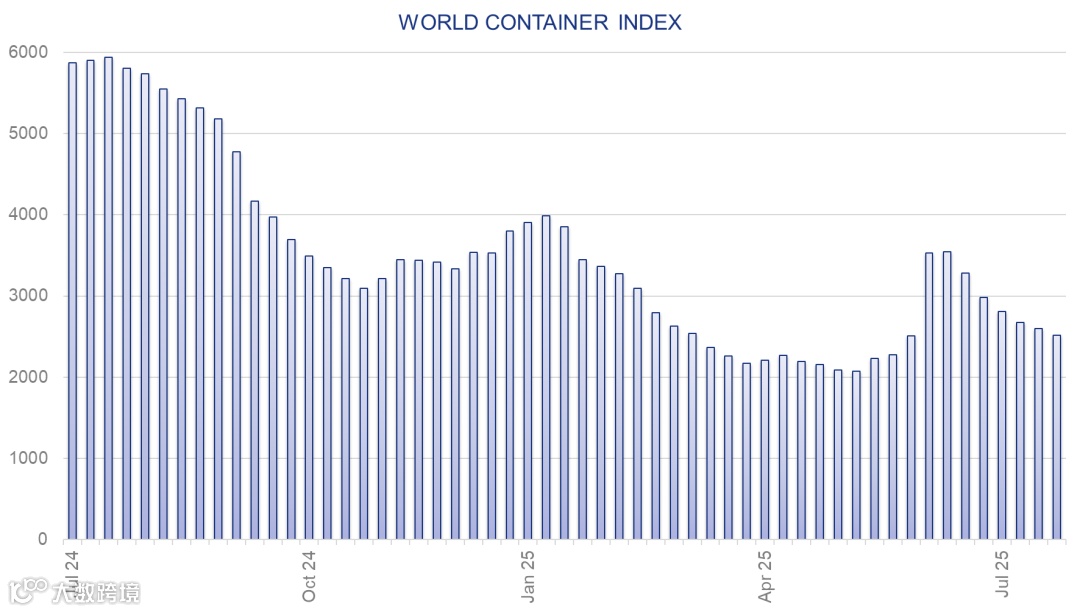
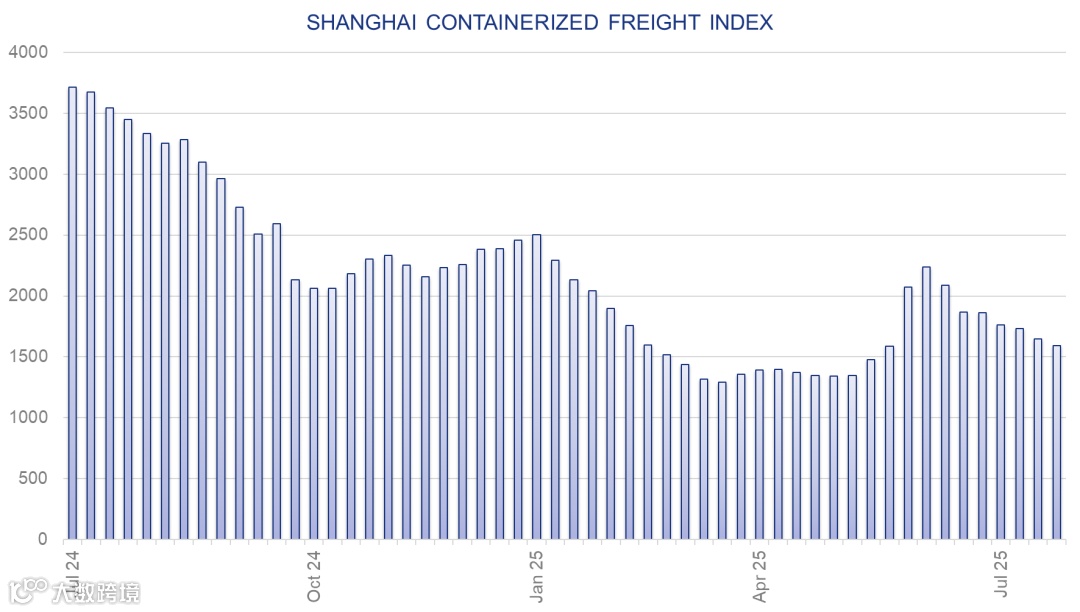
In Week 30, the Drewry World Container Index (WCI) fell by 3.3%, marking its sixth consecutive weekly decline. Rates briefly surged in May following April’s U.S. tariff announcement, peaking in early June. However, the impact was short-lived, with rates declining steadily since mid-June.
Sources:Drewry; Shanghai Shipping Exchange
Global Schedule Reliability Recovery
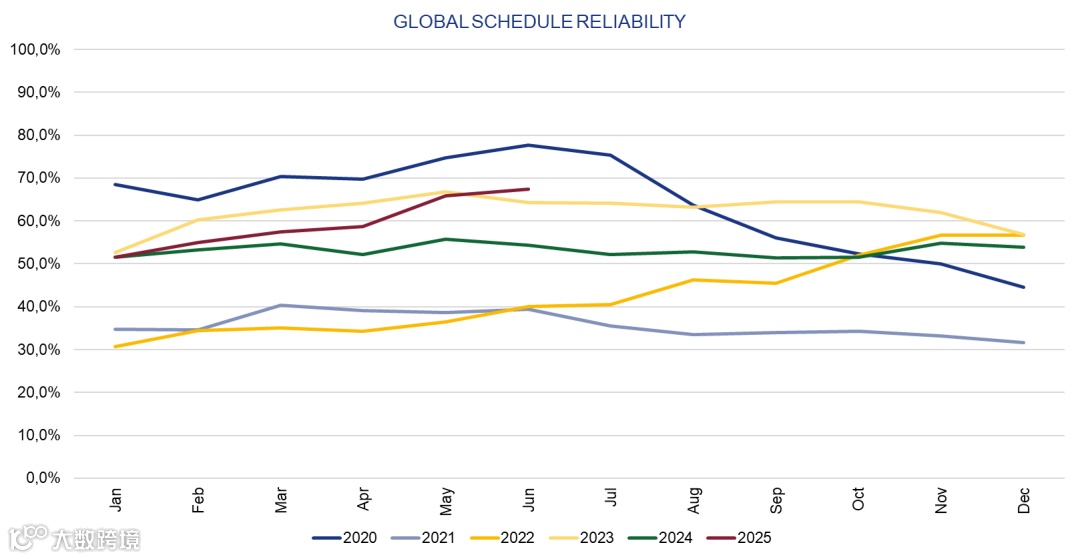
Global schedule reliability improved to 67.4% in June 2025, the highest level since November 2023, rising 1.6 percentage points month-on-month and 12.8 points year-on-year. This marks the fifth consecutive month of improvement since February.
Reliable carriers and alliances are now key differentiators as customers prioritize consistency in delivery performance.
Sources:Sea Intelligence

Air Cargo Trends
Capacity Trends
Global air cargo capacity reached 51.4 billion ACTK in June 2025, up 1.7% year-on-year but down 2.2 percentage points from May, reflecting adjustments to softer demand.
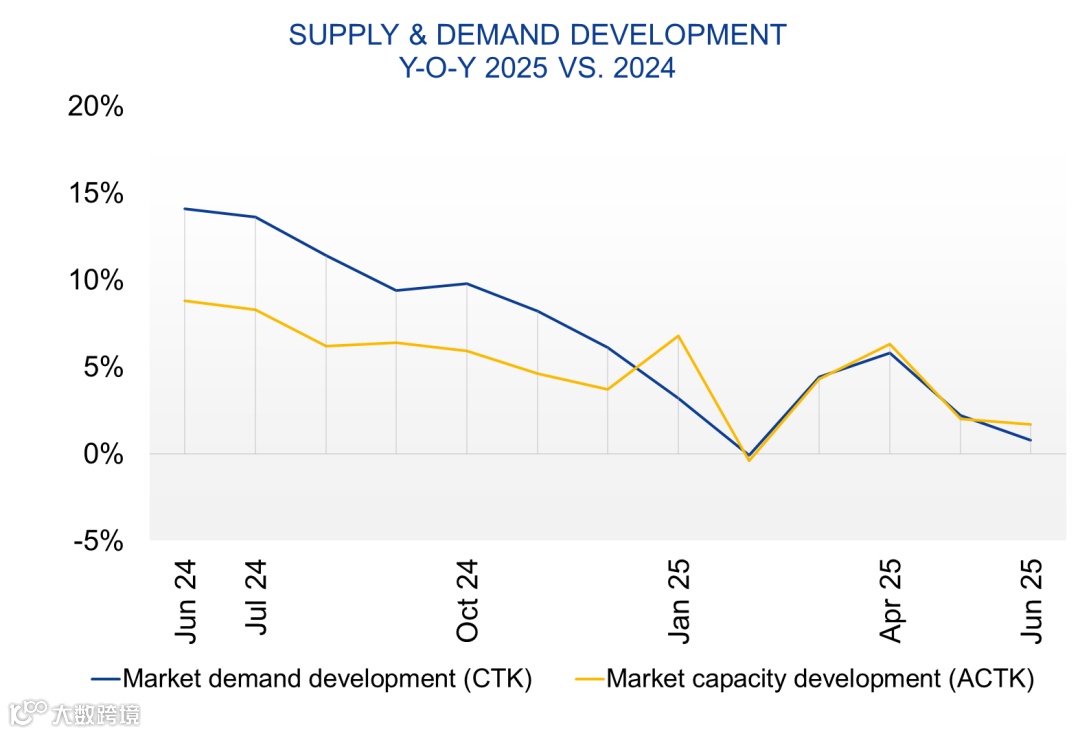
Demand growth slowed to 0.8% YoY in June, down from 2.2% in May, according to IATA. Asia-Pacific remained strong with 9.0% growth, driven by e-commerce, while North America saw a sharp 8.3% decline.
The Asia–Europe corridor emerged as the fastest-growing route, expanding 10.5% YoY due to increased Chinese exports to the EU, particularly Germany and France. Geopolitical instability in the Middle East and weak export orders point to fragile growth ahead.
Overall, demand remains uneven and vulnerable to external shocks, despite strength in time-sensitive sectors.
Pricing and Rate Development
Air cargo rates declined 2.5% year-on-year in June 2025 but rose 0.9% month-on-month, according to IATA. Rates on Asia–Europe routes saw gains due to tariff-related front-loading of shipments, while Asia–North America rates weakened amid low demand.
Shipper uncertainty around U.S. tariff timelines led to earlier shipments in Q2. Many continue to favor ocean freight due to scheduling concerns. With ample capacity and unstable demand, air rates are likely to remain under pressure into Q4 2025.
Updates on Key Freight Routes
Asia–Europe: Volumes grew 10.5% YoY, driven by exporters shifting away from the U.S. market due to tariffs, with strong inflows into Germany and France.
Asia–North America: Declined 4.7% YoY for the second consecutive month.
Southeast Asia–U.S.: Volumes rebounded in mid-July, though this appears to be a correction from prior weakness rather than a tariff-driven surge.
Sources:IATA, Air Cargo News, DVZ
World Economic Outlook
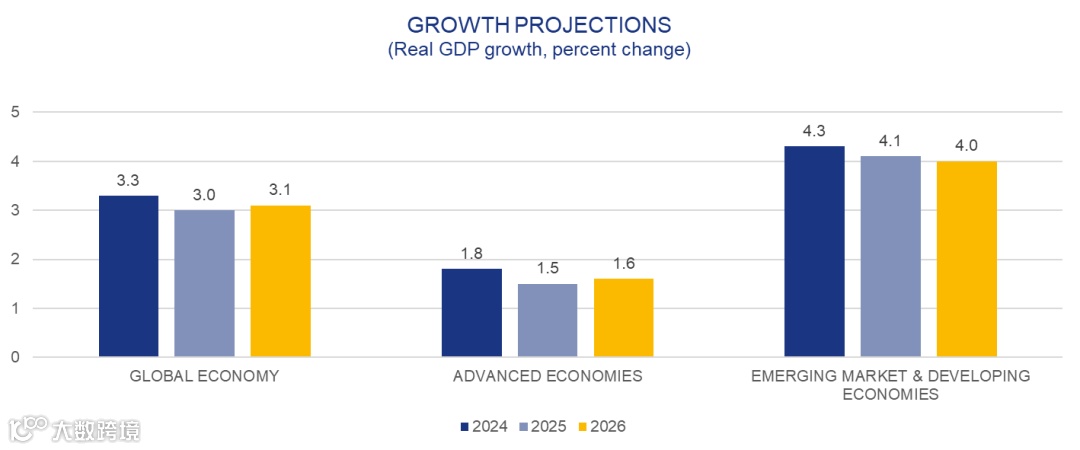
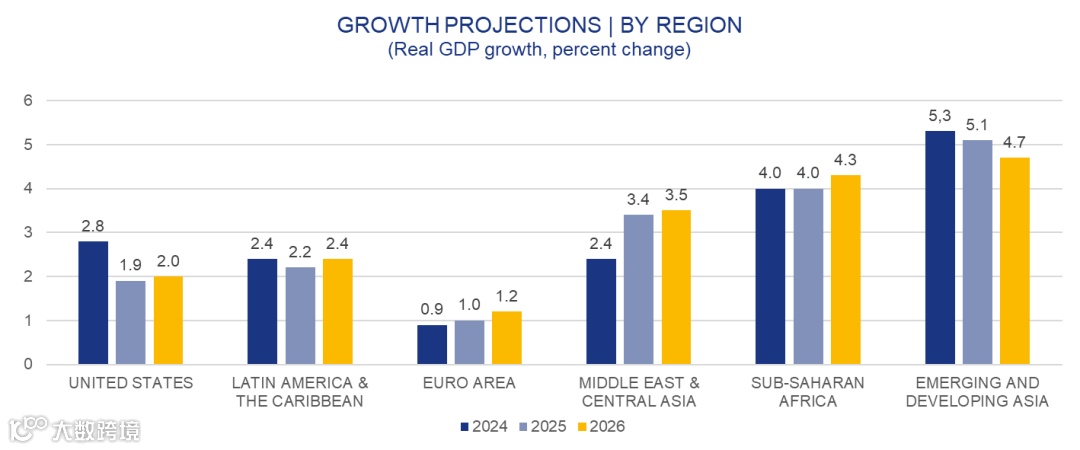
Global economic growth is projected at 3.0% in 2025 and 3.1% in 2026, slightly above earlier estimates.
Advanced economies are expected to grow by 1.5% in 2025, with the U.S. at 1.9% and the euro area reaching 1.0%. Emerging markets and developing economies are forecast to grow at 4.1%, with China’s growth revised upward to 4.8%.
Global inflation is expected to ease to 4.2% in 2025 and 3.6% in 2026. While inflation remains elevated in the U.S., it is more contained in other major economies. Regional disparities and ongoing risks continue to shape the outlook.
The IMF emphasizes reducing trade uncertainty through transparent and cooperative frameworks. Countries are encouraged to modernize trade rules, avoid broad subsidies, and address root causes of trade tensions. Targeted industrial policies and international collaboration—particularly in taxation, trade, and technology—are critical for building a stable and resilient global economy.
Sources:International Monetary Fund (IMF)
Tariff Tracker
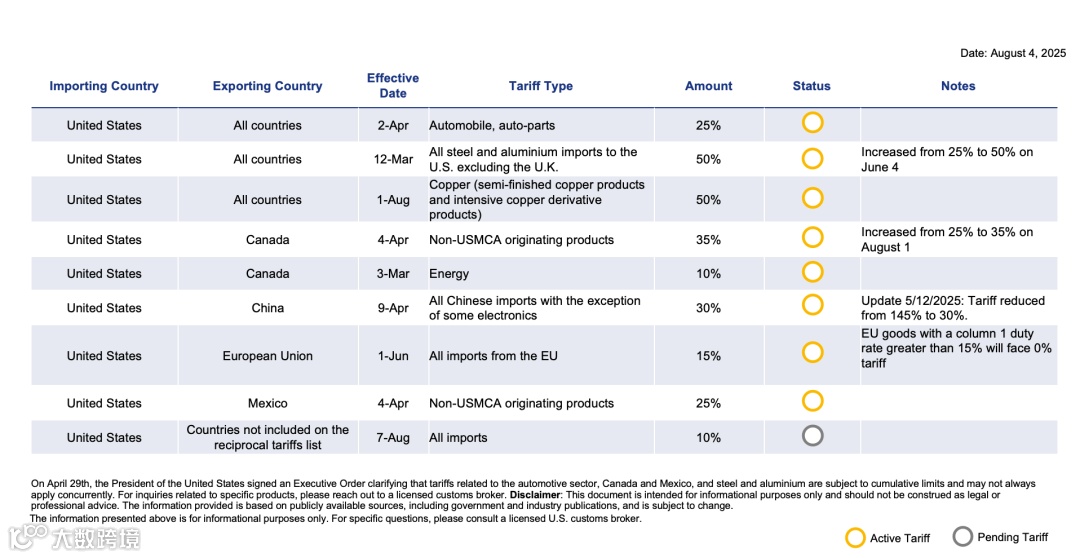
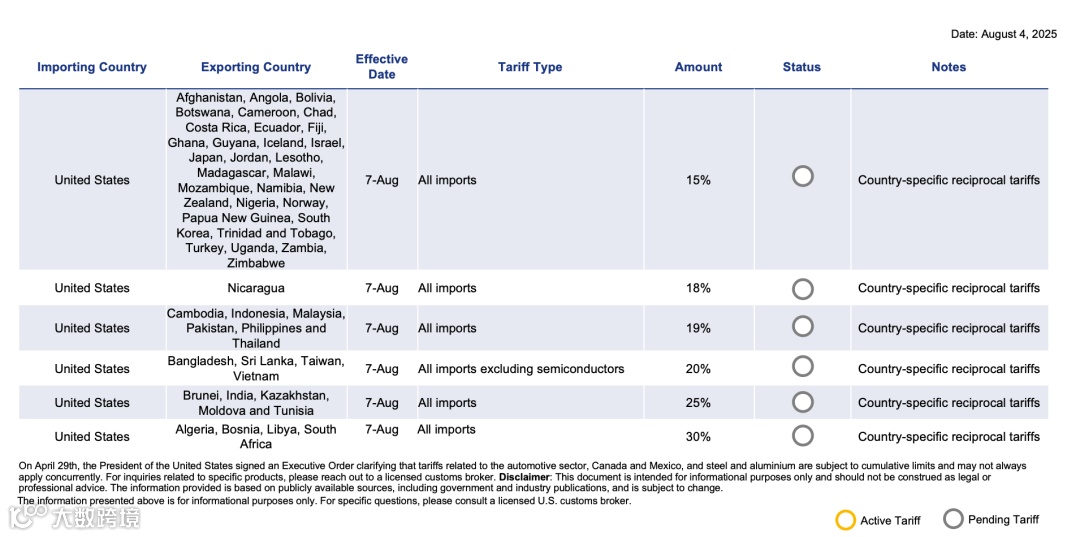
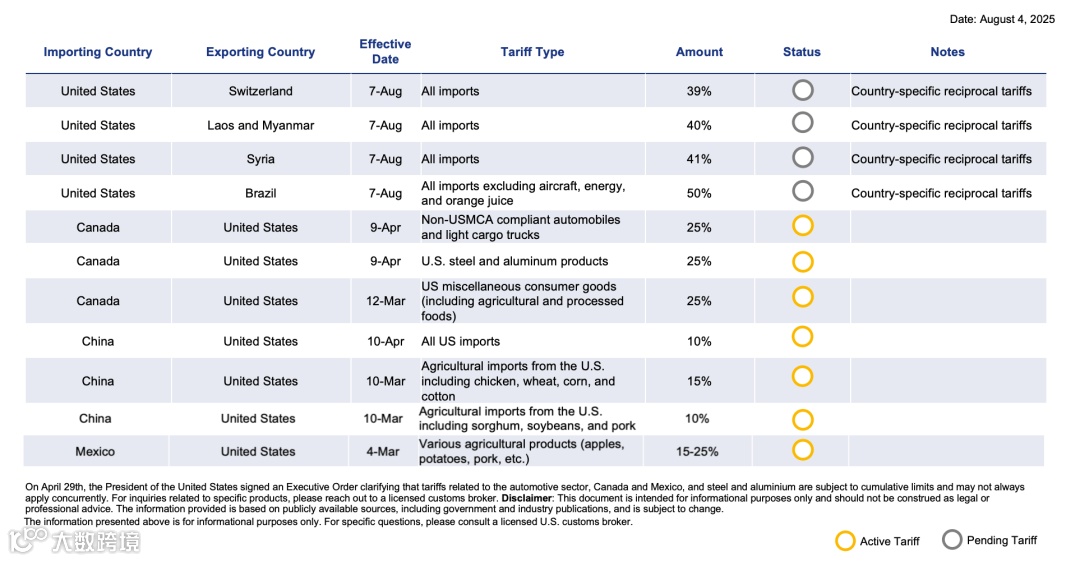
On April 29, 2025, the U.S. President signed an executive order outlining cumulative restrictions on tariffs related to the automotive industry, Canada and Mexico, and steel and aluminum. These measures may not be applied simultaneously.
Disclaimer: This document is for reference only and should not be regarded as legal or professional advice. Information is based on publicly available sources and may change. For specific guidance, consult a licensed U.S. customs broker.