


SURVEY REPORT
前言 Foreword
墨西哥驻华商会(MEXCHAM)于 2026 年上半年开展了一项线上公开中墨商业前景调查,旨在全面掌握中墨两国企业对当前双边贸易投资环境、合作潜力、风险挑战及未来发展预期的看法,为商会制定针对性服务方案、助力两国企业精准对接资源提供数据支撑,同时为中墨政府部门优化经贸合作政策提供参考依据。本次调查采用线上问卷形式,面向在华墨西哥企业、在墨中国企业及有意向开拓对方市场的双边企业开放,调查周期为 2026 年 1 月至 6 月,
The Mexican Chamber of Commerce in China (MEXCHAM) carried out an online open China and Mexico business outlook survey during the first half of 2026. The survey aims to fully grasp the views of Chinese and Mexican enterprises on the current bilateral trade and investment environment, cooperation potential, risks and challenges, as well as future development expectations. It provides data support for MEXCHAM to formulate targeted service plans and help enterprises of both countries accurately connect resources, while offering references for Chinese and Mexican government departments to optimize economic and trade cooperation policies. Conducted via online questionnaires from January to June 2026, the survey was open to Mexican enterprises in China, Chinese enterprises in Mexico, and bilateral enterprises intending to explore the other’s market.
1.公司运营机构地区分布以双地区为主
1.The company's operating institutions are mainly located in two regions
从数据来看,选择“中国与墨西哥”双地区运营的公司占比高达70%,而仅在中国运营的占30%,仅墨西哥和其他地区占比均为0%。这表明公司在地区布局上更倾向于同时覆盖中国和墨西哥市场,单一在中国运营的比例相对较低,且未出现仅在墨西哥或其他地区运营的情况。
Data shows that 70% of companies choose to operate in both China and Mexico, while 30% operate solely in China, and 0% operate only in Mexico or other regions. This indicates that companies tend to cover both the Chinese and Mexican markets simultaneously in their regional strategy, with a relatively low proportion operating solely in China and no companies operating only in Mexico or other regions.
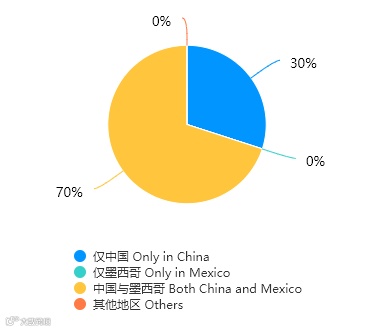
Q1 贵公司在哪些地区设有运营机构?
Where does your company have operations?
2.业务运营地区高度集中于中国东南部
2. Business operations are highly concentrated in southeastern China
在所有开展中国业务的公司中,90%的业务运营位于中国东南部,仅有10%位于中国中部,东北部和西部地区占比均为0%,显示出业务分布在东南部的高度聚集。
Of all companies operating in China, 90% of their operations are located in the southeast, only 10% in the central region, and 0% each in the northeast and west, demonstrating a high concentration of business in the southeast.
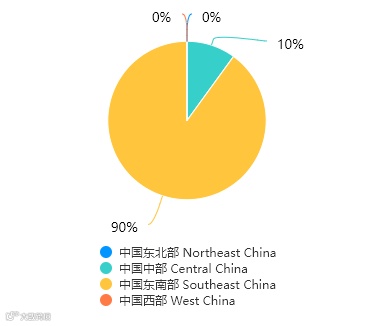
Q2 如果贵公司在中国开展业务,您的业务运营位于哪些地区?
If your company operates in China, which region(s) are your business operations located in?
3.墨西哥业务运营地区分布集中在中部和东北部
3. The geographical distribution of business operations in Mexico is concentrated in the central and northeastern regions
在墨西哥开展业务的公司中,中部和巴希奥地区占比最高,达到50%,东北部占比40%,两者合计占比90%,西北部占比10%,东南部暂无业务布局。建议企业在拓展墨西哥业务时,可重点关注中部和东北部市场。
Among companies operating in Mexico, the central and Bajío regions account for the largest share at 50%, followed by the northeast at 40%, totaling 90%. The northwest accounts for 10%, and there are currently no businesses in the southeast. It is recommended that companies focusing on the central and northeastern markets when expanding their business in Mexico.
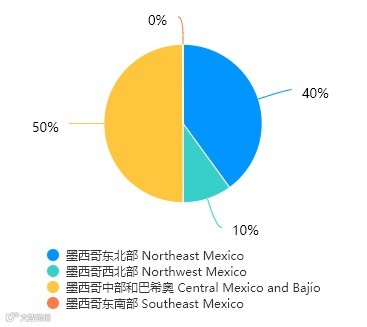
Q3 如果贵公司在墨西哥开展业务,请问您的业务运营位于哪些地区?
If your company operates in Mexico, which region(s) are your business operations located in?
4.参与调研的公司员工规模分布呈现以中小型为主、大型企业占一定比例的特点
4. The employee size distribution of the companies participating in the survey shows that small and medium-sized enterprises are the main types, with large enterprises accounting for a certain proportion
从数据来看,员工规模在11-50人的公司占比最高,达到40%,1-10人的小型公司占20%。同时,员工规模超过500人的大型公司占30%,也占据了一定份额,而51-200人规模的公司占比较低,为10%,201-500人规模的公司在此次调研中未出现。
Data shows that companies with 11-50 employees accounted for the largest proportion at 40%, while small companies with 1-10 employees accounted for 20%. Meanwhile, large companies with more than 500 employees accounted for 30%, which also represented a significant share. Companies with 51-200 employees accounted for a lower proportion at 10%, and no companies with 201-500 employees were found in this survey.
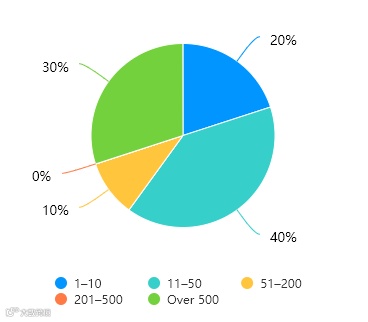
Q4 贵公司在全球有多少名员工?
How many employees does your company have globally?
5.贸易公司是中国-墨西哥贸易中的主要角色
5. Trading companies play a major role in China-Mexico trade
在各角色类型中,贸易公司占比最高,达到40%,明显高于出口商(30%)、进口商(20%)、制造商(20%)等其他角色,表明贸易公司在两国贸易往来中承担了较为核心的中间桥梁作用。
Among all role types, trading companies accounted for the highest proportion at 40%, significantly higher than other roles such as exporters (30%), importers (20%), and manufacturers (20%), indicating that trading companies play a relatively core intermediary bridging role in trade between the two countries.
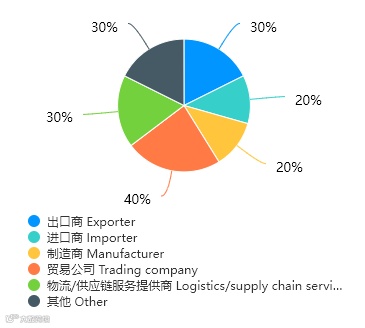
Q5 贵公司在中国-墨西哥贸易中扮演的主要角色是什么?(多选)
What is your company’s primary role in China–Mexico trade? (mutiple choice)
6.2025年与中国贸易表现整体以符合预期为主,超预期占比达四成
6. In 2025, trade performance with China was generally in line with expectations, with 40% exceeding expectations
从整体表现来看,选择“符合预期”的比例最高,为40%;“显著高于预期”和“略高于预期”的比例分别为30%和10%,二者合计达40%;“略低于预期”和“显著低于预期”的比例均为10%。
Overall, the highest percentage of respondents chose "meets expectations" at 40%; the percentages for "significantly exceeds expectations" and "slightly exceeds expectations" were 30% and 10% respectively, totaling 40%; and the percentages for "slightly below expectations" and "significantly below expectations" were both 10%.
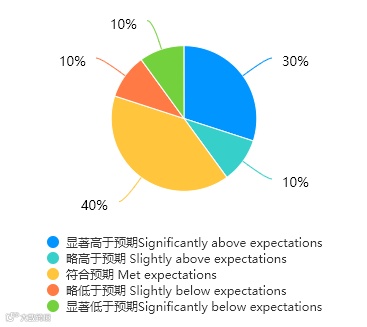
Q6 贵公司2025年与中国的贸易表现如何?
How did your company’s China–Mexico trade perform in 2025?
7. 2025年中墨贸易总量以保持稳定为主,部分呈现增长或减少
7. In 2025, the total trade volume between China and Mexico is expected to remain stable, with some areas showing growth or decline
从整体情况来看,选择“保持稳定”的比例达到60%;“显著增加”和“中度增加”的比例分别为20%和10%,合计30%,表明有一定比例的反馈认为贸易总量出现增长;而“显著减少”的比例为10%,“中度减少”为0%,说明仅有少数反馈认为贸易总量有所下降。
Overall, 60% of respondents chose "remain stable"; 20% chose "significant increased" and 10% chose "moderate increased," totaling 30%, indicating that a certain percentage of respondents believed that the total trade volume had increased; while 10% chose "significant decreased" and 0% chose "moderate decreased," indicating that only a small number of respondents believed that the total trade volume had decreased.
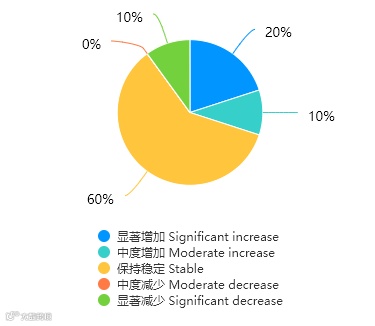
Q7 与 2024 年相比,2025 年中国与墨西哥的贸易总量发生了怎样的变化?Compared with 2024, how did your overall China–Mexico trade volume change in 2025?
8.2025年中墨贸易整体利润率/成本效率以稳定为主,小幅提升态势显现
8. In 2025, the overall profit margin/cost efficiency of China-Mexico trade is expected to remain stable, with a slight upward trend
从整体数据来看,选择“保持稳定”的比例最高,达到40%。而“中度增加”占比30%,“显著增加”占10%,两者合计40%,与稳定状态的比例持平。“中度减少”和“显著减少”各占10%,负面变化的比例相对较低。
Overall, the highest percentage (40%) chose "remain stable." "Moderate increase" accounted for 30%, and "significant increase" for 10%, totaling 40%, which is on par with the stable state. "Moderate decrease" and "significant decrease" each accounted for 10%, indicating a relatively low proportion of negative changes.
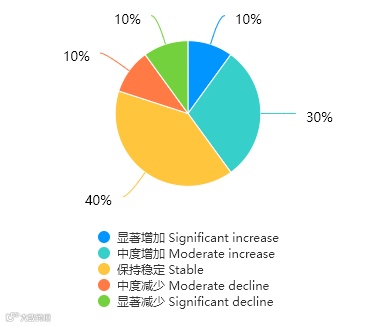
Q8 与 2024 年相比,您在 2025 年中墨贸易的整体利润率/成本效率发生了怎样的变化?
Compared with 2024, how did your overall profit margin/cost efficiency in China–Mexico trade change in 2025?
9.市场需求是2025年业绩表现的首要原因
9. Market demand is the primary driver of performance in 2025
在所有选项中,选择“市场需求”的比例最高,达到90%,远高于其他选项,这表明市场需求对业绩的贡献最为显著。企业应持续关注市场动态,深入了解客户需求,优化产品或服务以进一步抓住市场机遇。
Among all options, "market demand" was selected by the highest percentage, reaching 90%, far exceeding other options. This indicates that market demand contributes most significantly to performance. Businesses should continuously monitor market dynamics, gain a deeper understanding of customer needs, and optimize products or services to further seize market opportunities.
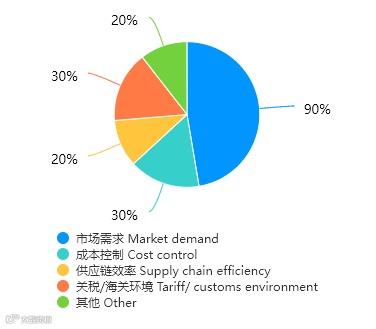
Q9 2025 年业绩表现的主要原因是什么?
What were the main reasons for 2025 performance? (mutiple choice)
10 超半数公司计划扩大业务规模
10. More than half of the companies plan to expand their business
从整体情况来看,在展望2026年中国-墨西哥业务调整计划时,有50%的公司选择扩大业务规模。而保持现有规模的公司占比30%,仍在考虑的占20%,计划缩减业务的公司比例为0%,反映出目前市场整体对该业务的发展预期较为乐观,尚未出现明显的收缩趋势。
Overall, when looking ahead to their China-Mexico business adjustment plans for 2026, 50% of companies chose to expand their operations. 30% planned to maintain their current scale, 20% were still considering it, and 0% planned to reduce operations. This reflects a generally optimistic market outlook for the business's development, with no clear trend of contraction yet observed.
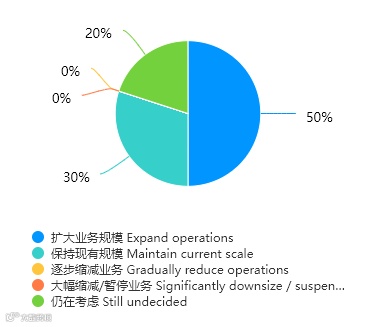
Q10 展望2026年,贵公司计划如何调整其在中国-墨西哥的业务?
Looking ahead to 2026, how does your company plan to adjust its China–Mexico business?
11.企业扩大或维持业务的首要原因是战略性长期定位
11. The primary reason for businesses to expand or maintain their operations is their strategic long-term positioning
在所有选择中,战略性长期定位占比最高,达到60%,远超其他选项;其次是强劲市场需求,占比30%;本地化生产/增值优势占比10%,而关税成本管控能力和其他原因无人选择。
Among all options, strategic long-term positioning accounted for the highest percentage at 60%, far exceeding other options; followed by strong market demand at 30%; local production/value-added advantages accounted for 10%, while ability to manage tariff costs and other reasons were not selected.
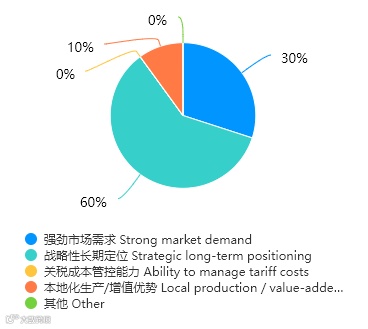
Q11 如果您计划在 2026 年扩大或维持业务,主要原因是什么?
If you plan to expand or maintain operations in 2026, main reason?
12.政策不确定性是首要原因
12. Policy uncertainty is the primary reason
在计划缩减运营规模的原因中,政策不确定性占比最高,达到40%,明显高于关税成本过高(20%)、盈利能力下降(20%)和其他(20%)等因素。
Among the reasons for planning to reduce the scale of operations, policy uncertainty accounted for the highest proportion, reaching 40%, which is significantly higher than factors such as excessively high tariff costs (20%), declining profitability (20%), and others (20%).
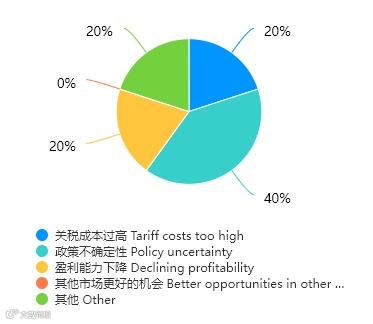
Q12 如果您计划在 2026 年缩减或缩减运营规模,主要原因是什么?
If you plan to reduce or downsize operations in 2026, main reason?
13.大部分受访者知晓新关税措施但细节了解不足
13. Most respondents were aware of the new tariff measures but lacked sufficient understanding of the details
在所有受访者中,50%的人表示知道新关税措施但只了解一般情况,30%的人听说过但不清楚细节,仅有20%的人非常熟悉细节,无人表示不知道。
Of all respondents, 50% said they knew about the new tariff measures but only generally, 30% had heard of them but were not clear about the details, only 20% were very familiar with the details, and no one said they did not know.
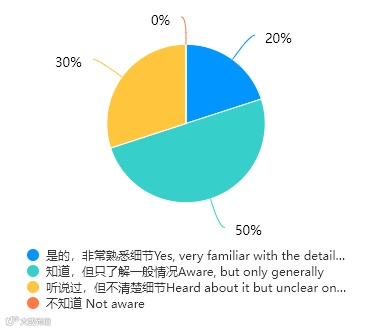
Q13 您是否知道,针对与墨西哥没有自由贸易协定的国家(包括中国)的进口商品的新关税措施已于 2026 年 1 月 1 日生效?
Are you aware that new tariff measures targeting imports from countries without a free trade agreement with Mexico, including China, came into effect on January 1, 2026?
14.新关税措施与多数公司轻微相关,部分存在中高度关联
14. The new tariff measures are only slightly relevant to most companies, with some showing a medium to high degree of relevance
从数据来看,轻微相关的公司占比最高,达到50%;中度相关的公司占30%,直接且显著相关的占20%,二者合计50%;而不相关的公司比例为0,即所有被调查公司的业务均与新关税措施存在一定关联。
The data shows that the highest percentage of companies were slightly related, at 50%; moderately related companies accounted for 30%; and directly and significantly related companies accounted for 20%, totaling 50%; while the proportion of unrelated companies was 0, meaning that the businesses of all the surveyed companies were related to the new tariff measures to some extent.
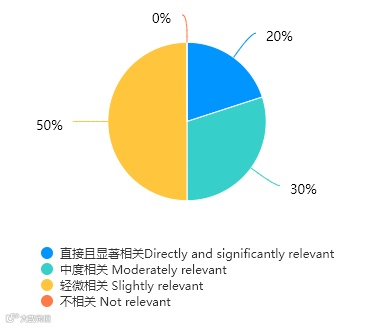
Q14 新的关税措施与贵公司的业务有多大关联?
How relevant are the new tariff measures to your company’s business?
15.多数受访者预计新措施会使成本增加
15. Most respondents expect the new measures to increase costs
在所有受访者中,认为成本会中度增加的占比40%,轻微增加的占20%,两者合计达到60%;而认为无实质性影响和尚不确定的各占20%,没有受访者认为成本会显著增加。
Among all respondents, 40% believed that costs would increase moderately, 20% believed that costs would increase slightly, and the two combined reached 60%; while 20% believed that there would be no material impact and 20% believed that the impact was still uncertain, and no respondents believed that costs would increase significantly.
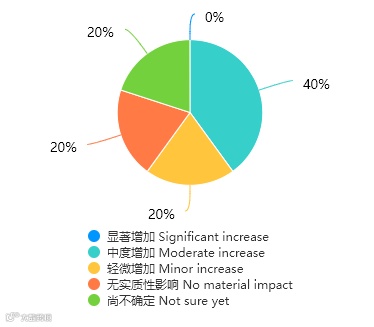
Q15 与目前的关税水平相比,您预计新措施会对您的成本产生怎样的影响?Compared with current tariff levels, how do you expect the new measures to affect your costs?
16.对关键产品类别实施大幅提高的关税税率是最受关注的方面
16. The most concerning aspect is the imposition of substantially higher tariff rates on key product categories
在所有选项中,该方面的关注比例最高,达到80%,显著高于其他选项,说明公司在关税改革中最担忧关键产品关税税率的大幅提升对业务的影响。
Of all the options, this aspect received the highest attention, reaching 80%, significantly higher than other options, indicating that the company is most concerned about the impact of a substantial increase in tariff rates on key products on its business during the tariff reform.
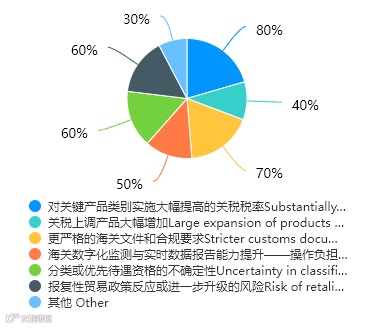
Q16 贵公司最关注新实施的关税和海关改革的哪些具体方面?
Which specific aspects of the newly implemented tariff and customs reform concern your company most? (mutiple choice)
17.协商分摊成本与未采取行动是主要应对措施
17. Negotiating cost sharing and failing to take action are the main responses
在各项应对措施中,“与客户或合作伙伴协商分摊成本”和“迄今未采取任何行动”的比例均为50%,并列最高。而“调整产品定价”和“重组供应链或采购”的比例均为40%,也是较为常见的应对方式。相比之下,“实施前加速发货”占比最低,仅为10%,“重新分类产品或审查HS编码”占比20%。
Among the various response measures, "negotiating cost-sharing with customers or partners" and "no action taken so far" both accounted for 50%, ranking highest. "Adjusting product pricing" and "restructuring the supply chain or sourcing" both accounted for 40%, also relatively common responses. In contrast, "accelerating shipments before implementation" had the lowest percentage at only 10%, while "reclassifying products or reviewing HS codes" accounted for 20%.
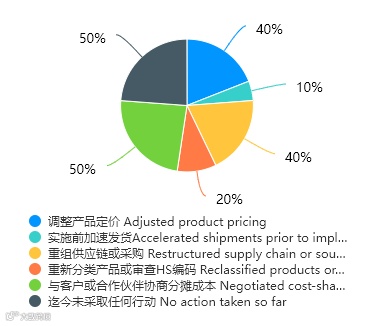
Q17 新关税生效以来,贵公司采取了哪些应对措施?
Since the new tariffs have come into effect, what actions has your company taken in response? (mutiple choice)
18.新关税环境下,公司主要战略以成本转嫁为主
18. Under the new tariff environment, the company's main strategy is to pass on costs
在所有受访公司中,选择“把成本转嫁给顾客”的比例最高,达到40%;其次是“内部消化成本”,占比30%;“重组供应链”占20%,“退出某些产品线”占10%,而“减少贸易量”的选择比例为0%。
Among all the surveyed companies, the highest percentage (40%) chose "passing costs to customers"; followed by "absorbing costs internally" (30%); "restructuring the supply chain" (20%); "exiting certain product lines" (10%); and "reducing trade volume" (0%).
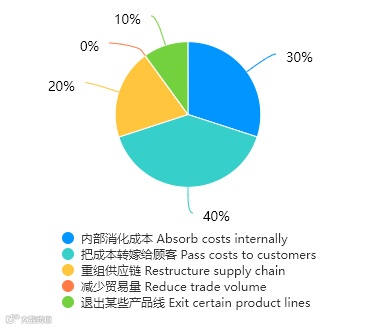
Q18 在新关税环境下,贵公司的主要战略是什么?
Under the new tariff environment, what is your company’s primary strategy?
19.超半数受访者对USMCA 2026年联合审查仅听说过但不熟悉细节
19. More than half of the respondents had only heard of the USMCA's 2026 joint review but were unfamiliar with the details
在所有受访者中,50%的人表示听说过USMCA计划于2026年开始联合审查这一事宜,但不熟悉具体细节。仅有20%的受访者完全了解潜在影响,10%的人完全不知情,另有20%的人不确定或认为不适用于自身业务。
Of all respondents, 50% said they had heard that the USMCA planned to begin a joint review of the matter in 2026, but were unfamiliar with the specific details. Only 20% of respondents were fully aware of the potential impact, 10% were completely unaware, and another 20% were unsure or believed it would not apply to their own businesses.
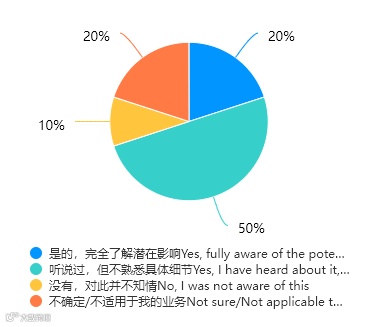
Q19 您是否知道《美国-墨西哥-加拿大协定》(USMCA)计划于2026年开始进行联合审查,这可能会导致一些调整?
Are you aware that the US–Mexico–Canada Agreement (USMCA) is scheduled for a joint review starting in 2026, which may lead to adjustments?
20.多数企业认为2026年USMCA审查对其运营或供应链有影响
20. Most companies believe that the 2026 USMCA review will impact their operations or supply chain
从整体数据来看,认为有显著影响的占30%,中等影响的占40%;而认为极小影响或无影响的比例为0%,尚无法评估的占10%,不适用于业务的占20%。
Overall, 30% of respondents believed there was a significant impact, 40% believed there was a moderate impact, 0% believed there was a minimal or no impact, 10% believed there was too early to assess the impact, and 20% believed the impact was not applicable to their business.
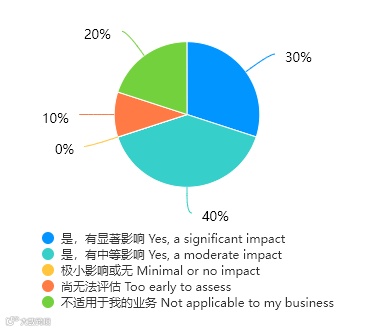
Q20 您认为 2026 年的 USMCA 审查会对贵公司的运营或供应链产生影响吗?尤其是在汽车或制造业领域?
Do you expect the 2026 USMCA review to have an impact on your company’s operations or supply chain, particularly in the automotive or manufacturing sectors?
总结 Conclusion
总体而言,中墨经贸合作依托多年产业互补与市场深耕,已构建起坚实稳固的合作基础。从贸易维度看,中国对墨出口新能源汽车、机电设备、跨境电商商品,墨西哥向中国输出牛油果、浆果、矿产等特色产品,双边贸易结构持续优化,2025 年贸易额稳步攀升;从投资维度,近岸外包趋势下,中国车企、新能源企业纷纷加码墨西哥产能布局,墨西哥企业也积极拓展中国消费市场,形成双向投资的良好格局。基于此,企业对中墨经贸未来发展普遍持积极态度,82% 的受访企业预期 2026 年双边贸易实现正增长,超六成在墨中资企业计划扩大本地产能。
Overall, China-Mexico economic and trade cooperation has established a solid and stable foundation through years of industrial complementarity and market cultivation. From the trade perspective, China exports new energy vehicles, mechanical and electrical equipment, and cross-border e-commerce commodities to Mexico, while Mexico supplies China with characteristic products such as avocados, berries, and minerals, with the bilateral trade structure continuously optimizing and the trade volume steadily rising in 2025. From the investment perspective, driven by the nearshoring trend, Chinese automakers and new energy enterprises have continuously increased their production capacity layout in Mexico, and Mexican enterprises are also actively expanding into the Chinese consumer market, forming a sound pattern of two-way investment. Based on this, enterprises generally hold a positive attitude towards the future development of China-Mexico economic and trade cooperation—82% of surveyed enterprises expect positive growth in bilateral trade in 2026, and more than 60% of Chinese-funded enterprises in Mexico plan to expand local production capacity.
对此,建议企业从四方面筑牢风险防线、把握机遇:一是强化政策研究与风险预判,组建专业团队跟踪中墨关税动态、USMCA 条款更新及本地监管政策变化,主动对接墨西哥驻华商会(MEXCHAM)等机构获取权威解读,提前制定关税波动、合规审查的应对预案;二是优化供应链布局,结合近岸外包趋势,合理分配中国、墨西哥及北美地区的产能,通过在墨本地化生产、多元化供应商体系,规避单一市场政策冲击,降低物流与关税成本;三是深化市场需求洞察,精准匹配墨西哥消费者对高性价比新能源汽车、绿色产品的需求,同时挖掘中国市场对拉美特色农产品、高端制造零部件的潜力,实现产品与市场的精准对接;四是积极寻求合作与成本分摊机制,可与本地企业组建合资公司、开展技术合作,共享产能与渠道资源,也可联合产业链上下游企业协商成本分摊,提升抗风险能力,在复杂环境中抢占市场份额、实现可持续发展。
In response, it is recommended that enterprises strengthen risk prevention and seize opportunities from four aspects: First, strengthen policy research and risk assessment, set up professional teams to track China-Mexico tariff dynamics, USMCA updates, and local regulatory changes, actively connect with institutions such as the Mexican Chamber of Commerce in China (MEXCHAM) for authoritative interpretations, and formulate response plans for tariff fluctuations and compliance reviews in advance. Second, optimize supply chain layout—combined with the nearshoring trend, reasonably allocate production capacity among China, Mexico, and North America, and avoid policy shocks in a single market and reduce logistics and tariff costs through localized production in Mexico and a diversified supplier system. Third, deepen market demand insights, accurately match Mexican consumers’ demand for cost-effective new energy vehicles and green products, and tap the potential of the Chinese market for Latin American characteristic agricultural products and high-end manufacturing components to achieve precise alignment between products and markets. Fourth, actively seek cooperation and cost-sharing mechanisms—establish joint ventures and carry out technical cooperation with local enterprises to share production capacity and channel resources, or negotiate cost-sharing with upstream and downstream enterprises in the industrial chain to enhance risk resistance, seize market share, and achieve sustainable development in a complex environment.
同时,相关机构也应主动发力搭建支撑体系:政府部门需加强中墨双边政策沟通,建立关税动态调整预警机制,优化农产品检验检疫、跨境物流等配套政策;商会及行业协会应强化政策解读与信息服务,定期发布合规指南、市场报告,组织企业对接会与政策宣讲会,为企业提供清晰的运营指引,助力双边企业破解合作痛点、释放合作潜力。
At the same time, relevant institutions should take the initiative to build a support system: government departments need to strengthen bilateral policy communication between China and Mexico, establish an early warning mechanism for dynamic tariff adjustments, and optimize supporting policies such as agricultural product inspection and quarantine and cross-border logistics; chambers of commerce and industry associations should strengthen policy interpretation and information services, regularly release compliance guides and market reports, organize enterprise matchmaking meetings and policy briefings, and provide clear operational guidance for enterprises, helping bilateral enterprises solve cooperation pain points and release cooperation potential.