



英国皇家化学会(RSC)是一个拥有175年历史的面向全球化学家的非营利会员制机构,旗下拥有43种期刊,其中很多在化学领域有很高影响力。为了进一步帮助广大读者追踪科技前沿热点,X-MOL团队与英国皇家化学会合作,推出英国皇家化学会期刊主编推荐的精彩文章快览,本期文章属纳米科技领域,英文点评来自英国皇家化学会期刊的主编。如果大家对我们的解读有更多的补充和点评,欢迎点击“阅读原文”进入网页版,在文后发表您的高见!
Chemical Science (IF: 9.144)
1. Confined-space synthesis of nanostructured anatase, directed by genetically engineered living organisms for lithium-ion batteries
Chemical Science; DOI: 10.1039/C6SC02311H
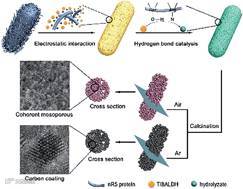
Adapted from abstract: Scientists from Wuhan University of Technology use a bioprocess-inspired approach to direct the synthesis of nanostructured anatase in a 3D-confined space, using repeating segments of silaffin displayed on Escherichia coli surfaces through genetic manipulation. Nanoparticle-assembled rod-shaped anatase was produced, showing high capacity lithium storage performance. Authors hope this approach may help broaden the scope and impact of nanosized biominerals.
摘要节选:武汉理工大学的科学家们受生物过程启发,利用基因工程所得的展示在大肠杆菌表面的silaffin重复片段,实现了纳米结构锐钛矿的三维限域空间合成。用这种方法所产生的锐钛矿呈棒状,由纳米粒子组装而成,作为锂电池电极具有很好的储锂性能。作者希望这种方法能够拓展纳米尺度生物矿物质的探索和应用。
Open Access(可免费阅读原文)
扫描或长按二维码,识别后直达原文页面

http://pubs.rsc.org/en/content/articlelanding/sc/2016/c6sc02311h#!divAbstract
2. Observing single nanoparticle events at the orifice of a nanopipet
Chemical Science; DOI: 10.1039/C6SC02241C
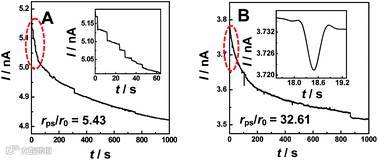
Adapted from abstract: Scientists from Beijing successfully observed single nanoparticle events at the orifice of a nanopipet by blocking the ionic current with a single nanoparticle, offering a new method for nanoparticle determination and single nanoparticle behaviour study.
摘要节选:来自中科院化学所的科学家们成功地利用单个纳米粒子对纳米管喷头的离子流的封阻效应观察到了单个纳米粒子事件,从而提供了一种新的测定和观察单个纳米粒子行为的方法。
Open Access(可免费阅读原文)
扫描或长按二维码,识别后直达原文页面

http://pubs.rsc.org/en/content/articlelanding/sc/2016/c6sc02241c#!divAbstract
Nanoscale Horizons
(IF: pending, first issue in January 2016)
1.Surface proteomics on nanoparticles, a step to simplify the rapid prototyping of nanoparticles
Nanoscale Horizons, DOI: 10.1039/C6NH00162A
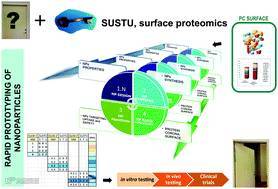
Cristobal and colleagues have developed a simple method to rapidly characterise nanoparticles for biomedical applications. The method, termed SUSTU (surface proteomics for nanoparticle safety, targeting and uptake), has potential for integration into nanoparticle prototyping platforms to assist the development future nano-drugs and precision medicines.
Cristobal及其同事研发出了一种简单方法,可快速表征用于生物医学的纳米粒子。这种被称为SUSTU(纳米粒子安全性、靶向性和摄取的表面蛋白质组学)的技术有潜力与纳米粒子原型开发平台整合,以帮助开发未来的纳米药物和精准疗法。
扫描或长按二维码,识别后直达原文页面

http://pubs.rsc.org/en/Content/ArticleLanding/2016/NH/C6NH00162A#!divAbstract
2.Redox stimuli-responsive hollow mesoporous silica nanocarriers for targeted drug delivery in cancer therapy
Nanoscale Horizons, DOI: 10.1039/C6NH00139D
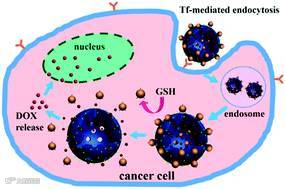
Researchers at Fudan University report a drug delivery system based on hollow mesoporous silica nanoparticles, aimed to achieve controlled drug release and specific targeting of cancer cells, thereby offering a promising platform for efficient cancer therapies.
复旦大学的科研人员报告了一种基于中空介孔硅纳米粒子的药物递送系统,旨在实现可控药物释放,以及特异性靶向癌细胞,这为更有效的治疗癌症提供了一种很有希望的新平台。
扫描或长按二维码,识别后直达原文页面

http://pubs.rsc.org/en/content/articlelanding/2016/nh/c6nh00139d#!divAbstract
3.Trapping, Manipulation, and Crystallization of Live Cells Using Magnetofluidic Tweezers
Nanoscale Horizons, DOI: 10.1039/C6NH00104A
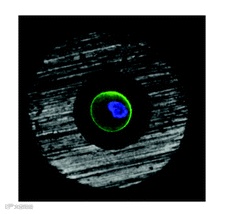
Bartosz Grzybowski and colleagues present a non-invasive, tag-free tweezing method to trap and manipulate live cells using a magnetic micropen. Their approach allows the formation of regularly shaped cell assemblies and avoids problems associated with traditional tweezing methods, such as heating and the need for magnetic tagging of cells.
Bartosz Grzybowski和同事们提出了一种利用磁性“微笔”来捕获和操控活体细胞的非侵入性、无标记镊钳法。这种方法促使规则形状的细胞群的形成,避免了诸如加热或对细胞进行磁性标记等传统镊钳法带来的问题。
扫描或长按二维码,识别后直达原文页面

http://pubs.rsc.org/en/content/articlelanding/2016/nh/c6nh00104a#!divAbstract
4.Body-centred cubic packing of spheres – The ultimate thermotropic assembly mode for highly divergent dendrons
Nanoscale Horizons, DOI: 10.1039/C6NH00155F
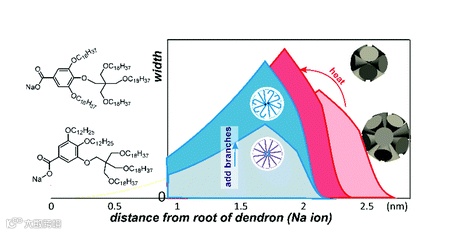
Goran Ungar and colleagues provide new fundamental insights into the relationship between the chemical structure and assembly of dendrons, with the aim to design improved encapsulation of guest molecules, such as organic light emitters, for a wide range of applications.
Goran Ungar和同事们对树枝状分子的组装与化学结构之间的关系提出了新的基本观点,有助于设计对客体分子(例如有机发光材料)具有更好包封性能的树枝状分子,使之能广泛应用。
扫描或长按二维码,识别后直达原文页面

http://pubs.rsc.org/en/content/articlelanding/2016/nh/c6nh00155f#!divAbstract

推荐阅读

点击“阅读原文”,参加讨论
