
与其他储能器件相比,微型超级电容器(MSCs)具有超长寿命、高能量密度、快速充放电等优点,在便携化器件、微机电系统、微纳机器人、物联网等领域具有巨大的应用前景。目前,MSCs的基础研究和技术开发包含两个重要方向:一是在有限占地面积下器件具备很高的能量存储能力;二是器件具有很好的集成性和功能性。这些是实现智能储能器件和微型智能系统的关键(Small Methods, 2019, 3, 1800367)。
在过去的几年中,超级电容器储能材料的性能获得了大幅提升,集成多种功能的原型器件也不断被开发出来,但是由于缺乏相应的先进集成技术,MSCs的广泛应用受到了严重制约。近日,德国开姆尼茨理工大学(Chemnitz University of Technology)和莱布尼茨固体材料研究所(Leibniz IFW Dresden)的朱峰博士、Oliver G. Schmidt院士领导的课题组发展出一类“自组装集成管状微型超级电容器”。
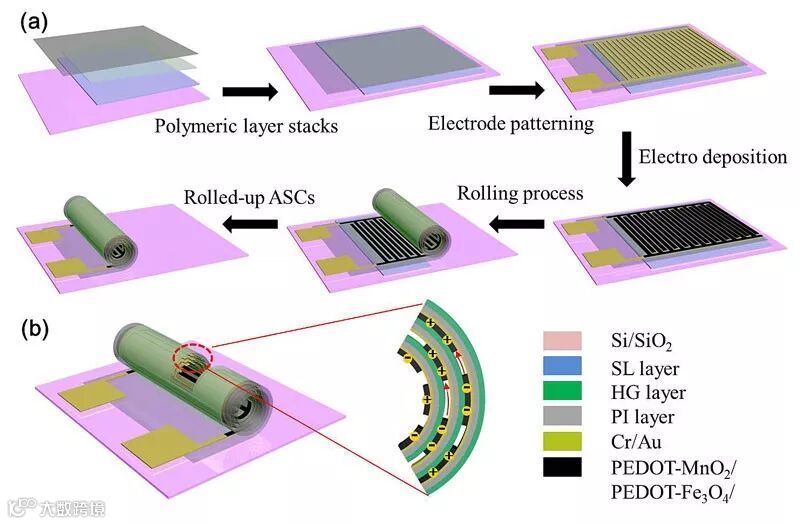
面向MSCs领域需求,研究团队结合标准的微加工技术、可形变聚合物材料技术和电化学沉积方法,突破传统MSCs的平面结构,发展出“瑞士卷(swiss roll)”构型的、“片上集成”和“自由站立”的、具有目前最小占位面积(小于2 mm2)的3D MSCs。卷曲集成后的PEDOT对称电极、PEDOT-MnO2//PEDOT-Fe3O4非对称电极等器件相对于平面型器件占位面积缩小10-100倍,单位面积器件性能提高1-2个数量级。同时,由于多重卷曲结构对电极活性层提供充分的保护并释放厚膜材料内的应力,集成器件循环性能和寿命相比于平面器件大幅提高。该类基于聚合物框架结构的MSCs表现出独特的抗外力冲击(高达30 MPa)、耐弯折、易串并联组装等特性,使得运用机器人手臂等自动化技术对基于众多功能材料的MSCs进行快速批量“摘取-放置(pick-and-place)”等工业操作成为可能,从而为宏量MSCs的平行制备、精准转移和电路集成提供了可行途径。
相关论文分别发表在ACS Nano(共同第一作者:王金辉、Vineeth Kumar Bandari)[1]和Advanced Science(共同第一作者:李飞、王金辉)[2]上,通讯作者均为朱峰博士。
1. 原文(扫描或长按二维码,识别后直达原文页面):
Self-Assembly of Integrated Tubular Microsupercapacitors with Improved Electrochemical Performance and Self-Protective Function
Jinhui Wang, Vineeth Kumar Bandari, Daniil Karnaushenko, Yang Li, Fei Li, Panpan Zhang, Stefan Baunack, Dmitriy D. Karnaushenko, Christian Becker, Maryam Faghih, Tong Kang, Shengkai Duan, Minshen Zhu, Xiaodong Zhuang, Feng Zhu*, Xinliang Feng, Oliver G. Schmidt
ACS Nano, 2019, 13, 8067-8075, DOI: 10.1021/acsnano.9b02917
2. 原文(扫描或长按二维码,识别后直达原文页面):
Self-Assembled Flexible and Integratable 3D Microtubular Asymmetric Supercapacitors
Fei Li, Jinhui Wang, Lixiang Liu, Jiang Qu, Yang Li, Vineeth Kumar Bandari, Daniil Karnaushenko, Christian Becker, Maryam Faghih, Tong Kang, Stefan Baunack, Minshen Zhu, Feng Zhu*, Oliver G. Schmidt
Adv. Sci., 2019, DOI: 10.1002/advs.201901051
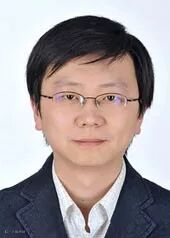
朱峰,2009年于中国科学院长春应用化学研究所获得博士学位,师从闫东航研究员。现任德国开姆尼茨理工大学和莱布尼茨固体材料研究所课题组长、PI。研究领域聚焦在由聚合物/有机/无机功能材料和应力纳米结构构成的微型器件和微机电系统,及其在显示、传感、能源、微纳机器人等领域的应用。
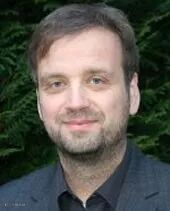
Oliver G. Schmidt is Director at the Leibniz IFW Dresden, Germany, and holds a full Professorship for Materials Systems for Nanoelectronics, and Research Center for Materials, Architectures and Integration of Nanomembranes (MAIN) at the Chemnitz University of Technology, Germany. He is Adjunct Professor for Nanophysics at the Dresden University of Technology and holds an Honorary Professorship at Fudan University in Shanghai, China. He received his Dr. rer. nat. at the TU Berlin in 1999 and spent several years leading a research group at the Max Planck Institute for Solid State Research in Stuttgart. His interdisciplinary activities bridge across several research fields, ranging from flexible electronics and microrobotics to energy storage and nanophotonics. In 2018, he received the most important research award in Germany, “Gottfried Wilhelm Leibniz-Prize”. In 2019, he was elected as an Academician of National Academy of Science and Engineering (acatech), Germany.
https://www.x-mol.com/university/faculty/69050


本文版权属于X-MOL(x-mol.com),未经许可谢绝转载!欢迎读者朋友们分享到朋友圈or微博!
长按下图识别图中二维码,轻松关注我们!
点击“阅读原文”,查看 化学 • 材料 领域所有收录期刊






 X-MOL资讯