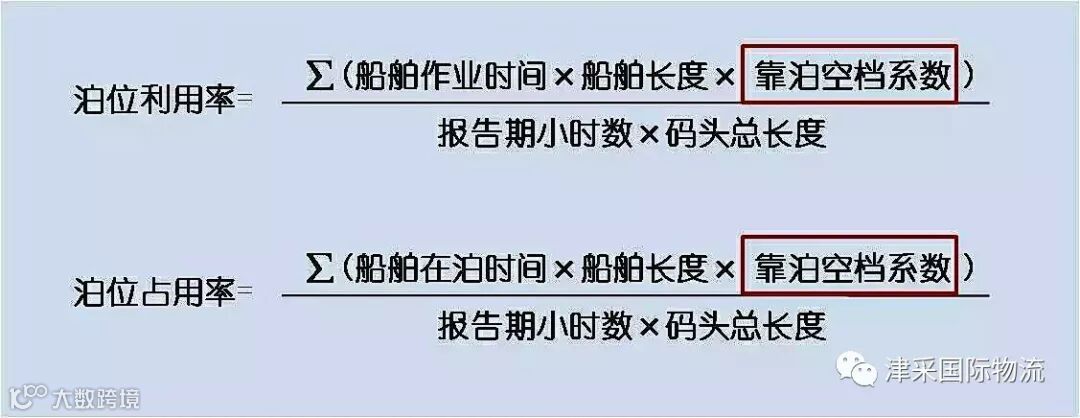
以千万级集装箱单体码头为例,讲一下非常生动易懂的“箱位”那些事。在说“箱位”之前,先来看一个小问题。下面用一个公式解释泊位利用率和泊位占用率,虽然帮大家拎出了关键点,但仍有勤奋好学的朋友不满足,问:这“靠泊空档系数”是啥意思?
Take the 10 million level single container terminal as an example to talk about the very vivid and easy to understand "bin" things. Before we say "bin", let's take a look at a small problem. Here is a formula to explain the berth utilization rate and berth occupancy rate. Although the key points are pointed out, there are still diligent and studious friends who are not satisfied. Ask: what is the meaning of "berthing gap coefficient"?
下面看一个例子:
好比你家小区的地下停车场,一般车位宽度都要比车宽一些,是为了空出车与车之间的必要的空间,以便于你的爱车在任意时间进出车位时不至于刮擦到相邻车辆。
停车场的一排排车位相当于我们的码头泊位(看下图),车位里的车相当于靠泊作业的集装箱船,而这个“靠泊空档系数”就是为了预留出船舶进出泊位的空间而设定的,一般为固定值1.1。
Here is an example:
For example, in the underground parking lot of your residential area, the width of the parking space is generally wider than that of the car, so as to free up the necessary space between the car and the car, so that your car won't scratch the adjacent vehicles when entering and leaving the parking space at any time.
The row of parking spaces in the parking lot is equivalent to our wharf berth (see the figure below), and the cars in the parking space are equivalent to the container ships berthing, and this "berthing gap coefficient" is set to reserve the space for ships to enter and leave the berth, generally a fixed value of 1.1.
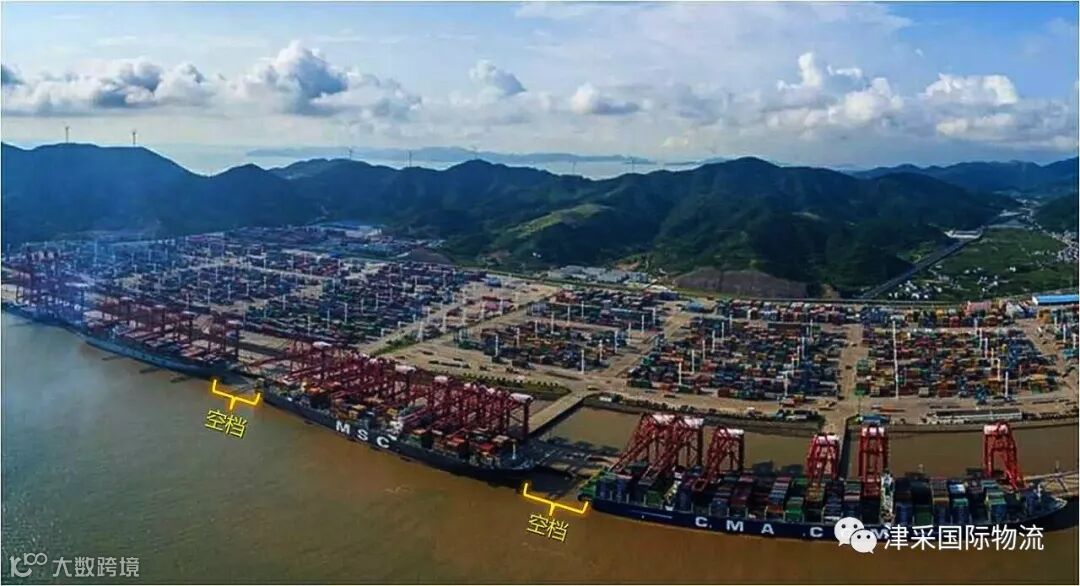
因为这个空档占用是船舶靠泊作业的必要条件,所以在计算泊位利用率和占用率的时候必须要加上它。现在你再回头看看上面那个计算公式,是不是更好理解了呢?
好啦,下面言归正传,进入正题~
身在“千万级”单体集装箱码头,你一定见多了这样的场面:
Because this gap occupancy is a necessary condition for ship berthing operation, it must be added in the calculation of berth utilization and occupancy. Now, if you look back at the above formula, do you understand it better?
Now, let's get back to the point~
In the "ten million" single container terminal, you must see more scenes like this:

还有这样的:
And so on:
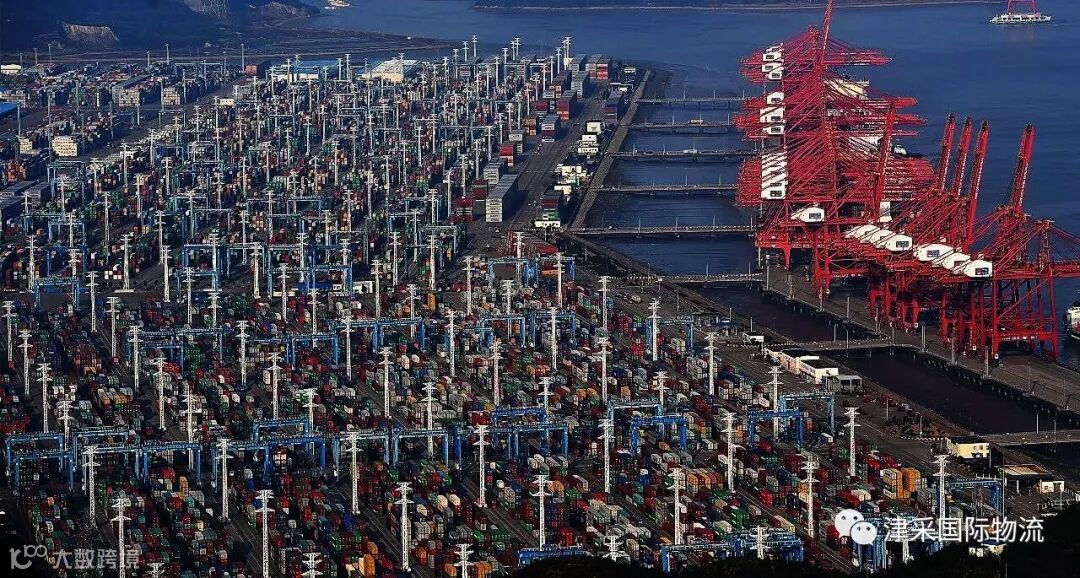
感叹壮观之余,是不是还有密密麻麻?你知道到底有多少箱子在大北三堆场吗?小编给你几个数字:
大北三堆场面积183.7万平方米,可堆箱23万TEU,常年堆箱量在15万TEU左右。如果这些箱子首尾相连排起来你在箱顶上开车,得开9个钟头左右!这么多积木一样的集装箱之所以能如此整齐,是因为有一套编码系统让这些箱子“安家落户”。
也可以这样说,在集装箱码头的堆场里,每一个箱子都有一个属于自己的ID,这就是“箱位”。
Exclamation spectacular, is there dense? Do you know how many boxes are in the third yard of Dabei? Here are some numbers:
Dabei three storage yard covers an area of 1.837 million square meters, can stack 230000 TEU, and the annual stacking volume is about 150000 TEU. If these boxes line up end to end, you have to drive on top of the box for about 9 hours! The reason why so many building block like containers can be so neat is that there is a coding system to "settle down" these boxes.
It can also be said that in the yard of the container terminal, each box has its own ID, which is "bin".
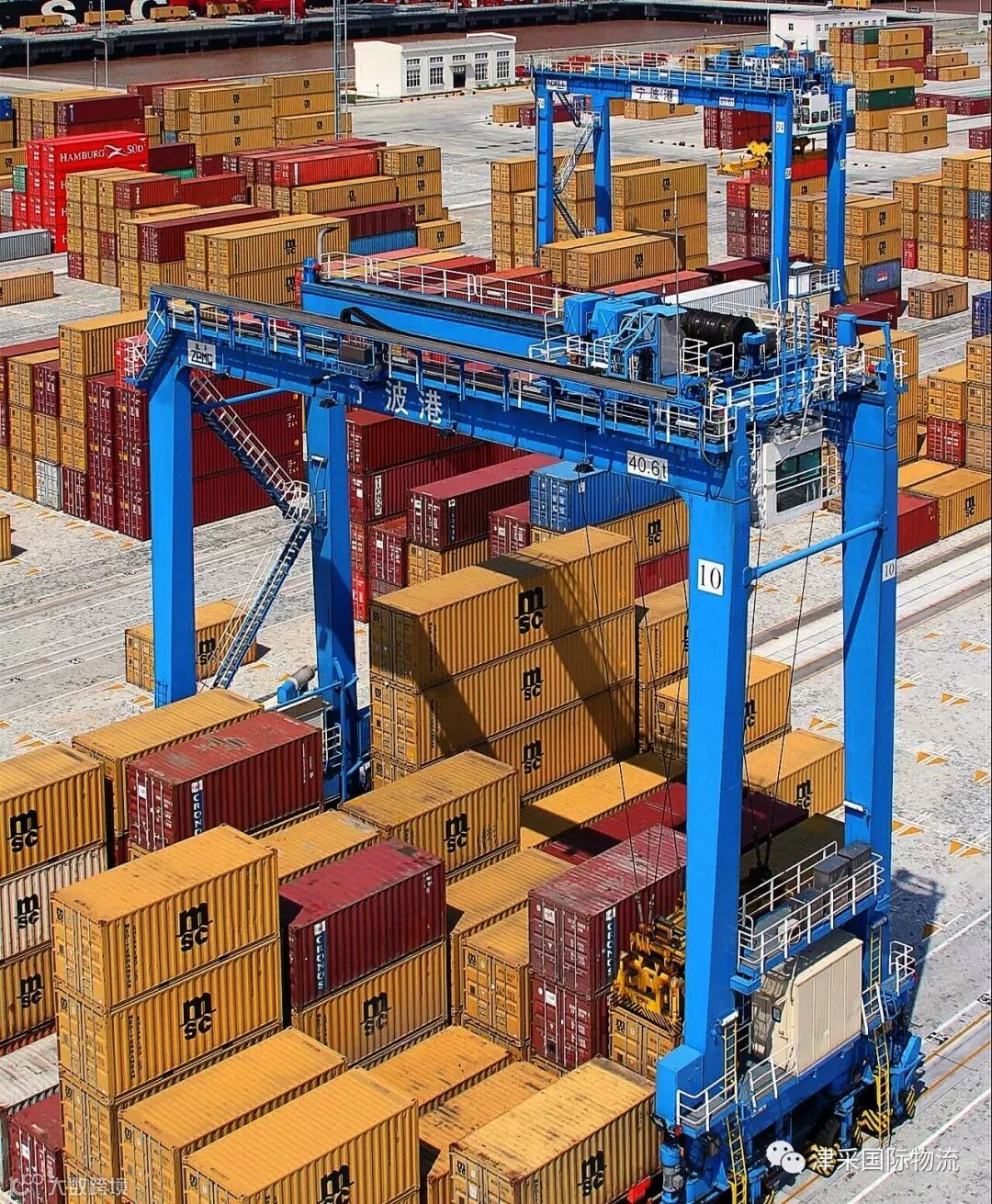
我们的控制员和龙门吊司机就是凭借这个“ID”,才能在成千上万的箱堆里精准定位某一个箱子,并进行指挥和吊装的。
如果你还是觉得似懂非懂,那小编就分5个步骤帮你把大象装进冰箱,看好咯~
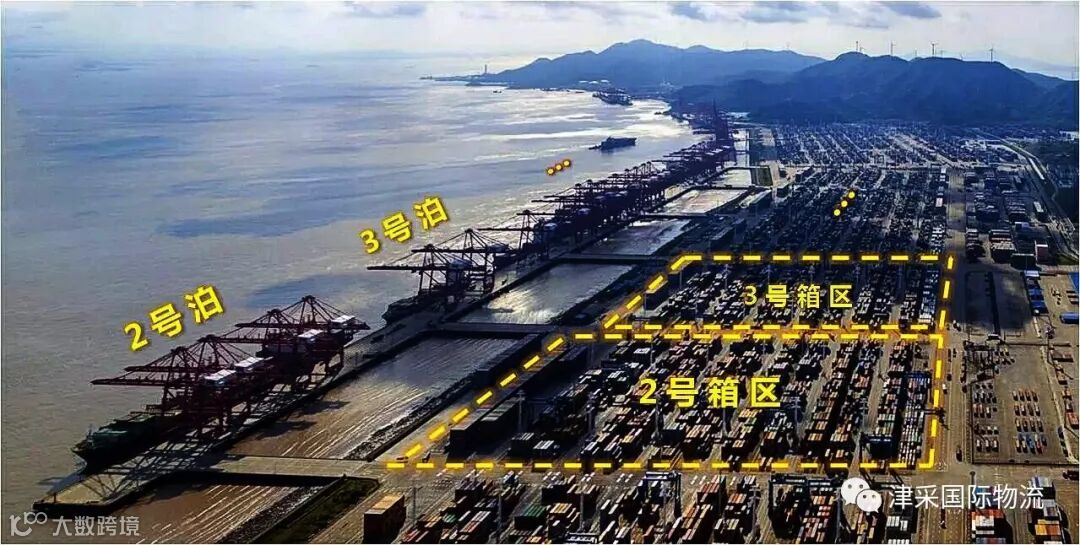
第一步,整个堆场,按“区”划分
按照泊位顺序,每个泊位对应一个区。如1号泊位对应1区,2号泊位对应2区……,放个图:
With this "Id", our controllers and gantry crane drivers can precisely locate a certain box in thousands of boxes and carry out command and hoisting.
If you still think you don't understand, the editor will help you put the elephant in the fridge in five steps. Watch it~
The first step is to divide the whole storage yard into "areas"
According to the berth sequence, each berth corresponds to one area. For example, berth 1 corresponds to zone 1, and berth 2 corresponds to zone 2 , put a picture:
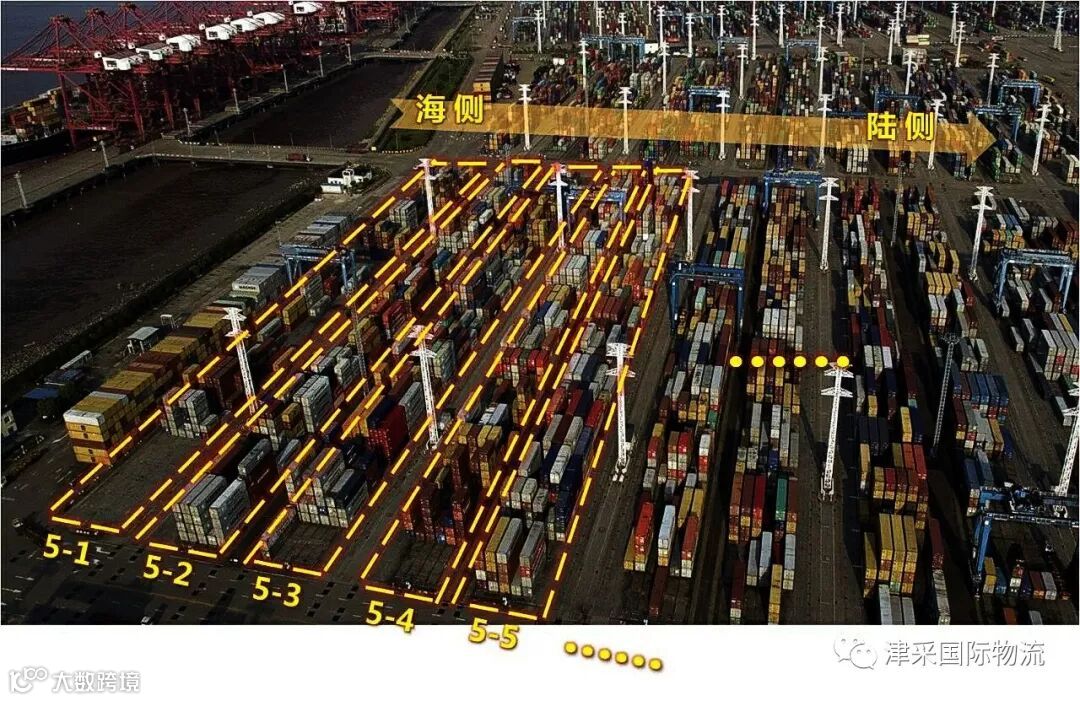
第二步,每个区又划分为“块”
如第5区,按照海侧到陆侧的顺序,分别为5-1、5-2、……,如果数到第10块了还没完,那就用5-A、5-B、……
The second step is to divide each area into "blocks"
For example, in zone 5, 5-1, 5-2 If you have not finished counting to block 10, use 5-a, 5-b
第三步,每块又划分为“贝”
英文为BAY,与船箱位的BAY对应。按惯例,用奇数表示20英尺小箱的摆放位置,用偶数表示40英尺大箱的摆放位置。文字太抽象,还是看图说话吧:
The third step is to divide each block into "Bei"
English is Bay, which corresponds to bay of ship's box position. As a rule, odd numbers are used to show the location of 20 foot small boxes and even numbers are used to show the location of 40 foot large boxes. The words are too abstract. Let's look at the pictures:
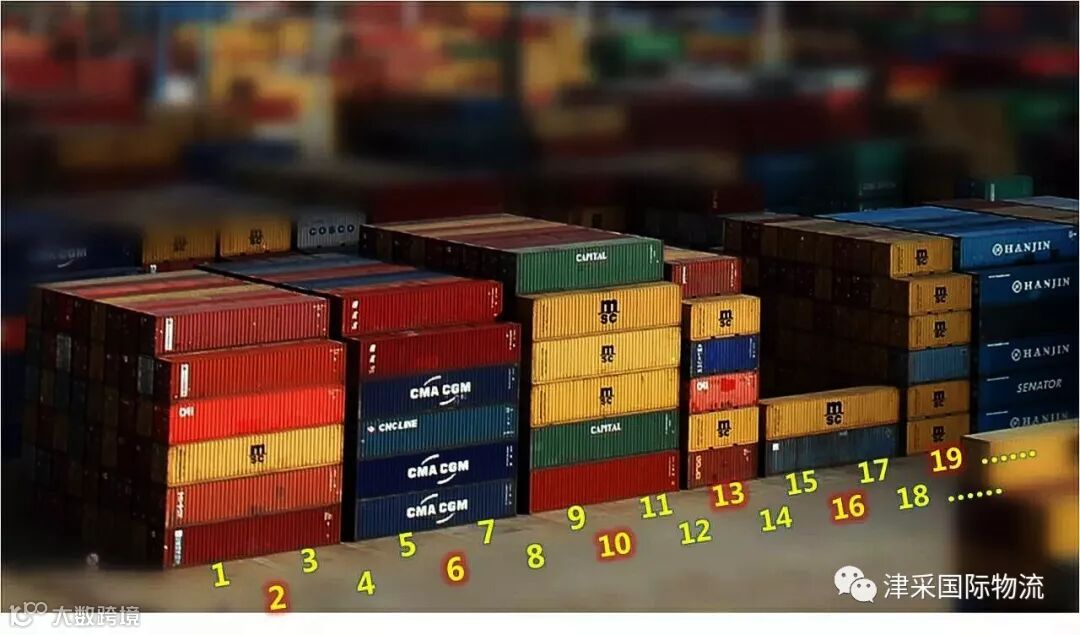
为了方便你理解,小编用带红光圈的数字标示出这个箱块的实际堆箱贝位,不知道你有没有看懂了呢~?
第四步,每贝又划分为“列”
每个贝位一般有6列,从靠近车道一侧起,分别为1、2、3、4、5、6列,找1个贝的箱子给你看吧:
In order to facilitate your understanding, Xiaobian uses the numbers with red diaphragm to mark the actual stacking shell position of this box block. I wonder if you understand ~?
Step four: each shell is divided into "columns"
There are six rows for each shell, which are 1, 2, 3, 4, 5 and 6 from the side near the lane. Find a shell box to show you:
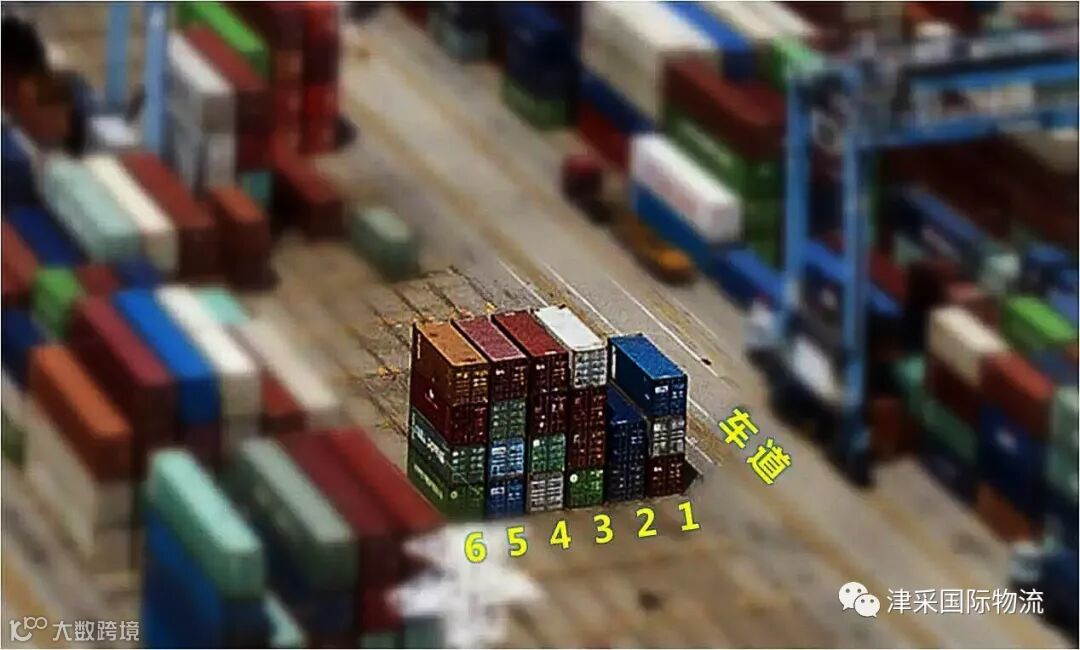
第五步,每列又分为“层”
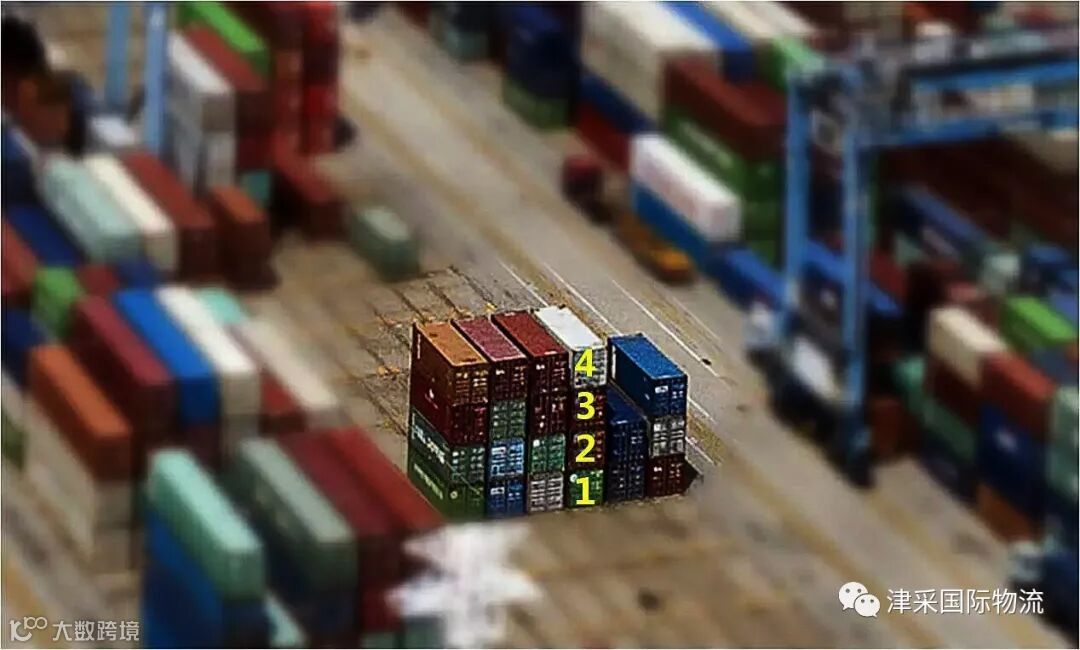
英文为“TIER”,一般为4-5层,从底向上,依次为1、2、3、4……,还是刚才那个贝,你再瞧:
Step 5: each column is divided into "layers"
In English, "tier" is generally 4-5 layers, from bottom to top, 1, 2, 3, 4 , it's the same shell. Look again: