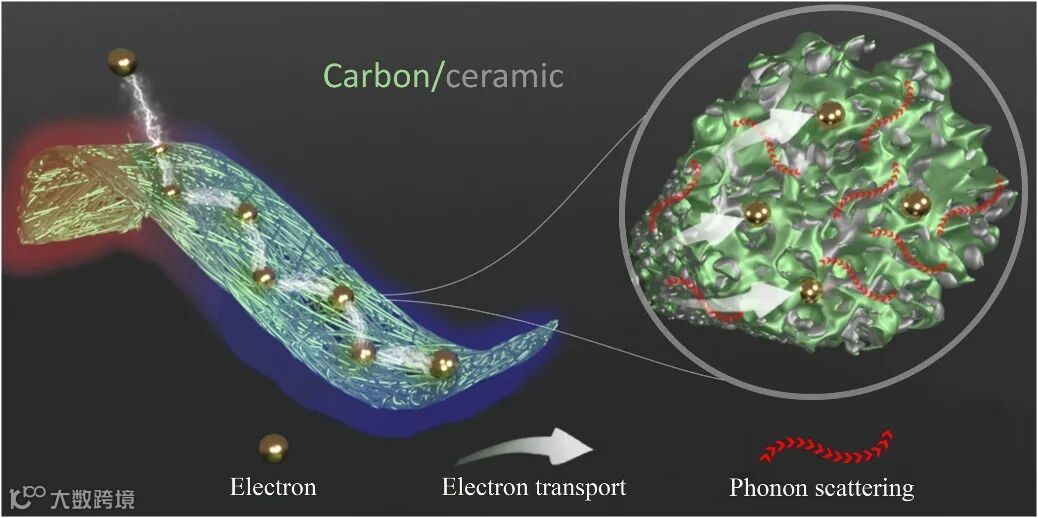
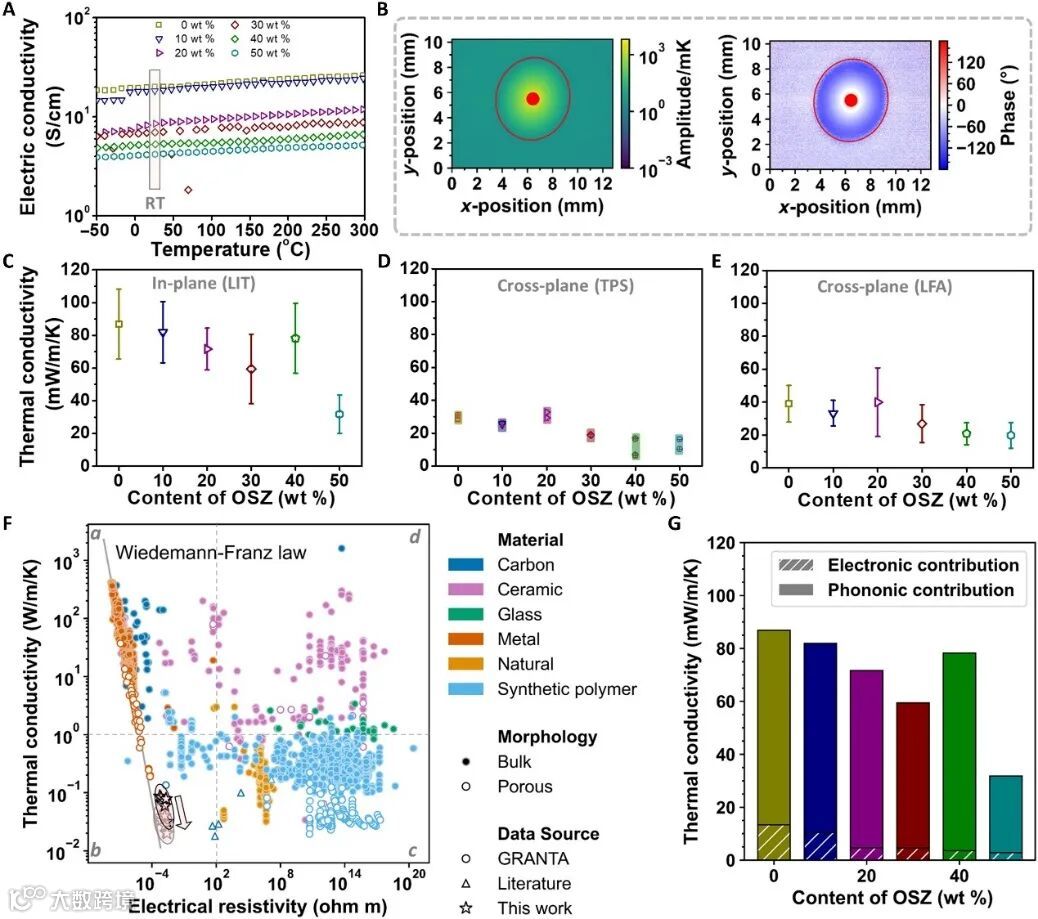
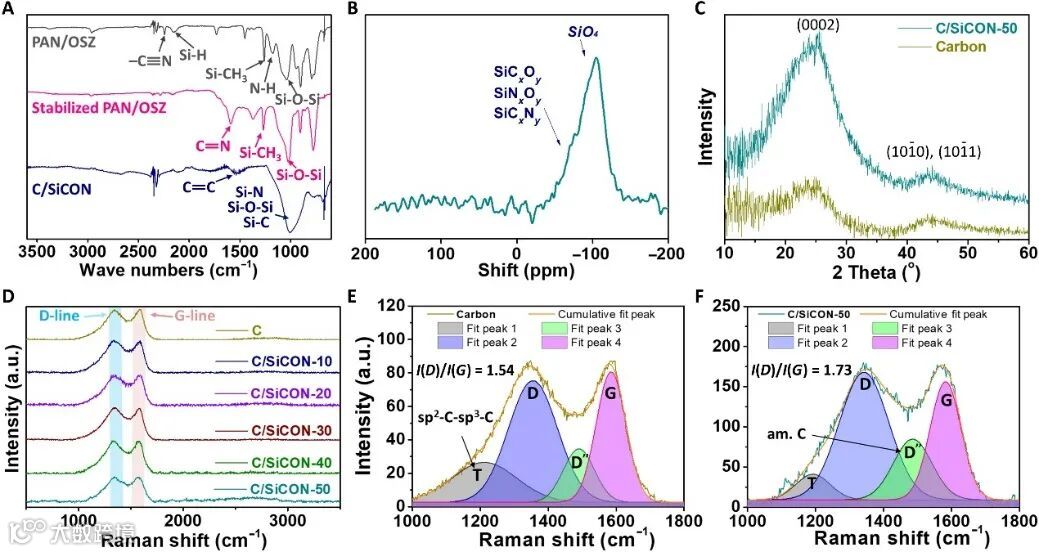
C/SiCON非织造材料的热学和电学性质。图片来源:Sci. Adv.
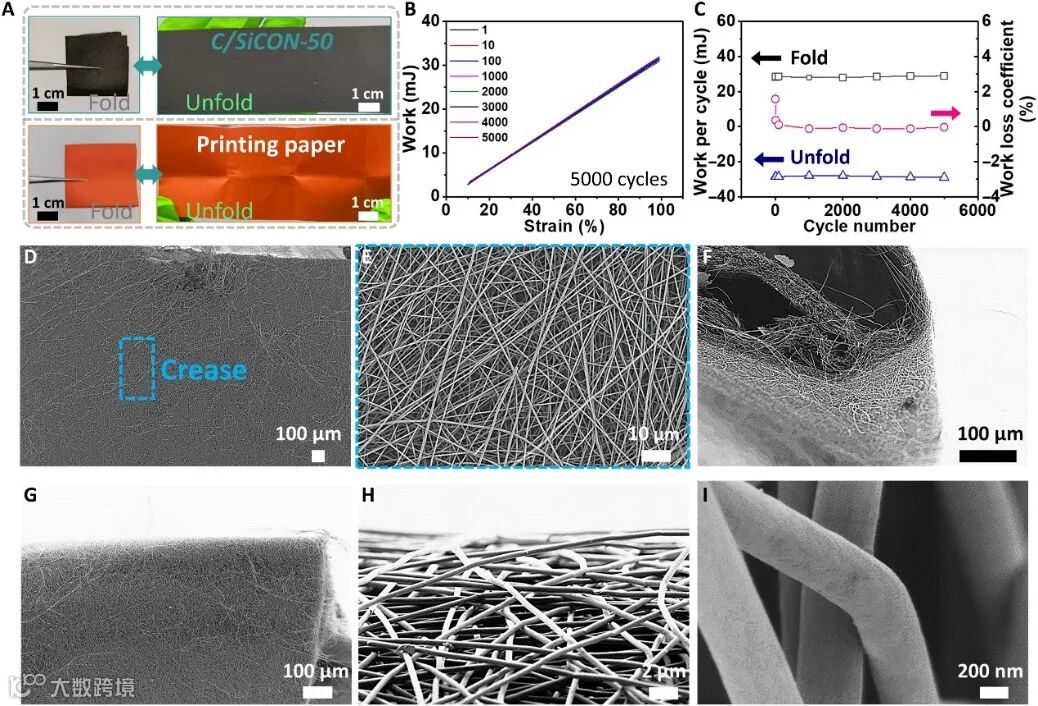
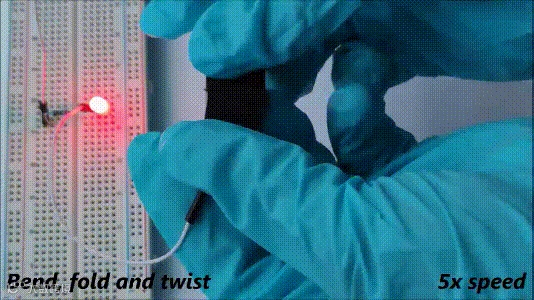
当然,随着SiCON含量增加,电导率略有下降,从20.1 S cm-1逐渐降低到4.2 S cm-1。不过,陶瓷相并没有阻止电子通过纤维中的碳材料相之间进行传输,不但可以点亮发光二极管,在弯曲、折叠5000次循环后,材料的电阻几乎不变,发光二极管的亮度在视觉上也没有变化。此外,非织造材料电导率在−50 °C到300 °C间,仅略有增加,说明材料工作温度范围相当广。
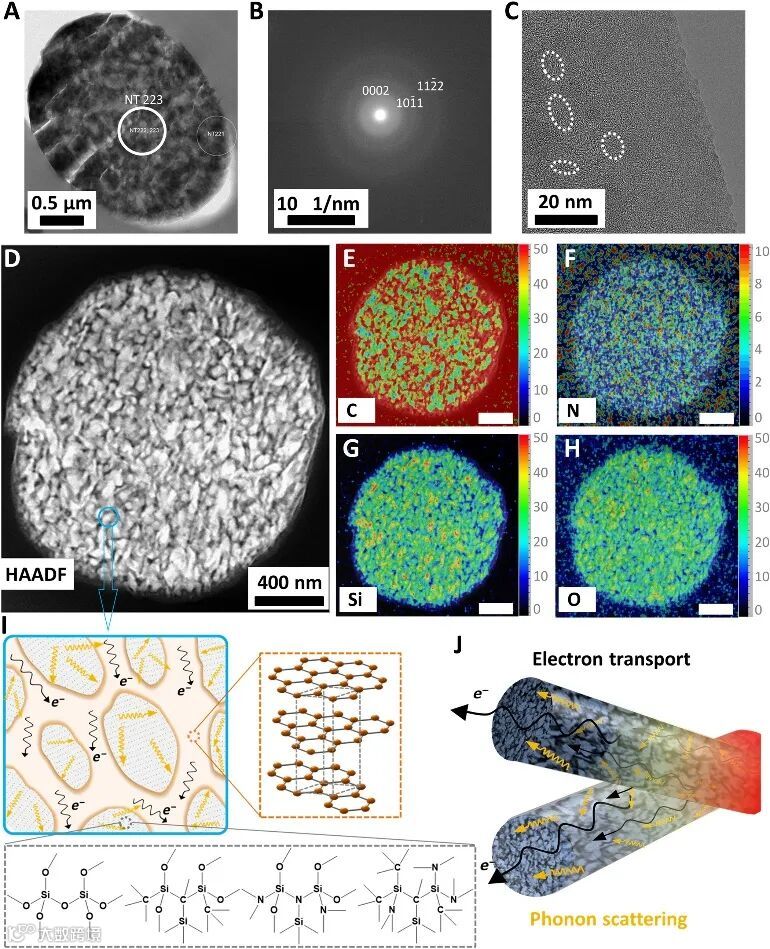
C/SiCON纤维的纳米结构及元素分析。图片来源:Sci. Adv.
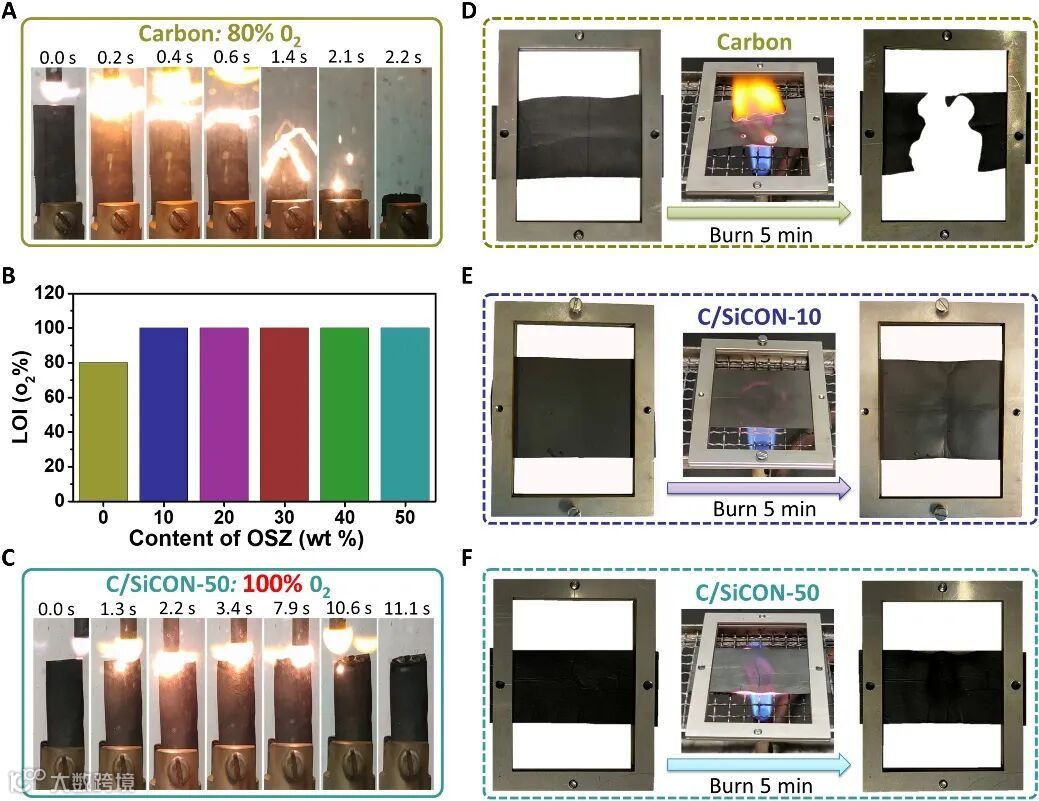
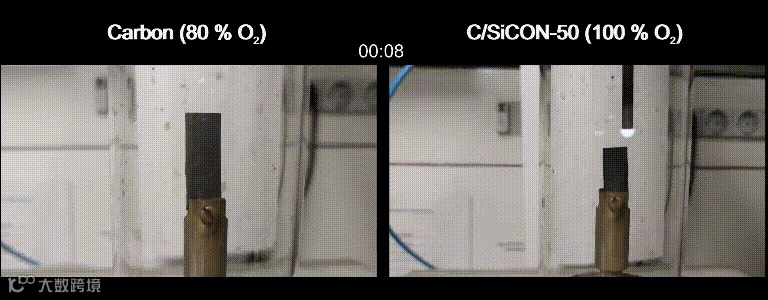
此外,C/SiCON非织造材料还具有非常好的热稳定性和阻燃性。纯碳非织造材料很容易被点燃,而C/SiCON在100% O2氛围下也不会燃烧和变形。这或许归因于表面碳燃尽后,SiOCN陶瓷相形成钝化的二氧化硅层,可以有效地保护纤维。因此,在火焰上灼烧5分钟后,材料的电导率降至0.02 S cm-1。
C/SiCON非织造材料的阻燃性和热稳定性。图片来源:Sci. Adv.
氧气环境中的阻燃性对比。图片来源:Sci. Adv.
“这种材料的制备工艺很容易实现产业化,可以解决航空航天等行业目前的瓶颈”,Xiaojian Liao博士说,“这项工作最初源于对新型纱线的研究”。“复合材料中的热和电荷传输机理目前还没有完全弄清楚,但这篇论文给了我们很多鼓舞人心的结果”,马萨诸塞大学的材料科学家Yanfei Xu表示,“如果我们能在大规模生产中获得同样的性能,我认为这将令人非常向往”。[3] 原文(扫描或长按二维码,识别后直达原文页面):Extremely low thermal conductivity and high electrical conductivity of sustainable carbonceramic electrospun nonwoven materialsXiaojian Liao, Jakob Denk, Thomas Tran, Nobuyoshi Miyajima, Lothar Benker, Sabine Rosenfeldt, Stefan Schafföner, Markus Retsch, Andreas Greiner, Günter Motz, Seema AgarwalSci. Adv. 2023, DOI: 10.1126/sciadv.ade6066 参考文献:[1] W. Sun, et al. Graphene-templated carbon aerogels combining with ultra-high electrical conductivity and ultra-low thermal conductivity. Micropor. Mesopor. Mat. 2017, 253, 71-79. DOI: 10.1016/j.micromeso.2017.06.044[2] X. Liao, et al. High strength in combination with high toughness in robust and sustainable polymeric materials. Science 2019, 366, 1376-1379. DOI: 10.1126/science.aay9033[3] Composite achieves the virtually impossible – it’s electrically conducting, while thermally insulatinghttps://www.chemistryworld.com/news/composite-achieves-the-virtually-impossible-its-electrically-conducting-while-thermally-insulating/4017254.article (本文由小希供稿)




 X-MOL资讯