
大数跨境
0
0

ChinaNANO -Small Sciences Symposium 诚邀您参加,共庆Small创刊20周年!

ChinaNANO -Small Sciences Symposium 诚邀您参加,共庆Small创刊20周年! X-MOL资讯
2025-08-22
1


今年,我们迎来了一个特别的时刻——Small 期刊创刊20周年!作为全球纳米科技领域的重要学术平台,Small 始终致力于推动前沿研究、连接全球科学家。值此里程碑之际,第五届Small Sciences Symposium将于ChinaNANO 2025期间隆重举行,再次与中国纳米科技界的顶级盛会深度融合,共同见证Small 的发展与未来。

在本届Small Sciences Symposium上我们特别邀请了全球纳米科学领域顶尖的科学家带来前沿报告,还将有Small Young Innovator Award颁奖仪式,Small 20周年庆祝活动。我们还将在219展位上举办主编面对面交流,展台抽奖等活动。20年风雨兼程,Small 与中国科研力量携手前行,记录了中国纳米科技的飞跃发展,也承载着一代代科研人的梦想与坚持。我们诚挚邀请您加入这场特别的庆典,与我们一同回顾过去、展望未来。


时间

2025年8月31日


地点:

北京国际会议中心三层311C会议室


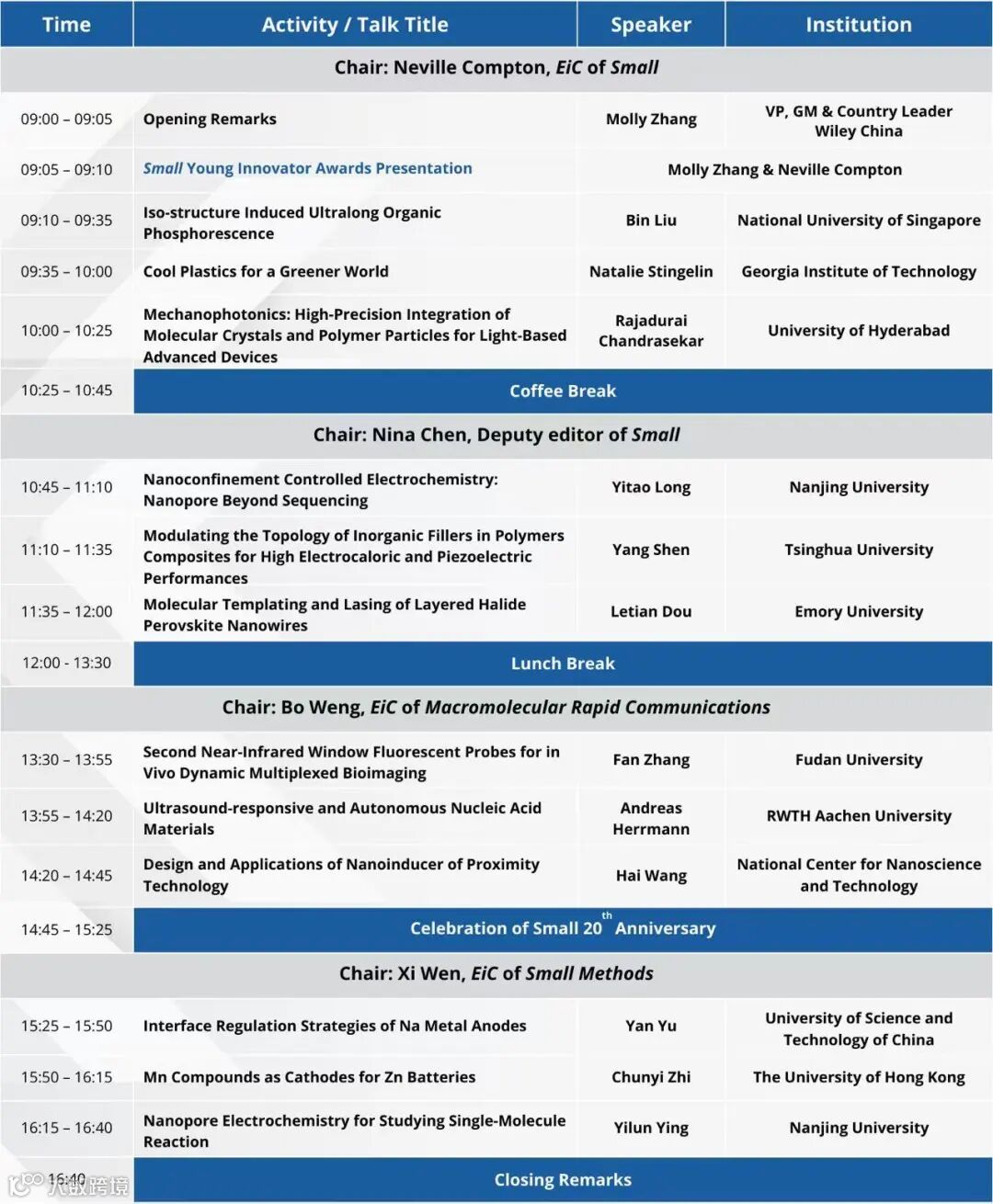
会议日程:

会议预报名
扫描二维码提前注册,现场签到即送Wiley笔记本,先到先得


展位亮点抢先看


展位地点

北京国际会议中心二层219号展位

编辑面对面——主编现场交流

时间:

8月30日 14:00-15:00

8月31日 13:00-14:00


Small 主编及副主编、Small Methods 主编、Macromolecular Rapid Communications 主编、Advanced Photonics Research 主编将莅临现成为您答疑解惑。

扫码有礼——来展台逛一逛,精美周边即刻到手!

时间:8月30日-8月31日全天
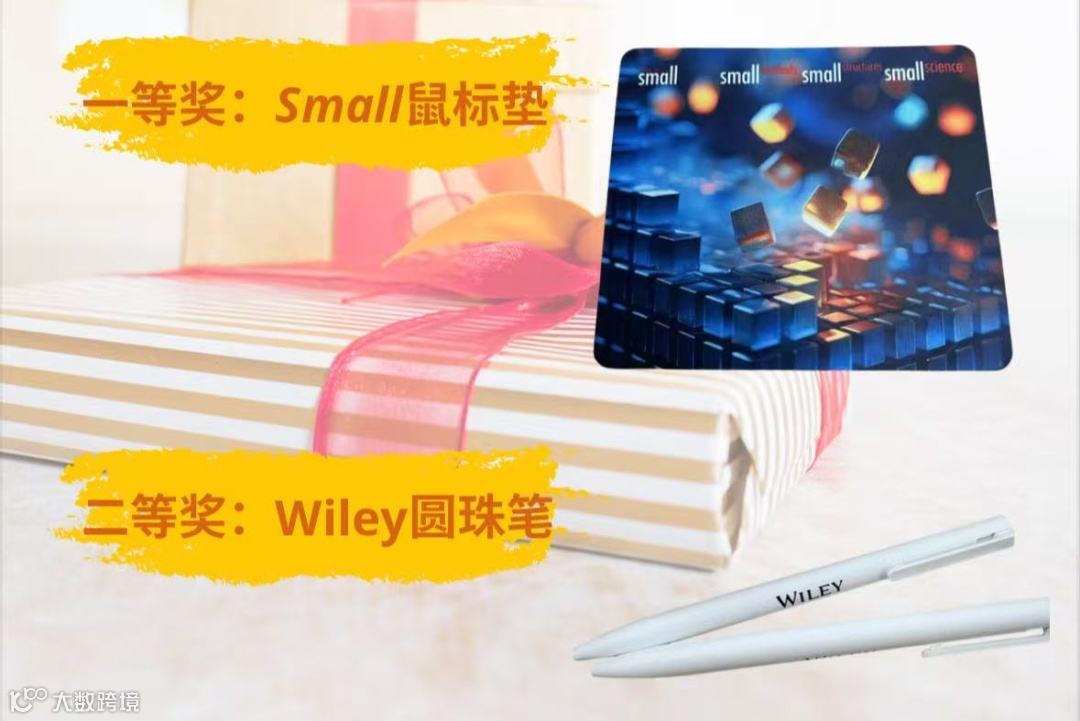

百分百中奖率,送完即止!

展位示意图:
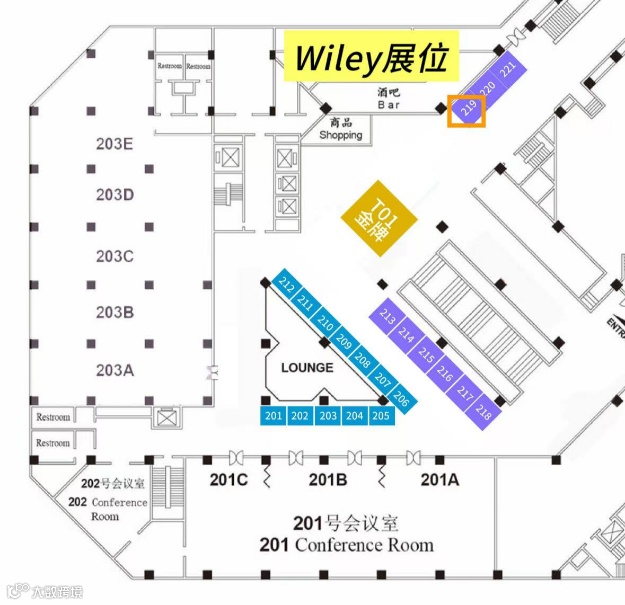
二层219号展位


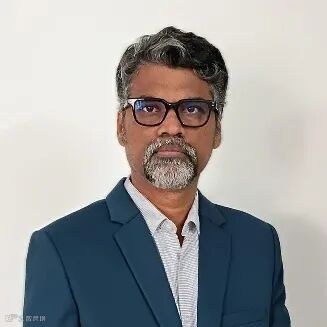
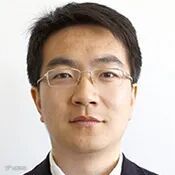
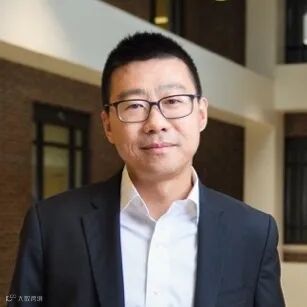
报告人介绍


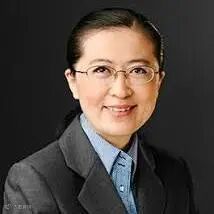
Bin Liu
向上滑动阅览

Dr. Bin Liu is a Tan Chin Tuan Centennial Professor and Deputy President(Research and Technology) at the National University of Singapore(NUS). Prior to her current appointment, she served as Senior ViceProvost (Faculty & Institutional Development, Vice President (Researchand Technology), and Head of Department at the NUS Department ofChemical & Biomolecular Engineering. Prof Liu graduated with abachelor’s and master’s degree from Nanjing University, and a PhD inChemistry from NUS. She received her postdoctoral training at theUniversity of California at Santa Barbara. She joined NUS as an Assistant Professor in 2005 and waspromoted to full professorship in 2016. She is a Fellow of the Singapore Academy of Engineering,Singapore National Academy of Sciences, Asia Pacific Academy of Materials, and the Royal Societyof Chemistry in Britain. In 2022, she was elected as an international member of the US NationalAcademy of Engineering. Professor Liu’s research is focused on organic functional materials forbiomedical and energy applications. She has been highly recognized for her contributions inpolymer chemistry and applications of organic nanomaterials for biomedical, environmental andenergy research. Since 2014, she has been named annually among the World's Most InfluentialScientific Minds by Thomson Reuters and the Top 1% Highly Cited Researchers by Clarivate. Shehas received many awards, including the National Science and Technology Young Scientist Award(2008), the L'Oréal Women in Science National Fellowship (2011), the President’s TechnologyAward (2016), and the American Chemical Society ACS Nano Lectureship Award (2019). In 2021,she bagged the Kabiller Young Investigator’s Award in Nanoscience and Nanomedicine, and theRoyal Society of Chemistry Centenary Prize. She was one of 12 women in the world who receivedthe 2023 International Union of Pure and Applied Chemistry Distinguished Women in Chemistry orChemical Engineering award. In 2024, Prof Liu was awarded the President’s Science Award for herteam’s breakthrough discovery of the role of carbazole isomers in room temperaturephosphorescence of carbazole.


Natalie Stingelin

向上滑动阅览

Professor Natalie Stingelin obtained her B.S. and Ph.D. degree in Swiss Federal Institute of Technology in Zurich. She joined Georgia Institute of Technology in 2016 and served as Full Professor of Materials Science. Prior to her current appointment she served as a professor at the Department of Materials, Imperial College of London. Professor Stingelin focuses her research on the broad field of organic functional materials, including organic electronics; multifunctional inorganic/organic hybrids; smart, advanced optical systems based on organic matter; and bioelectronics.  She has published more than 130 papers and issued 6 patents. She is the Director of the Center for Organic Photonics and Electronics (COPE) at Georgia Tech and Editor-in-Chief of Journal of Materials Chemistry C. She is a co-investigator of the newly established EPSRC Centre for Innovative Manufacturing in Large Area Electronics, and she leads the EC Marie-Curie Training Network 'INFORM' that involves 11 European partners. She was awarded the Institute of Materials, Minerals & Mining's Rosenhain Medal and Prize (2014) and the Chinese Academy of Sciences (CAS) President's International Fellowship Initiative (PIFI) Award for Visiting Scientists (2015).


Rajadurai Chandrasekar

向上滑动阅览

Rajadurai Chandrasekar is a Professor of Chemistry at the University of Hyderabad, India. He earned his PhD at the Max Planck Institute for Polymer Research, Mainz, and completed postdoctoral research at the Karlsruhe Institute of Technology. His interdisciplinary work in optics and materials science has yielded over 140 peer-reviewed publications and five patents. He pioneered two novel research domains: Mechanophotonics—mechanical micromanipulation of single-crystal photonic modules, and Crystal Photonic Foundry—focused ion beam milling of organic crystals to fabricate photonic components. His research advances the use of crystals and polymer particles in photonic integrated circuits, optoelectronics, visible-light communication, data transfer, and medical devices. A Fellow of the Indian Academy of Sciences, the National Academy of Sciences, and the Royal Society of Chemistry, he serves on the editorial boards of Small, Adv. Opt. Mater, J. Mater. Chem. C and Materials Advances. He is the author of Mechanophotonics for Organic Photonic Integrated Circuits, published by IOP London. His H-index is 44.


Yi-Tao Long 

向上滑动阅览

Professor Yi-Tao Long received his BS degree (1989) in chemistry from Shandong University, MS degree (1996) and Ph.D. degree (1998) in electroanalytical chemistry from Nanjing University. After completing 2 years postdoctoral study at Heidelberg University, he worked as a Research Scientist at University of Saskatchewan and University of Alberta, Canada. After he worked as an Associate Specialist at the University of California, Berkeley in 2006, he was appointed as a professor at East China University of Science and Technology to start his independent research. In 2019, he returned to the School of Chemistry and Chemical Engineering at Nanjing University and is the director of Molecular Sensing and Imaging Center. He has been an honorary visiting professor at University of Birmingham (2014-2020), visiting professor at University of Bath (2011-2017) and University of Western Ontario (2014-2016). His main research expertise involves nanopore electrochemistry, spectroelectrochemistry, single-molecule analysis, biointerfaces, and instrumentations for nanoelectrochemistry . He has published more than 400 peer-reviewed papers, including Nat. Chem., Nat. Nanotechnol., Nat. Chem. Biol., Nat. Methods., Nat Protoc.,  5 books/chapters and he holds 34 China national patents and 3 international patents. He is a Fellow of the Royal Society Chemistry and the International Society of Electrochemistry. He served as an Associate Editor of Chemical Science, Research, and Chemical Journal of Chinese Universities, and he is an editorial board member for Chemical Reviews, Microchimica Acta, Theranostics, and ChemElectroChem. He was awarded the Faraday Medal from the Royal Society of Chemistry (RSC).


Yang Shen 

向上滑动阅览

Prof. Yang Shen is a Professor in School of Materials Science and Engineering, Director of the State Key Laboratory of Advanced Ceramic Materials, Tsinghua University. He obtained his B.S. and Ph.D. in Materials Science & Engineering from Tsinghua University. Following his doctorate, he served as a postdoctoral scholar at the University of California, Santa Barbara, and Harvard University. Prof. Shen’s research focuses on polymer composites with novel electrical/magnetic properties, doped oxides as luminescence temperature sensors in thermal barrier coatings, and low-thermal-conductivity oxide materials. He has published almost 200 SCI papers as corresponding author in journals including Science, Nature Communications, Advanced Materials, Advanced Functional Materials, Advanced Energy Materials, Journal of the American Chemical Society, and Annual Review of Materials Research, garnering more than 19,000 citations with an H-index of 69. He holds 29 patent applications (granted), and served as project lead for multiple projects. He has got the First Prize of the Natural Science Award by the Ministry of Education of China in 2022.


Letian Dou

向上滑动阅览

Prof. Letian Dou is currently the Paul & Phyllis Fireman Professor of Chemistry at Emory University. Prior to that, he was Charles Davidson Associate Professor of Chemical Engineering and Chemistry (by courtesy) at Purdue University. He obtained his B.S. in Chemistry from Peking University in 2009 and Ph.D in Materials Science and Engineering from UCLA in 2014. From 2014 to 2017, he was a postdoctoral fellow at University of California-Berkeley and Lawrence Berkeley National Laboratory. His research interest includes the design and synthesis of novel polymers, organic-inorganic hybrid materials and low-dimensional materials, fundamental understanding of the structure-property relationships, as well as applications in high performance electronic and optoelectronic devices. He is a recipient of Humboldt Research Fellowship (2024), Purdue College of Engineering Faculty Excellence Award for Early Career Research (2023), Waterloo Institute for Nanotechnology (WIN) Rising Star Award (2022), AIChE Owens Corning Early Career Award (2022), NSF CAREER Award (2021), Advanced Materials Rising Stars Award (2021), Office of Naval Research Young Investigator Award (2019), Highly Cited Researcher in Cross-Fields (2019-present), MIT Technology Review Innovators Under 35-China Award (2018), and MRS Graduate Student Award (2014).


Fan Zhang

向上滑动阅览

Prof. Fan Zhang received his Ph.D. degree in 2008 from Fudan University followed by more than 2 years postdoctoral experience (2008-2010) from the prestigious, world leading laboratories in University of California at Santa Barbara (Galen. D. Stucky's group) before joining as an associate professor in the Chemistry Department of Fudan University in 2010. He became a full professor in Fudan University since 2013. Prof. Zhang has authored a number of book chapters, patents and more than 90 peer-reviewed research papers in international journals with the high impact factors i.e. Nat. Nanotechnol., Nat. Commun., J. Am. Chem. Soc., Angew. Chem. Int. Ed., Nano Lett., Adv. Mater., ACS Nano, Small, Chem. Mater..


 Andreas Herrmann

向上滑动阅览

Prof. Andreas Herrmann is the Chair of Macromolecular Materials and Systems, Institute for Technical and Macromolecular Chemistry, RWTH Aachen University. He studied chemistry at the University of Mainz and pursued his graduate studies at the Max-Planck-Institute for Polymer Research in Mainz. In 2004 he was appointed as a head of a junior research group at the Max-Planck-Institute for Polymer Research. In 2007 he moved to the Zernike Institute for Advanced Materials at the University of Groningen, the Netherlands. Since 2017 Prof. Herrmann is scientific board member of the DWI Leibniz-Institute for Interactive Materials, Aachen, Germany and Professor of Macromolecular Chemistry and Systems at RWTH Aachen University. He is Vice Scientific Director of the DWI since 2018 and was appointed as Interim Scientific Director by the Board of Trustees as of January 2023. The research of our group focuses on synthetic chemistry and molecular biology and pioneered the development of nucleic acid conjugates and supercharged polypeptides.


Hai Wang

向上滑动阅览


Dr. Wang received his Ph.D. in Physical Chemistry from the National Center for Nanoscience and Technology (NCNST) in 2013 and subsequently pursued postdoctoral training at The Ohio State University. He then joined the University of Maryland, where he served as an Assistant Research Professor in the Department of Bioengineering. He is currently a Full Professor of Biomedical Engineering at NCNST. His research group focuses on nanobiotechnology and, in recent years, has systematically advanced the concept of the nanoinducer of proximity. By integrating theoretical simulations, molecular design, and the precise engineering of nanomaterials, he has successfully employed this technology to induce interactions and information transfer among protein conformations, protein complexes, and organelles at defined spatial scales. This enables dynamic regulation of protein and organelle functions, offering a novel technological pathway for investigating the functions of specific proteins and organelles. Dr. Wang has published extensively in leading journals in the field, including Nature Nanotechnology, Nature Communications, Advanced Materials, ACS Nano, Advanced Functional Materials, Biomaterials, among others.


Yan Yu

向上滑动阅览

Prof. Yan Yu is a full professor of material science at University of Science and Technology of China (USTC). She received her Ph.D. in material science at USTC in 2006. From 2007 to 2008, she worked as a postdoctoral researcher at Florida International University. After that she received a Humboldt Research Fellowship and the Sofja Kovalevskaja award from the Alexander von Humboldt Foundation and worked at the Max Planck Institute for Solid-State Research in Stuttgart, Germany. Her current research interests mainly include the design of novel nanomaterials for clean energy, especially for batteries and the fundamental science of energy-storage systems. She was selected as a Thomson Reuters Highly Cited Researcher in the field of Materials Science. She also received several awards and honors, such as the National Science Fund for Distinguished Young Scholars, The 16th China Youth Science and Technology Award, Fellow of The Royal Society of Chemistry, etc.


Chunyi Zhi 

向上滑动阅览

Prof. Chunyi Zhi received his B.S. degree in Physics from Shandong University and his Ph.D. in Condensed Matter Physics from the Institute of Physics, Chinese Academy of Sciences. He then spent two years as a postdoctoral fellow at the National Institute for Materials Science (NIMS) in Japan, where he was subsequently promoted to ICYS Researcher, Researcher, and Senior Researcher. Before joining the University of Hong Kong, Dr. Zhi served as a Chair Professor in the Department of Materials Science and Engineering at City University of Hong Kong. Dr. Zhi is now a Chair Professor at the Department of Mechanical Engineering, the University of Hong Kong. He has extensive expertise in aqueous electrolyte-based batteries, solid-state batteries, and zinc-ion batteries. As of July 2025, he holds over 100 patents and has published more than 500 research papers. Dr. Zhi has been recognized as a Clarivate Analytics Global Highly Cited Researcher in Materials Science (2019–2024) and in Environment and Ecology (2024).


Yi-Lun Ying

向上滑动阅览

Dr. Yi-Lun Ying obtained her Ph.D. in Analytical Chemistry from East China University of Science and Technology (ECUST), following a doctoral exchange at the University of Birmingham (UK) in 2014. She carried out postdoctoral research on nanoelectrochemistry at ECUST before starting her independent career in 2016. She has been promoted to Professor at Nanjing University since 2019. Her research focuses on nanopore electrochemistry for single-molecule analysis and the development of intelligent nanopore instrumentation for single-molecule reactions. She has co-authored over 100 peer-reviewed publications, including papers in Nat. Chem., Nat. Nanotechnol., J. Am. Chem. Soc. and Angew. Chem. Int. Ed. with an H-index of 46. Prof. Ying has received several awards and honors, including the L'Oréal-UNESCO International Rising Talents Award (2016), RSC Analyst Emerging Investigator Lectureship (2020), Young Chemists Award of the Chinese Chemical Society (2020), ACS Rising Star in Measurement Science Award (2023), and Wiley Small Young Innovator Award (2025). She serves on the Editorial Boards of ACS Sensors, ACS Measurement Science Au, ChemElectroChem, and Sensors and Actuators B: Chemical, and on the Advisory Board of Analyst.


威立(Wiley)是全球领先的出版机构之一。作为科研和学习领域值得信赖的领导者,我们凭借行业前沿的内容、服务、平台与知识网络,精准对接和满足科研人员、学生、教师、专业人士、机构和企业客户不断变化的需求。威立致力于帮助求知者将当今严峻的挑战转化为未来璀璨的机遇,践行两个多世纪以来不变的使命——激发人类潜能。 


点赞,在看,分享,来个一键三连吧!


【声明】内容源于网络
0
0
X-MOL资讯
“X-MOL资讯”隶属于X-MOL学术平台(官网x-mol.com),关注化学、材料、生命科学、医学等领域的学术进展与科研前沿,提供专业与深度的内容。公众号菜单还提供“期刊浏览”等强大功能,覆盖各领域上万种期刊的新近论文,支持个性化浏览。
内容 19833
粉丝 0
X-MOL资讯 “X-MOL资讯”隶属于X-MOL学术平台(官网x-mol.com),关注化学、材料、生命科学、医学等领域的学术进展与科研前沿,提供专业与深度的内容。公众号菜单还提供“期刊浏览”等强大功能,覆盖各领域上万种期刊的新近论文,支持个性化浏览。
总阅读1.6k
粉丝0
内容19.8k