


文 / 宋保维1,2,潘光1,2,张立川1,2,黄桥高*1,2,于洋1,2,田文龙1,2,董华超1,2,张新虎1,2
摘 要:为推进和引导我国自主水下航行器(AUV)的发展,总结国内外 AUV 的研究现状,提出其系列化、集群化、体系化、大型化的发展趋势。重点探讨 AUV 总体多学科优化设计、结构与材料设计、动力与推进、导航与控制、探测与通信等关键技术,为更好地利用 AUV 经略海洋,从而实现“进入海洋、探测海洋、利用海洋”的战略目标提出发展意见。
关键字:自主水下航行器;海洋探测;无人系统;集群协同


自主水下航行器发展趋势及关键技术
0
引言
01
AUV发展趋势
1.1 系列化
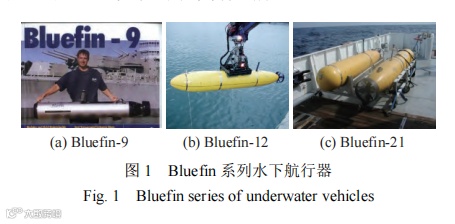
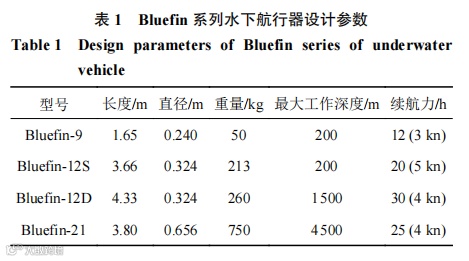
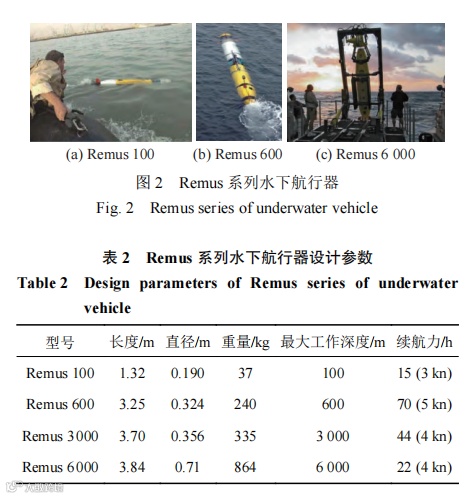
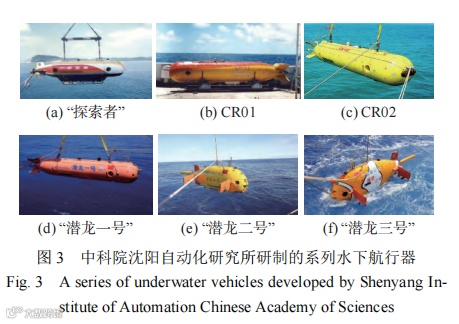
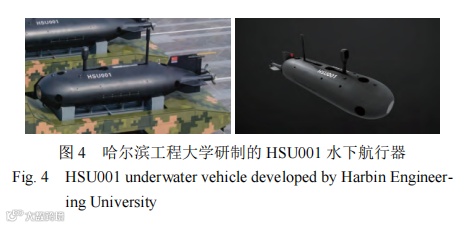
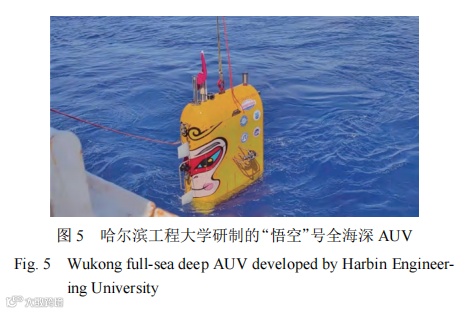
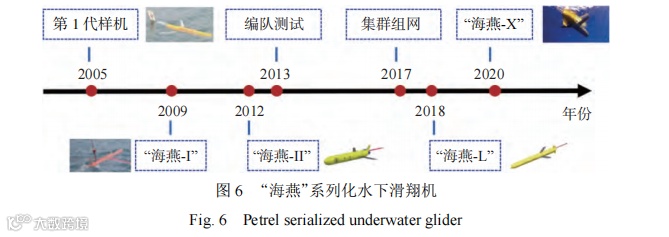
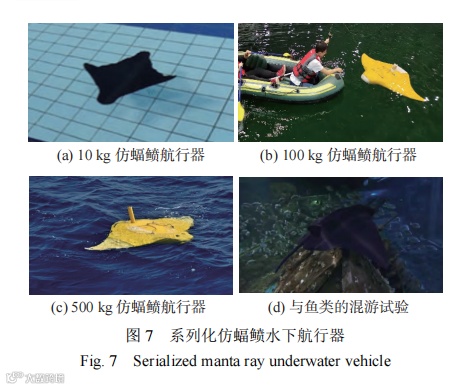
1.2 集群化(单类多个)
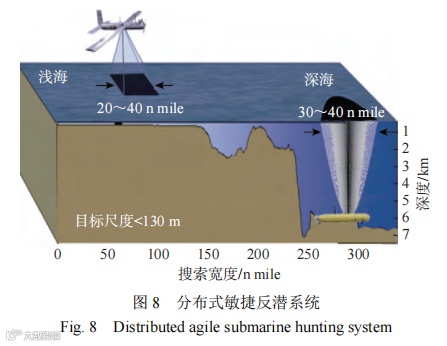
1.3 体系化(多类多个)
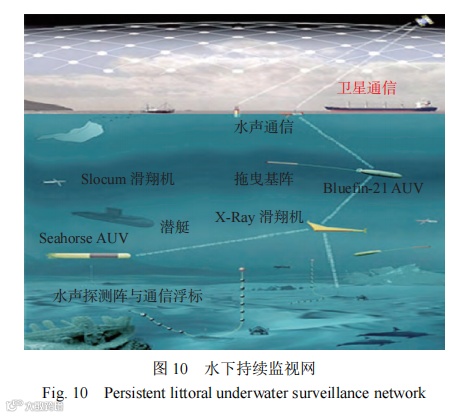
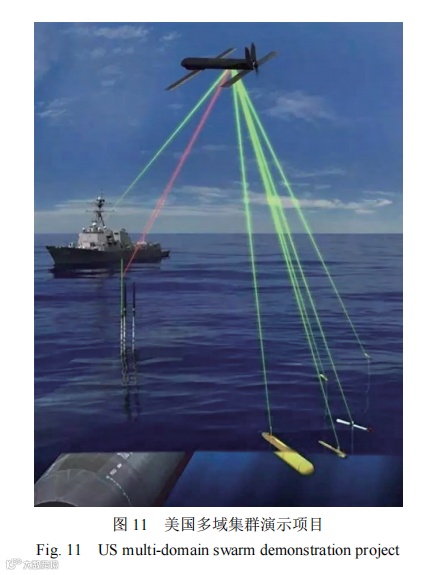
1.4 大型化
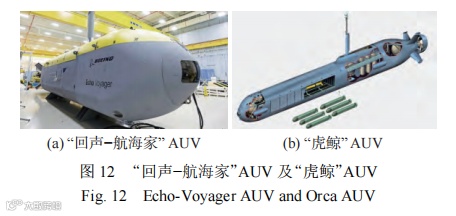
02
AUV关键技术
2.1 AUV 总体多学科优化设计
2.1.1 参数化建模技术
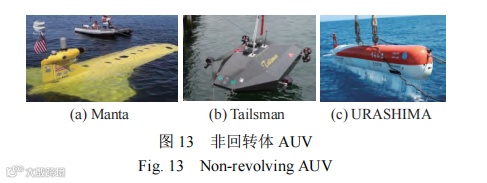
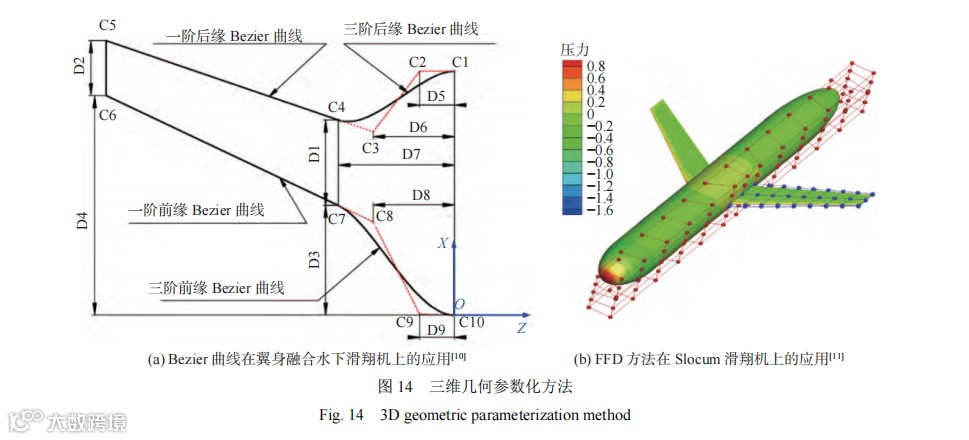
随着 AUV 总体设计的不断深入,未来参数化建模技术趋于更加智能化的方向。例如,基于深度学习的参数化方法是利用卷积神经网络(convolutional neural networks,CNN)、生成对抗网络(generative adversarial network,GAN)和深度神经网络(deep neural networks,DNN)等架构,将复杂的几何模型转化到一个特殊的潜空间中,然后通过人工智能强大的学习能力来解析模型在潜空间中具有的低维流形特征,实现几何模型的局部定向控制,同时,还可通过数据库学习获取一种符合设计准则的最佳方案。
2.1.2 代理模型预测技术
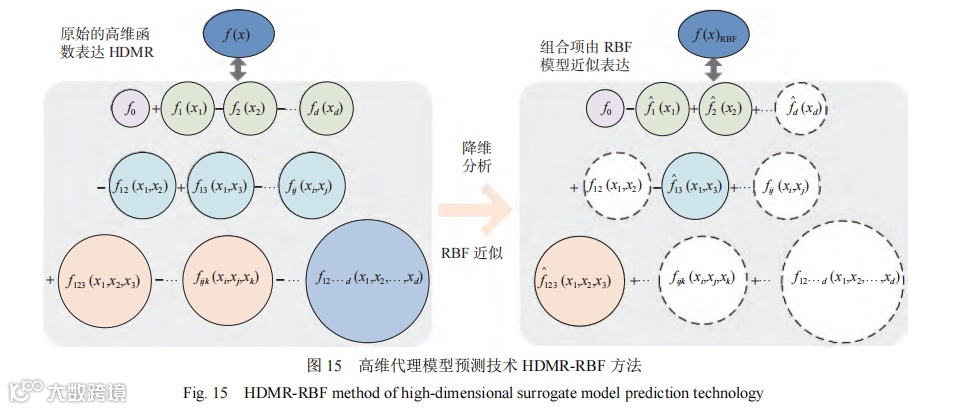
2.1.3 数据驱动的多学科优化设计技术
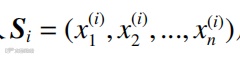
得到了对应的升阻比 、结构强度等优化目标
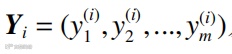
及操纵性 、布局干涉等约束

的求解。经目标函数值、约束值重构后,不断进行优化迭代,实现了对多学科最优解的获取。具体地,对优化目标、约束的求解可以由图 17 所示的技术路线进行,通过对所需性能指标 按仿真耗时度划分计算资源,可实现不同耗时单元的统一协调,从而进一步提高系统仿真速度,实现优化迭代效率的进一步提升。图中:f *为最优目标函数值;X*为最优设计变量值;为合成第 i 个仿真单元对应的预测目标函数值;为预测目标函数值;为合成第 i 个仿真单元对应的预测约束函数值;F 为重构矩阵。
2.2 AUV 结构与材料设计技术
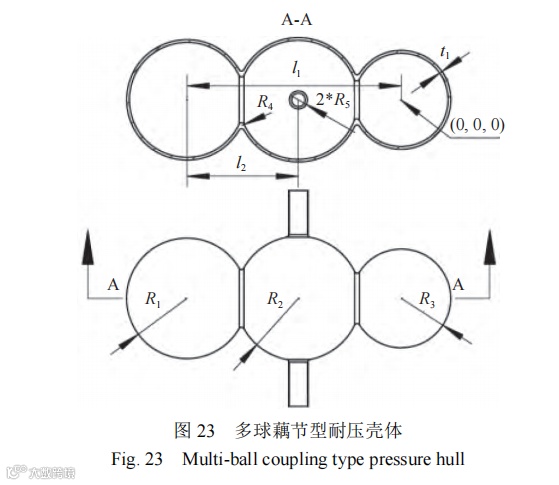
2.3 AUV 动力与推进技术
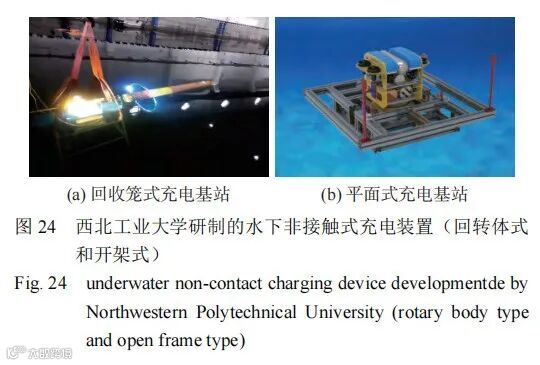
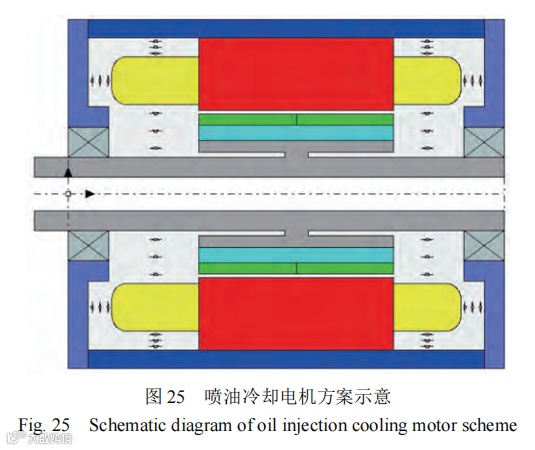
2.3.2 高比特性推进电机技术
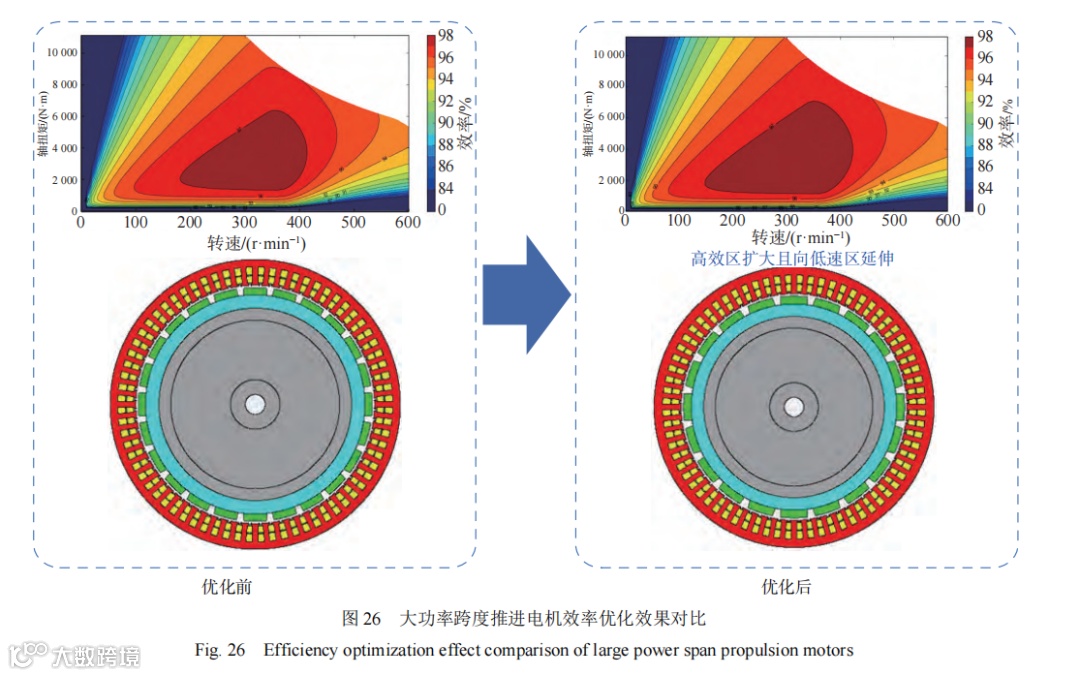
2.3.3 低噪声高机动推进器设计技术
2.4 AUV 导航与定位技术
2.4.1 地球物理场导航技术
2.4.2 组合导航技术
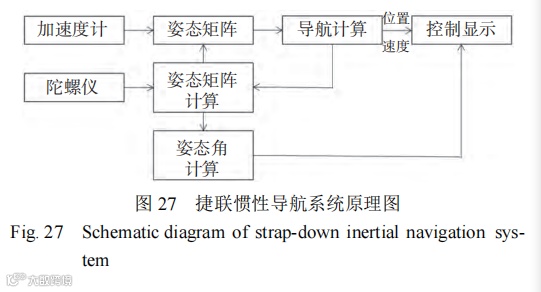
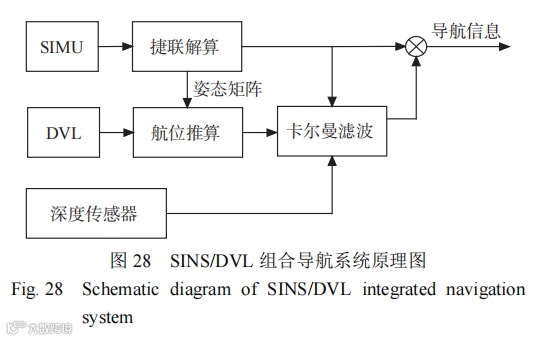
2.4.3 协同导航
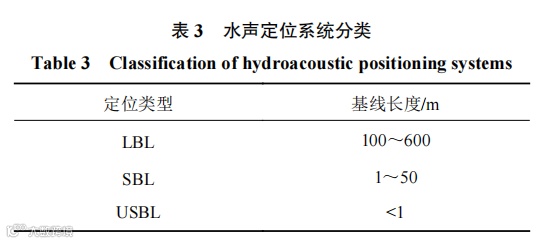
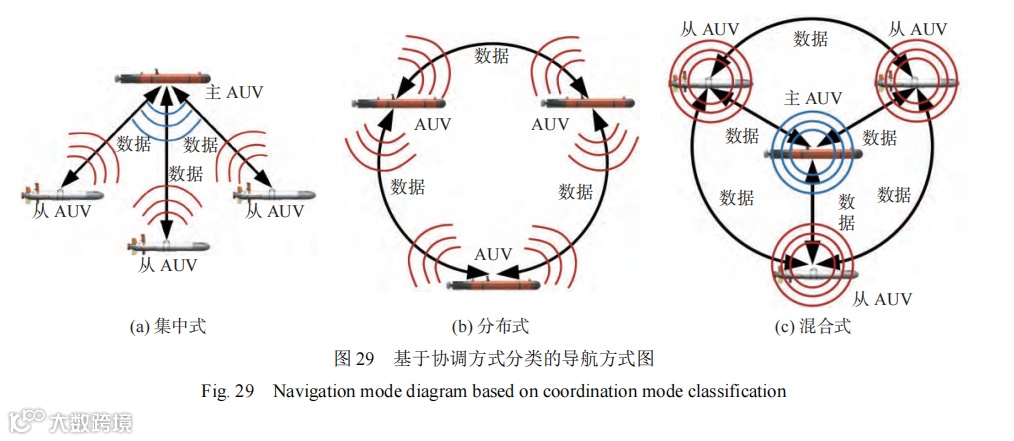
2.5 AUV 探测与通信技术
03
总结
[1]潘光, 宋保维, 黄桥高, 等. 水下无人系统发展现状及其关键技术 [J]. 水下无人系统学报, 2017, 25(2): 44–51.PAN G, SONG B W, HUANG Q G, et al. Development and key techniques of unmanned undersea system[J]. Journal of Unmanned Undersea Systems,2017, 25(2): 44–51 (in Chinese).
[2]李德远, 吴汪洋, 李晓晨. 军用 UUV 的发展与应用前景展望 [J]. 舰船电子工程, 2012, 32(4): 22–24, 35.LI D Y, WU W Y, LI X C. Current status and future
directions of navy unmanned underwater vehicles[J]. Ship Electronic Engineering, 2012, 32(4): 22–24, 35 (in Chinese).
[3]钱东, 赵江, 杨芸. 军用 UUV 发展方向与趋势 (上)——美军用无人系统发展规划分析解读 [J]. 水下无人系统学报, 2017, 25(2): 1–30.
QIAN D, ZHAO J, YANG Y. Development trend of military UUV (Ⅰ): a review of U. S. military unmanned system development plan[J]. Journal of Unmanned Undersea Systems, 2017, 25(2): 1–30 (in Chinese).
[4]李经. 水下无人作战系统装备现状及发展趋势 [J]. 舰船科学技术, 2017, 39(1): 1–5, 36.LI J. Existence and development trend of navy autonomous underwater combat system[J]. Ship Science and Technology, 2017, 39(1): 1–5, 36 (in Chinese).
[5]钟宏伟. 国外无人水下航行器装备与技术现状及展望 [J]. 水下无人系统学报, 2017, 25(4): 215–225.ZHONG H W. Review and prospect of equipment and techniques for unmanned undersea vehicle in foreign countries[J]. Journal of Unmanned Undersea Systems,2017, 25(4): 215–225 (in Chinese).
[6]吕达. 翼身融合水下滑翔机稳定面设计及滑翔性能分析 [D]. 西安:西北工业大学, 2020.LYU D. Design of stable surface and gliding performance analysis of wing-body fusion underwater glider[D].Xi'an: Northwestern Polytechnical University, 2020 (in Chinese).
[7]张栋. 牛鼻鲼游动过程中柔性变形对水动力影响研究 [D]. 西安:西北工业大学, 2020.ZHANG D. Research on the influence of flexible deformation on hydrodynamics during the swimming process of the cow-nosed ray[D]. Xi'an: Northwestern Polytechnical University, 2020 (in Chinese).
[8]聂卫东, 马玲, 张博, 等. 浅析美军水下无人作战系统及其关键技术 [J]. 水下无人系统学报, 2017, 25(5): 310–318.NIE W D, MA L, ZHANG B, et al. A brief analysis of
United States unmanned underwater combat system[J].Journal of Unmanned Undersea Systems, 2017, 25(5):310–318 (in Chinese).
[9]钟宏伟, 李国良, 宋林桦, 等. 国外大型无人水下航行器发展综述 [J]. 水下无人系统学报, 2018, 26(4): 273–282.ZHONG H W, LI G L, SONG L H, et al. Development of large displacement unmanned undersea vehicle in foreign countries: a review[J]. Journal of Unmanned Undersea Systems, 2018, 26(4): 273–282 (in Chinese).
[10]LI J L, WANG P, DONG H C, et al. Multi/manyobjective evolutionary algorithm assisted by radial basis function models for expensive optimization[J]. Applied Soft Computing, 2022, 122: 108798.
[11]LI J L, WANG X J, WANG P, et al. Shape optimization for a conventional underwater glider to decrease average periodic resistance[J]. China Ocean Engineering,2021, 35(5): 724–735.
[12]ZHANG N, WANG P, DONG H C. Research on highdimensional model representation with various metamodels[J]. Engineering Optimization, 2019, 51(8): 1336–1351.
[13]FU C B, WANG P, ZHAO L, et al. A distance correlation-based Kriging modeling method for high-dimensional problems[J]. Knowledge-Based Systems, 2020, 206:106356.
[14]MOHAMMAD ZADEH P, MEHMANI A, MESSAC A.High fidelity multidisciplinary design optimization of a wing using the interaction of low and high fidelity models[J]. Optimization and Engineering, 2016, 17(3):503–532.
[15]DONG H C, SONG B W, WANG P, et al. Multi-fidelity
information fusion based on prediction of Kriging[J]. Structural and Multidisciplinary Optimization, 2015,51(6): 1267–1280.
[16]李学斌, 甘霖. AUV 总体概念设计中的多学科和多目标优化研究 [J]. 海洋技术, 2008, 27(2): 77–82.LI X B, GAN L. Study on multi-disciplinary design and multi-objective problem in conceptual design of AUV[J]. Ocean Technology, 2008, 27(2): 77–82 (in Chinese).
[17]王建. 多学科优化设计在水下无人航行器设计中的应用研究 [D]. 哈尔滨: 哈尔滨工程大学.WANG J. Application of multi-discipline design optimization method for design of unmanned underwater vhicles[D]. Harbin: Harbin Engineering University (in Chinese).
[18]LUO W L, LYU W. An application of multidisciplinary design optimization to the hydrodynamic performances of underwater robots[J]. Ocean Engineering, 2015,104: 686–697.
[19]ZHANG X H, LI Z, WANG P, et al. Experimental and numerical analyses on buckling and strength failure of composite cylindrical shells under hydrostatic pressure[J].Ocean Engineering, 2022, 249: 110871.
[20]WEI R F, SHEN K C, PAN G. Optimal design of trapezoid stiffeners of composite cylindrical shells subjected to hydrostatic pressure[J]. Thin-Walled Structures,2021, 166: 108002.
[21]RAHIMI G H, ZANDI M, RASOULI S F. Analysis of the effect of stiffener profile on buckling strength in composite isogrid stiffened shell under axial loading[J]. Aerospace Science and Technology, 2013, 24(1):198–203.
[22]何衍儒, 宋保维, 曹永辉. 翼身融合自主式水下航行器的多泡结构耐压舱分步优化设计 [J]. 西北工业大学学报, 2018, 36(4): 664–670.HE Y R, SONG B W, CAO Y H. Multi-step structural optimization design of multi-bubble pressure cabin in
the autonomous underwater vehicle with blended-wingbody[J]. Journal of Northwestern Polytechnical University, 2018, 36(4): 664–670 (in Chinese).
[23]伍莉, 孟凡明, 陈小宁, 等. 藕节形大深度潜水器耐压壳体优化设计 [J]. 船舶力学, 2008, 12(1): 100–109.WU L, MENG F M, CHEN X N, et al. Optimum
design of multiple intersecting spheres great deep-submerged pressure hull[J]. Journal of Ship Mechanics,2008, 12(1): 100–109 (in Chinese).
[24]宋保维, 成鹏飞, 曹永辉, 等. 藕节形耐压壳体强度与稳定性有限元分析 [J]. 计算机仿真, 2013, 30(2): 38–41,246.SONG B W, CHENG P F, CAO Y H, et al. Strength and stability study of multiple intersecting spheres for
pressure hull[J]. Computer Simulation, 2013, 30(2):38–41, 246 (in Chinese).
[25]李星升, 关静岩. 泵喷推进器在某水下航行器降噪方面的应用 [J]. 数字海洋与水下攻防, 2018, 1(2): 51–56.
LI X S, GUAN J Y. Application of pump-jet propulsor in noise reduction of underwater vehicle[J]. Digital Ocean & Underwater Warfare, 2018, 1(2): 51–56 (in Chinese).
[26]方尔正, 周子凌, 桂晨阳. 水下滑翔机原理与应用 [J].国防科技工业, 2020(8): 66–68.FANG E Z, ZHOU Z L, GUI C Y. The principle and application of underwater glider[J]. Defence Science &Technology Industry, 2020(8): 66–68 (in Chinese).
[27]邢城, 潘光, 黄桥高. 仿蝠鲼柔性潜水器翼型流场性能分析 [J]. 数字海洋与水下攻防, 2020, 3(3): 265–270.XING C, PAN G, HUANG Q G. Performance analysis of airfoil flow field of a mannequin-like flexible submersible[J]. Digital Ocean & Underwater Warfare, 2020,3(3): 265–270 (in Chinese).
[28]胡小平. 导航技术基础 [M]. 北京: 国防工业出版社,2015: 123-124.HU X P. Basics of navigation technology[M]. Beijing:National Defense Industry Press, 2015: 123-124 (in Chinese).
[29]周玲. 自主水下潜器海底地形辅助导航技术研究 [D].南京: 东南大学, 2018.ZHOU L. On seabed terrain aided navigation technology for autonomous underwater vehicles[D]. Nanjing: Southeast University, 2018 (in Chinese).
[30]彭富清, 霍立业. 海洋地球物理导航 [J]. 地球物理学进展, 2007, 22(3): 759–764.PENG F Q, HUO L Y. Marine geophysical navigation[J].Progress in Geophysics, 2007, 22(3): 759–764 (in Chinese).
[31]黄玉龙, 张勇刚, 赵玉新. 自主水下航行器导航方法综述 [J]. 水下无人系统学报, 2019, 27(3): 232–253.HUANG Y L, ZHANG Y G, ZHAO Y X. Review of
autonomous undersea vehicle navigation methods[J].Journal of Unmanned Undersea Systems, 2019, 27(3):232–253 (in Chinese).
[32]王博, 周明龙. 水下重力辅助导航适配区选取的研究进展 [J]. 导航定位学报, 2020, 8(3): 32–39.WANG B, ZHOU M L. Perspective on matching area
selection technology for underwater gravity aided navigation[J]. Journal of Navigation and Positioning, 2020,8(3): 32–39 (in Chinese).
[33]刘莉娜, 刘任庆. 基于捷联惯性导航的组合导航系统研究 [J]. 现代电子技术, 2009, 32(3): 111–113.LIU L N, LIU R Q. Research of integrated navigation
system based on strapdown inertial navigation system[J].Modern Electronics Technique, 2009, 32(3): 111–113 (in Chinese).
[34]CHANG L B, HU B Q. Robust initial attitude alignment for SINS/DVL[J]. IEEE/ASME Transactions on Mechatronics, 2018, 23(4): 2016–2021.
[35]BATISTA P, SILVESTRE C, OLIVEIRA P. GES integrated LBL/USBL navigation system for underwater vehicles[C]//2012 IEEE 51st IEEE Conference on Decision and Control (CDC). Maui, HI, USA: IEEE, 2012:
6609–6614.
[36]ZHANG L C, LI Y C, LIU L, et al. Cooperative navigation based on cross entropy: dual leaders[J]. IEEE Access, 2019, 7: 151378–151388.
[37]MENSING C, NIELSEN J J. Centralized cooperative positioning and tracking with realistic communications constraints[C]//2010 7th Workshop on Positioning, Navigation and Communication. Dresden, Germany: IEEE,2010: 215–223.
[38]GOEL S. A distributed cooperative UAV swarm localization system: development and analysis[C]//Proceedings of the 30th International Technical Meeting of The Satellite Division of the Institute of Navigation. Portland, Oregon, 2017: 2501–2518.
[39]张伟, 王乃新, 魏世琳, 等. 水下无人潜航器集群发展现状及关键技术综述 [J]. 哈尔滨工程大学学报, 2020,41(2): 289–297.ZHANG W, WANG N X, WEI S L, et al. Overview of unmanned underwater vehicle swarm development status and key technologies[J]. Journal of Harbin Engineering University, 2020, 41(2): 289–297 (in Chinese).
[40]CUI R X, GE S S, VOON EE HOW B, et al. Leaderfollower formation control of underactuated autonomous underwater vehicles[J]. Ocean Engineering, 2010,
37(17–18): 1491–1502.
[41]潘无为. 分布式多水下机器人编队控制方法研究 [D].哈尔滨: 哈尔滨工程大学, 2018.PAN W W. Study on distributed formation control of multiple autonomous underwater vehicles[D]. Harbin:Harbin Engineering University, 2018 (in Chinese).
[42]FIORELLI E, LEONARD N E, BHATTA P, et al.Multi-AUV control and adaptive sampling in Monterey Bay[J]. IEEE Journal of Oceanic Engineering, 2006,31(4): 935–948.
[43]YAN Z P, LIU Y B, ZHOU J J, et al. Consensus of multiple autonomous underwater vehicles with double independent Markovian switching topologies and timevarying delays[J]. Chinese Physics B, 2017, 26(4):
040203.
[44]GAO Z Y, GUO G. Fixed-time leader-follower formation control of autonomous underwater vehicles with event-triggered intermittent communications[J]. IEEE Access, 2018, 6: 27902–27911.

作品来源

本文整理自《中国舰船研究》期刊 2022年10月 第17卷 第5期,转载请备注论文作者,说明文章来源,并备注由“智慧海洋公众交流平台”微信公众号整理。

声明:本公众号相关内容均来自主流媒体及公众号,非商业用途,并不意味着赞同其观点或证实其内容的真实性。版权归原作者所有,如有发现侵犯您的权益,请后台联系编辑,我们会尽快删除相关侵权内容。