


中国科大研发新型全固态锂电池正极材料
突破性氯化物材料实现高能量密度与长循环稳定性
By WANG Xiaoxia
Battery technology is critical to the development of electric vehicles and green industries, driving the need for higher-performance solutions. A research team from the University of Science and Technology of China (USTC) has developed a breakthrough approach to enhance the capacity of all-solid-state lithium batteries (ASSLBs).
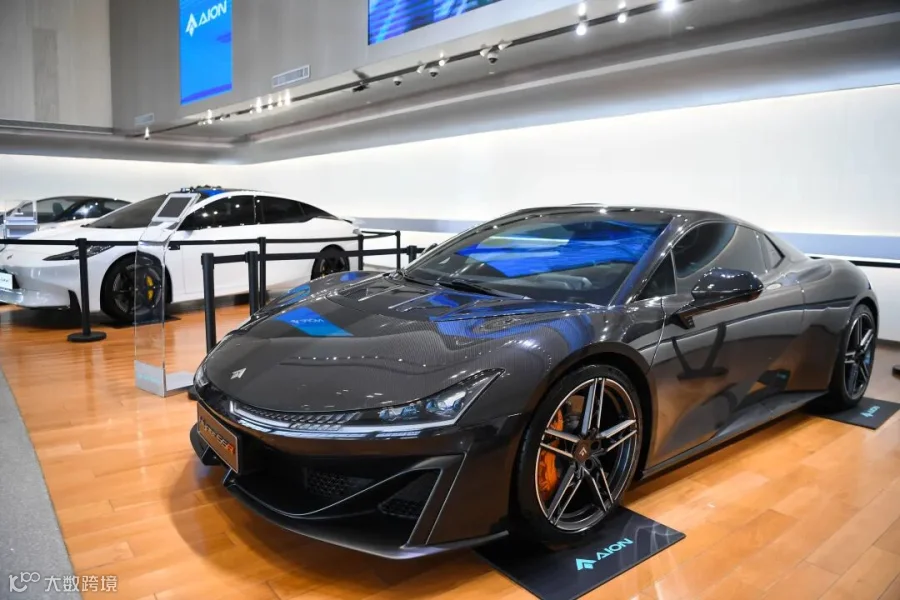
▲ Electrical vehicles displayed in Guangzhou, Guangdong province. (PHOTO: XINHUA)
Compared to conventional lithium-ion batteries that use flammable liquid electrolytes, ASSLBs offer superior safety and higher energy density by employing solid-state inorganic electrolytes.
To achieve high energy density, ASSLBs require positive electrode materials with high ionic conductivity and good compressibility at room temperature, enabling greater loading of active substances. Traditional oxide-based materials—such as LiCoO2 and LiFePO4—typically allow only up to 80 wt% mass loading and face limitations in both ionic conduction and compressibility.
The USTC team synthesized lithium titanium chloride (Li3TiCl6) as a novel cathode material for ASSLBs. This chloride-based compound exhibits an ionic conductivity of 1.04 mS cm−1 at 25 °C, excellent compressibility, and stable electrochemical performance.
Using this material, the active component loading in the composite cathode reached 95 wt%, significantly exceeding conventional oxides. In testing, the all-solid-state cell maintained over 80% capacity after 388 cycles and retained 62.3% capacity even after 2,500 cycles under a current density of 95.2 mA g−1 at room temperature.
The findings were published in Nature Communications on March 13, 2023.
Editor | SONG Ziyan
Supervisor | TIAN Xueke