

共促科技合作 共建共享未来
国际科技交流大会在京举行 多国专家呼吁加强全球协同创新
By YU Haoyuan
In the face of pressing global challenges, international collaboration in science and technology is more critical than ever. A major event held in Beijing on August 13, co-hosted by the China Association for Science and Technology (CAST) and the World Federation of Scientific Workers (WFSW), brought together experts from Europe, Africa, and the Americas to promote open dialogue and cooperation in the global sci-tech community.
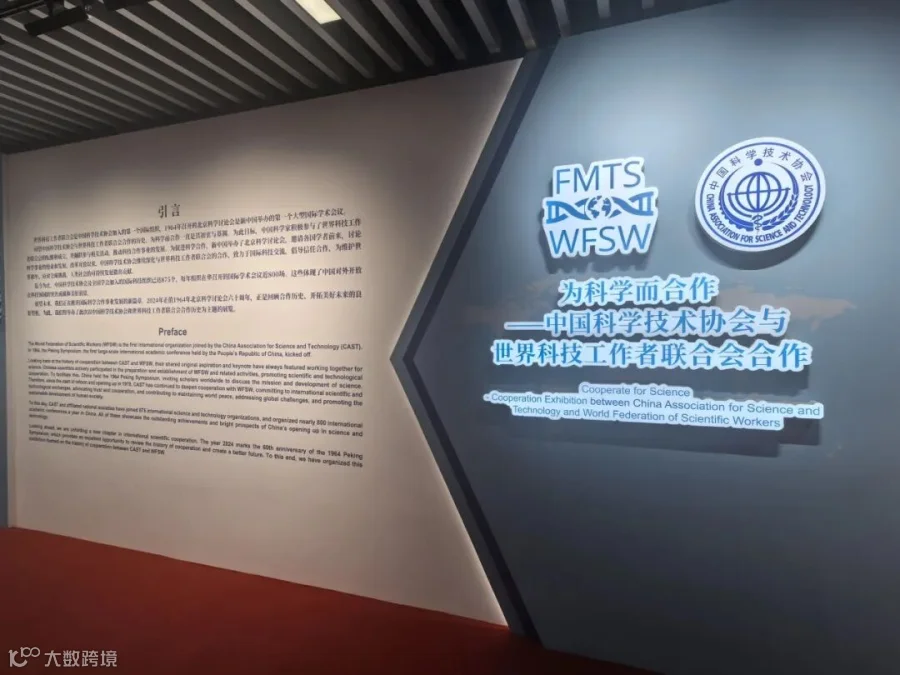
▲ "Cooperate for Science" 展览在北京市举办,由中国科协与世界科技工作者联合会共同主办。(PHOTO: SCIENCE AND TECHNOLOGY DAILY)
Pascal Janots, treasurer of WFSW, highlighted a significant gap in media coverage between China's scientific achievements and their recognition in the West. He noted that despite milestones such as the Chang'e-6 mission—the first to return samples from the far side of the moon—receiving minimal attention in mainstream European outlets, China has become a pivotal player in addressing global challenges like climate change, energy security, and resource sustainability.
Janots urged European media and the public to overcome biases and acknowledge China’s contributions on par with those from Western nations, emphasizing that equitable recognition is essential for fostering trust and collaboration.
Malik Fall, WFSW vice-president, affirmed China’s leadership in science and technology, quoting the ancient adage, “Seek knowledge even if you have to go as far as China,” to underscore its growing influence. He emphasized Africa’s vast research potential and need for technological advancement, noting that China’s expertise offers valuable support for development across the continent.
Fall proposed establishing an African scientific research fund to deepen Sino-African cooperation, suggesting joint publications and practical projects as key avenues for mutual benefit. He described the partnership as inherently win-win: China gains access to rich natural resources and diverse research environments, while Africa benefits from technical transfer and capacity building.
Janots echoed this sentiment, calling for CAST and WFSW to use partnerships with African and Latin American countries as strategic entry points for broader global engagement.
Shi Yigong, CAST vice-president and academician of the Chinese Academy of Sciences, outlined four pillars for advancing international collaboration: promoting the spirit of science, maintaining openness, building trust, and expanding cooperation scope. He stressed that scientific progress transcends borders and called for a collective effort to build a global community of shared future among science and technology workers.
"I hope future cooperation will be enhanced and world sci-tech workers can jointly build a community with a shared future," he said.
Editor | SONG Ziyan
Supervisor | FANG Linlin