


清华全球第10!中国高校国际声誉持续攀升
国际学术合作受关注,美多所高校呼吁放宽对华签证限制
Lately, in the new Times Higher Education annual Reputation Ranking, Tsinghua University was named the 10th most prestigious university in the world, and China also saw Peking University at 15, five universities in the top 100 and other five new universities ranked altogether, making a record 17 in the top 200.
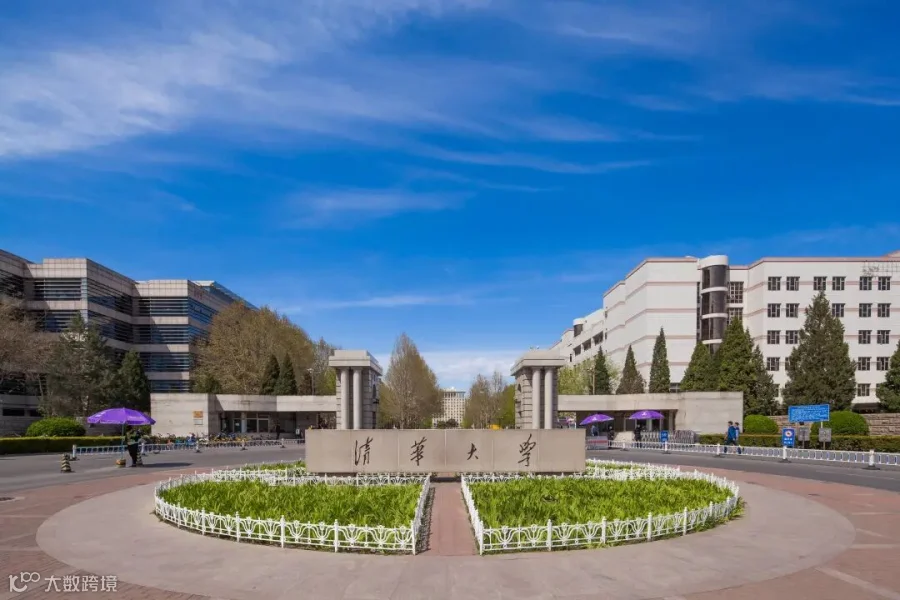
▲ Tsinghua University (PHOTO: VCG)
The rankings are helping attract more and more American universities and scientists to consider Sino-American bilateral cultural exchanges and educational cooperation as opposed to visa restrictions and racial bias towards Chinese scientists.
Although the reputation of China's universities has been steadily rising for some time, this is the first time it has been at the elite end of the global higher education market.
"China's breakthrough into the top 10 and its results across the table show that its excellence in higher education is increasingly coming to the notice of the wider world," said Phil Baty, chief knowledge officer at Times Higher Education.
Chinese universities actively promote academic exchanges and attract foreign talents while American universities worry that visa restrictions on Chinese students may undermine American innovation. Scientists' concerns over racial bias have also intensified amid current Sino-American relations.
▲ PHOTO: VCG
Some U.S. universities and research institutions warn that tightened visa policies restricting academic talent from China could weaken America’s scientific and technological edge.
Data from the U.S. State Department shows that over 500 Chinese students had their visas denied this year, while more than 1,000 Chinese nationals had their visas revoked last year over national security concerns.
Christo Wilson, an associate professor of computer science at Northeastern University, said one of his doctoral students from China has been unable to enter the U.S. since 2020. “It takes a long period of training and a high level of very specific expertise to run some of these labor-intensive experiments,” he explained, noting that the work cannot easily be reassigned.
Randy Katz, vice chancellor for research at the University of California, Berkeley, criticized such broad-brush screening practices. “Focusing on institutional affiliation to determine whether someone is a national threat is not a surgical strike but more like carpet bombing,” Katz said.
A survey of nearly 2,000 scientists found that the U.S. government’s efforts to root out espionage in labs and businesses have fueled fear among scientists of Chinese descent and damaged collaborative ties with researchers in China.
More scientists of Chinese heritage reported facing difficulties in securing research funding and career advancement due to their ethnicity.
Andrea Liu, a physicist at the University of Pennsylvania, expressed concern over the growing disparity in experiences between Chinese and non-Chinese scientists. “It is difficult for me to see how anyone who is following the news on ‘the China Initiative’ could fully support all the investigations,” she said. “We still have quite a bit of work to do to educate our non-Chinese colleagues on what has been happening.”
Pressure is mounting to end or reform the initiative. In September, 177 faculty members from Stanford University sent a letter to U.S. Attorney General Merrick Garland urging the termination of “the China Initiative.”
Faculty from other leading institutions have echoed the call. The American Physical Society (APS) wrote to President Biden’s science adviser and the attorney general, recommending a policy shift, including renaming the initiative.