


geomagnetic storms: What are they and how do they affect us?
The recent occurrence of geomagnetic storms has sparked public interest. What exactly is a geomagnetic storm, and how does it impact Earth and human activities? Experts provide key insights into this natural phenomenon.
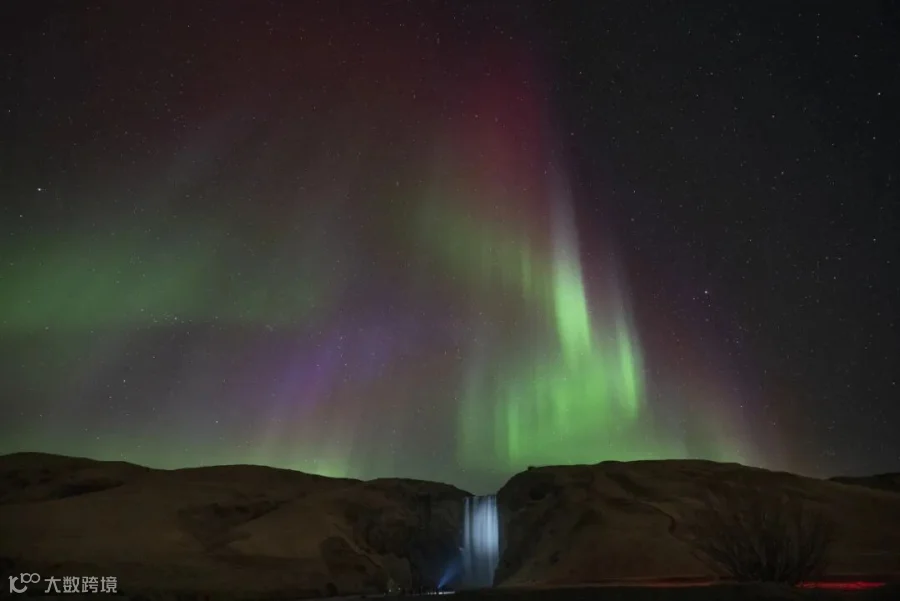
Geomagnetic storms result from solar coronal mass ejections whose embedded magnetic fields collide with Earth's magnetosphere at high speed, causing significant disturbances in the planet's magnetic field.
He Jiansen, Deputy Dean of the School of Earth and Space Sciences at Peking University, explained that geomagnetic storms are essentially the Earth's response to solar eruptions. The sun undergoes an approximately 11-year magnetic cycle, and 2024 falls within the 25th solar activity cycle—also known as a peak year for sunspots. During this period, increased solar eruptions release large amounts of energy into space.
The China Meteorological Administration (CMA) noted that heightened geomagnetic activity can increase atmospheric drag on orbiting objects, potentially lowering the altitude of space stations. It may also lead to larger positioning errors in satellite navigation systems.
Cai Zheng, Associate Professor in the Department of Astronomy at Tsinghua University, pointed out that geomagnetic storms can disrupt radio wave propagation, interfering with ground-based communications and satellite signals. This interference may affect GPS accuracy, mobile networks, and satellite television reception.
In extreme cases, strong geomagnetic storms can induce currents in power transmission lines, increasing load and potentially damaging transformers or other grid infrastructure, which could lead to regional power outages.
However, experts emphasize that these events pose no significant threat to human health. Most everyday electronic devices remain unaffected. Astronauts in space, however, may face higher radiation exposure during intense storms.
One visible effect of geomagnetic storms is the aurora. When high-energy charged particles enter Earth's atmosphere along magnetic field lines, they collide with atmospheric atoms, releasing energy that produces luminous displays—commonly seen near polar regions.
During periods of intense solar activity, such as in 2024, auroras can be observed at lower latitudes. This makes the current year a favorable time for aurora viewing, especially when major geomagnetic storms occur.