


PC
SWMM
今天我们分享模拟不同的地下水流动条件地下水编辑器系数。
PCSWMM
Linear reservoir
The saturated zone of the aquifer can be represented as a storage reservoir whose lateral outflow is linearly proportional to the difference in water levels. The lateral flow equation can be written as:
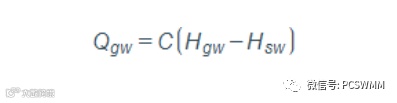
The conversion between these parameters is:
A 1=C
B 1=1
A 2=C (cfs/ac/ft or cms/ha/m)
B 2=1
A 3=0
C=Const to represent linearity > 0
PCSWMM
Seepage to a channel: Dupuit-Forchheimer Equation
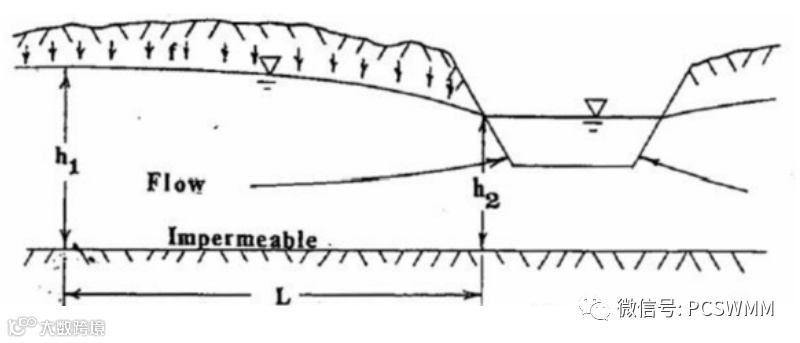
As stated in the SWMM User Manual, the Dupuit-Forchheimer approximation for groundwater flow to a channel can be represented as:
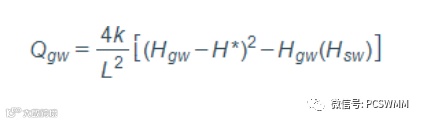
Lateral groundwater flow is represented with the following general equation:

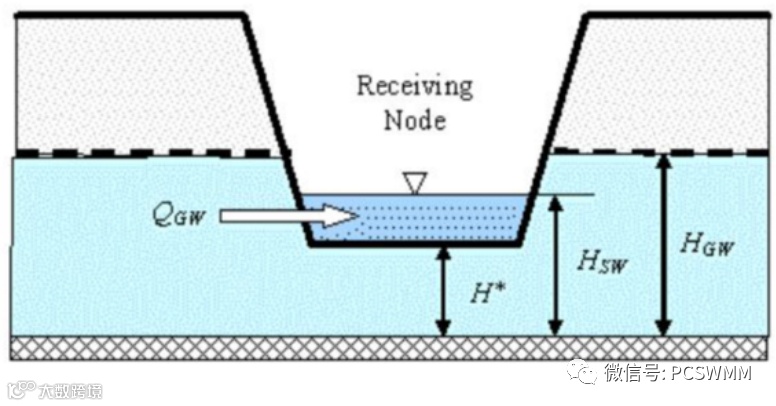
After computing the water fluxes that exist during a given time step, a mass balance is written for the change in water volume stored in each zone so that a new water table depth and unsaturated zone moisture content can be computed for the next time step.
Lateral groundwater equation provides flexibility to represent different sub-surface flow conditions including Darcy flow, seepage to a channel or tile drainage.
The conversion between these parameters is:
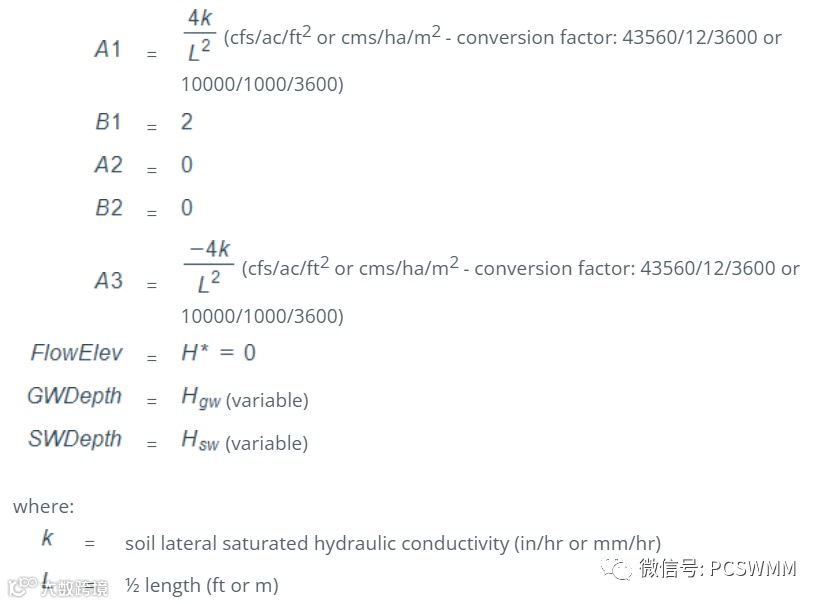
The calculation of L is approximated as ½ Length (the subcatchment flow length) since SWMM’s groundwater elevation really represents an “average” value, taken as (H1 + H2)/2 from the figure below (Huber & Dickinson, 1992).
PCSWMM
Tile drainage: Hooghoudt Equation
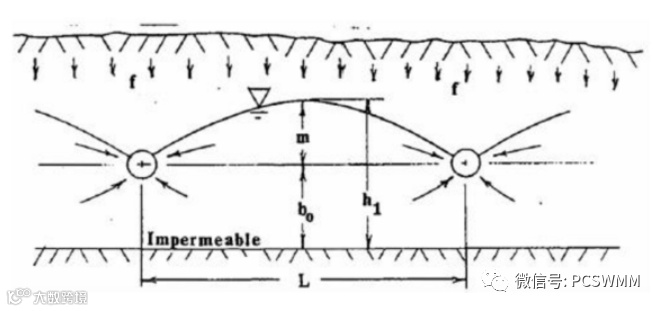
As stated in the SWMM User Manual, the Hooghoudt equation for steady-state groundwater flow to a system of drain tiles can be represented as:
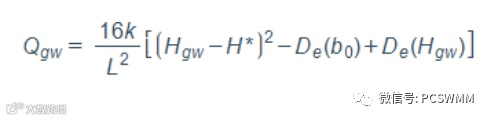
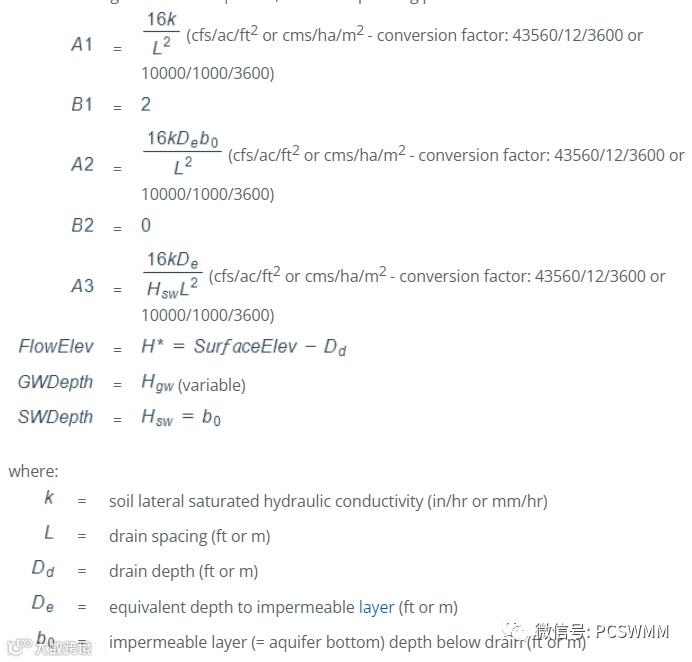
In the SWMM groundwater equation, the corresponding parameters are:
US EPA SWMM5 engines 5.1 and greater allows two lateral equations: one with the equation discussed above and another one that can be user defined. The user defined equation supports other additional parameters including: unsaturated zone moisture content, hydraulic conductivity, soil porosity, surface infiltration (fl), soil percolation (fL) and subcatchment area.
版权
文章版权归CHI所有

模型采购和咨询请联系:
龙网科技,王女士,13752149150