正如SECS/GEM系列的特性和优点的第一篇文章所指出的,SECS/GEM标准定义了一个可以在任何设备上使用的标准化接口。GEM接口通过状态变量、数据变量、收集事件、警报、数据格式、错误代码、SECS-II消息和其他可选的GEM功能公开设备的功能。GEM标准要求每台设备都附带文档;确保工厂拥有使用设备GEM接口所需的信息。该文档通常称为GEM手册。
GEM手册可以以多种形式分发。目前,大多数GEM手册都是以Word、Excel或PDF文档的形式提供的。GEM手册中的大量信息被用于做出购买决策、开发主机软件和测试设备。对于一个功能完整的GEM接口,GEM手册必须包含以下主题: 状态模型、场景、数据收集、警报管理、远程控制、设备常量、流程配方管理、物料移动、终端服务、错误消息、时钟、假脱机、控制、支持的SECS-II消息、GEM遵从性声明和数据项格式。为了使这篇文章保持一个合理的长度,我们将只讨论一些必要的主题。
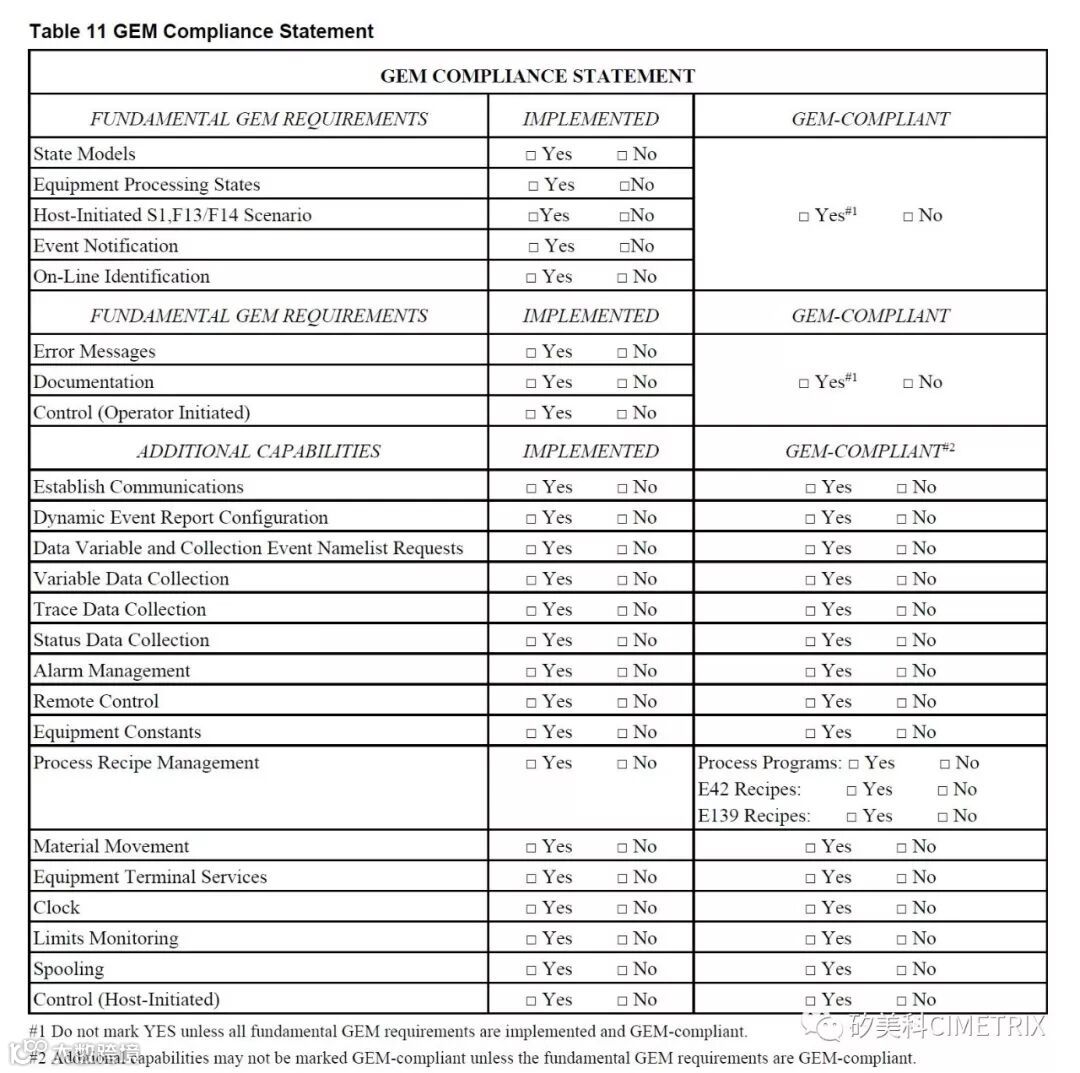
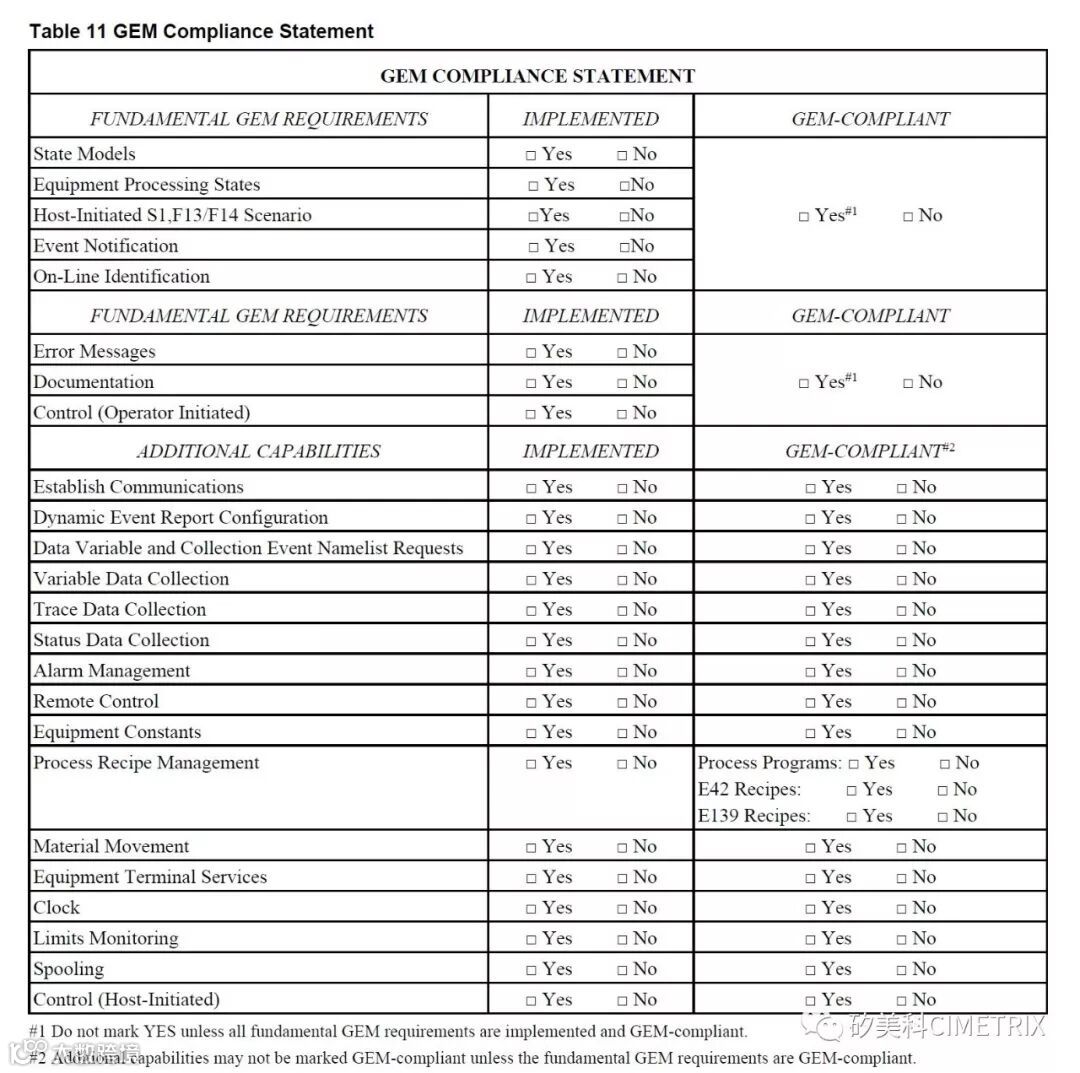
GEM遵从性声明
遵从性声明是要审阅的第一个主题之一。它是一种快速、简单地了解设备接口特性的方法。制造商需要标记在设备上实现了哪些GEM功能,以及这些功能是否以符合GEM标准的方式实现。
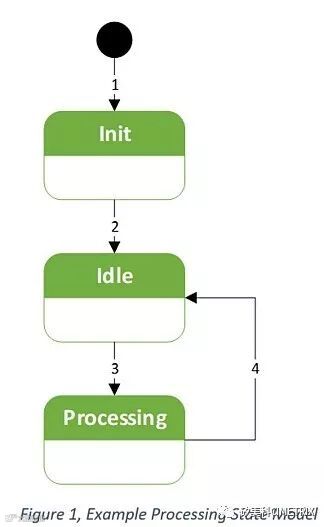
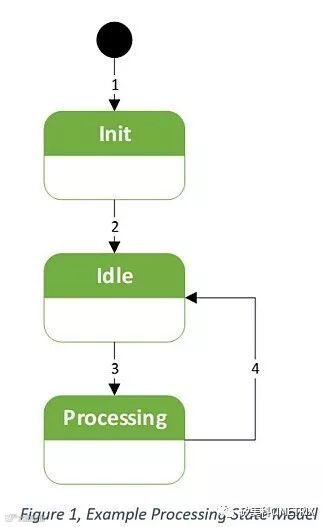
状态模型
状态模型是GEM的基本功能,因此可以在每个设备上实现。该功能定义了设备的通信、控制和假脱机行为。设备必须提供处理状态模型。但是,定义出一个适用于所有设备的工艺状态的状态机是不可能的。本标准规定了所有设备应具有相同的加工行为。每个状态模型都必须用状态模型图、转换表和每个状态的文本描述来记录归档。关于每个状态模型的一致和详细信息使工厂能够在得到GEM手册之后立即开始编写主机应用程序。
警报、收集事件、设备常数、数据变量和状态变量
设备收集数据的一大部分都是警报、收集事件和变量。所以需要将他们包含在GEM手册中并不意外。设备上的每个警报都应该在GEM手册中有其ID、名称、描述和相关的Set/Clear事件。每个集合事件的文档应该包括ID、名称、描述和关联变量列表。所有变量的文档将包括ID、名称、描述和数据类型。还应该在适当的时候提供变量默认值或值范围的信息。虽然不是必需的,但通常将所有这些信息显示在五个容易找到的表中。对于以下每一类都有一个表: 警报、收集事件、设备常量、数据变量和状态变量。参见下面的示例。
警报

收集事件

状态变量

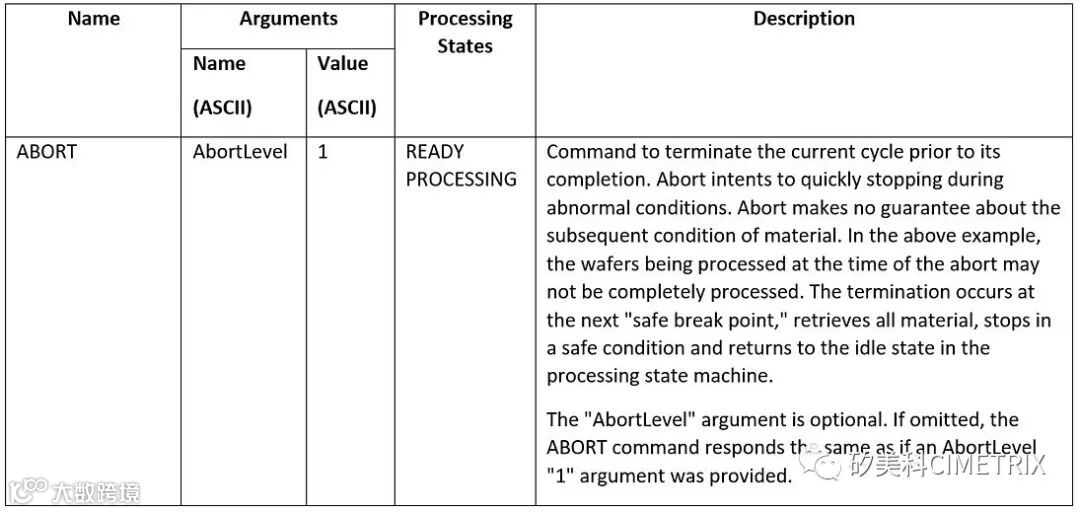
远程控制
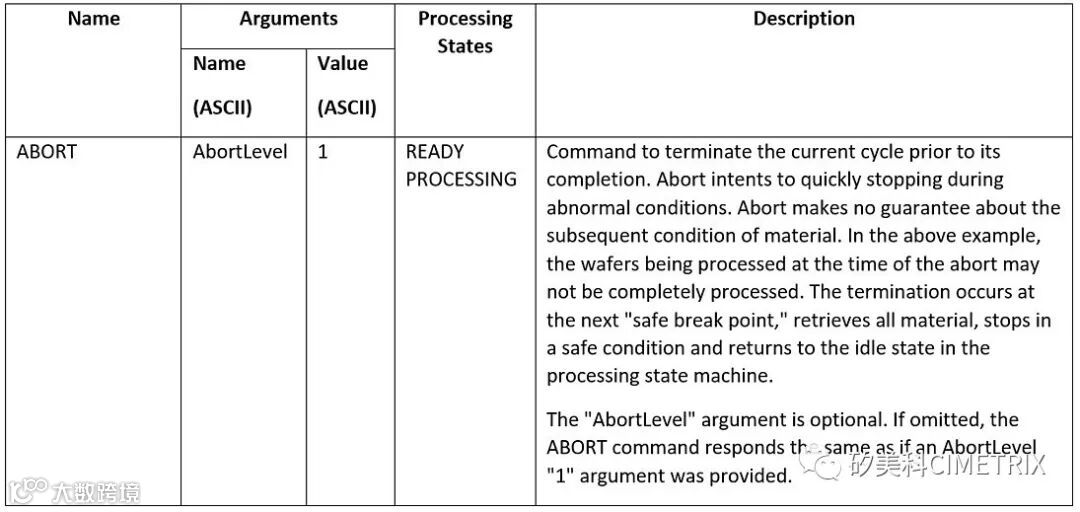
一旦工厂能够从设备中收集数据,他们就开始研究如何控制设备。远程控制是GEM功能,它允许主机应用程序请求设备执行一个操作。所有远程命令都应该包含在手册中,包括它的名称、描述以及可能随命令一起发送的每个命令参数的详细信息。命令参数的详细信息应该包括名称、格式和描述。下面显示了一个示例。
SMN 和SEDD
GEM手册很少采用易于在软件中解析的格式。这通常会导致重复代码,并进行一些小的更改,以便与其他设备通信。SEMI E172 SECS设备数据字典(SEDD)和E173 SECS消息表示法(SMN)是两个标准,它们可以极大地提高主机应用程序的灵活性和可重用性。SEDD是一个易于在软件中分布和解析的xml文件。SEDD可以被认为是一个现代化的GEM手册,因为它包含了与GEM手册中相同的信息。例如,SEDD文件包含关于每个变量、收集事件、警报和受支持的SECS-II消息的详细信息。SEDD文件使用SMN表示数据项、变量和SECS-II消息。SMN也是XML格式,它是第一个定义表达数据项和SECS-II消息的表示法的标准。这意味着单个应用程序可以读取SEDD文件,进行一个简短的配置过程,然后立即开始使用设备的GEM接口。这些特性允许单个应用程序用于多个设备,而不是为每个设备创建略有不同的变体。
总结
GEM手册是GEM标准所要求的与每个设备一起提供的重要文档。当遇到关于设备的GEM接口的问题时,GEM手册应该是寻找答案的首选。SEMI也在通过更新现有标准和创建新标准,继续改进GEM手册的内容和灵活性。
SECS/GEM series: Documentation
As the first article in this Features and Benefits of SECS/GEM series points out, the SECS/GEM standards define a standardized interface that may be used on any equipment. A GEM interface exposes an equipment's capabilities through status variables, data variables, collection events, alarms, data formats, error codes, SECS-II messages, and other optional GEM capabilities. The GEM standard requires each equipment to come with documentation; ensuring a factory has the information it needs to use an equipment’s GEM interface. This documentation is commonly referred to as the GEM manual.
The GEM manual may be distributed in many ways. Currently, most GEM manuals are provided digitally in a Word, Excel, or PDF document. The vast amount of information in a GEM manual is used to make purchasing decisions, develop host software, and test equipment. For a full GEM interface, the GEM manual must include the following topics: State Models, Scenarios, Data Collection, Alarm management, Remote Control, Equipment Constants, Process Recipe Management, Material Movement, Terminal Services, ErrorMessages, Clock, Spooling, Control, Supported SECS-II messages, GEM Compliance statement, and Data Item Formats. To keep this post a reasonable length, we will only cover a few of the required topics.
GEM Compliance Statement
The compliance statement is one of the first topics to be reviewed. It is a quick and easy way to understand the features of anequipment’s interface. The manufacturer is required to mark which GEM capabilities are implemented on the equipment, and if they are implemented in away that is compliant with the GEM standard.
State Models
State Models is a fundamental GEM capability and is therefore implemented on every equipment. This capability defines the Communication, Control, and spooling behavior of the equipment. A processing state model must be provided. However, it is not possible to define a processing state machine that can be used on every equipment. The processing behaviors that should be the same for all equipment are specified by the standard. Each state model must be documented with a state model diagram, a transitiontable, and a text description of every state. The consistent and detailed information about each state model enables a factory to start writing a host application as soon as they have the GEM manual.
Alarms, Collection Events, Equipment Constants, Data Variables, and Status Variables
Alarms, Collection Events, and Variables are large components in gathering data from an equipment. It should not be a surprise that these are required to be in the GEM manual. Each alarm on the equipment should have its ID, name, description, and associated Set/Clear events in the GEM manual. The documentation for each collection event should include the ID, name, description, and a list of associated variables. The documentation for all variables will include an ID, name, description, and the data type. Information about a variable default value or value range should also be provided when appropriate. Although not required, it is common to display all this information in five tables that are easy to find. There would be a single table for each of the following: alarms, collection events, equipment constants, data variables, and status variables. See the examples below.
Alarms

Collection Events

Status Variables

Remote Control
Once a factory can gather data from an equipment they start looking at how to control the equipment. Remote Control is the GEM capability that allows a host application to request an equipment to perform an action. Each remote command should be in the manual with its name, description, and details about each command parameter that may be sent with the command. The details of a command parameter should include the name, the format, and a description. An example is shown below.
SMN and SEDD
GEM manuals rarely come in a format that is easy to parse in software. This often results in duplicating code and making small changes in order to communicate with other equipment. SEMI E172 SECS Equipment Data Dictionary (SEDD) and E173 SECS Message Notation (SMN) are two standards that can drastically increase the flexibility and reusability of a host application. SEDD is an xml file that is easily distributed and parsed in software. SEDD can be considered a modernized GEM manual because it contains much of the same information that is found in a GEM manual. For example, a SEDD file contains details about every variable, collection event, alarm, and supported SECS-II message. A SEDD file uses SMN to represent the data items, variables, and SECS-II messages. SMN is also XML and is the first standard to define a notation for representing data items and SECS-II messages. This means a single application can read a SEDD file, have a short configuration process, and then immediately start using the GEM interface of an equipment. These features allow a single application to be used with multiple equipment instead of creating slightly different variants for each equipment.
Wrap up
The GEM manual is a crucial piece of documentation that is required by the GEM standard to be provided with every equipment. The GEM Manual should be the first place to look for an answer when there is a question about an equipment’s GEM interface. SEMI continues to improve the content and flexibility of a GEM manual by updating existing standards and creating newstandards.
Topics: SECS/GEM, SmartManufacturing/Industry 4.0, SECS/GEMFeatures & Benefits Series
Posted by Joe Cravotta,Client Support EngineeronMar 6, 2018 11:27:00 AM