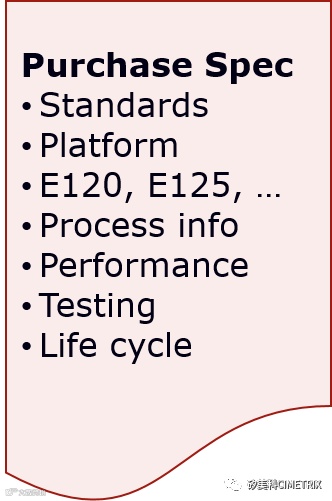
在2017年12月19日发布的本系列文章的介绍中,我们列出了一些生产制造的利益相关者,他们的工作目标是直接由我们在后续文章中强调的应用程序来实现的。然而,在讨论这些应用程序的具体功能和好处之前,似乎应该及时地与您分享一下EDA主要实践者为了确保他们所购买的设备将支持这些应用程序所使用的流程。“适当的”,因为您可能需要审查和更新您的采购规范,以便在标准没有直接涵盖的领域(如模型内容、性能和稳定性)清楚地传达您的需求;“及时”是因为我们在Cimetrix最近举办了多次客户研讨会,在讨论中有效地利用和改进了这一过程。
特别是,本文解释了关键利益相关者群体的关注是怎样被“翻译”成特定的EDA接口需求,然后可以直接包含在采购规范中。随着越来越多的半导体制造企业采取这一做法,有效地“提高了整个行业的标准”,我们的设备供应商的集体能力将随之提高,以满足所有人的利益。
在上一篇文章中,我们建议制造业利益相关者、KPI、应用程序和设备数据都是相互关联的。由于这个价值链的最终受益者是利益相关者本身,因此挑战就变成了如何有效地捕获他们的需求……因为这些人都是忙碌的人,他们的时间都很宝贵。在过去的18个月里,通过对领先制造商的一系列访谈,我们发现实现这一目标的最佳方法是通过一个有重点的、互动的问卷调查过程。
通过询问关于人们日常任务、问题领域、期望、成功标准和其他经常关注的项目的非常具体的问题,我们可以获得一个通用的EDA购买规范大纲,并在几天内生成一组完整的、特定于工厂的EDA购买规范。当您考虑到设备的价值和数量可能受到影响……以及没有明确表达这些需求的机会成本时,这段时间是很值得的。
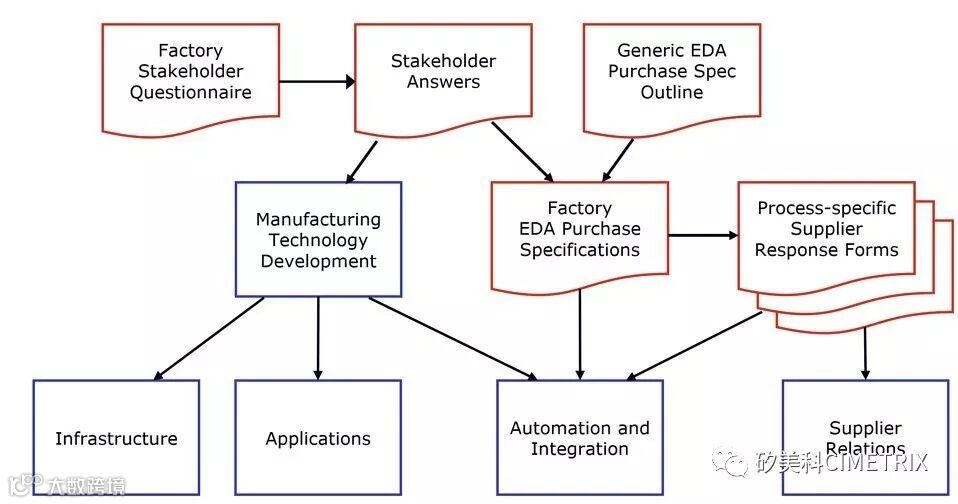
利益相关者对问卷的回答也有更广泛的用途,因为除了驱动设备采购规范的内容外,它们还形成了工厂内许多制造技术发展的基础。整个过程如下图所示;文档和相关工件以红色显示; 受影响的组织(其中有很多!)用蓝色表示。
一篇博客文章只能涵盖整个过程的一小部分,但是下面的示例问题应该能让您了解它是如何工作的。
针对制造自动化和技术开发利益相关者的示例问题包括:
您熟悉SEMIE157(模块工艺跟踪)吗?它是否有在您当前的任何工具上实现的?如果是,您是否有在监视这些事件?
您是否要求实现被引用的300mm SEMI标准中定义的所有状态机、状态、状态转换事件和对象的属性?如果没有,为什么没有?
您目前是否在任何线上的生产应用程序比如FDC、PHM、R2Rcontrol或其他应用程序中使用来自 sub-fab系统的信息,?
如果是,支持什么范围的设备,以及如何支持(泵、冷却器、减排系统……)?
如何表达您对工艺变量报告的性能预期,例如采样频率、每个腔的参数个数、报告大小、报告的所有数据的总带宽、事件生成的最大延迟等等?
针对生产运营和工程支持人员的示例问题包括:
你们如何分别安排Carrier从设备的提取和到设备的发放?这是使用AMHS/MCS/OHT系统组件中的算法来完成的,还是依据从设备中获得关于待完成批次和工具可用性的实时更新?
您是否需要具有从fab外检查的基本机台状态的远程访问功能?
您是否要求供应商提供内置的数据收集方案(预定义的报告、宏等)来支持常见的监视、维护或诊断流程?
您是否有一个必须能被收集的参数/事件列表来支持生产应用程序组合?
您是否监视生产制造机台上的任何低电平执行器/传感器信号?
对采购和供应商关系组织的示例问题包括:
在设备供应商将设备运至你们工厂之前,你们要求他们做什么符合性测试/报告?你曾经/有时/总是访问供应商的网站来观察这个过程吗?在设备发货后呢?
对于自动化需求,您是否有标准的供应商反馈表或清单?如果是,您对它的清晰性、完整性和评估反馈的易用性满意吗?
在设备采购周期的哪个阶段,您会检查接口软件的功能(事件/参数列表、模型结构/内容、预测性能等)?何时验证这些功能?
您是否为接口软件指定了消费金额(例如,设备购买价格的某个百分比)?
如果上述讨论引发了这样一个问题:“我想知道我们的EDA购买规格是否足以解决我们在未来几年将面临的制造挑战?”给请联系我们,我们很乐意讨论如何通过一个有效的现场研讨会来支持您的利益相关者和自动化团队,从而一劳永逸地解决这个问题……这可能是您在制定自己公司的EDA实现路线图时所采取的最重要的下一步。
EDA Applications and Benefits for Smart Manufacturing Episode 2: The Stakeholder-Driven Requirements Development Process
In the introduction to this series posted December 19, 2017,we listed some of the manufacturing stakeholders whose work objectives are directly addressed by the applications we'll highlight in subsequent postings. Before getting into the specific capabilities and benefits of these applications, however, it seemed appropriate and timely to share a little bit about the process that the leading EDA practitioners use to ensure the equipment they are purchasing will support these applications. “Appropriate” becauseyou may need to review and update your own purchasing specifications to clearly convey your requirements in the areas that are not directly covered by the standards (like model content, performance, and stability); "timely” because we at Cimetrix have recently conducted a number of customer workshops and seminars in which this process was effectively used and refined.
In particular, this article explains how the care abouts of key stakeholder groups are translated”into specific EDA interface requirements which can then be directly included in the purchasing specifications. As more semiconductor manufacturing companies take this approach, effectively “raising the bar” for the entire industry, the collective capability of our equipment suppliers will increase in response, to everyone's benefit.
In the previous post, we suggested that manufacturing stakeholders, KPIs, applications, and equipment data are all interrelated. Since the ultimate beneficiaries in this value chain are the stakeholders themselves, the challenge then becomes how to capture their requirements effectively… because these are busy people whose time is precious. Through a number of interviews with leading manufacturers over the past 18 months, we discovered that the best way to accomplish this is through a focused, interactive questionnaire process.
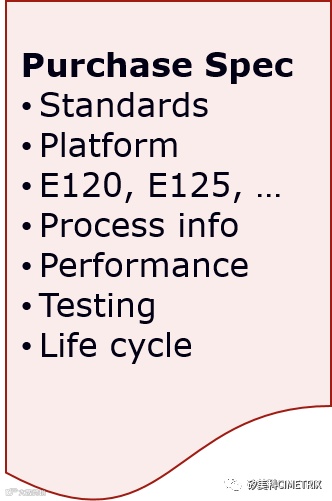
By asking very specific questions about people's daily tasks, problem areas, expectations, success criteria, and other items of constant concern, we can take a generic EDA purchase specification outline and generate a complete, factory-specific set of EDA purchase specifications in a matter of days. This is time well-spent when you consider the value and volume of equipment potentially affected… and the opportunity cost of not having these requirements clearly expressed.
The stakeholder answers to the questionnaire serve a broader purpose as well, because in addition to driving the content of the equipment purchase specifications, they also form the basis for a lot of manufacturing technology development within the factory. This overall process is shown in the figure below; documents and related artifacts are shown in red; the affected organizations (of which there are many!) are shown in blue.
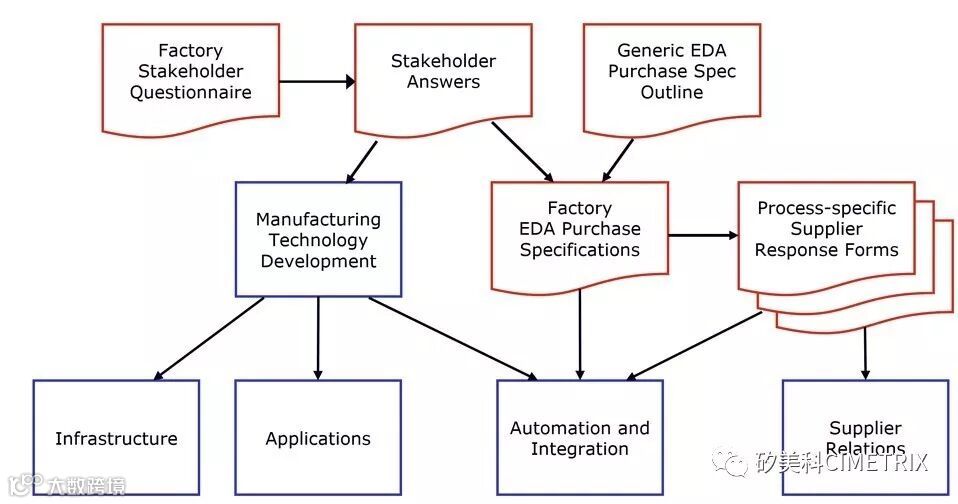
A blog posting can only hope cover a fraction of this overall process, but the sample questions below should give you an idea of how it works.
Sample questions for the Manufacturing Automation and Technology Development stakeholders include:
Are you familiar with SEMI E157 (ModuleProcess Tracking)? Is it implemented on any of your current tools, and if so,do you monitor those events?
Do you require that all state machines, states, state transition events, and attributes of the objects defined in the referenced 300mm SEMI Standards be implemented? If not, why not?
Do you currently use information from sub-fabsystems in any of your on-line production applications, like FDC, PHM, R2Rcontrol, or others? If so, what range of equipment is supported, and how(pumps, chillers, a batement systems …)?
How do you express performance expectations for process variable reporting, such as sampling frequency, # parameters per chamber, report sizes, total bandwidth of all data reported, maximum latency of event generation, etc.?
Sample questions for Production Operations and Engineering Support people include:
How do you schedule carrier pick-up and delivery from/to equipment, respectively? Is this done using algorithms in the AMHS/MCS/OHT system components, or do you get real-time updates from the equipment about pending lot completion and tool availability?
Do you need to have remote access capability for checking basic tool status outside the fab?
Do you require your suppliers to provide built-in data collection schemes (pre-defined reports, macros, etc.) to support common monitoring, maintenance, or diagnostic processes?
Do you have a list of parameters/events that must be collectable to support your production application portfolio?
Do you monitor any of the low-level actuator/sensor signals in the various mechanisms that make up a manufacturing tool?
Sample questions for the Procurement and Supplier Relations organizations include:
What compliance tests/reports do you require of the equipment suppliers before they ship equipment to your factories? Do you ever/sometimes/always visit the supplier's site to observe this process? What about after delivery?
Do you have a standard supplier response sheet or checklist for your automation requirements? If so, are you satisfied with its clarity, completeness, and ease of use for evaluating responses?
At what point in the equipment purchasing cycle do you review the capabilities of the interface software (event/paramete rlists, model structure/content, projected performance, etc.)? When are these capabilities validated?
Do you assign a monetary value (say, some % of the equipment purchase price) to the interface software?
If the above discussion triggers the question"I wonder if our EDA purchase specs aresufficient to address the manufacturing challenges we'll face in the next fewyears?" give us a call. We'll be happy to talk about how to support your stakeholders and automation team with an effective onsite workshop to address this question once and for all… It could be the most important next step you take in formulating you own company’s EDA implementation roadmap.
Topics: EDA/Interface A, Smart Manufacturing/Industry 4.0, EDA in Smart Manufacturing Series
Posted by Alan Weber: Vice President, New Product Innovationson Feb 7, 2018 11:19:00 AM