
《个人数据保护法》:员工数据管理指南
Keywords: 越南 Vietnam;网络安全与数据合规 Cybersecurity and Data Compliance;政府事务 Government Affairs

即将于2026年1月1日正式生效的《个人数据保护法(2025)》(以下简称“《个保法(2025)》”),标志着越南在隐私与个人数据保护法律框架领域实现重大发展。随着企业运营模式日益向数据驱动转型,员工信息已成为使用最广泛且具有高度法律敏感性的数据类型之一。招聘记录、身份识别数据、绩效评估等常规信息,以及健康详情、生物识别标识等敏感信息,均被纳入《个保法(2025)》的规制范畴。若企业对上述数据管理不当,或将面临重大法律责任。
The Personal Data Protection Law 2025 ("PDPL 2025"), which takes effect on 1 January 2026, represents a major development in Vietnam's legal framework for privacy and personal data protection. As businesses become increasingly data-driven, employee information has emerged as one of the most used, and legally sensitive, types of data. Routine categories of information such as recruitment records, identification data, or performance evaluations, along with sensitive information like health details or biometric identifiers, all fall within the scope of PDPL 2025. If managed improperly, these categories of data may expose businesses to significant legal liability.

《个保法(2025)》的一项核心变革,是大幅拓展了员工个人数据的界定范围,同时强化了透明度要求。根据新法规定,几乎所有与员工相关的信息均被认定为个人数据,包括基本身份信息、联系方式、薪酬与薪资发放信息、银行账号、健康数据、位置信息,甚至工作场所监控录像。基于这一宽泛的界定标准,企业在收集或处理员工数据时,必须明确告知员工相关事宜。告知内容需包括数据处理目的、收集范围、适用的留存期限以及员工享有的数据相关权利。尤为关键的是,企业必须能够证明其切实履行了上述透明度义务,而非仅在劳动合同或内部规章制度中提及相关要求。
A central change introduced by PDPL 2025 is the substantial expansion of what constitutes employee personal data, accompanied by a reinforced requirement for transparency. Under the new law, nearly all information relating to employees is regarded as personal data. This includes basic identification and contact details, salary and payroll information, bank account numbers, health data, location information, and even workplace camera footage. Because of this broad classification, businesses are required to clearly inform employees whenever their data is collected or processed. Such notice must include the purposes of processing, the scope of data collected, the applicable retention periods, and the rights employees have concerned their data. Crucially, businesses must be able to demonstrate actual compliance with these transparency obligations rather than merely referencing them in employment contracts or internal rules.
《个保法(2025)》还加强了特定员工数据处理活动中的明示同意要求。任何涉及高度敏感或侵入性的处理行为——例如采用指纹或人脸识别考勤系统、收集健康信息、对公司车辆或工作设备进行定位追踪、将监控录像用于安防以外的目的、向第三方共享员工数据或将此类数据传输至境外——均需获得员工明确、具体且自愿的明示同意,方可开展相关操作。为确保同意的有效性,企业必须提供清晰说明、获取员工的积极确认同意、留存相关同意记录,并允许员工随时撤回同意。预先收集的数据或默示同意均不符合新法规定的标准。
PDPL 2025 also strengthens the requirement for explicit consent in certain employee-data processing activities. Any processing that involves particularly sensitive or intrusive practices—such as fingerprint or facial-recognition timekeeping systems, the collection of health information, location tracking of company vehicles or work devices, the use of security camera footage for purposes beyond security, the sharing of employee data with third parties, or the transfer of such data abroad, may only be conducted with the employee's clear, specific, and voluntary explicit consent. For consent to be valid, businesses must provide clear explanations, obtain the employee's affirmative agreement, keep records of that consent, and allow the employee to withdraw it at any time. Pre-collected data or implied consent does not meet the standards set by the new law.
对于敏感个人数据类别,尤其是生物识别信息和健康信息,《个保法(2025)》进一步要求企业在进行任何处理活动前需开展数据保护影响评估(DPIA)。该评估需判断数据处理是否具有必要性、评估其对员工隐私的影响、考量数据安全事件发生时的潜在风险,并制定降低此类风险的技术或组织措施。监管机构在检查过程中可能要求查阅该评估报告,因此数据保护影响评估已成为企业合规体系的关键组成部分。
For categories of sensitive personal data, particularly biometric and health information, PDPL 2025 goes a step further by requiring businesses to conduct a Data Protection Impact Assessment (DPIA) before any processing takes place. A DPIA evaluates whether the processing is necessary, assesses its impact on employees' privacy, considers potential risks in the event of data incidents, and identifies technical or organizational measures that reduce such risks. Authorities may request to review the DPIA during inspections, making it a critical component of a business's compliance framework.

新法还对员工数据的存储、共享和删除设定了严格义务。企业必须根据数据收集和处理的目的设定合理的留存期限,并采取充分的安全措施防止未授权访问。仅在具备合法依据或获得明示同意的情况下,企业方可向第三方共享员工数据。当雇佣关系终止时,企业需对所持有的员工数据进行评估,对不再具有留存必要性的信息予以删除或销毁,但法律明确要求继续留存的情形除外。员工数据留存过长一直是实践中存在的突出问题,《个保法(2025)》通过强化数据最小化和删除义务,致力于解决这一难题。
The new law also imposes stringent obligations regarding the storage, sharing, and deletion of employee data. Companies must establish retention periods that are appropriate to the purposes for which the data is collected and processed, and they must implement sufficient security measures to prevent unauthorized access. Sharing employee data with third parties is permissible only when there is a valid legal basis or when explicit consent has been obtained. When an employment relationship comes to an end, businesses must assess the data they hold and delete or destroy any information that is no longer necessary, except where continued storage is expressly required by law. Over-retention of employee data has been a persistent issue in practice, and PDPL 2025 seeks to address this challenge by imposing stricter data-minimization and deletion obligations.
总体而言,《个保法(2025)》为越南企业的员工数据管理营造了要求更为严格的监管环境。为满足这些要求,企业必须审查现有数据处理活动、更新内部流程,并建立更健全的治理机制。除确保合规外,这些变革也为企业提供了提升透明度、与员工建立更牢固信任关系的契机,并有助于企业在日益强调负责任数据使用的商业环境中降低法律风险。
Overall, PDPL 2025 creates a far more demanding regulatory environment for the management of employee data in Vietnam. To meet these requirements, businesses must review their existing data-processing activities, update internal procedures, and adopt more robust governance mechanisms. Beyond ensuring compliance, these changes offer companies an opportunity to improve transparency, build stronger trust with employees, and reduce legal risks in a business landscape increasingly shaped by the responsible use of data.
END
D'Andrea & Partners Legal Counsel will continue to provide information on investment information in Vietnam. If you have any questions related to any business and legal information in general, feel free to contact us at:
info@dandreapartners.com.
德恩瑞律师事务所将继续提供相关的信息。若有更多关于越南的投资相关的信息,您可以通过以下邮箱联系我们的专业人员咨询相关问题: info@dandreapartners.com。
D'Andrea & Partners Legal Counsel is a leading international law firm, with our European headquarters situated in Milan, Italy, and our Asia-Pacific headquarters based in Shanghai, China. Our firm has a strong presence across major cities in China. Our firm has a strong presence across major cities in China, India, Italy, UAE, and Vietnam, as well as a Russian-speaking Desk. We are one of the very few international law firms in China duly authorized by the Ministry of Justice of the PRC to operate as a Representative Office of a foreign law firm in China.
德恩瑞律师事务所是一家领先的国际律师事务所,我们的欧洲总部位于意大利米兰,亚太总部位于中国上海。我们的公司在中国、印度、意大利、阿联酋、越南等主要城市都有强大的业务,并设有俄罗斯语言服务台。我们是为数不多的经中华人民共和国司法部正式授权,在中国设立代表处经营的国际律师事务所之一。
Disclaimer
The above content is provided for informational purposes only. The provision of this article does not create an attorney-client relationship between D'Andrea & Partners and the reader and does not constitute legal advice. Legal advice must be tailored to the specific circumstances of each case, and the contents of this article are not a substitute for legal counsel.
声明
以上内容仅供参考。本文的规定并不构成德恩瑞律师事务所和读者之间的律师-客户关系,也不能作为法律建议。法律咨询必须针对每个案件的具体情况,本文的内容不能取代法律咨询。

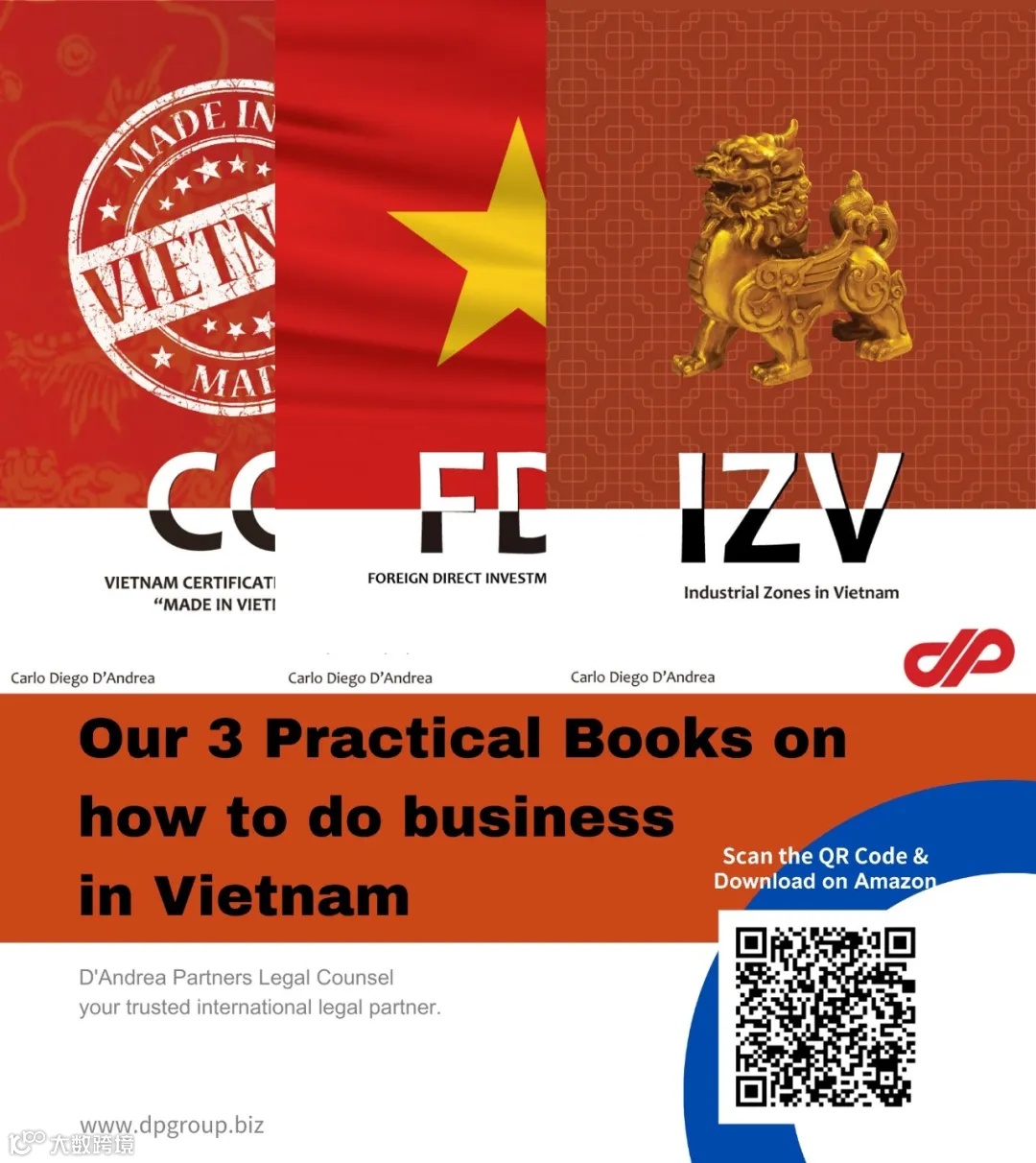
Would you like to learn more? Contact us to get the publications on Amazon!
你想了解更多关于投资相关的信息吗?联系我们获取出版物!
Latest Articles 近期内容