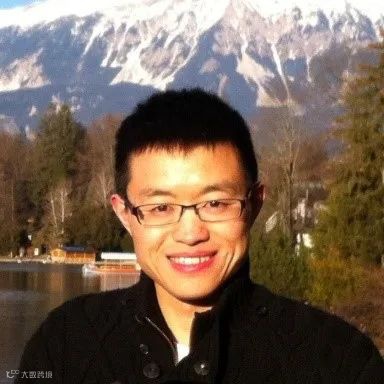
2012 年 Google 公司提出知识图谱的概念,以结构化方式描述海量概念、实体及其语义关系,旨在增强语义搜索,提升搜索质量。次年,以 TransE 为代表的知识图谱表示学习逐渐兴起,以向量化形式进行知识表示,以方便知识的高效推理计算。 知识图谱天然是符号表示,表示学习的输出是向量表示,分属于符号主义与连接主义的两个人工智能流派,迅速发展的同时也暴露了一定问题,如知识图谱的稀疏性,尤其常识和领域知识,亟需探索更有效的知识获取与整理手段;表示学习与深度学习的不可解释性,驱动我们探索鲁棒可解释的表示与推理技术。Geoffrey Hinton、Yoshua Bengio 和 Yann LeCun 三位图灵奖获得者 2015 年在《自然》上联合撰文指出 “融合表示学习与复杂知识推理是人工智能进步的阶梯”;2018 年中国科学院院士张钹院士指出第三代人工智能是实现可解释、鲁棒、可信安全的智能系统,将知识作为核心的四个要素之首;人工智能顶级国际学术会议 AAAI 2019 上题为 “人工智能未来 20 年路线图” 的 Townhall 会议将融合数字与符号的推理作为人工智能未来 20 年亟需解决的问题之一。因此,研究符号与数字融合的神经符号推理,推动兼具鲁棒性与逻辑性的推理技术,也是目前的研究热点。 为进一步分析此领域的最新研究进展,期刊 AI Open 特别设置了专刊 “Special Issue on knowledge acquisition and reasoning”,欢迎学者们关注并投稿。 本专刊致力于发表和呈现知识获取与推理的前沿评论、研究和应用,为研究人员提供一个平台,分享在这一活跃领域的最新观察和成果。 一、本次征稿的十个主题 1. Knowledge representation2. Knowledge graph embedding3. Entity extraction, entity typing, relation extraction4. Open knowledge extraction5. Entity resolution, entity linking6. Knowledge graph completion7. Knowledge graph alignment8. Neural-symbolic reasoning9. Question answering on knowledge graphs10. Knowledge-enhanced search or recommendation 二、投稿要求 提交给该期刊以供发表的论文必须是原创的,且不能一稿多投;稿件必须具有大量的 “新的和原始的” 想法,30%以上的内容必须是 “全新” 的;提交前,请先阅读 Guide for Authors ,文章提交请 Submitted online;请在提交时选择 SI:Knowledge acquisition and reasoning;Guide for Authors 链接地址:http://www.keaipublishing.com/en/journals/ai-open/guide-for-authors/Submitted online 链接地址:https://www.editorialmanager.com/aiopen/default.aspx 三、客座编辑唐杰清华大学计算机与科学技术系教授,系副主任Email: jietang@tsinghua.edu.cn 李涓子清华大学计算机与科学技术系教授Email:lijuanzi@tsinghua.edu.cn
张静中国人民大学信息学院副教授Email:zhang-jing@ruc.edu.cn 侯磊清华大学计算机与科学技术系助理研究员Email: houlei@tsinghua.edu.cn 三、注意日期提交截止日期:2021 年 5 月 10 日最终决定日期:2021 年 7 月 15 日发布日期:2021 年 8 月 30 日 Journal: AI OpenSpecial issue title:Special Issue on Knowledge Acquisition and Reasoning Introduction: In 2012, Google proposed the concept of the knowledge graph, which describes mass entities and their relationships in a structured manner, intending to enhance semantic search and improving search quality. Later, knowledge graph representation techniques such as the the-state-of-art TransE have emerged, expressing knowledge in continuous vectors to facilitate efficient reasoning of knowledge. The rapid development of knowledge graph acquisition and reasoning exposes several problems, such as the sparseness of knowledge graphs, especially the common sense and domain knowledge graphs. It is urgent to explore more effective means of knowledge acquisition and reasoning. Geoffrey Hinton, Yoshua Bengio, and Yann LeCun, three Turing Prize winners, jointly wrote in Nature 2015 that "major progress in artificial intelligence will come about through systems that combine representation learning with complex reasoning". In 2018, Zhang Bo, the Academician of the Chinese Academy of Sciences, pointed out that the third generation of artificial intelligence is an intelligent system that can be explained, robust, trusted, with knowledge as the core of the four elements. Therefore, it is a hot research topic to study neural symbol reasoning, promoting the reasoning technology to be both robust and logical.This special issue on Knowledge Acquisition and Reasoning is devoted to gathering and presenting cutting-edge review, research, or applications of this topic, providing a platform for researchers to share their recent observations and achievements in this active field. Topics covered: 1. Knowledge representation2. Knowledge graph embedding3. Entity extraction, entity typing, relation extraction4. Open knowledge extraction5. Entity resolution, entity linking6. Knowledge graph completion7. Knowledge graph alignment8. Neural-symbolic reasoning9. Question answering on knowledge graphs10. Knowledge-enhanced search or recommendationImportant Deadlines: · Submission deadline: 10 May 2021· Final Decision: 15 July 2021· Publication date: 30 August 2021Submission Instructions: Papers submitted to this journal for possible publication must be original and must not be under consideration for publication in any other journals. Extended work must have a significant number of "new and original" ideas/contributions along with more than 30% brand "new" material.Please read the Guide for Authors before submitting. All articles should be submitted online, please select SI: Pretrained Language Models on submission.Guest Editors: · Dr. Jie Tang, Tsinghua University, China. E-mail: jietang@tsinghua.edu.cn· Dr. Juanzi Li, Tsinghua University, China. E-mail: lijuanzi@tsinghua.edu.cn· Dr. Jing Zhang, Renmin University of China, China. E-mail: zhang-jing@ruc.edu.cn· Dr. Lei Hou, Tsinghua University, China, E-mail: houlei@tsinghua.edu.cnTarget journals: List all applicable KeAi journals, these will be used for web banner placement on KeAipublishing.com and ScienceDirect. KeAI: Data Science and Management, Artificial Intelligence in Geosciences, Artificial Intelligence in Agriculture ElSEVIER: Artificial Intelligence, Artificial Intelligence in Engineering, CAAI Transactions on Intelligence Technology, Engineering Applications of Artificial IntelligenceRelevant topics and keywords: This will be used for email, Twitter, and Google AdWords campaigns natural language processing, deep learning, language models, neural networks.点击阅读原文,查看更多精彩! 喜欢本篇内容,请分享、点赞、在看






 学术头条
学术头条