




将所有数据提供给一个模型,也就是一个通用模型(general model);
为每个细分市场构建一个模型(在前面的示例中,品牌和国家/地区的组合),也就是许多专业模型(specialized models)。
通用模型与专用模型

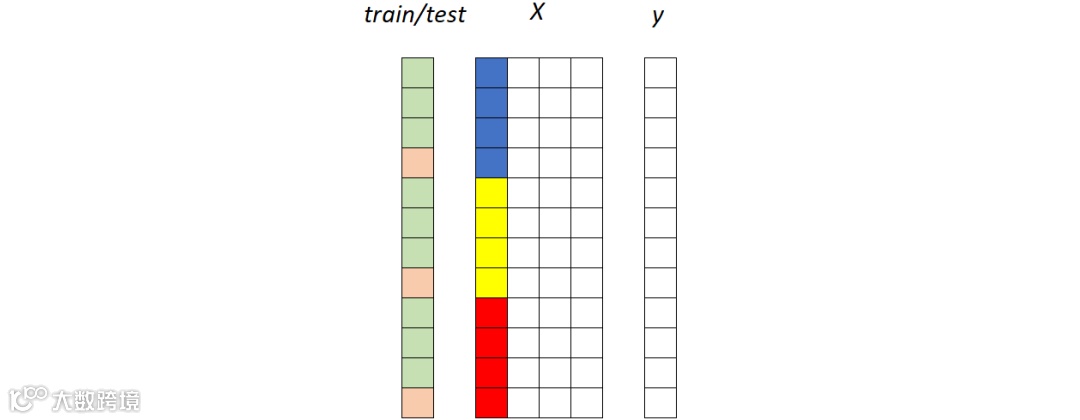
第一种策略:通用模型

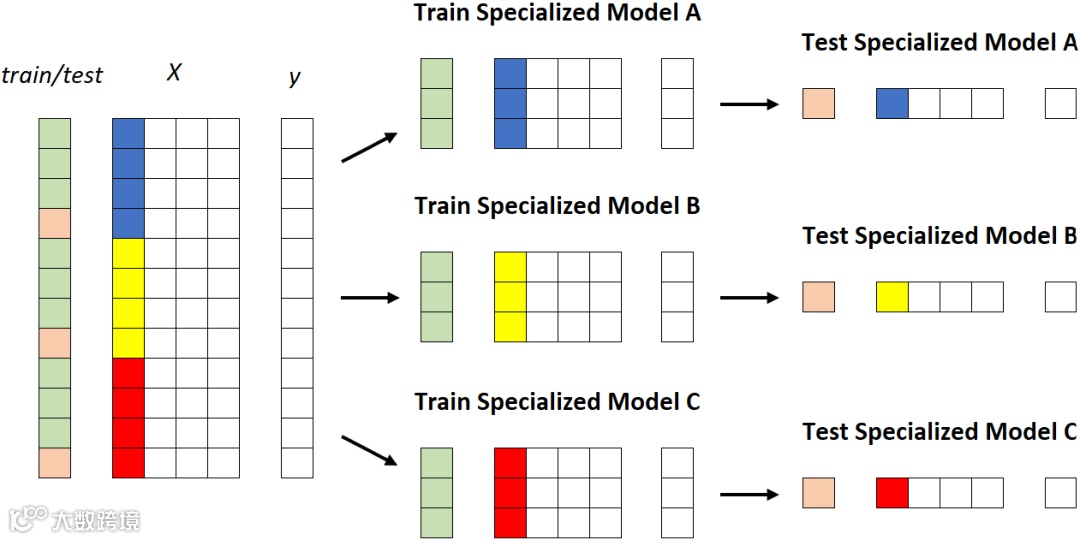
 专用模型。每个段被馈送到不同的模型。[作者图片]
更高的维护工作量;
更高的系统复杂度;
更高的(累积的)培训时间;
更高的计算成本:
更高的存储成本。
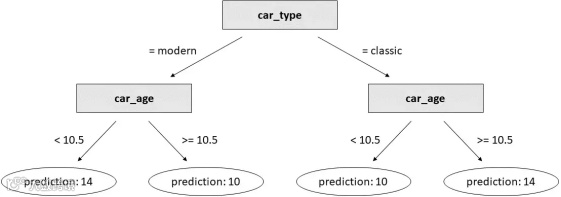
对通用模型的偏见
汽车类型(经典或现代);
汽车时代;
车价。

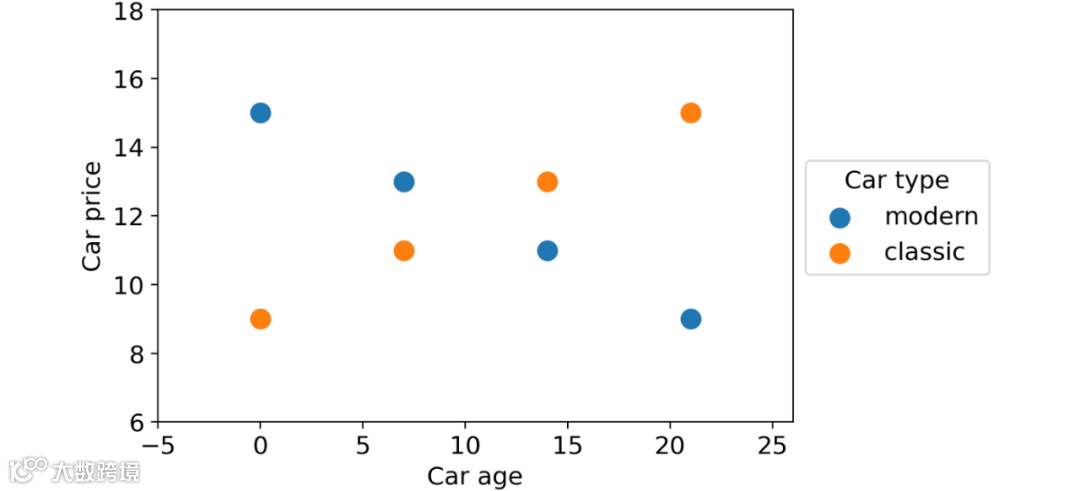
linear_regression = LinearRegression().fit(df[[ "car_type_classic" , "car_age" ]], df[ "car_price" ])


decision_tree = DecisionTreeRegressor(max_depth= 2 ).fit(df[[ "car_type_classic" , "car_age" ]], df[ "car_price" ])

实验细节
训练一个通用模型;
训练许多个专用模型。

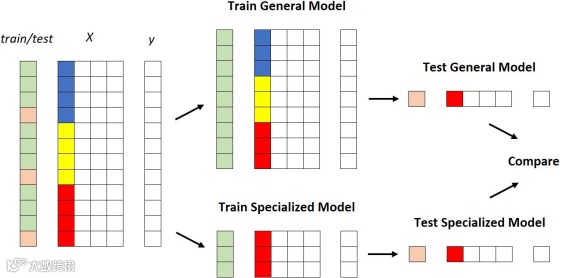
对于不同的数据集;
使用不同的列来分割数据集本身;
使用同一列的不同值来定义段。
for each dataset:train general model on the training setfor each column of the dataset:for each value of the column:train specialized model on the portion of the training set for which column = valuecompare performance of general model vs. specialized model
for dataset_name in tqdm(dataset_names):# get datay, num_features, cat_features, n_classes = get_dataset(dataset_name)# split index in training and test set, then train general model on the training setix_test = train_test_split(X.index, test_size=.25, stratify=y)model_general = CatBoostClassifier().fit(X=X.loc[ix_train,:], y=y.loc[ix_train], cat_features=cat_features, silent=True)pred_general = pd.DataFrame(model_general.predict_proba(X.loc[ix_test, :]), index=ix_test, columns=model_general.classes_)# create a dataframe where all the columns are categorical:# numerical columns with more than 5 unique values are binnizedX_cat = X.copy():, num_features] = X_cat.loc[:, num_features].fillna(X_cat.loc[:, num_features].median()).apply(lambda col: col if col.nunique() <= 5 else binnize(col))# get a list of columns that are not (statistically) independent# from y according to chi 2 independence testcandidate_columns = get_dependent_columns(X_cat, y)for segmentation_column in candidate_columns:# get a list of candidate values such that each candidate:# - has at least 100 examples in the test set# - is not more common than 50%vc_test = X_cat.loc[ix_test, segmentation_column].value_counts()nu_train = y.loc[ix_train].groupby(X_cat.loc[ix_train, segmentation_column]).nunique()nu_test = y.loc[ix_test].groupby(X_cat.loc[ix_test, segmentation_column]).nunique()candidate_values = vc_test[(vc_test>=100) & (vc_test/len(ix_test)<.5) & (nu_train==n_classes) & (nu_test==n_classes)].index.to_list()for value in candidate_values:# split index in training and test set, then train specialized model# on the portion of the training set that belongs to the segmentix_value = X_cat.loc[X_cat.loc[:, segmentation_column] == value, segmentation_column].indexix_train_specialized = list(set(ix_value).intersection(ix_train))ix_test_specialized = list(set(ix_value).intersection(ix_test))model_specialized = CatBoostClassifier().fit(X=X.loc[ix_train_specialized,:], y=y.loc[ix_train_specialized], cat_features=cat_features, silent=True)pred_specialized = pd.DataFrame(model_specialized.predict_proba(X.loc[ix_test_specialized, :]), index=ix_test_specialized, columns=model_specialized.classes_)# compute roc score of both the general model and the specialized model and save themroc_auc_score_general = get_roc_auc_score(y.loc[ix_test_specialized], pred_general.loc[ix_test_specialized, :])roc_auc_score_specialized = get_roc_auc_score(y.loc[ix_test_specialized], pred_specialized)results = results.append(pd.Series(data=[dataset_name, segmentation_column, value, len(ix_test_specialized), y.loc[ix_test_specialized].value_counts().to_list(), roc_auc_score_general, roc_auc_score_specialized],index=results.columns),ignore_index=True)
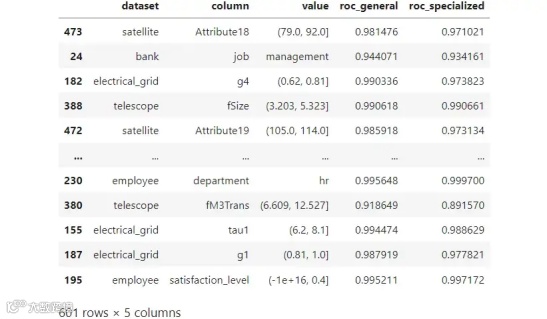
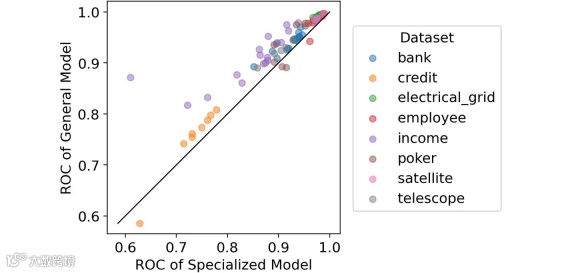
结果




结论
