


在世界范围内,气候变化的主要原因是向大气中排放太多的二氧化碳。与此同时,世界人口的91%生活在空气污染超过世界卫生组织(世卫组织)准则限制的地方,每年导致420万人过早死亡。因此,我们需要找到新的解决方案,确保交通部门的有害排放为零,因为它造成很大一部分空气污染,特别是在交通拥挤的人口稠密地区。
其中之一是甲醇燃料电池。
如何使用燃料电池
燃料电池使用氢气作为燃料,以产生清洁高效的电力,可以为汽车、卡车、公共汽车、轮船、手机、家庭和企业供电。
甲醇是一种优秀的氢载体燃料,这种简单的酒精分子中存储的氢气比液氢更多。
甲醇可以在加油站现场"改造",为燃料电池汽车或固定动力装置产生氢气,为燃料电池提供初级后备动力。车载改革技术可用于燃料电池车辆,允许快速 3 分钟加油和扩展范围(从 200 公里加氢到 800 公里的甲醇)。
由于甲醇可以从各种常规和可再生原料中生产,因此它是最经济、可持续和易于处理的氢载体燃料。
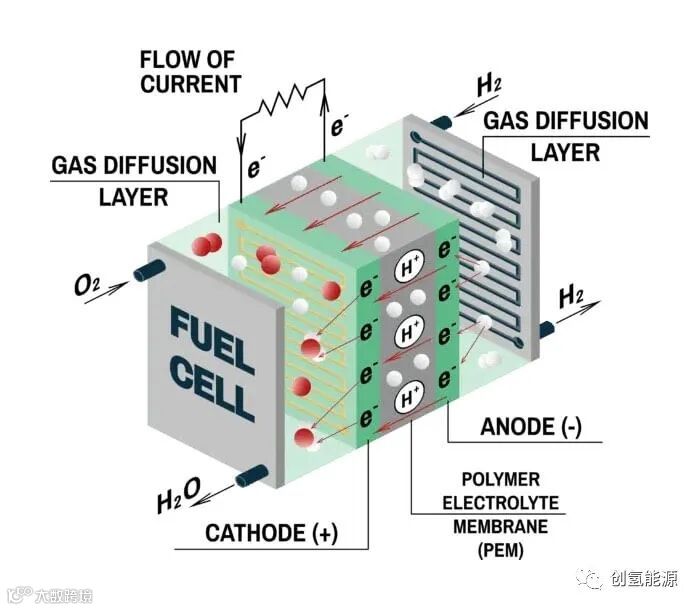
世界上第一个中型燃料电池(甲醇重整氢燃料电池)
2020年9月,氢气发电技术的领先开发商E1公司与Co-Win氢动力公司合作,宣布对世界上第一个中型燃料电池进行道路测试。Co-Win说,E1的专有甲醇M系列氢发生器已经并入到世界上最大的卡车制造公司之一生产的中型燃料电池卡车上。
在全球范围内,燃烧化石燃料的内燃机排放的颗粒物每年导致数百万人过早死亡。这些危险的排放不是由燃料电池驱动的车辆产生的,因为唯一的排放物是水蒸气。M系列在氢气的产生中不产生颗粒物,当使用垃圾填埋气体或沼气等废气流产生的甲醇时,E1的氢生成解决方案是碳中和。
E1首席执行官戴夫•埃德隆德表示:"Co-Win既是E1的重要战略合作伙伴,也是E1的持牌人,我们很高兴能与他们合作进行这一燃料电池卡车项目。"正在部署的氢生成技术是E1 独有的,是清洁运输的游戏规则改变者。据我所知,世界上没有其他公司能够提供与我们的M系列产品线相媲美的商业机载氢气发电产品。
燃料电池车辆通常需要纯氢级才能产生推进所需的电力。从历史上看,这种氢气被压缩并储存在车辆上,这就需要开发一个昂贵的氢气加油站网络。在世界许多地区,建设这种基础设施根本不可行。车辆上液体甲醇按需产生氢气,减轻了对氢燃料基础设施的需求。在安装固定氢气加油站的地区,E1的 L 系列产品线为现场生成燃料电池级氢气提供了非常经济实惠的模块化解决方案。
与压缩氢气相比,E1氢发生器使用的甲醇需要车辆上空间的一小部分,从而在加油之间产生显著更大的行驶距离。
这种范围扩展对于每天长途行驶的重型和中型燃料电池卡车至关重要。除了燃料电池卡车的应用,E1正在经历来自开发燃料电池动力船舶的公司的巨大全球兴趣。该公司预计将就船上氢气发电做出重大公告,用于商业和军事领域的海洋应用。
高温甲醇重整燃料电池系统
BLUE WORLD技术设计、开发和制造高温甲醇重整燃料电池系统,主要用于汽车和移动应用。高温甲醇重整燃料电池系统零有害排放,整体二氧化碳排放水平低,为解决全球空气污染和气候变化问题提供解决方案。
凭借数十年的行业经验,BLUE WORLD 技术专注于开发从核心材料到电堆和辅助模块设计到最终集成的高温甲醇重整燃料电池系统等一系列先进技术产品组合。
BLUE WORLD技术覆盖了整个价值链,实现了组件和系统的优化性能和成本效益,这确保了生产和产品交付的无缝扩展。
最近,BLUE WORLD技术公司收购了DPS公司,这是一家拥有25年历史的HT-PEM材料研究公司。
2020年12月,BLUE WORLD和DPS公司的各自大会批准了两家公司的合并,DPS被BLUE WORLD收购,随后并入BLUE WORLD公司,以加强BLUE WORLD公司的市场地位。这笔交易是在2019年8月收购BLUE WORLD之后完成的,该公司最初购买DPS15%的股份。这笔交易有待丹麦当局批准。
25 年来,DPS一直致力于高温 PEM (HT-PEM) 技术,是世界上最早在该技术范围内开展研发活动的公司之一。丹麦电力系统凭借其出色的 MEA 技术(膜电极组装),在全世界得到广泛认可。自 2018 年BLUE WORLD公司成立以来,其愿景和战略是将高温甲醇重整燃料电池技术商业化,其燃料电池平台是利用DPS的 MEA 技术构建的。
"DPS团队进入BLUE WORLD的经验和诀窍是首屈一指的。20 年来,我一直在研究燃料电池技术,从未看到其他组件供应商能够提供与DPS相同的稳定性、功率密度和久经考验的组件寿命。因此,收购DPS公司是我们确保加强、及燃料电池生产的其他技术能力的重要和增值步骤,"BLUE WORLD公司首席执行官兼联合创始人安德斯·科尔斯加德表示。
凭借DPS团队的丰富经验和能力,BLUE WORLD能够加快产品开发,优化技术平台,满足研发活动和市场需求。通过采用工业方法,BLUE WORLD与大多数甲醇燃料电池和燃料电池系统的其他制造商不同,在燃料电池电堆价值链内部拥有所有技术和核心组件制造,在某些情况下甚至达到系统级别。
"多年来,我们的活动一直以研发为中心。现在,我们非常期待成为BLUE WORLD的一部分,并致力于将HT-PEM甲醇燃料电池技术商业化的雄心勃勃的目标。它使我们更接近市场,在那里我们可以看到我们的技术在走向更绿色未来的竞赛中有所作为,"DPS公司首席执行官汉斯·艾奇·胡勒说。
BLUE WORLD通过大规模生产启动高温甲醇重整燃料电池技术的商业化,并计划在2021年年中开始预系列生产,产能可达5000台高温甲醇重整燃料电池模块(总产能50MW)。该公司的目标是在三年内达到高达50,000台燃料电池模块的全面商业生产能力。大规模且经济高效的生产是高温甲醇重整燃料电池解决方案作为全球工业的绿色替代品真正商业化突破的关键。
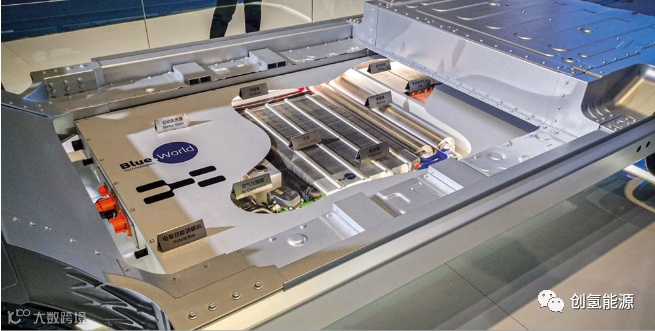
BLUE WORLD由马德斯·邦、安德斯·科斯加德和马德斯·弗里斯·詹森创立,他们都是燃料电池行业的高管,经验丰富。
安德斯·科尔斯加德表达公司一直在努力的工作,以及摆在他们面前的有趣未来:"我们一直在研究的最关键因素之一是降低燃料电池组件的生产时间和成本。我们现在已经到了一个点,使我们能够向技术商业化迈进一步,以便能够与传统技术竞争。
"人们越来越关注 Power-to-X,市场对提供减少二氧化碳的替代技术的需求很大,我们也在当前订单簿上看到,也从我们与潜在客户展开的对话中看到这一点。现在开始这种初始生产使我们能够与客户一起开发和试验项目,"马兹·弗里斯·詹森解释道。
在电源到 X 价值链中的重要角色
在过去几年中,Power-to-X在政治领域和许多行业都获得了全球基础。在绿色转型中,电力到X技术将发挥重要作用,特别是在无法或无法实现直接电气化的部门,例如,这些部门可能属于重型运输。当将绿色电力转化为液态燃料(如甲醇)时,可以重复利用现有的全球基础设施进行储存和分配,同时减少化石燃料的消耗,从而减少二氧化碳排放。
甲醇和其他燃料可用于为传统的内燃机和发电机提供燃料,无论是作为独立燃料还是作为添加剂,也可以用于为燃料电池提供动力。在电源到X价值链的实用性方面,BLUE WORLD的燃料电池技术正在努力发挥重要作用。BLUE WORLD高温甲醇重整燃料电池的综合发电效率高达45%,与内燃机和发电机相比,它为许多应用提供了更高的效率。此外,燃料电池提供清洁和环保的操作,消除氮氧化物和SOx等有害颗粒的排放。此外,该作业可以是二氧化碳中性,也可以根据燃料的来源显著减少二氧化碳排放量,有助于抗击严重的空气污染和气候变化。
内燃机逐步退役
高温甲醇重整燃料电池技术在海运、重型、固定和乘用车等多个市场具有巨大潜力。BLUE WORLD拥有合作伙伴的方法,可以充分利用这些市场的潜力。作为内燃机和柴油发电机的绿色和清洁替代品,甲醇燃料电池技术提供了多种优势,如节约成本、减少二氧化碳排放,甚至使用绿色甲醇时二氧化碳中性运行,以及零有害排放。燃料电池运行在甲醇上,甲醇是一种易于使用的电子燃料,因为它是在大气压力下的液体,使加油方便,并有可能集成和重复使用世界上现有的基础设施。甲醇是一种燃料,可以从绿色来源生产,在井到车轮的角度是二氧化碳中性。因此,它是化石燃料的坚实替代品,有助于全球多个行业的绿色转型。
为了使内燃机退役,BLUE WORLD正积极致力于燃料电池技术的商业化。面对已经持续了几十年的内燃机技术的优化和发展,BLUE WORLD在过去两年中一直在不断降低生产时间和成本,并提高电气效率,以便能够与内燃机竞争。
转载:Energy Industry Review
Fighting Against Air Pollution: Methanol Fuel Cells to Provide Higher Efficiency
Energy Industry Review February 24, 2021
Worldwide, the climate is changing mainly due to too much CO2 emitted into the atmosphere. At the same time, 91% of the world’s population lives in places where air pollution exceeds World Health Organization (WHO) guideline limits resulting in 4.2 million premature deaths each year. That’s why we need to find new solutions and ensure zero harmful emissions in the transportation sector as it is responsible for a large proportion of air pollution, especially in densely populated areas with heavy traffic. One of them is methanol fuel cells.
How fuel cells are used
Fuel cells use hydrogen as a fuel to produce clean and efficient electricity that can power cars, trucks, buses, ships, cell phone towers, homes, and businesses. Methanol is an excellent hydrogen carrier fuel, packing more hydrogen in this simple alcohol molecule than can be found in liquified hydrogen.
Methanol can be ‘reformed’ on-site at a fuelling station to generate hydrogen for fuel cell cars, or in stationary power units feeding fuel cells for primary of back-up power. On-board reformer technology can be used on fuel cell vehicles, allowing quick 3-minute fuelling and extended range (from 200 km with hydrogen to 800 km on methanol). As a simple molecule – CH3OH – with no carbon-to-carbon bonds, Direct Methanol Fuel Cells can be used for some applications, where methanol reacts directly on the fuel cell’s anode to strip hydrogen atoms to fuel DMFC systems.
Since methanol can be produced from a wide range of conventional and renewable feedstocks, it is the most affordable, sustainable, and easily handled hydrogen carrier fuel.
World’s first medium-duty fuel cell
In September 2020, Element 1 Corp, a leading developer of hydrogen generation technology, in collaboration with Co-Win Hydrogen Power, announced road testing of world’s first medium-duty fuel cell. Co-Win said that e1’s proprietary methanol-based M-Series hydrogen generator has been incorporated onto a medium-duty fuel cell truck produced by one of the world’s largest truck manufacturing companies.
Globally, particulate matter emissions from combustion engines burning fossil fuels causes millions of premature deaths annually. These dangerous emissions are not produced by fuel cell powered vehicles as the only emission is water vapor. The M-Series produces no particulate matter in the generation of hydrogen, and when using methanol produced from waste gas streams such as landfill gas or biogas, e1’s hydrogen generation solution is carbon neutral.
“Co-Win is both a valued strategic partner and licensee of e1, and we are excited to be working with them on this fuel cell truck project,” said Dave Edlund, e1’s Chief Executive Officer. “The hydrogen generation technology being deployed is unique to e1 and is a game changer for clean transportation. To my knowledge, no other company in the world can provide a commercial onboard hydrogen generation product comparable to our M-Series product line.”
Fuel cell vehicles typically require a pure grade of hydrogen to produce the electricity needed for propulsion. Historically, this hydrogen has been compressed and stored on the vehicle, which necessitates a costly network of hydrogen refuelling stations to be developed. In many regions of the world, building out this infrastructure is simply not feasible. On-demand hydrogen generation from liquid methanol onboard the vehicle mitigates the need for hydrogen fuelling infrastructure. In regions where stationary hydrogen refuelling stations are being installed, e1’s L-Series product line provides a very cost effective, modular solution for generating fuel cell grade hydrogen on-site.
The methanol used by e1’s hydrogen generators requires a fraction of the space onboard the vehicle compared to compressed hydrogen, enabling significantly greater driving range between fuelling.
This range extension is critical for heavy- and medium-duty fuel cell trucks traveling long distances each day. In addition to fuel cell truck applications, e1 is experiencing considerable world-wide interest from firms developing fuel cell powered marine vessels. The company expects to be making significant announcements relative to on-board hydrogen generation for marine applications in both the commercial and military space.
Methanol fuel cell systems
Blue World Technologies designs, develops and manufactures methanol fuel cell systems primarily for automotive and mobility applications. The methanol fuel cell system has zero harmful emissions and a low overall well-to-wheel CO2 emission level providing a solution to the worldwide problems with air pollution and climate change.
With decades of experience in the industry, Blue World Technologies’ focus is on developing an advanced technology portfolio ranging from core materials through the stack and reformer design to the final reformed methanol fuel cell system.
Blue World Technologies is covering the entire value chain to enable optimized performance and cost-effectiveness of components and systems. This ensures a seamless scale-up of production and product delivery.
Recently Blue World Technologies acquired Danish Power Systems, a 25-year-old HT-PEM material research company.
In December 2020, the respective general assemblies at Blue World Technologies and Danish Power Systems approved a combination of the two companies, whereby Danish Power Systems is acquired by and subsequently merged into Blue World Technologies to strengthen the market position of Blue World Technologies. The transaction follows the acquisition Blue World Technologies made in August 2019, where the company initially bought 15% of the shares in Danish Power Systems. The transaction awaits the approval of the Danish Authorities.
For more than 25 years, Danish Power Systems has been working with high-temperature PEM (HT-PEM) technology and was one of the first companies in the world to start research and development activities within this technology. Based on its outstanding MEA-technology (membrane electrode assembly) Danish Power Systems is widely recognised around the world. Since Blue World Technologies was founded in 2018 with the vision and strategy to commercialise the methanol fuel cell technology, their fuel cell platform has been built using the MEA-technology of Danish Power Systems.
“The experience and knowhow the team from Danish Power Systems is bringing into Blue World Technologies are second to none. In the 20 years, I have been working with fuel cell technology I have not seen other component suppliers capable of providing the same stability, power density, and well-proven component-lifetime as Danish Power Systems. The acquisition of Danish Power Systems is, therefore, an important and value-adding step for us to secure additional technology competences strengthening and benefitting our fuel cell production,” states Anders Korsgaard, CEO and Co-founder of Blue World Technologies.
With the strong experience and competences of Danish Power Systems’ team, Blue World Technologies is able to accelerate product development to optimise the technology platform bridging R&D activities and market needs. With an industrial approach, Blue World Technologies is differentiated from most other manufacturers of methanol fuel cells and fuel cell systems, by having all technologies and core component manufacturing within the fuel cell stack value-chain in-house, and in some cases even to system level.
“For many years, our activities have been centred around R&D. Now we are very much looking forward to being part of Blue World Technologies and contribute to the ambitious goal of commercialising the HT-PEM methanol fuel cell technology. It is taking us much closer to the market where we can really see our technology make a difference in the race towards a greener future,” says Hans Aage Hjuler, CEO of Danish Power Systems.
Blue World Technologies has initiated the commercialisation of the methanol fuel cell technology through large-scale production and is planning to start up pre-series production in mid-2021 with a production capacity of up to 5,000 units (50MW). The company is targeting to reach a full-scale commercial production capacity of up to 50,000 fuel cell units within three years. Large-scale and cost-efficient production is key for a truly commercialised breakthrough of methanol fuel cell solutions as a green alternative to industries around the world.
Blue World Technologies is founded by Mads Bang, Anders Korsgaard and Mads Friis Jensen – all executives from the fuel cell industry with extensive experience.
Anders Korsgaard expresses what the company has been working on and the interesting future that lies ahead of them: “One of the most crucial elements we have been working on is bringing down the production time and costs of the fuel cell components. We have now reached a point which enables us to move one step closer towards commercialising the technology to be able to compete with conventional technologies.”
“There is an increased focus on Power-to-X and there is a big market demand for alternative technologies providing CO2 reduction, which we also see in both our current order books but also in the initiated dialogues we have with potential customers. Starting this initial production now allows us to progress with development and trial projects with customers,” explains Mads Friis Jensen.
An important role in the Power-to-X value chain
Within the past couple of years, Power-to-X has gained global ground, both on the political scene and in many industries. In the green transition, Power-to-X technologies are going to play a significant role, especially within the sectors where direct electrification is not possible or feasible, which for example could be within heavy-duty transportation. When transforming green electricity into liquid fuel, such as methanol, it is possible to reuse the existing global infrastructure for storage and distribution while reducing fossil fuel consumption, and thereby, cutting down CO2 emissions.
Methanol and other e-fuels can be used to fuel conventional combustion engines and generators, either as a stand-alone fuel or as an additive, or they can be used to power fuel cells. On the utility side of the Power-to-X value chain, Blue World Technologies’ fuel cell technology is striving to play an important role. With high electrical efficiency of up to 45 %, Blue World Technologies’ methanol fuel cells will for many applications provide a much higher efficiency compared to combustion engines and generators. In addition, the fuel cells provide a clean and environmentally friendly operation where emissions of harmful particles such as NOx and SOx are eliminated. Furthermore, the operation can be either CO2 neutral or have a significantly reduced CO2 emission depending on the origin of the fuel, contributing to the combat against severe air pollution and climate changes.
Retiring the combustion engine
The methanol fuel cell technology has great potential in several markets such as maritime, heavy-duty, stationary, and passenger vehicles. Blue World Technologies has a partner approach to fully leverage the potential of these markets. As a green and clean alternative to combustion engines and diesel generators the methanol fuel cell technology provides multiple benefits such as cost-savings, CO2 reduction – or even a CO2 neutral operation when running on green methanol – as well as zero harmful emissions. The fuel cells run on methanol which is an easy-to-use e-fuel as it is liquid at atmospheric pressure making refuelling convenient and makes it possible to integrate and reuse in the world’s existing infrastructure. Methanol is a fuel that can be produced from green sources and is CO2 neutral in a well-to-wheel perspective. Therefore, it is a solid alternative to fossil fuel and can contribute to the green transition in multiple industries around the world.
With an aim to retire the combustion engine Blue World Technologies is eagerly working towards commercialising the fuel cell technology. Facing the optimisations and development of combustion engine technologies that have been ongoing for decades, Blue World Technologies has spent the past two years and is continuing to bring down production time and costs as well as increasing the electrical efficiency to be able to compete with the combustion engine.