


AMiner平台由清华大学计算机系研发,拥有我国完全自主知识产权。平台包含了超过2.3亿学术论文/专利和1.36亿学者的科技图谱,提供学者评价、专家发现、智能指派、学术地图等科技情报专业化服务。系统2006年上线,吸引了全球220个国家/地区1000多万独立IP访问,数据下载量230万次,年度访问量超过1100万,成为学术搜索和社会网络挖掘研究的重要数据和实验平台。
AMiner平台:https://www.aminer.cn
导语:EMNLP,自然语言处理经验方法会议(Conference on Empirical Methods in Natural Language Processing),是由国际语言学会(ACL)下属的SIGDAT小组主办的自然语言处理领域的顶级国际会议,也是自然语言算法的A类会议。EMNLP2020共审阅论文3359篇,接收754篇,接收率为22.4%。
Question answering(问答系统),是自然语言处理的明日之星,也是学者们目前研究的重点。问答系统外部的行为上来看,其与目前主流资讯检索技术有两点不同:首先是查询方式为完整而口语化的问句,再来则是其回传的为高精准度网页结果或明确的答案字串。从系统内部来看,问答系统使用了大量有别于传统资讯检索系统自然语言处理技术,如自然语言剖析、问题分类、专名辨识等等。
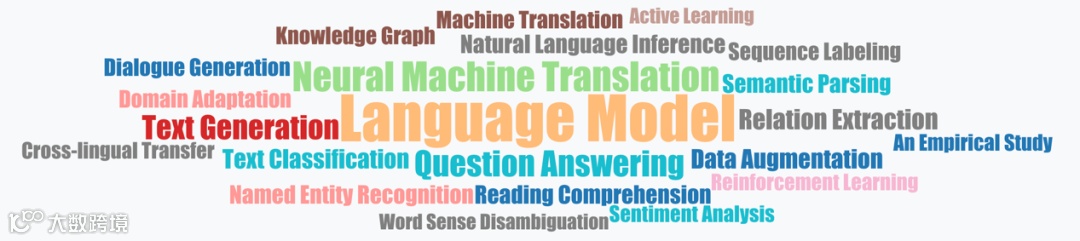
根据AMiner-EMNLP2020词云图和论文可以看出,Question Answering在本次会议中也有许多不凡的工作,下面我们一起看看Question Answering主题的相关论文。
1.论文名称:Hierarchical Graph Network for Multi-hop Question Answering
论文链接:https://www.aminer.cn/pub/5dca89783a55ac77dcb01e28?conf=emnlp2020
作者:Fang Yuwei, Sun Siqi, Gan Zhe, Pillai Rohit, Wang Shuohang, Liu Jingjing
简介:
In contrast to one-hop question answering, where answers can be derived from a single paragraph, recent studies have more and more focused on multihop reasoning across multiple documents or paragraphs for question answering.
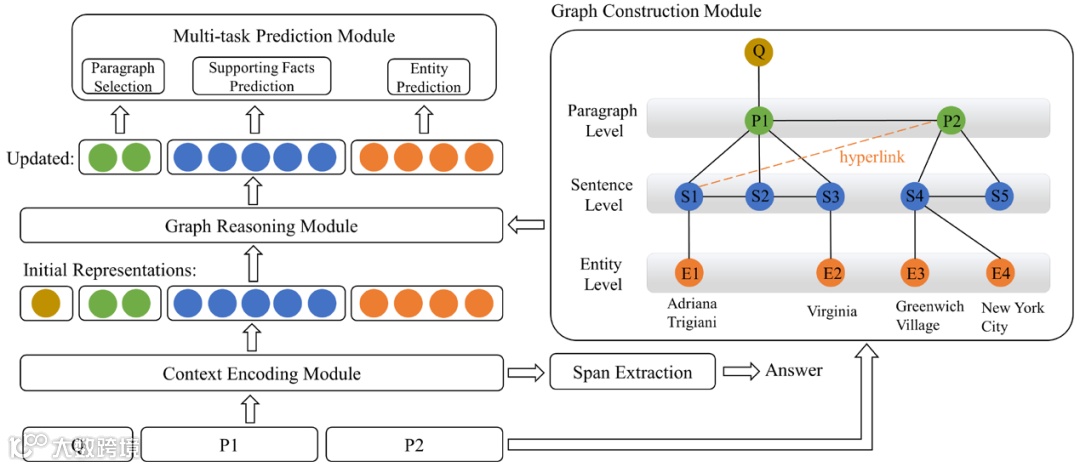
The authors propose a new approach, Hierarchical Graph Network (HGN), for multi-hop question answering.
To capture clues from different granularity levels, the HGN model weaves heterogeneous nodes into a single unified graph.
Experiments with detailed analysis demonstrate the effectiveness of the proposed model, which achieves state-of-the-art performance on HotpotQA benchmark.
2.论文名称:Scalable Multi-Hop Relational Reasoning for Knowledge-Aware Question Answering
论文链接:https://www.aminer.cn/pub/5eb78919da5629cf244303cf?conf=emnlp2020
作者:Feng Yanlin, Chen Xinyue, Lin Bill Yuchen, Wang Peifeng, Yan Jun, Ren Xiang
简介:
Many recently proposed question answering tasks require machine comprehension of the question and context, and relational reasoning over entities and their relationships based by referencing external knowledge.
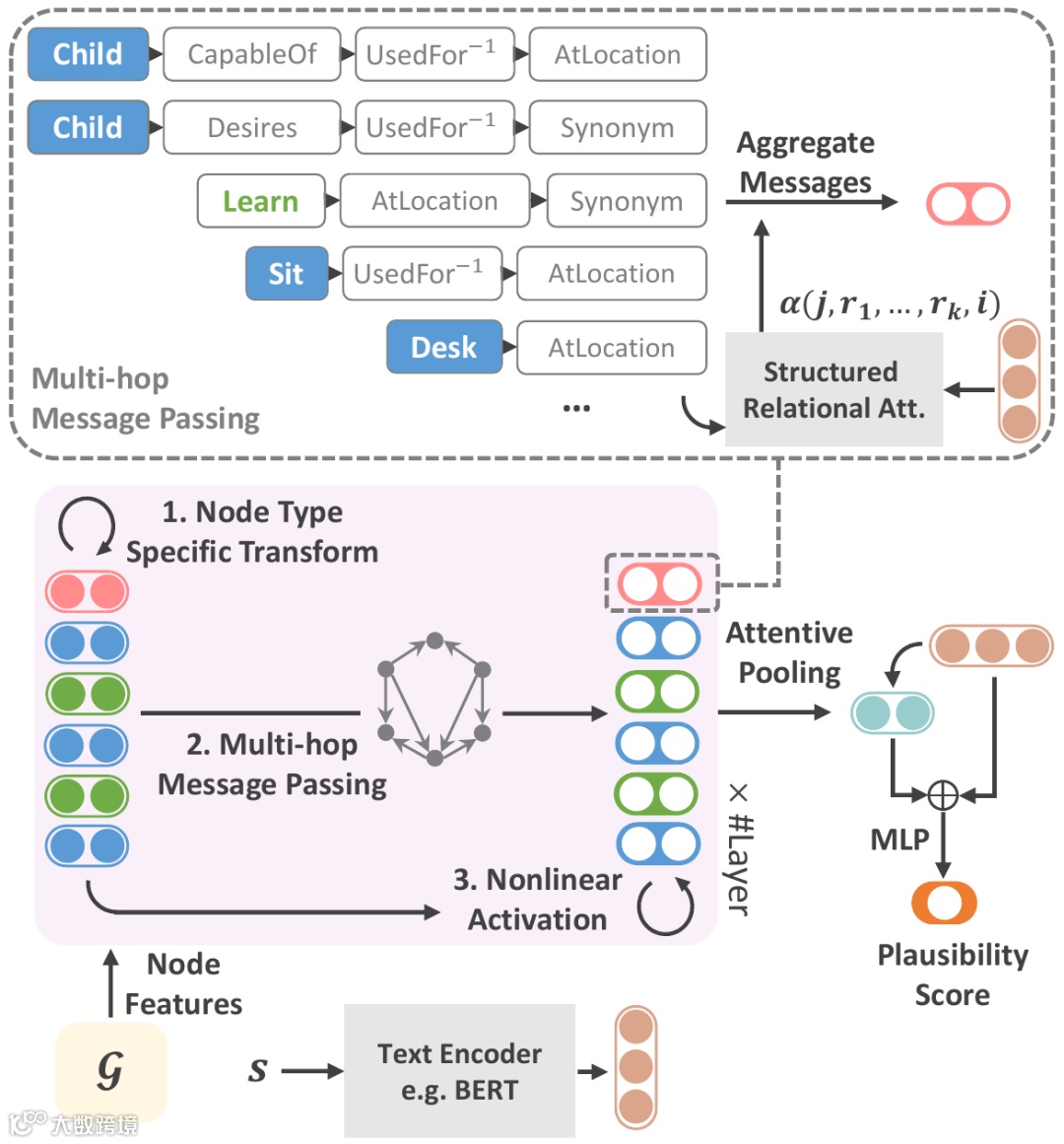
We propose a novel graph encoding architecture, Multi-hop Graph Relation Networks (MHGRN), which combines the strengths of path-based models and graph neural network (GNN).
The proposed MHGRN generalizes and combines the advantages of GNNs and path-based reasoning models.
It explicitly performs multi-hop relational reasoning and is empirically shown to outperform existing methods with superior scalablility and interpretability.
3.论文名称:Training Question Answering Models From Synthetic Data
论文链接:https://www.aminer.cn/pub/5e54f17a3a55acae32a25cd9?conf=emnlp2020
作者:Puri Raul, Spring Ryan, Patwary Mostofa, Shoeybi Mohammad, Catanzaro Bryan
简介:
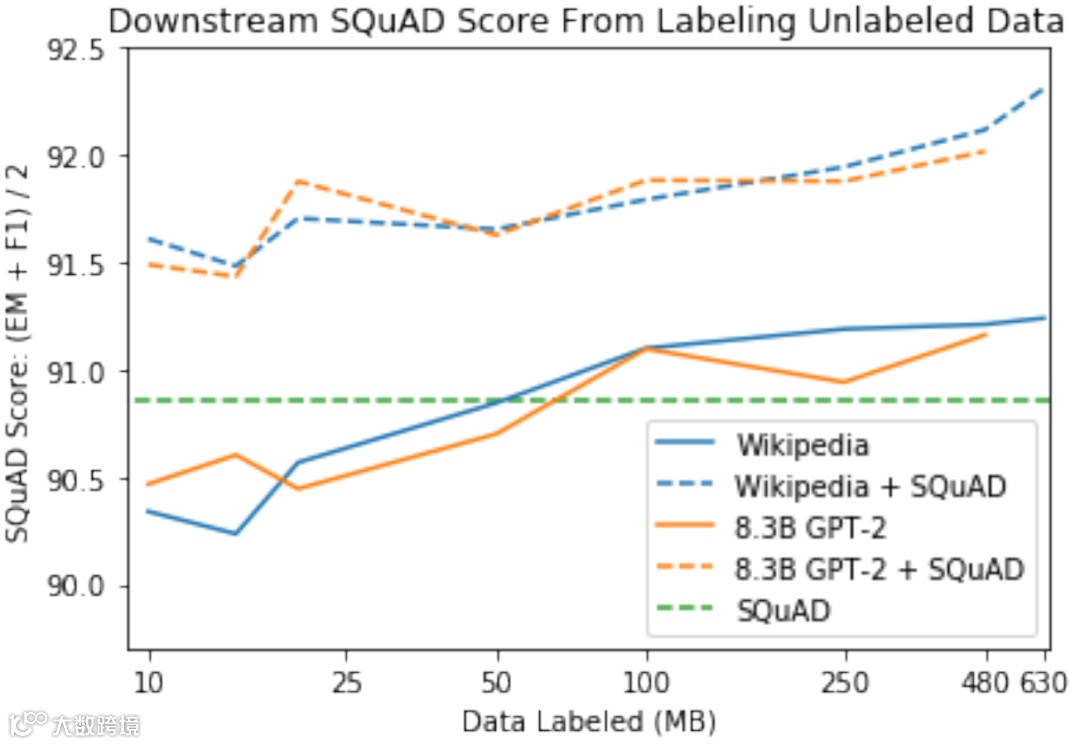
One of the limitations of developing models for question answering, or any Deep Learning application for that matter, is the availability and cost of labeled training data.
The authors build upon existing work in large scale language modeling and question generation to push the quality of synthetic question generation.
Finetuning the resulting model on real SQUAD1.1 data further boosts the EM score to 89.4.
The authors generate synthetic text from a Wikipedia-finetuned GPT-2 model, generate answer candidates and synthetic questions based on those answers, and train a BERT-Large model to achieve similar question answering accuracy without directly using any real data at all.
4.论文名称:Look at the First Sentence: Position Bias in Question Answering
论文链接:https://www.aminer.cn/pub/5eabf34391e011664ffd289c?conf=emnlp2020
作者:Ko Miyoung, Lee Jinhyuk, Kim Hyunjae, Kim Gangwoo, Kang Jaewoo
简介:
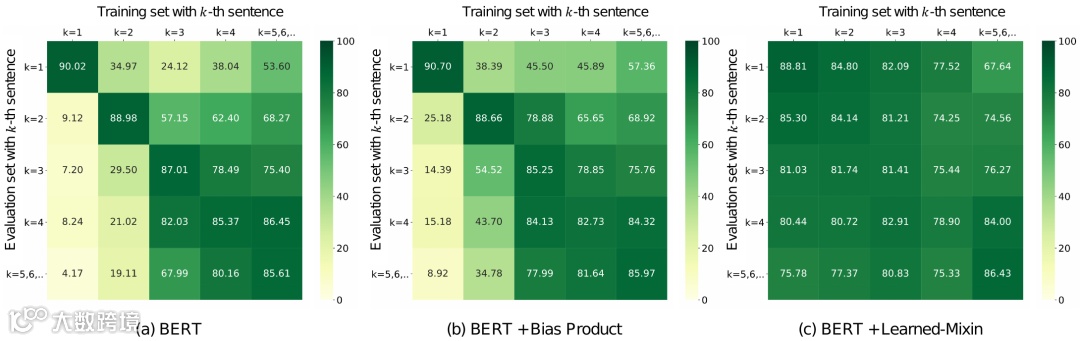
Most QA studies frequently utilize start and end positions of answers as training targets without much considerations.
The authors' study shows that most QA models fail to generalize over different positions when trained on datasets having answers in a specific position.
The authors introduce several de-biasing methods to make models to ignore the spurious positional cues, and find out that the sentence-level answer prior is very useful.
The authors' findings generalize to different positions and different datasets.
5.论文名称:Infusing Disease Knowledge into BERT for Health Question Answering, Medical Inference, Disease Name Recognition
论文链接:https://www.aminer.cn/pub/5f7fe6d80205f07f68973229?conf=emnlp2020
作者:Yun He, Ziwei Zhu, Yin Zhang, Qin Chen, James Caverlee
简介:
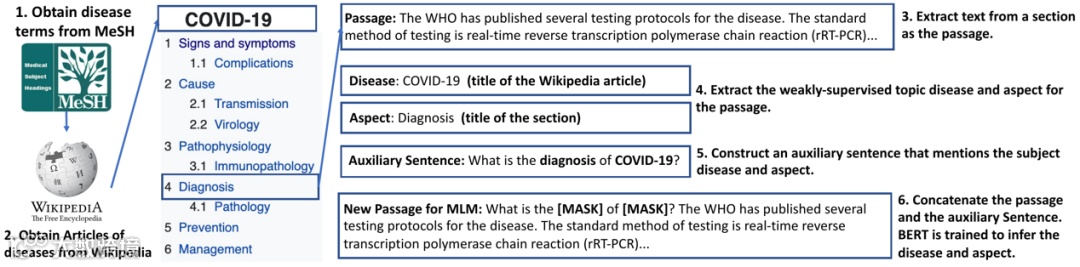
Human disease is “a disorder of structure or function in a human that produces specific signs or symptoms”.
The authors propose a new disease infusion training procedure to augment BERT-like pre-trained language models with disease knowledge.
The authors conduct this training procedure on a suite of BERT models and evaluate them over disease related tasks.
Experimental results show that these models can be enhanced by this disease infusion method in most cases.
6.论文名称:Self-supervised Knowledge Triplet Learning for Zero-shot Question Answering
论文链接:https://www.aminer.cn/pub/5eafe7e091e01198d398664a?conf=emnlp2020
作者:Banerjee Pratyay, Baral Chitta
简介:
The ability to understand natural language and answer questions is one of the core focus in the field of natural language processing.
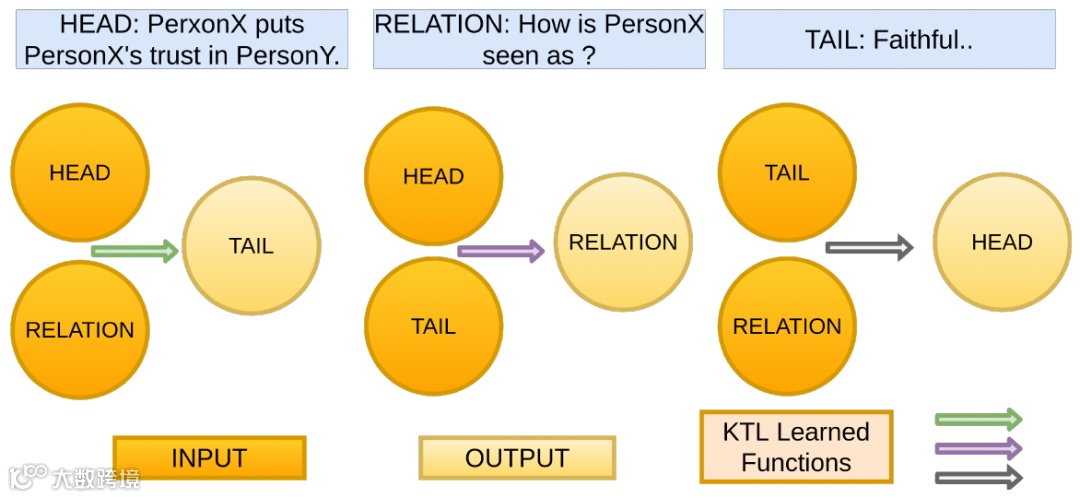
The authors achieve state-of-the-art results for zero-shot and propose a strong baseline for the few-shot question answering task.
The authors can see the Transformer encoder trained on KTL perform significantly better than the baseline models in this setting.
The authors' framework achieves state-of-the-art in the zero-shot question answering task and sets a strong baseline in the few-shot question answering task.
想要了解更多EMNLP2020论文,可以关注公众号或者链接直达EMNLP2020专题,最前沿的研究方向和最全面的论文数据等你来~


阅读原文,直达“EMNLP2020”会议专题,了解更多会议论文!