

Currently, the global economic landscape is in a state of constant flux, and the panel industry is also confronted with numerous challenges. The overseas market environment is growing increasingly complex and highly competitive. Meanwhile, with the expansion of the industry in the domestic market, production capacity has been continuously released, leading to a cut-throat competitive situation due to saturated supply.
In terms of exports, fluctuations in exchange rates, rising transportation costs, and increasingly stringent overseas standards have made the journey of many domestic panel enterprises to enter the overseas market extremely difficult. It has become more challenging to obtain orders, and profit margins are constantly shrinking under the squeeze of transportation and compliance costs. As a result, enterprises have less capital available for technological upgrades and equipment renewal, forcing them to slow down their development pace.
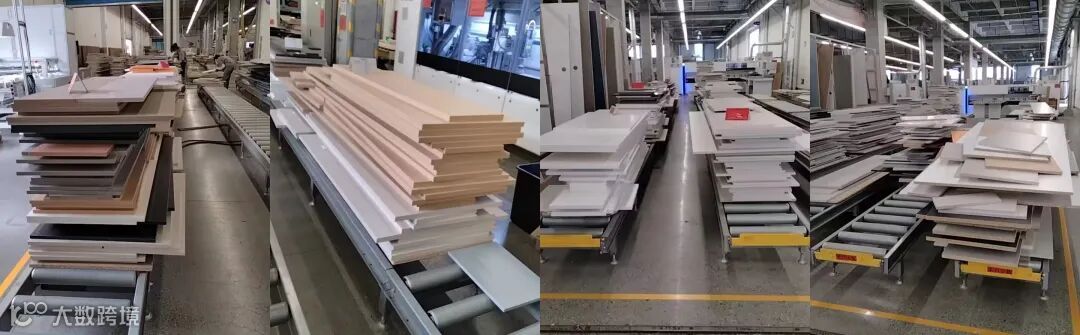
In the domestic market, as the industrial production capacity is gradually unleashed, the market supply becomes increasingly abundant and the competition is white-hot. To survive, companies often get caught in the whirlpool of price wars. If this situation persists, it will not only disrupt the market order but also drive down the profit margins of the entire industry. Small and medium-sized enterprises, in particular, are struggling to stay afloat in the narrow gap.
How should domestic panel enterprises respond?
Faced with such difficulties, domestic panel enterprises need to take a multi-pronged approach to respond actively.
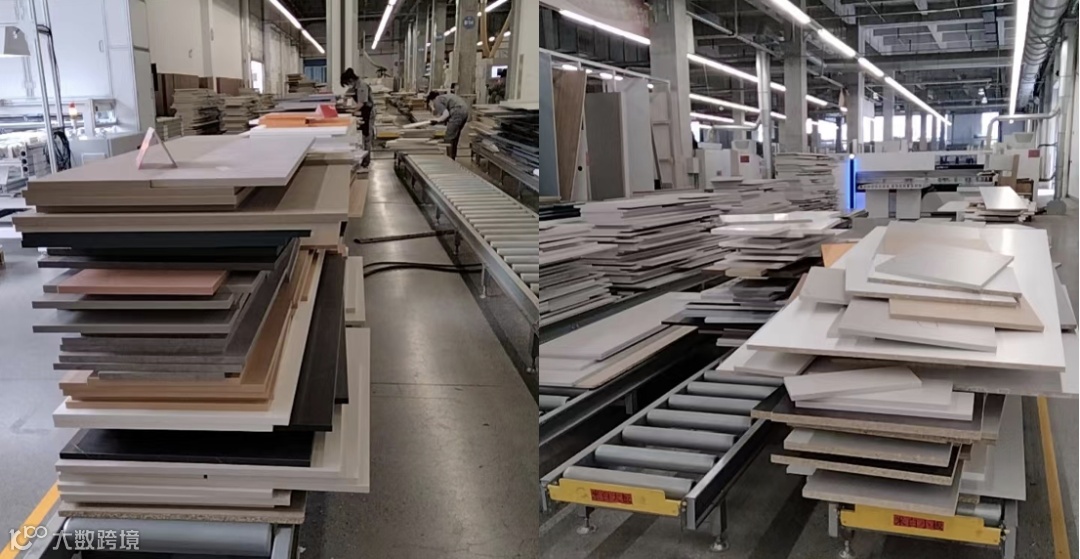
Cost control is also a crucial link. On the procurement side, enterprises should screen for high-quality and stable raw material suppliers and establish long-term partnerships. By means of bulk purchasing, they can gain a price advantage and optimize inventory management to reduce warehousing costs.
During the production process, advanced management concepts and technologies should be introduced to optimize the production process, cut down on raw material waste, and boost production efficiency, thus offsetting the cost increase brought about by tariffs.
In addition, supply chain integration cannot be ignored. It is necessary to strengthen the coordination among upstream and downstream enterprises to ensure efficient logistics transportation and reduce logistics costs.
HIYAN Tech Reshapes Confidence in the Panel Market
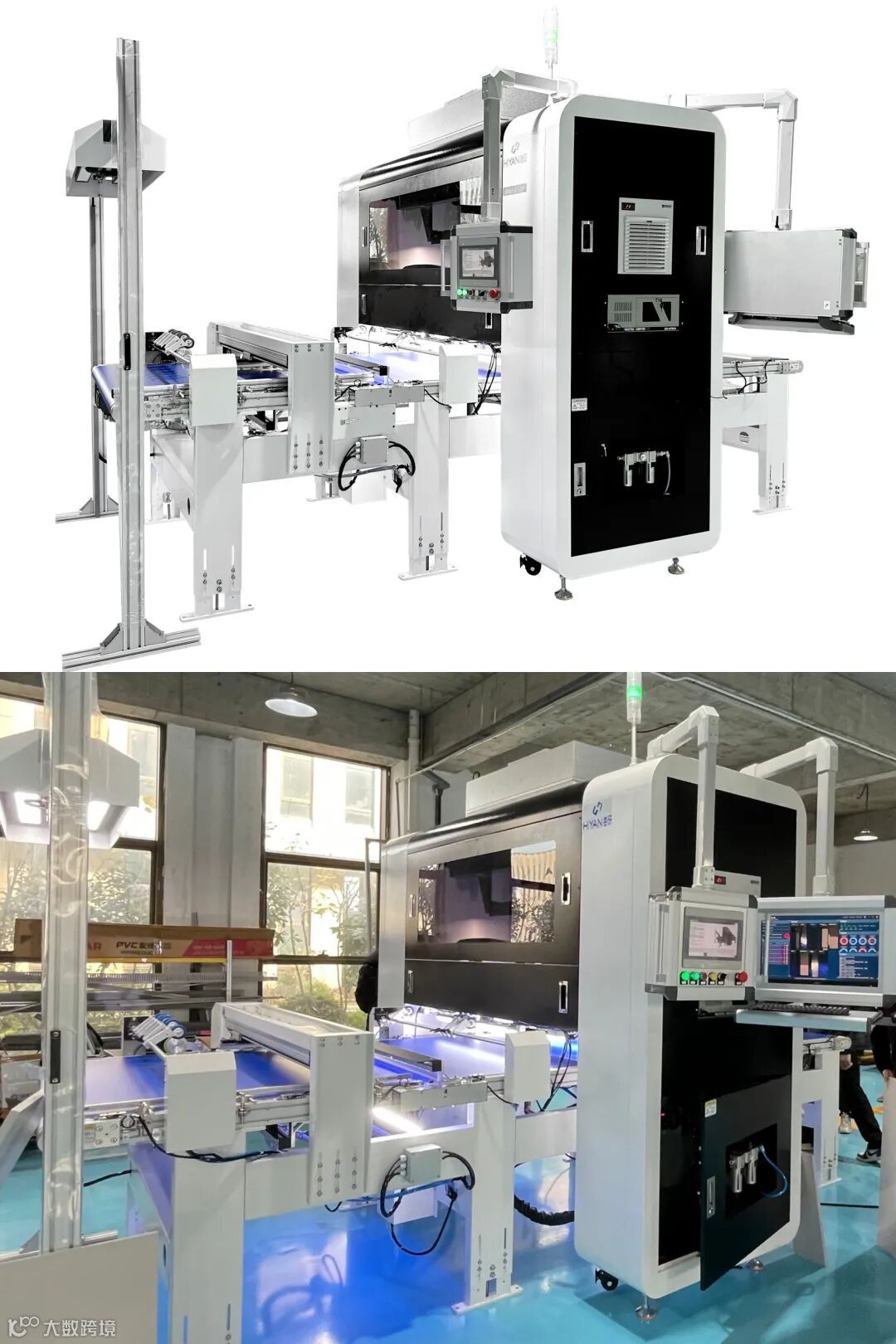
The HIYAN Tech Board Vision Detection System covers all aspects of the board production process, helping enterprises optimize production processes, improve the quality of boards, and providing strong support for board-making enterprises in the coping stage:
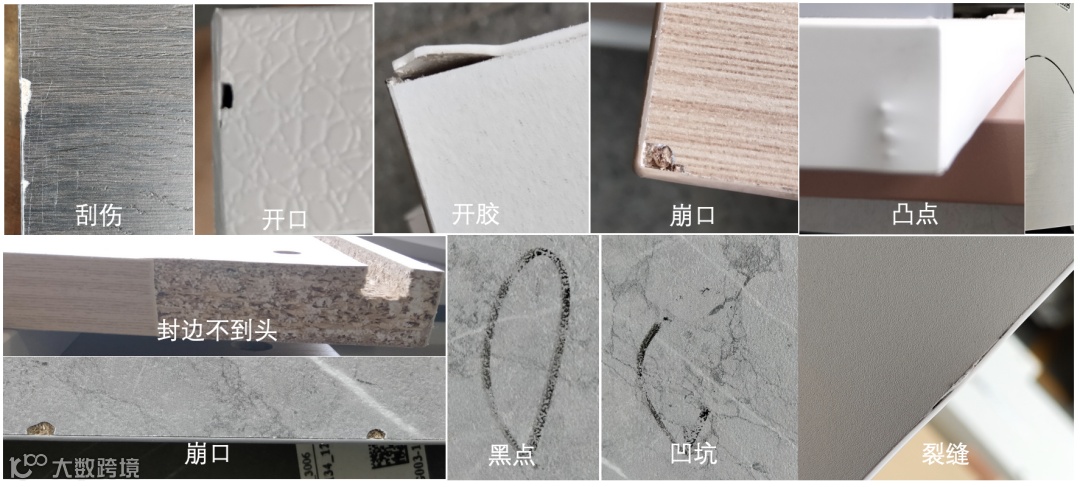
The raw material inspection link
The production and processing stage
The processing stage is the core of board quality control. The HIYAN Tech Board Vision Detection System can provide precise detection throughout the entire process during cutting, edge banding, drilling, and other operations, thus avoiding common processing problems.
The HIYAN Tech Board Vision Detection System utilizes high-precision laser measurement and visual inspection technologies to accurately detect dimensional errors, tapering, parallelogram-shaped deformations and other shape problems, ensuring that the cutting dimensions of each board meet the design specifications.
2. Edge banding: In the edge banding process, the system automatically detects whether the edge banding is in place, and if there are any cracks or chipping problems through image processing technology. The detection results are fed back in real-time, ensuring the precision and stability of the edge banding process.
Data analysis and management
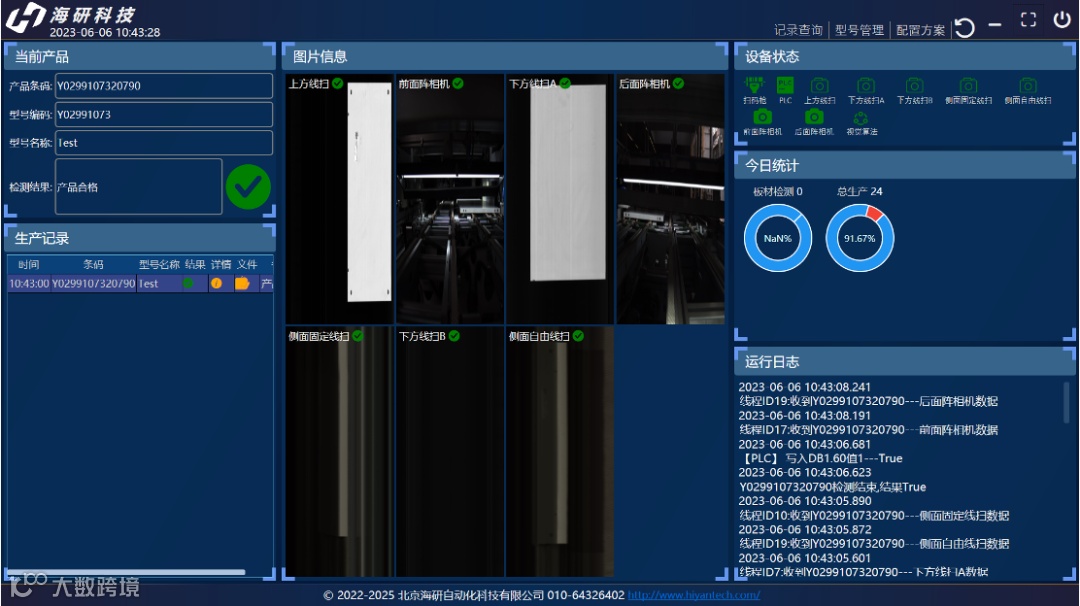
In the tide of the global market, the journey of panel enterprises going global is full of challenges and uncertainties, and they are currently at a crucial transformation juncture. The HIYAN Tech Board Vision Detection System has already become a key enabler for enterprises to break through the situation and expand overseas.
The system conducts meticulous inspections throughout the entire production process. From strict control of raw materials, precise management in the processing stage, to quality traceability and optimization driven by data, every step solidifies the foundation for the quality of the panels. This means that when the panels travel across the ocean, they can face the scrutiny of the overseas market with more stable and reliable quality.