
According to the 2021 Statistical Bulletin on Telecommunications recently released by the Ministry of Industry and Information Technology, China's telecommunications industry maintained steady and sound growth last year, with an 8% year-on-year increase in telecommunications revenue to 1.47 trillion yuan. Calculated at the same unit price as in 2020, the volume of the telecommunications business totaled 1.7 trillion yuan in 2021, an increase of 27.8% from the previous year.
(Photo Source: CFP.CN)
In terms of business areas, enterprise-oriented emerging digital services such as cloud computing, big data and data center grew fast, with their revenue up 27.8% over the previous year, contributing 3.6 percentage points to the revenue growth of the telecommunications industry. The figures show that these digital services have become the 1st driving force behind the revenue growth. Revenue from fixed service, mobile data, and Internet business keeps increasing steadily.
From the perspective of network coverage, China has set up and opened 1,425,000 5G base stations as of the end of 2021, which made up the world's largest 5G network covering the urban areas of all prefecture-level cities, more than 98% of counties, and 80% of towns and townships. China's 5G base stations account for over 60% of the world's total, with 10.1 5G base stations serving every 10,000 people, nearly doubling from the end of 2020. More than 300 cities have started the construction of gigabit optical fiber broadband networks.
2021 China International Fair for Trade in Services (hereinafter referred to as "CIFTIS") was held in China National Convention Center and Shougang Park from September 2 to September 7, with the theme of "Towards Digital Future and Service Driven Development". Telecommunications, Computer and Information Services, one of the 8 thematic exhibitions of this CIFTIS, focuses on displaying new products, new technologies, and new application scenarios in the fields of communication, electronic information, software information services and digital economy under the theme "Grasp the Development Opportunities of Digital Economy and Promote the Innovation-driven Integrated Development".
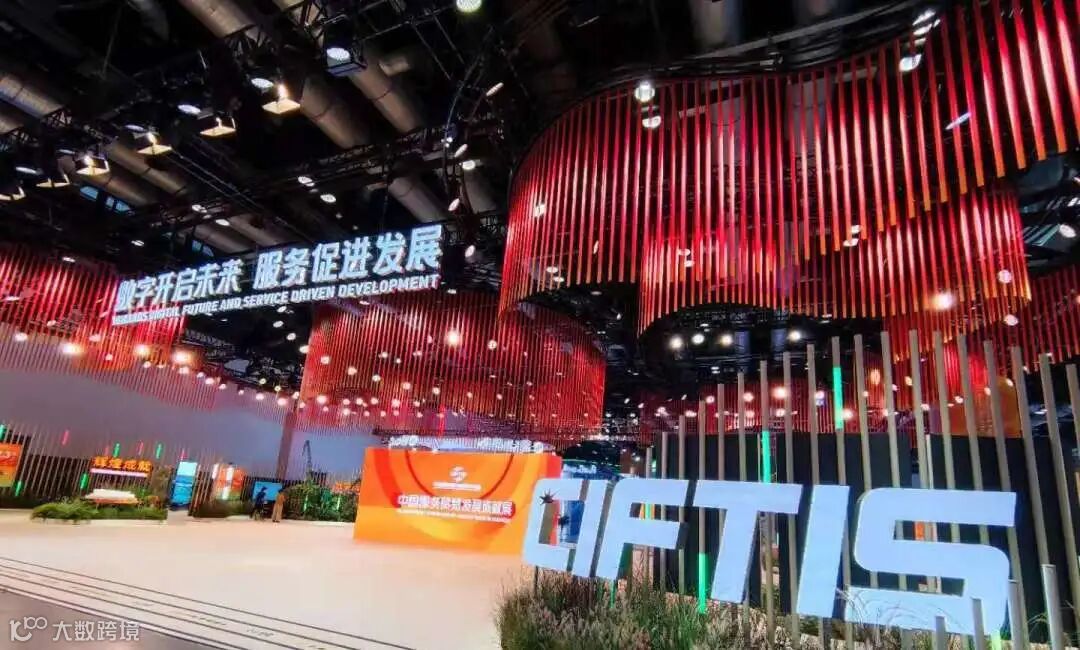
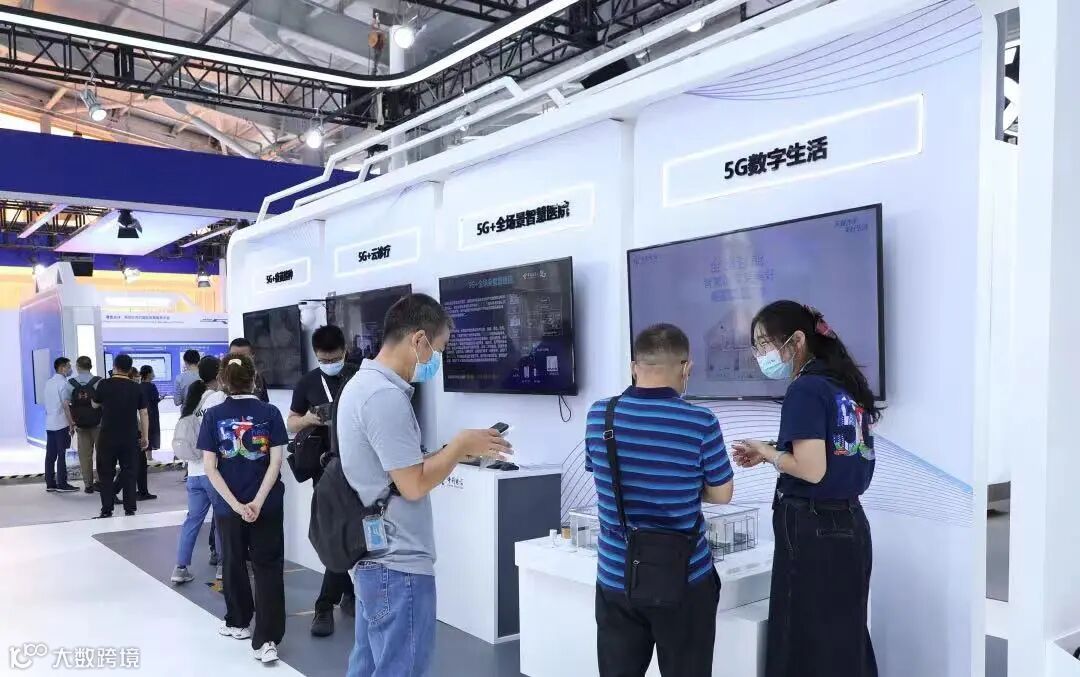
Covering an area of 9,600 square meters, the thematic exhibition on telecommunications, computer and information services is composed of four sections, namely 5G Communication Services, Software and Information Services, Ultra-high Definition Audio-visual Services, and "Carbon Neutrality" Green Technology Services. Among them, the 5G communication services section, following the trajectory of people's life and work, features an interactive display space that highlights 5G application scenarios such as family life, health care, financial consumption, social communication, education and entertainment, transportation and logistics, production and manufacturing, and urban management to show the full picture of the smart connected life in the 5G era. The information services section is a showcase for the application of new generation of information technologies and intelligent technologies such as big data, artificial intelligence, industrial Internet, and intelligent robots in urban environmental services.
In addition, the China Intelligent Industry Forum 2021 was held under the theme "Lead the Future in the Intelligent Era" during the CIFTIS. Zhao Zhiyun, Party Secretary and head of the Institute of Scientific and Technical Information of China and director of the New-Generation Artificial Intelligence Development Research Center at the Ministry of Science and Technology, said at the Forum that the fourth industrial revolution brings both challenges and opportunities to China and he hopes the country can gain new technological advantages in the revolution.
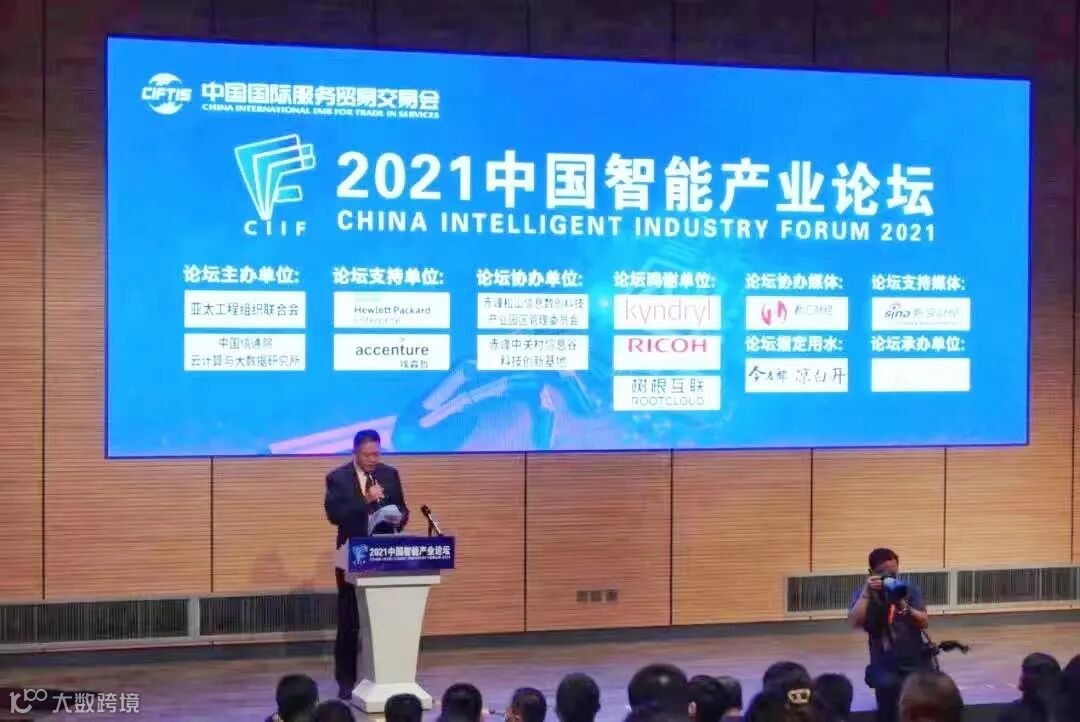
(Photo Source: WeChat Official Account of the Federation of Engineering Institutions of Asia and the Pacific)
Zhao pointed out that at present, China has three obvious potential advantages: The first is technological advantage. Different from the previous three industrial revolutions sparked by a single technological breakthrough, the fourth one features dramatic advances in core technologies and a widespread upgrade of other technologies. China has gained big competitive edges in such key fields as new-generation artificial intelligence, 5G, and brain-computer interface. The second is industrial advantage. China boasts an enormous market size and rich application scenarios. The fourth industrial revolution, unlike the previous three ones, is driven, first and most, by application scenarios. The third is governance advantage. The continuous development of technologies and industries will rapidly improve China's technology governance, thereby promoting the country's participation in global governance of the development of technology.