


HKEX is preparing to introduce its Volatility Control Mechanism (VCM), which will cool the market for five minutes when there are abrupt price changes on individual stocks or futures. It's tentatively set to begin on 22 August 2016. One unique aspect of HKEX’s VCM is that trading will continue even when the VCM is triggered.
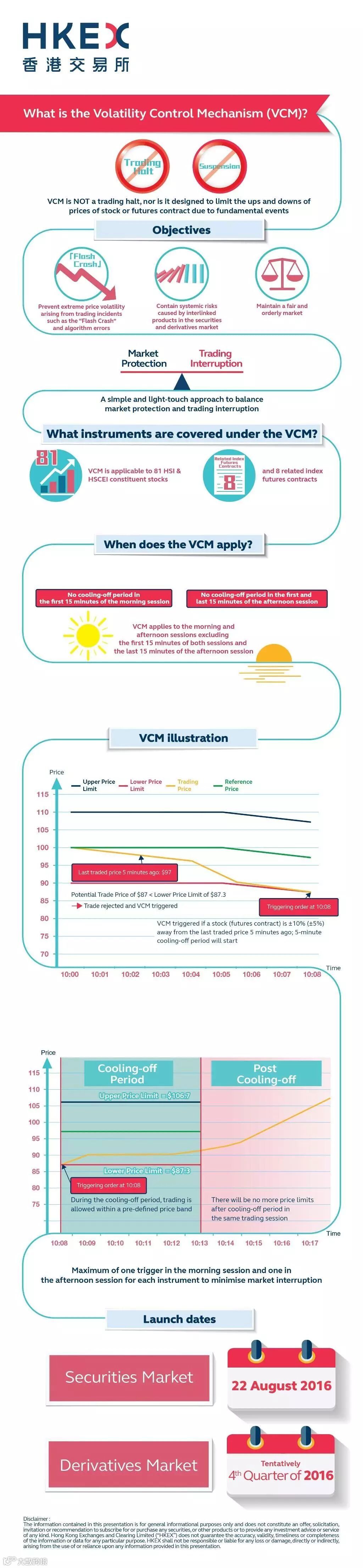
What is the Volatility Control Mechanism?
The Volatility Control Mechanism is designed to prevent extreme price volatility from trading incidents such as a “flash crash” and algorithm errors, and to address systemic risks from the inter-connectedness of securities and derivatives market.
How will HKEX's VCM work?
If rapid and large price movements are captured on individual stocks or futures (>±10% from the reference price for securities market; >±5% from the reference price for derivatives market), a cooling-off period of five minutes will be triggered and trading within the set band will be allowed. Normal trading resumes afterwards.
Which securities and futures contracts are covered under the VCM?
In the securities market, the VCM will cover Hang Seng Index (HSI) and Hang Seng China Enterprise Index (HSCEI) constituent stocks. There were 81 such stocks listed on the Stock Exchange of Hong Kong as of 31 May.
In the derivatives market, the VCM will cover spot and next calendar month index futures contracts with HSI or HSCEI as their underlying index. Currently eight futures contracts are covered under the VCM.
What is the applicable period for the VCM?
The VCM is applicable to the continuous trading session excluding the first 15 minutes of the morning and afternoon trading sessions; the last 15 minutes of the afternoon trading session; and the After-Hours Futures Trading session in the derivatives market.
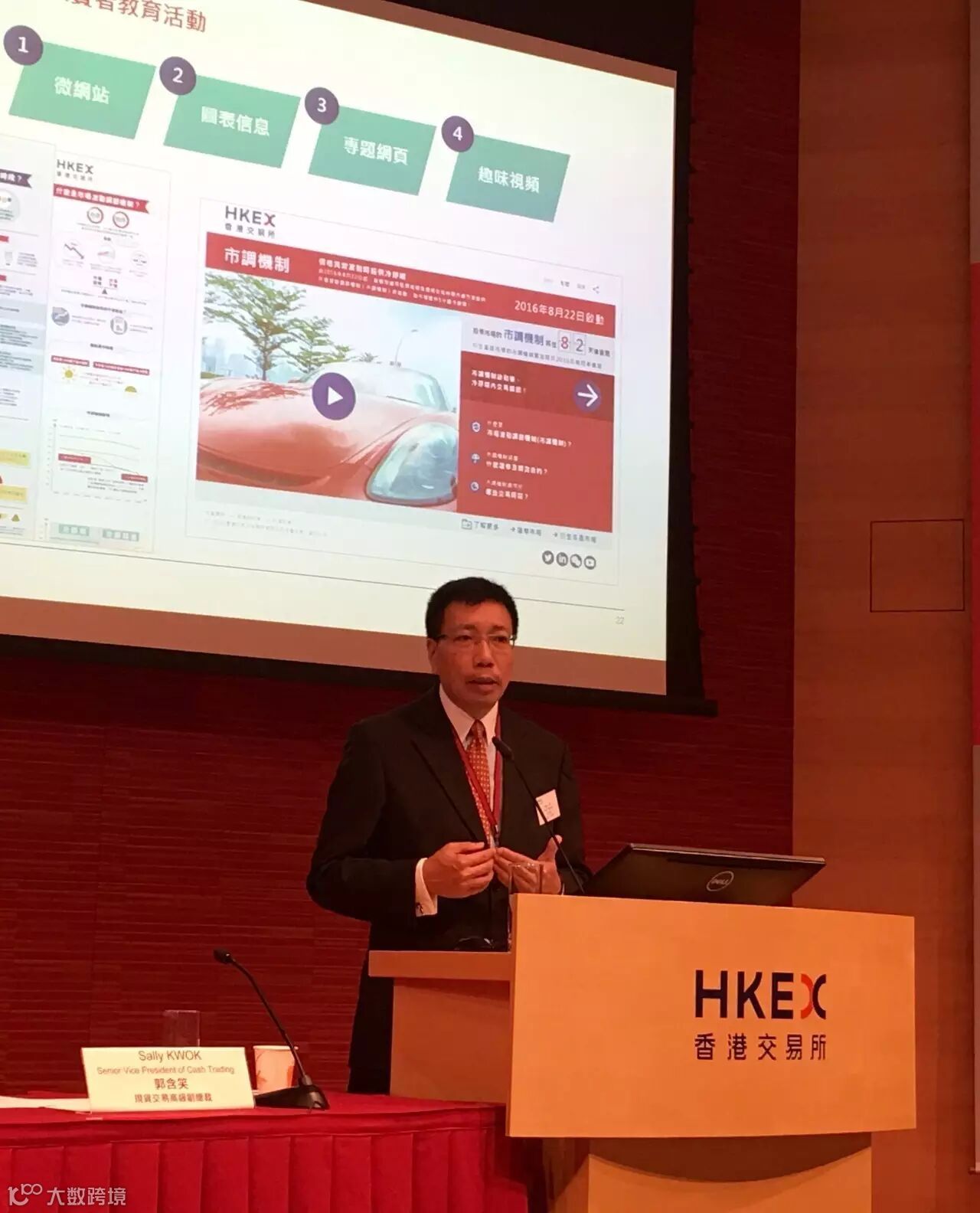
HKEX Head of Markets Roger Lee introduced the VCM in detail to over 40 journalists at a media workshop today. He said that HKEX’s VCM is a simple and light-touch model that is able to maintain a fair and orderly market without over intervention. He added that if it had been implemented over the last nine years, it would not have been triggered in most years, and it would only have been triggered twice in the derivatives market over that entire time.
Tap Read More to find out how the VCM works on our special website.