



Demand for block trading is growing, according to a new report published by HKEX's Chief China Economist's Office. The report looks at what is driving this demand and how enhancing mutual market connectivity with block trade facilities could potentially help meet the growing needs of Mainland and global investors.
Block trading is a mechanism that allows market users to buy or sell large blocks of shares in a single transaction, which is normally not conducted on the open auction market. It is a common tool in global markets to limit the price impact of large transactions and prevent information leakage.
Average daily turnover value of negotiated trades of major stock exchanges (2013 – 2015 and 2016 – 2018)
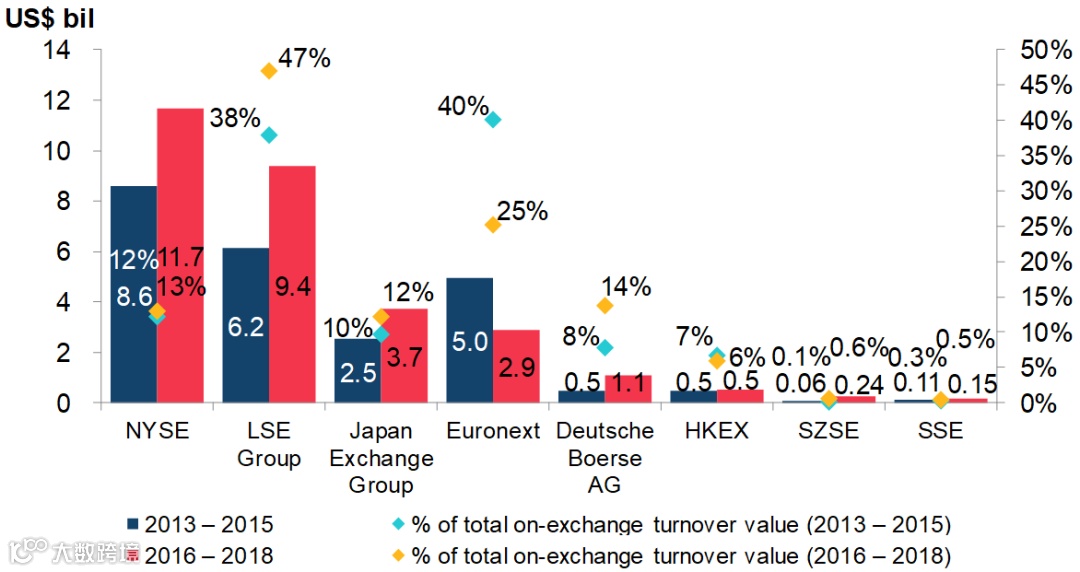
Note: The numbers may include not only placements or upstairs block trades but also other types of negotiated deals, and are therefore not entirely comparable across exchanges because of different reporting rules and calculation methods.
Source: Calculated based on the statistics available on the WFE website.
The growth of asset management services is a fundamental driver for block trading in global markets. The price impact of lit orders of on-exchange large-sized transactions would erode active returns for active managers, while for passive managers, the costs of rebalancing on index stocks can be significant and much higher than the management fees received. The absence of a block trading mechanism on exchanges may significantly increase the cost of execution.
The Mainland market provides dedicated platforms for block trading of A shares, but they are mainly used for major shareholders to sell the shares after the lock-up period. Nevertheless, the situation is expected to change as global access to the A-share market has been expanded through Northbound Stock Connect. The asset management of offshore institutional investors in A shares is also expected to grow further after the inclusion of A shares into global indices. The increased global institutional participation might increase the demand for block trading of A shares.
Year-end total foreign investments in Mainland onshore stocks (2013 – 2018)
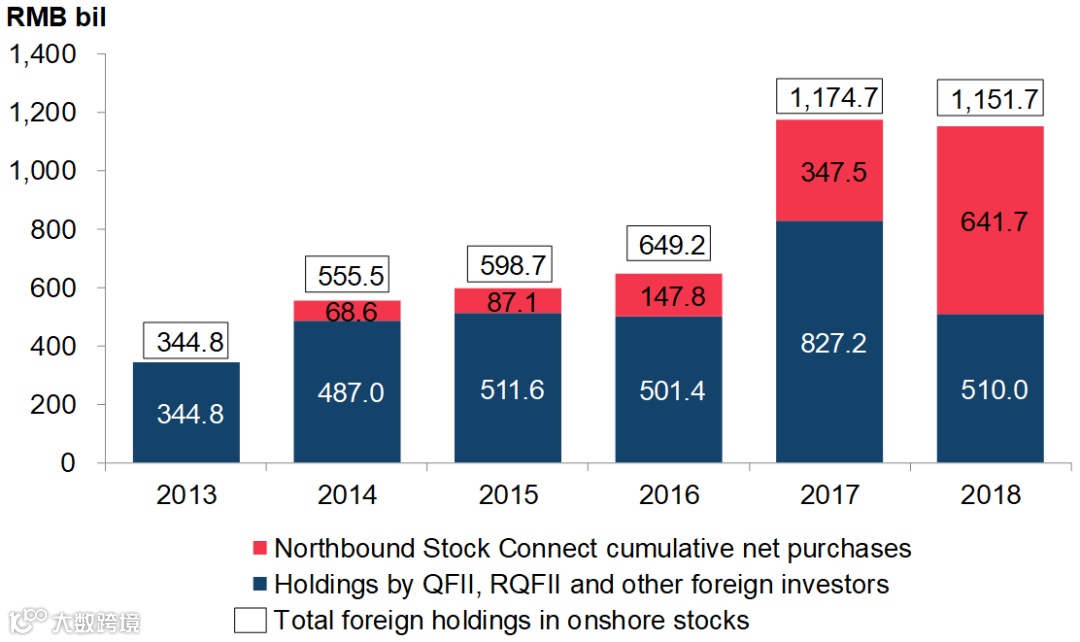
Note: The amount of holdings by QFIIs, RQFIIs and others is estimated as the difference between the total foreign holdings in onshore stocks and the cumulative net purchases via Northbound Stock Connect.
Source: HKEX for the cumulative net purchases via Northbound Stock Connect; Wind for the total foreign holdings in onshore stocks.
In Hong Kong, HKEX's manual trade mechanism accommodates the reporting by Exchange Participants through private negotiations. The turnover of negotiated trades reached the highest in 2018. The growth in block trading could, to a certain extent, be attributable to the growth in asset and wealth management in the Hong Kong market. Moreover, Mainland investors are increasingly interested in diversifying their portfolios through mutual funds with exposure in Hong Kong stocks. The potential demand for block trading from Mainland funds through Southbound Stock Connect is expected to grow further.
Funds that invest in Hong Kong stocks through Southbound Stock Connect ― Total net assets and number of funds at quarter-ends (2014Q4 – 2018Q4)
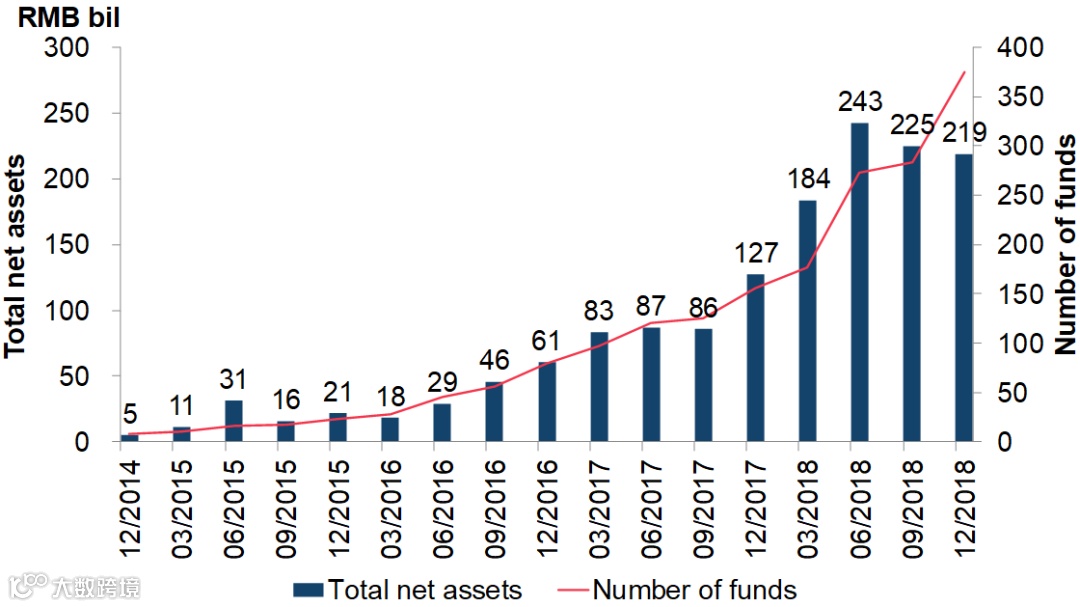
Note: Only the funds reported quarterly total net assets are included. Some funds have more than one tranche.
Source: Wind.
Given the potential demand for cross-border block trading, enhancing Mainland-Hong Kong market connectivity with block trading facilities could potentially meet investors' rising demand and enhance cross-border market liquidity.

Tap Read More for the full report.