


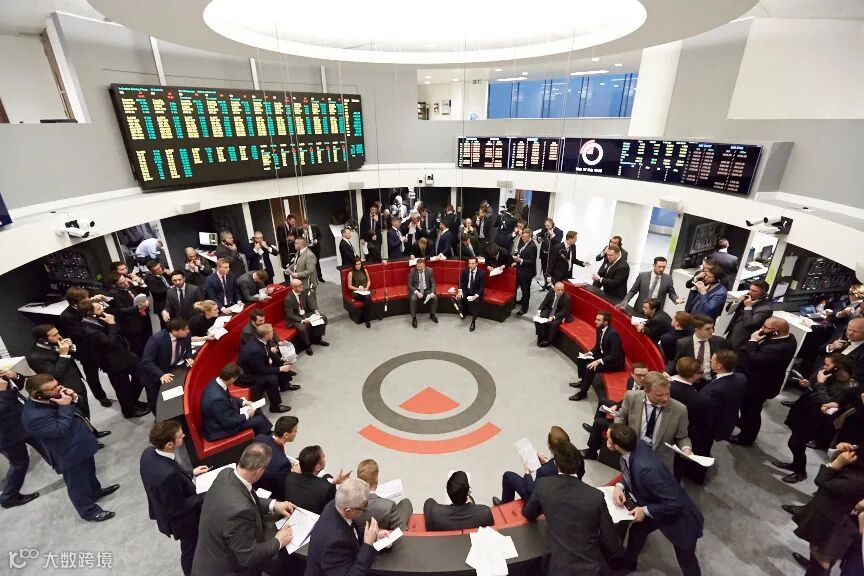
Greater China’s demand for exchange-traded futures contracts for base metals is growing rapidly, with metal producers and consumers looking for additional ways to manage their exposure to metals price risks. China is the world leader in production and consumption of commodities including metals, and greater access to international commodities markets would give it increased influence in global commodities pricing, more accurately reflecting its leading position.
As the leading international market for base metals price discovery, hedging, and trading, the London Metal Exchange (LME) is well placed to provide such connectivity opportunities.
Since being acquired by Hong Kong Exchanges and Clearing Limited (HKEX) in 2012, the LME and other companies within the corporate group have been working closely together to explore ways to offer greater two-way access to commodities markets for participants both inside and outside China.
HKEX’s Chief China Economist’s Office and the LME have jointly published two research reports which give an overview of the LME’s market structure, contracts, operations, and services. The reports explore opportunities to build greater connections between the commodities market in China and the LME, leveraging the platforms of its parent company, HKEX, and its sister company, the Qianhai Mercantile Exchange (QME).
In the past 20 years, China’s increasing base metals demand has been driven by intensive industrialisation and widespread urbanisation projects, with construction, transport infrastructure and communications networks driving demand for a wide variety of industrial metals. China has also seen sizeable growth in demand for battery materials such as cobalt, nickel and lithium, particularly for the production of electric vehicles (EVs).
The international physical metals industry ― those who mine metal, produce metal and make things out of metal, together with financial participants who trade metal ― use the LME’s market to transfer or to take on price risk.
The LME currently offers contracts for fourteen types of metal, providing the world with daily, transparent, and real reference prices that are reflective of global supply and demand, and set the global standard in physical base metal contract negotiations.
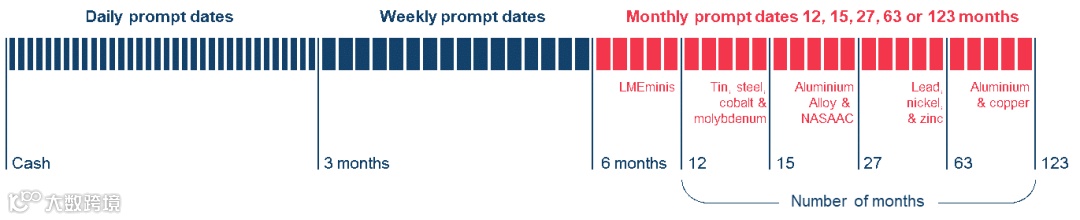
The time between a physical contract being agreed and the time it is settled can span years, leaving companies and investors exposed to risk. The LME’s unique and highly flexible settlement-date structure for its physical contracts, also known as “prompt dates”, allows market participants to use the LME’s contracts to transfer or take on risk against metal prices for a wide range of trading dates as far as 10 years in the future (see diagram below).
Prompt-date structure of contracts on the LME
Working together, the LME, HKEX and the QME are looking at ways to bring Mainland Chinese and international markets together to create new opportunities. Options under consideration include establishing benchmark metal prices for China, establishing warehouse facilities in the Mainland, further expansion of LME trading in Asian time zones, exploration of cross-border and international trading, and the cross-listing of metal derivatives as part of the wider Connect programme.

Tap Read More for the full reports.