During the "13th Five-year Plan" period, China achieved great success and notable results in the reform of household registration system. According to the data of the Ministry of Public Security of the PRC, China has accomplished the task of 100 million residents’ settlement ahead of schedule, with more than 100 million rural residents voluntarily and orderly transferring into urban residents, which makes the urbanization rate of residents in terms of household registration increase from 35.93% in 2013 to 44.38% in 2019.
The distinction between agricultural registered permanent residence and non-agricultural registered permanent residence has been removed all around the country, and all people are uniformly put under household register, which symbolizes the withdrawing of the "agricultural population to be given non-agricultural status" that has lasted for more than half a century from the historical arena. In addition to provincial (prefectural) cities, all places in the central and western regions of China have realized the barrier-free settlement. In the eastern regions of China, the conditions for settlement have been generally reduced, and most cities therein have cancelled or reduced their requirement in the fixed number of years of people participating in urban social insurance. Nanjing, Wuhan, Chengdu, Zhengzhou, Xi'an and other super-cities have fully liberalized their settlement policies towards graduates from colleges, universities and vocational schools, skilled workers, overseas returnees, and other groups. Beijing, Shanghai, Guangzhou, Shenzhen and other megacities have built open and transparent points-based household registration systems.
At present, 31 provinces (regions and cities) have all promulgated measures for the implementation of residence permits. By the end of 2019, more than 100 million residence permits have been issued nationwide, and the fundamental urban public service delivery system with the residence permit as its carrier has been established basically. In the aspect of education, the "two-exemption and one-subsidy" fund and the benchmark quota fund of public expenses per student can be carried by the students as they move, and benefit more than 14 million children who move with their peasant-worker parents. In the aspect of employment, more than 100 million peasant workers have received vocational training since 2014 by accumulative total. In the aspect of social insurance, a uniformed basic old-age insurance system for both urban and rural residents has been built nationwide. By the end of 2019, 63.01 million peasant workers have participated in worker's basic endowment insurance, 86.16 million in employment injury insurance, and 49.58 million in unemployment insurance.
The 2020 China International Fair for Trade in Services ("CIFTIS") was held in Beijing in September 4 - 9, with the theme of "Global Services, Shared Prosperity". During this period, the 10th Global Green Economy Fortune Forum --- the "14th Five-year Plan" Green Development Themed Roundtable Conference of Mayors was specially convened; by centering on the economic and social development characteristics of local governments, and with high-quality green development as the entry point, participants discussed how to make the "14th Five-year plan" featuring high-quality green development, and communicated and promoted a batch of green industries and major projects of green investment.
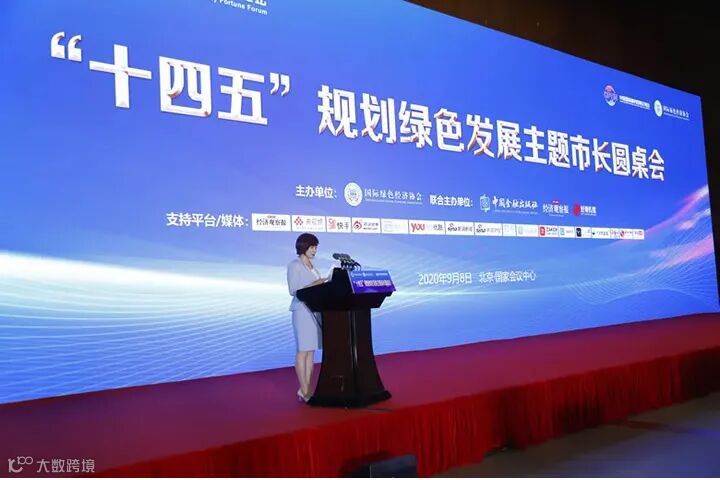
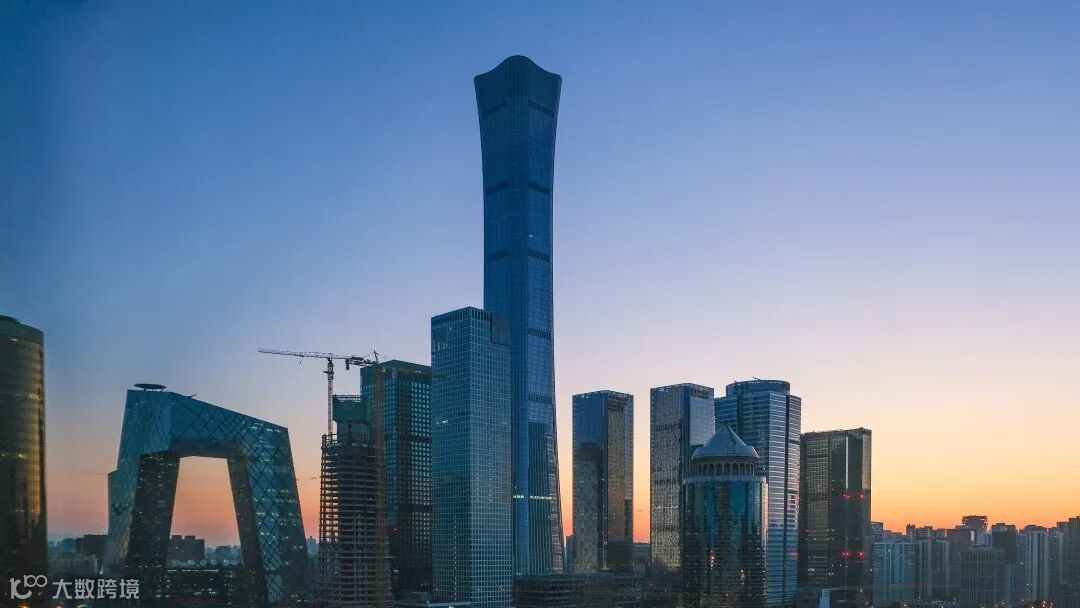
(Source of picture: IGEA)
Shen Chi, the deputy director of China Center for Urban Development, indicated on the conference that the "14th Five-year plan" had clearly required the transition from high-speed development to high-quality development and the green and low-carbon development is an important symbol of high-quality development. The green development includes green industries, green products, green productive processes, and green living. The urban green space is mainly represented in the following three aspects:
1.Urban density
The most common and important indicators are the population density or employment density. As the urban density increases, the average motor vehicle utilization rate will be effectively reduced, so will the fuel consumption and the corresponding emission of greenhouse gases.
2.Mixture of functions
Generally speaking, the greater the land is developed, the higher its mixed utilization degree is, which enables the reduction of travel volume of motor vehicles and of carbon emission per capita. Therefore, we should enhance the mixed utilization and diversified development of the land, and advocate the development pattern of city-industry integration.
3.Form of the space structure
The influences of urban spatial form are mainly embodied in the connection degree and disperse degree of urban space. We should advocate the continuous multi-center development pattern to control the disorderly expansion of urban space, reasonably plan and guide the construction of compact, continuous and multi-center urban spatial structure, enhance the control role of urban growing border, and achieve a balanced and effective urban spatial layout.