
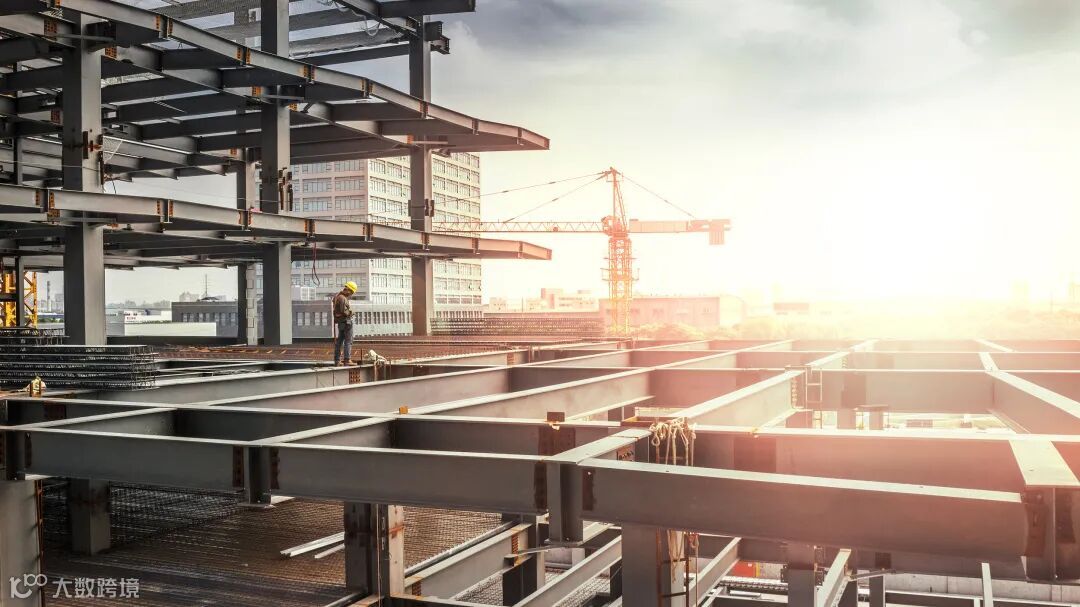
The Regulation on the Administration of Earthquake Resistance of Construction Projects (hereinafter referred to as the Regulation) shall come into force on September 1, 2021. At the China SCIO Briefing on State Council Policies held on September 27, Zhang Xiaohong, Vice Minister of Housing and Urban-Rural Development, introduced that the Regulation is the first administrative regulation promulgated for the administration of earthquake resistance of construction projects since the founding of the People's Republic of China, which is of great significance for improving the seismic fortification level of construction projects and the ability to resist earthquake disasters.
(Photo Source: CFP.CN)
What practical moves are proposed in the Regulation? In answer to this question, Zhang Xiaohong gave his insights from the following aspects. First, the Regulation made clear that competent housing and urban-rural development departments at all levels and other relevant departments shall strictly supervise the implementation of mandatory criteria for seismic fortification of construction projects, and clarified the measures that regulatory authorities are entitled to take when performing their duties. Second, for old houses without seismic fortification measures or failing to meet the mandatory criteria for seismic fortification, the government shall give necessary policy support during seismic reinforcement. Third, the state encourages and supports the research, development and application of seismic technology in construction projects. Fourth, we should establish and perfect the seismic fortification database of construction projects, and use big data technology and information-based means to improve the modernization level of administration of earthquake resistance of construction projects. Fifth, we should establish the credit record system of responsible enterprises and related employees for earthquake resistance of construction projects.
According to Huang Yi, Director of the Fourth Bureau of Legislation, the Ministry of Justice, the Regulation sets very strict legal responsibilities and strengthens accountability. First, the punishment on the subjects related to earthquake resistance of construction projects is intensified. Second, for illegal acts in violation of the Regulation, such punishment measures as ordering to stop the construction, imposing a fine, lowering the qualification level or revoking the qualification certificate are stipulated. Third, severe punishments will be meted out for violations such as issuing false reports.
2021 China International Fair for Trade in Services (hereinafter referred to as "CIFTIS") was held in China National Convention Center and Shougang Park from September 2 to September 7, with the theme of "Towards Digital Future and Service Driven Development". Engineering Consulting and Construction Services, as one of the 8 thematic sections, appeared in Shougang Park, where the integration of century-old industrial relics and modern exhibitions reflects the progress of the architectural concept. At the exhibition site, an array of innovative achievements in urban construction and people's life is displayed, demonstrating China's technological strength and service capability in construction.
Patrol robot dog capable of walking and jumping, arm-shaped welding robot, and "passive house" with thermal insulation effect and other innovative achievements are demonstrated. Today's construction sites have long gotten rid of the stereotype of being covered in dirt and mud, and the application of new technologies also makes reinforced concrete intelligent.
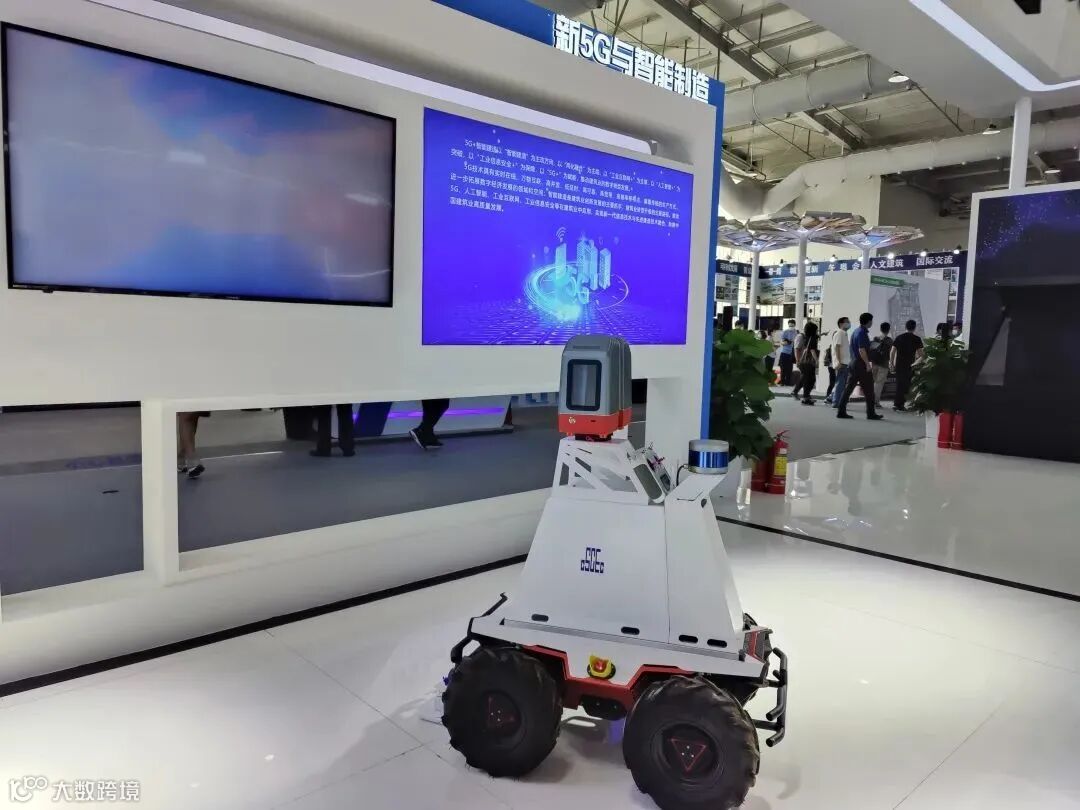
According to the technical commentator of the exhibition stand of Beijing Construction Engineering Group, the utility tunnel is known as the "lifeline" of urban underground pipelines, on which the transmission of water, electricity, gas, communication is dependent. The patrol robot dog has excellent climbing ability, and it is provided with high-resolution camera and detection sensor, thus allowing it to perceive and respond to the environment well, and complete the patrol task independently.
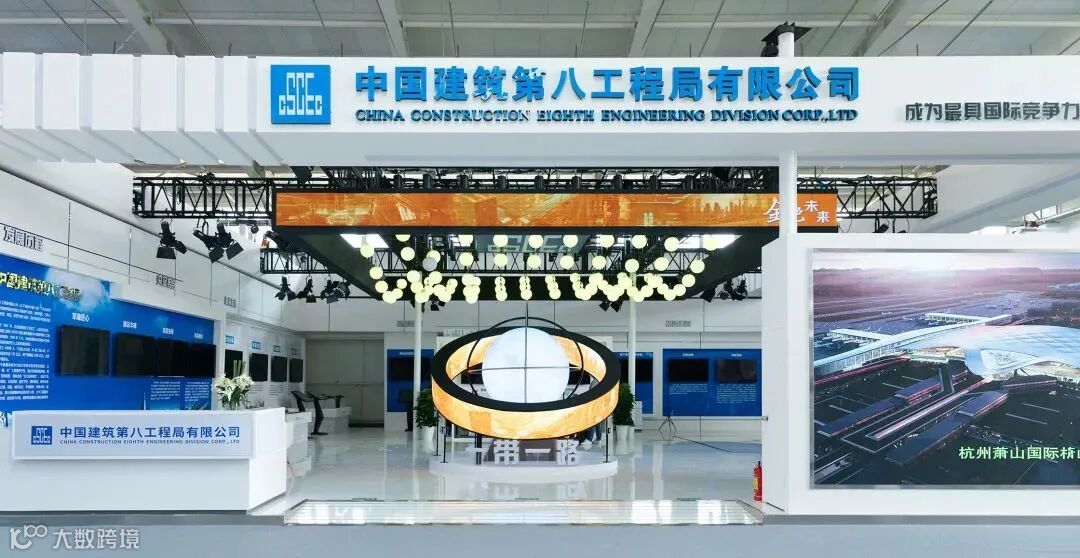
At the exhibition stand of China Construction Eighth Engineering Division, the intelligent assembled bridge-building machine (IABM) realized the integrated installation of factory prefabricated columns, bent caps and box girders on site for the first time. The IABM can complete the erection of one 200-ton bent cap in 30 minutes, automate key processes and eliminate manual operation errors, thus saving 7 days per kilometer of erection.
(Photo Source: WeChat Official Account of China Construction Eighth Engineering Division)
At the exhibition stand of Beijing Capital Development Group, the ultra-low energy house project is particularly eye-catching. According to the on-site commentator, ultra-low energy house, also known as "passive house", is equipped with envelop enclosure, energy and equipment system as well as lighting system to realize energy conservation. According to relevant monitoring data, the energy consumed by a prototype room with a floor area of 150 square meters throughout a winter is 1/10 of that consumed by a house designed with common heating facilities. In the meantime, intelligent operation and maintenance systems to monitor the building health indexes are also provided, which can monitor and control indoor and outdoor environment, structural safety, energy consumption of different items, operation and maintenance status of smart household equipment.
At the Smart Construction and Green Development Summit Forum held during this CIFTIS, Qian Qihu, academician of the Chinese Academy of Engineering, pointed out that smart construction is the key to industrial transformation and upgrading, and the Internet of Things and 5G technology should also be used to build smart platforms in engineering construction. Qian said that, from artificial drilling, mechanical trolley construction to today's digital driving, China's scientific and technological innovations in the engineering field have experienced a development process in the ascending and progressive sequence, and will move toward a future requiring less and even no labor force. With respect to the understanding of smart construction, Qian answered from two dimensions, namely, comprehensive and thorough perception system and intelligent platform for decision making.