

Lead-in
News Today
Amidst the global restructuring of supply chains, India is evolving from a mere “cost sink” into a core strategic choice for corporate procurement and supply chain diversification. With increasingly sophisticated industrial clusters, manufacturers possessing both skill and creativity, and a sustained emphasis on quality compliance, India's procurement value has long transcended its low-cost label. Yet this promising market harbours complex challenges: fragmented supply chains, divergent perceptions of standards, and cross-cultural collaboration hurdles. How can businesses penetrate these layers to identify reliable partners, achieving the leap from ‘price-driven procurement’ to ‘long-term collaboration’? This article focuses on the core logic and practical essentials of sourcing in India, unlocking new pathways for efficient and compliant procurement for global enterprises.
01
India –
A New Global Sourcing Destination
Procurement Situation in India
For international companies, India sourcing has moved from being a “cost-saving alternative” to becoming a strategic destination for product sourcing and global sourcing. With its expanding industrial clusters, skilled Indian manufacturers, and a growing emphasis on quality and compliance, India is steadily building its credibility as a key source for global supply chains.
Yet, the real challenge isn’t just finding suppliers — it’s finding reliable suppliers who can meet global expectations.
India’s manufacturing landscape is vast, diverse, and often unstructured. The same flexibility that makes Indian suppliers innovative can also make them unpredictable. This duality defines the sourcing from India experience: promising, but complex.
As Rüdiger Schröder, Vice President – Projects, who has lived and worked in India for over 15 years, observes:
“India has a lot to offer – capability, cost, and creativity. But sourcing here isn’t plug-and-play. It demands understanding, patience, and the right process discipline.”
The Hidden Complexity
Behind India’s Sourcing Potential
The first misconception many international firms face is assuming that India’s vast base of suppliers in India automatically translates into reliability or speed.
It doesn’t.
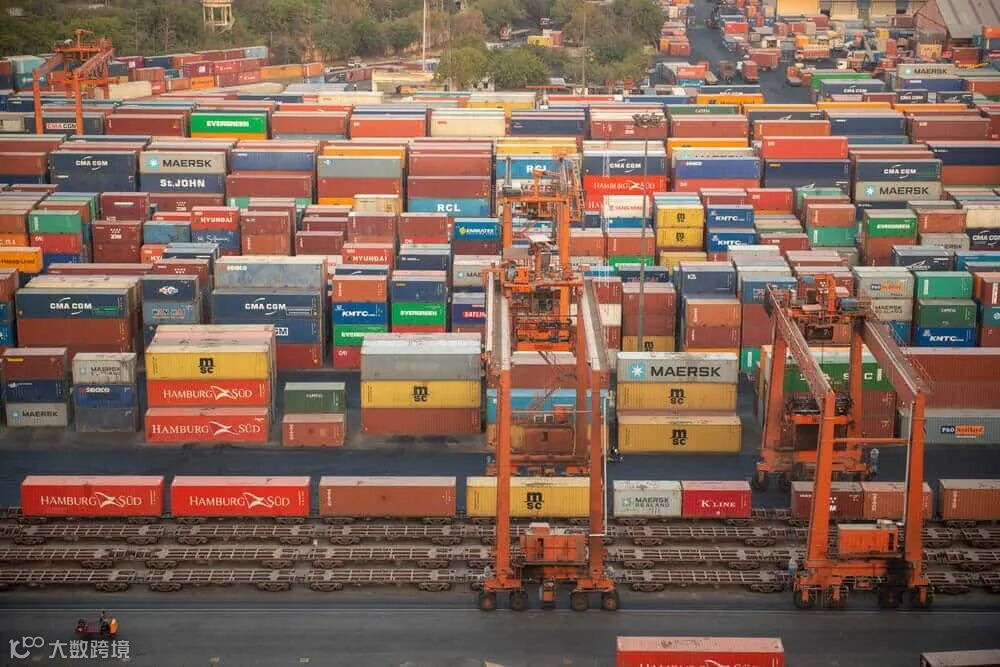
India’s manufacturing ecosystem is fragmented across thousands of small and mid-sized firms — many technically capable but uneven in quality systems, export maturity, and communication. This is why India sourcing agents and sourcing experts often emphasise deeper due diligence and structured procurement processes.
“India has an impressive supplier base, but finding a partner who truly meets global quality and delivery expectations requires patience and precision. Many companies discover that the challenge isn’t cost – it’s consistency.”
02
Beyond Price: How Global Procurement Leaders Succeed in India
Place Emphasis on
Long-term Development
Companies often begin their Indian sourcing journey with a cost-saving mandate. But the real question is: “Are we sourcing price or long-term performance?” Hidden inefficiencies — delayed responses, incomplete documentation, inconsistent quality control — can quickly offset price advantages. This is why mature sourcing processes must include performance metrics, not just quotes.
Assess Supplier Quality
Quality varies across Indian manufacturers, not just in capability but in interpretation. Ensuring alignment demands a structured evaluation of each supplier’s process maturity – including certifications, material traceability, and export logistics readiness (packaging, container loading, customs protocols). Without this diligence, “approved samples” can fail to scale into consistent production quality.
Adapt to Differences in Work Pace
Speed remains a critical differentiator. In China, a quotation can appear in 24 hours; in India, two weeks is common. This is not inefficiency but a reflection of system differences – decentralised decision-making, limited automation, and a culture that values precision over immediacy. Companies that plan for this learning curve and support suppliers with clearer specifications and predictable feedback loops – shorten their adaptation cycle dramatically.
Master Cultural Etiquette
Western procurement teams often underestimate how relationship-driven Indian business is. A supplier’s “yes” may signify intent, not immediate capacity – a nuance rooted in cultural etiquette rather than evasion. Bridging that difference requires structured communication, shared metrics, and on-ground visibility – the same rigour one applies to quality or logistics.
Understanding these nuances is what makes a trusted sourcing partner indispensable, especially when global sourcing from India demands balance, sensitivity, and attention to detail.
03
What Effective Sourcing
from India Looks Like
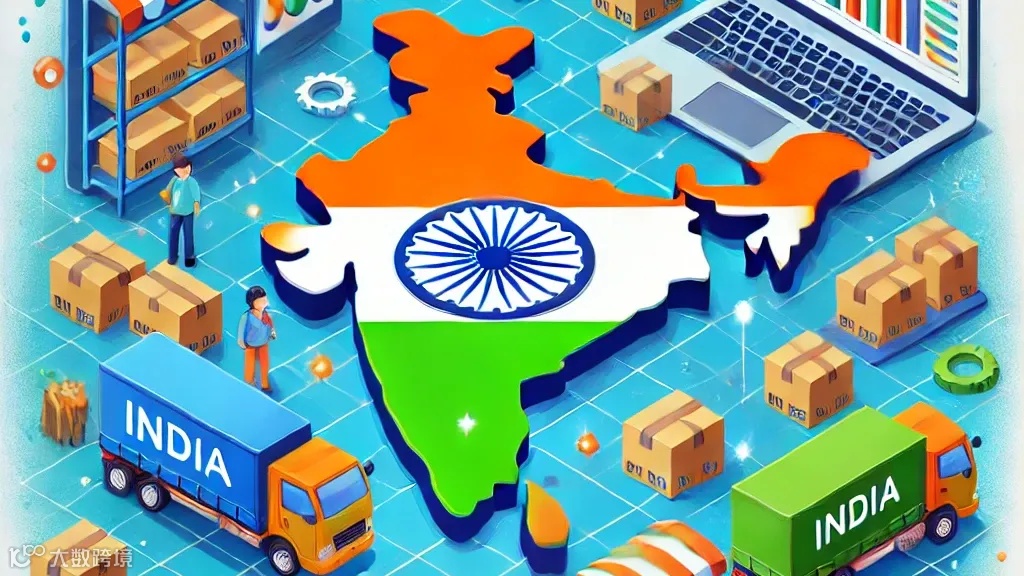
Successful product sourcing from India is engineered through clarity and process. From years of working with global buyers, five elements consistently differentiate success:
Start broad, then go deep
A two-stage method: Macro cluster identification and Micro supplier analysis. This helps shortlist trusted Indian manufacturers with export expertise.
Align on specifications early
Ambiguity multiplies in India. Clear drawings, samples, tolerances, and packaging standards ensure alignment.
Structure the quote process
Quality, scalability, delivery, and total cost must be factored into comparisons — not just unit price.
Build quality into the process, not after
Continuous QC inspections, batch checks, container loading supervision, and documentation reduce risks throughout the supply chain.
Manage delivery like a relationship
Regular rhythms of communication build trust — essential for long-term, stable sourcing and even for e-commerce buyers and small-volume importers.
Patience is important
India rewards companies that take a long view. While response times may initially lag behind China or Eastern Europe, the payoff comes in supplier loyalty, engineering adaptability, and cost resilience. A European hand-tool manufacturer that relocated production from China to India reached 95 percent localisation within a year – with equal quality and lower total cost.
The key: disciplined onboarding, continuous audits, and transparent communication. This illustrates a broader truth – India doesn’t just offer cheaper inputs; it offers smarter continuity for companies willing to invest in alignment.
04
What are the key trends happening in the Global Sourcing space?
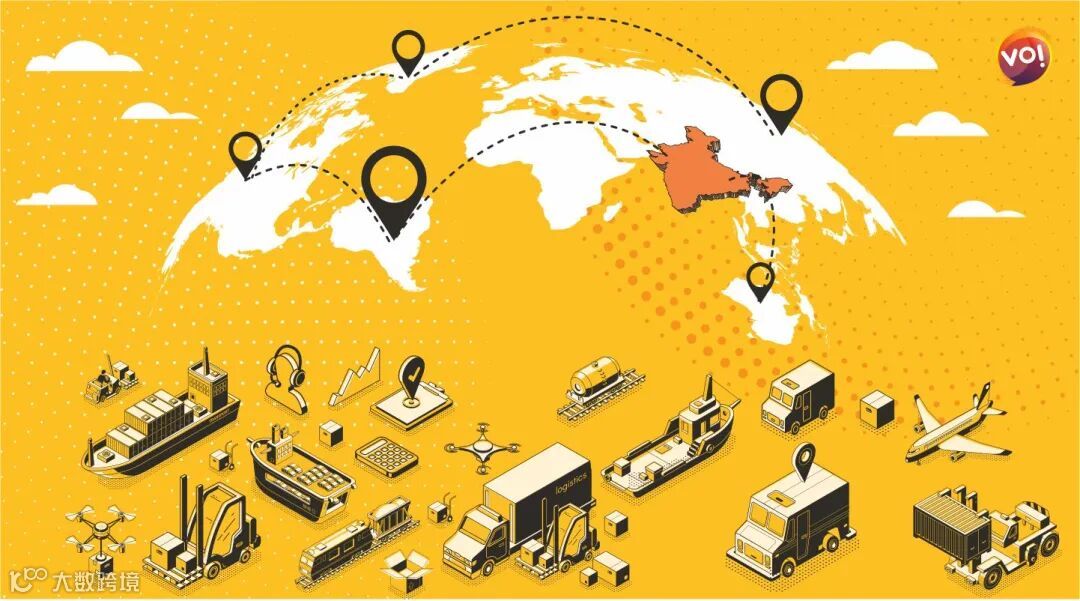
India's Global Supply Chain
via vibes of India
Building Global Competency
Centres in India
Nowadays foreign companies are establishing global competency centres in India which are funded by their principles. Sourcing is not just about manufacturing components it is also about finding the right talent who can do that work for you. These centres are bridging the gap between the mechanics and upskilling the talent.
Shifting Manufacturing and
Assembly Lines in India
Many European companies are shifting their manufacturing line in India which can be attributed to a rising labour shortage and high fuel costs.
Decentralisation Model
The government is boosting its decentralisation model in areas of effective and efficient pre-investment advisory in terms of land search, certifications, licenses, and approvals to achieve one step closer to Atmanirbhar Bharat.
Free Trade Agreements
There is a renewed focus on trade deals with the US, the European Union and the UK, which are key markets for Indian exporters and are keen to diversify their sourcing. FTAs are being touted by policymakers as a gateway for extensive opportunities for companies in India.
What ALTIOS International Enables:
Supplier discovery and due diligence
Process validation and quality assurance
Contracting and negotiation support
Supply-chain governance and delivery oversight
Cultural and operational alignment...
ALTIOS Tip
India has progressively reduced tariffs and market access barriers with its major trading partners through a series of bilateral free trade agreements (FTAs/CEPAs). For Chinese enterprises, establishing manufacturing facilities or undertaking substantial processing in India presents opportunities to leverage rules of origin. By using India as an export platform, they can benefit from preferential tariffs for markets including ASEAN, the Middle East, Australia, and Japan. Concurrently, Indian FTAs are characterised by stringent protective measures and complex rules. Chinese enterprises must proactively assess origin compliance requirements and industry exclusion lists to mitigate policy and compliance risks.
Your India Sourcing Needs Local Precision and Global Perspective

India’s sourcing opportunity is undeniable — competitive costs, capability depth, and supply chain diversification. But success requires more than supplier lists. It requires:
Discipline
On-ground visibility
Realistic expectations
A trusted India sourcing partner
Complete transparency
At ALTIOS International, we help businesses source products from India with predictable quality, verified suppliers, and structured execution — ensuring you get the best suppliers, the best prices, and the most trusted sourcing experience.