




Six Core Requirements for Naturalization
The Most Difficult Naturalization Path in the World
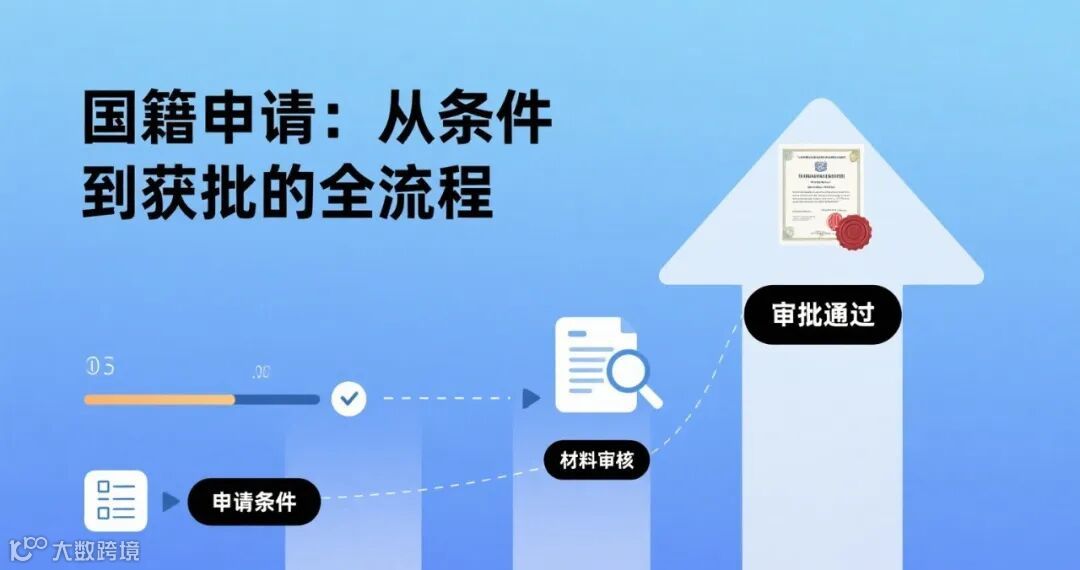
不是所有人都能 “天生” 拥有某国国籍 —— 有人因父母国籍特殊无法自动获籍,有人因跨国定居渴望融入新国家,这时 “归化” 就成了他们获取新国籍的核心路径。简单来说,归化就是非本国公民通过法定程序,满足居住、品行、语言等一系列条件后,正式加入该国国籍的过程。从美国的 “5 年移民监”,到英国的 “入籍考试”,各国归化规则虽千差万别,但都围绕 “是否能真正融入国家” 设定门槛;而中国国籍,凭借严苛的审批标准和 “放弃外国籍” 的硬性要求,成为全球最难获得的国籍之一。无论是想申请他国国籍的跨境工作者,还是对中国国籍感兴趣的外籍人士,读懂归化的通用逻辑与中国特色,才能清晰规划身份申请之路。
Not everyone can "naturally" acquire the nationality of a certain country. Some people cannot automatically obtain citizenship due to the special nationality of their parents, while others, who have settled across borders and aspire to integrate into a new country, find that "naturalization" becomes the core path for them to obtain a new nationality. Simply put, naturalization is the process by which non - citizens formally join the nationality of a country through legal procedures after meeting a series of conditions such as residence, good conduct, and language proficiency. From the "5 - year residency requirement" in the United States to the "citizenship test" in the United Kingdom, although the naturalization rules of various countries vary greatly, they all set thresholds around the question of "whether one can truly integrate into the country." The Chinese nationality, with its strict approval standards and the mandatory requirement of "renouncing foreign nationality," has become one of the most difficult nationalities to obtain in the world. Whether it is cross - border workers who want to apply for the nationality of other countries or foreign nationals who are interested in the Chinese nationality, understanding the general logic of naturalization and its Chinese characteristics is essential for clearly planning the path of identity application.
国籍的申请:归化的路径
Application for nationality: The path to naturalization
1. Residence Requirements (Immigration Detention): Applicants usually need to legally and continuously reside in the applying country for a certain number of years (for example, 5 years in the United States, usually 5 - 6 years in the United Kingdom, and living in Canada for 3 years within 5 years).
2. Identity Requirements: Holding a valid permanent residency (green card) is a common prerequisite.
3. Conduct Requirements: It is necessary to provide a certificate of no criminal record and have good moral conduct.
4. Language Ability: Most countries require applicants to reach a certain proficiency level in the official language (such as English in the United States and German in Germany).
5. Legal and Economic Knowledge: Usually, it is necessary to pass a naturalization test, which examines the understanding of the country's history, government structure, civil rights and obligations. At the same time, it is necessary to prove a stable source of income and not become a burden on society.
6. Oath of Naturalization: The last step is usually to participate in an oath - taking ceremony, swear allegiance to the new country, and give up allegiance to the original country (if the country does not allow dual citizenship).
例如,外籍人士通过 “杰出人才”“投资” 等渠道获得中国永居后,连续在中国居住满一定年限(无明确法律规定,由公安部根据实际情况判定),可凭借 “定居证明” 申请归化。

Apply for Chinese nationality:
Chinese nationality is one of the most difficult nationalities to obtain in the world.
Article 7 of the Nationality Law of the People's Republic of China stipulates that foreigners or stateless persons applying to join the Chinese nationality must meet one of the following conditions:
* Be a close relative of a Chinese citizen;
Here, "close relative" specifically refers to direct or collateral relatives such as spouses, parents, children, siblings, grandparents, and maternal grandparents, and the relative must be a "Chinese citizen" (not a foreign national or stateless). The applicant needs to provide proof of kinship (such as marriage certificates, birth certificates, household registers, etc.) to prove the legally recognized kinship with a Chinese citizen.
* Settle in China;
For example, after foreign nationals obtain permanent residence in China through channels such as "outstanding talents" or "investment", and have continuously lived in China for a certain number of years (there is no clear legal regulation, and it is determined by the Ministry of Public Security according to the actual situation), they can apply for naturalization with a "settlement certificate".
* Have other "legitimate and necessary" reasons.
This is a flexible clause, usually applicable to people who have made special contributions to China, such as foreign experts who have made significant contributions in the fields of science and technology, education, culture, public welfare, etc., or people who need to live in China for a long time due to political asylum or humanitarian reasons. The applicant needs to provide sufficient supporting materials (such as award certificates, contribution certificates, recommendation letters from relevant departments, etc.) to prove that there is a "legitimate reason" for applying for Chinese nationality.
The approval power lies with the Ministry of Public Security of the People's Republic of China, and the final approval rate is extremely high. After successful approval, foreign nationality can no longer be retained.
归化,本质是一场 “双向选择”:申请人选择融入一个国家的社会、法律与文化,国家选择接纳一个能为其发展贡献力量、遵守其规则的新公民。从全球通用的 “居住 + 语言 + 宣誓...” 要求,到中国特有的 “近亲属 / 定居 / 特殊贡献...” 门槛,每一项条件都是对 “身份认同” 的考验。对于想申请他国国籍的人来说,需提前规划 “移民监” 时长、备考入籍考试,做好 “融入” 的长期准备;对于关注中国国籍的外籍人士,则需认清 “难获批”“弃外籍” 的现实,理性评估自身条件。无论选择哪条路径,归化都不是简单的 “换本护照”,而是对生活方式、权利义务、身份认同的全面重构 —— 只有充分了解规则,才能做出最适合自己的选择。
Naturalization, in essence, is a "two-way choice": applicants choose to integrate into the society, laws and culture of a country, and the country chooses to accept a new citizen who can contribute to its development and abide by its rules. From the globally common requirements of "residence + language + oath...", to the unique thresholds in China such as "close relatives / permanent residence / special contributions...", each condition is a test of "identity recognition". For those who want to apply for the nationality of other countries, they need to plan in advance the length of the "immigration residence requirement" and prepare for the naturalization test, and make long-term preparations for "integration"; for foreign nationals who are interested in Chinese nationality, they need to recognize the reality of "difficult approval" and "giving up foreign nationality", and rationally evaluate their own conditions. Whichever path is chosen, naturalization is not simply "getting a new passport", but a comprehensive reconstruction of lifestyle, rights and obligations, and identity recognition - only by fully understanding the rules can one make the choice that best suits oneself.
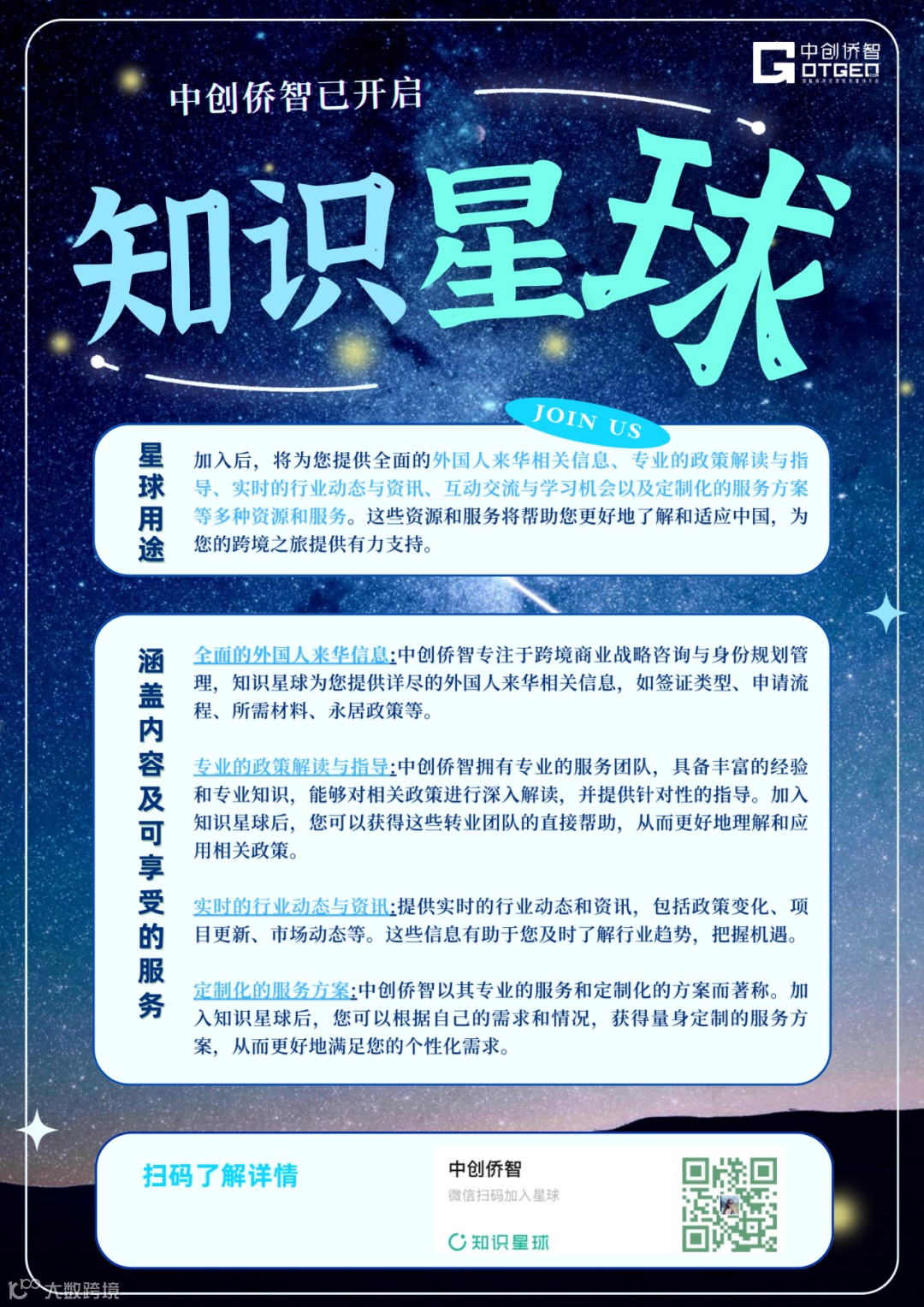
更多信息获取可加入中创侨智—知识星球,将为您提供全面的外国人来华相关信息、专业的政策解读与指导、实时的行业动态与资讯、互动交流与学习机会以及定制化的服务方案等多种资源和服务。这些资源和服务将帮助您更好地了解和适应中国,为您的跨境之旅提供有力支持。扫描下方二维码可付费加入。
或点击下方小程序加入
or click on the mini program below to join
可以添加中创侨智顾问
进行详细评估咨询


欢迎关注公众号:中创侨智
如对相关政策有疑惑,想要了解更多的

国籍冲突——当 “一人双国籍” 或 “无国籍” ,中国这样定规则

由于近期公众号规则调整,大家很可能无法第一时间收到我们的推送。所以如果你希望我们能正常出现在你的时间线,恐怕你要手动设置个星标了,阅读完后顺手点一下「在看」,记得哦~
声明:此文章乃中创侨智原创不易,杜绝任何形式的抄袭行为
图片来自网络,如有侵权请联系删除