


Hi, guys!
Long time no see~

五一假期已经离大家远去了
之前落下的学习计划
又该重新捡起来了
学习归学习
不过不要牺牲睡眠时间哦

现在又到了
每周的雅思知识分享时间了
这周我们来讲讲
雅思江湖上令人闻风丧胆的题型
据说遇到这种题的人
不是一脸懵逼就是当场自闭

没错
它就是小作文里的地图题
虽然它有一定难度
但只要运用好正确的方法
多积累多练习
大家就一定能打败它!

雅思小作文
地图题
Map
⽬前地图题主要是两种:
1.描述地区的变化
2.描述⼀个具体的位置
又以地区的变化(地理变迁)最为常见,这种题⽬,⼀般会⽤⼀组图展现同⼀个地点在不同时间段的形态变化。另外就是地图题的读题⽐较难。如下图所⽰:
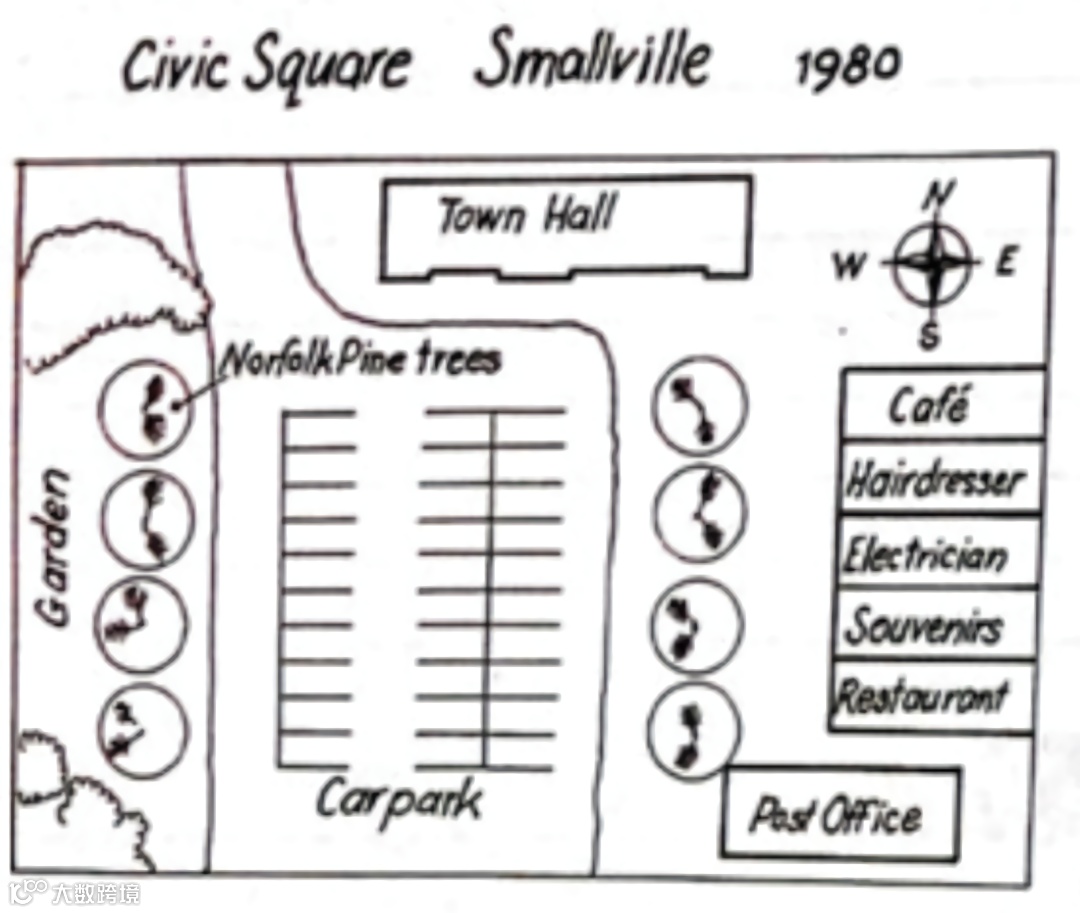
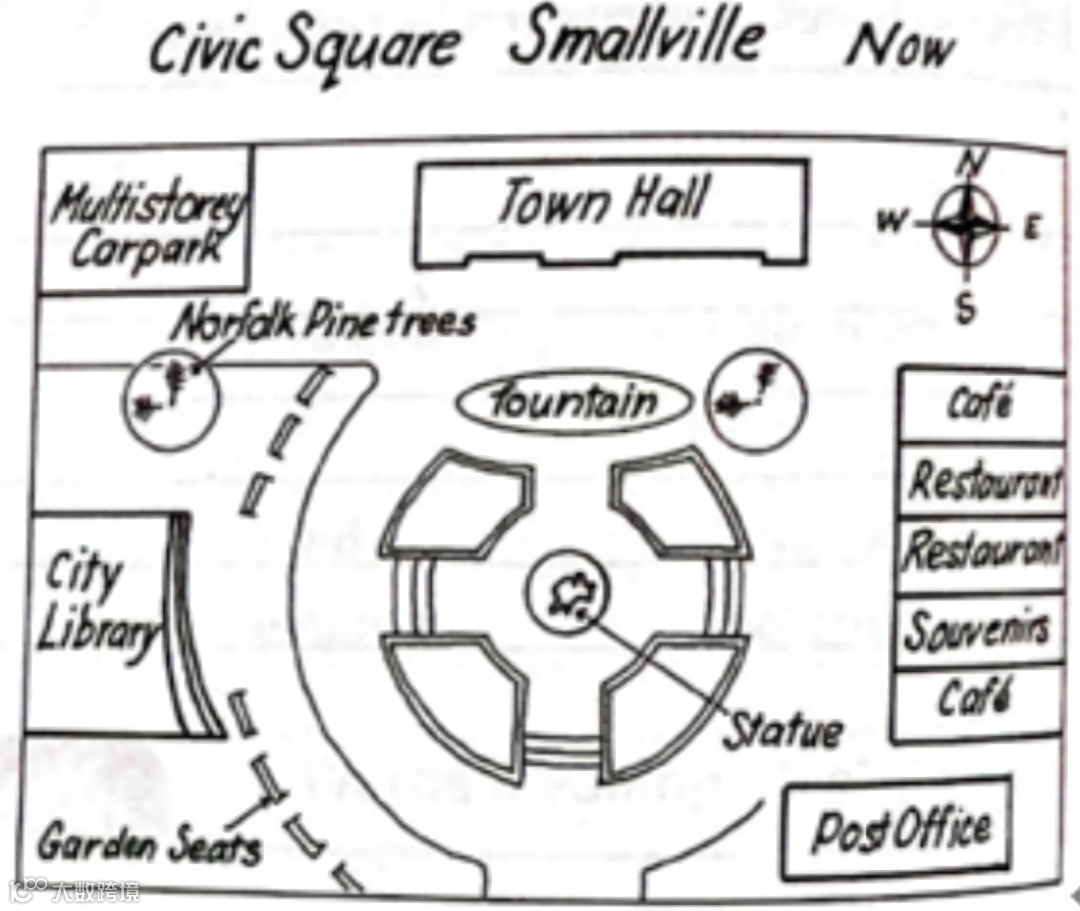
一、地理变迁的写法:
The maps below show the 事物 in 年份 and now.
1.读题:读图标的含义,哪个是铁路,哪个是村庄等等都读明⽩了。要看清哪个是公路,哪个是铁路。有没有交叉点等等。
2.确定写的顺序,是按变化写还是按位置写,还是两个的综合体。
3.如果是要求描述变化,把明显的变化先划出,最好⽤词在图旁边描述,确定⾃⼰要写⼏点。
4.细节变化:地图每个细节变化都要提到,不要忽视⼀个细节。
5.语态:地图题⽤被动语态。
第⼀幅图为静态地理位置描写,描述到第⼆幅图的时候,运⽤变化词汇。
主题句:In the present-day town, a great deal changed.
记得⽤关联的词和句⼦:
• It is obvious/ notable/ noticeable
• It is easy to locate/ to find that…
• It can be seen from the graph that…
#常⽤表达:
1.中间:
• A is in center/ middle/ central area of B
2.紧挨着:
• A is near / next to/ close to/ adjacent to B.
3.对⾯:
• A is opposite B.
• A is across B
• A is on the opposite side of B.
4.建设:
• construct, build, set up, establish, add
• transform, convert
二、地图题第⼆类为选址题:
The map shows two possible sites for the….
选址题并不难写,主要注意两点:
• 位置描述
• 优缺点
⼀般可分两段,分别陈述:
• S1的位置及位置相应的优缺点
• S2的位置及位置相应的优缺点
(其中表位置的⽅位词在下⽂有总结)

⼀、 时态
(一)如果地图题反映的是⼀个地⽅在过去的⼀段时间的变化,⽂章⽤⼀般过去时。
(二)如果地图题反映的是⼀个地⽅在将来⼀段时间的变化趋势,⽂章⽤表“估计”的词汇。
(三) 如果地图题反映的是⼀个地⽅从过去到现在的变化,可⽤现在完成时。
注意!!!⼀般不⽤将来时,表⽰将来的时间可以⽤下列表达:
• is likely to= is predicted to /is estimated to/is projected to/is expected to
• it is likely that = it is predicted/estimated/
projected/ expected that…
如:现在停车场改成了⼀个剧院。
The car park has been removed and replaced by a theatre.
城镇A的家庭数量从1937年到2020年将翻⼀番。
•The number of homes in Town A is likely to double.
•It is likely that the number of homes in Town A will double.
⼆、地图题的书写顺序:时间顺序和空间顺序
地图题的⽅位我们说东西南北,不说成左右。
1. A 在B 的东⽅/西⽅/南⽅/北⽅
A is/ lies/ is located/ is situated in/on / to the east/west/south/north of B (in 表A 在B 内部, on 表A 和B接壤,to 表A 和B 分开)
2. A 在B 内部的某个部位
A is in the eastern/ southern/ western/ northern part of B.
3. A在B 西北部的120 千⽶处
A lies 120 km to the northwest of B.
4. A 在B…⾓落
A is at/ in the south-eastern corner of B ( at 表⽰A 在B 外部, in表A 在B 内部)
5. 在河流或道路的南边/北边等
• On the south/southern side of the river
• On both sides of the road
• On the other side
6. 临近马路的地区
The area adjacent to/ near /next to/ just off the road
7. 在道路或河流的最南端
At the southern end of the river
8. A 在B 的对⾯
A is on the opposite side of B
A is opposite B
9. A 在B 东部的边界上(A 在B外部)
A is on the eastern border of B
10. A 在B 东部边缘上 (A 在B 内部)
A is on/ along the eastern edge of B
三、 “变化”词汇
地图题描述的是⼀个地区的变化,那么“变化”词汇必须过关。变化包括两种:图形原有事物的改变,图形新添事物。
1.图形原有事物的改变:
原有事物可说成:
The original/previous/former...
原有事物尺⼨上变⼤/变⼩:
The size of the ... has been enlarged/ extended/ halved/ reduced by half
原有事物在数量上增多或减少:
The number of... has increased/ risen/ grown/ reduced/ decreased/ dropped/ fallen/ doubled/ tripled/ quadrupled to 数字.
原有事物被推倒了:
A is pulled down/ knocked down/torn down.
恒定表达:
• A has remained unchanged.
• A被建造在B:A is constructed / establishedin B.
• A被增建在B:A is added to B.
原有事物没了:
The....completely disappeared/ were removed.
原有事物被改为:
• A becomes B
•A is transformed/ reconstructed/ redeveloped/ converted/changed/ turned over to/ into B
• A is replaced /substituted by B = A gives way to B
2.图形新添事物:
• A newly-built ...
• A new.... was built/established/set up/
constructed/completed and opened in the
middle of B
• A new .... has been added to the library
• The year年份 saw two additions to the land: 事物A in the northern part and 事物B on the opposite side.
再坚持一下
马上就学完啦!
In the present-day town, a great deal changed.
Perhaps the most noticeable change are those relating to transportation.
Our modern-day needs are very different and so the roads have been improved and traffic lights, a roundabout and a zebra crossing have been added, as well as an extra road.
Increased traffic means that a car park has now replaced Goode Farm and the fields that are located at the top of the 1700 map.
Housing is another area where many changes have been made.
While in 1700 there were few houses, now there are rows of houses and a block of flats instead of the stables.
终于学完啦!

今天的专栏分享就到这里啦
这么多的知识你都看完了
想必你一定是个非常优秀的人吧
继续加油
我们下周见!



你学“废”了吗,分享一下,点个在看吧~