



Check out our interview with Stephanie Jackson where she shares her experience of being a Schwarzman Scholar, being the President of Beijing Women's Network, and British Council's Communication Manager. Also, she is sharing her tips on how she landed her job at Mckinsey in London!
Now that you have watched the interview video above, don't miss out on the full interview below to learn more Stephanie's tips for success!



10 Questions with
Stephanie Jackson

JingJobs

You’ve been in China for some time now. What made you want to come here and stay for so long?
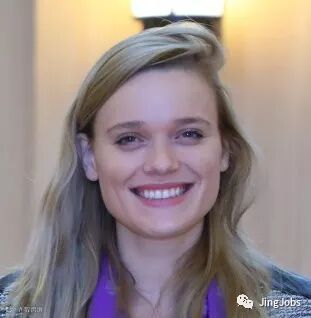
As most good stories start, my China journey started quite randomly. In secondary school, my principal asked me and a friend whether we would be interested in setting up a fundraising project for a school in Maande, Yunnan. We ended up raising €14,000 and after graduating, I thought I would come and check out Yunnan and see the school. I ended up spending seven months travelling across China (and South East Asia) and fell in love with the country.
I found myself returning almost every year, and not even because I actively sought out ways to do so, but because all the exciting opportunities just seemed to be here. I came back to teach English and public speaking one summer during university, and after graduating to work for the British Council in Beijing.
I think because China as a country has so many different opportunities and experiences on offer, for anything from career development, to travel, and experiencing a totally different culture and rapidly developing society, I ended up staying much longer than I ever expected (perhaps to my mum’s chagrin…).

Stephanie


JingJobs

You did Communication at the British Council, tell us a little bit about that and what advice would you have to young graduates who are trying to step foot into the world of Communications?
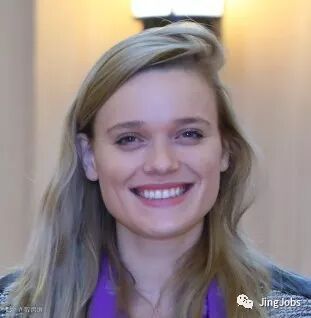
I think working in Communications is a great starting point for any career. I learnt how to produce loads of different pieces of written work, from policy research, to project impact analysis, and diplomatic speeches. Working in communications also gives you other transferrable skills such as how to set up a persuasive argument, how to succinctly get your point across and making engaging presentations.
As to how to get into the world of Communications, I think having some sort of portfolio of independent work can be really helpful to refer to during interviews. Not necessarily to show you already know how to produce different types of content, but more to show you are able to manage yourself and your time in order to complete large-scale projects, and that you are creative in your thinking.

Stephanie

JingJobs

You’re a Schwarzman Scholar, belated congratulations by the way, can you tell us a bit about that?
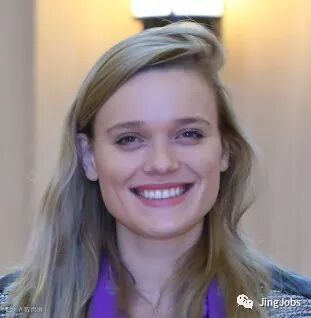
Of course! I started the programme last August, and it’s been quite the whirlwind. I applied because I wanted to deepen my academic knowledge of China as well as getting some formal business training. The Scholarship seemed perfect for that goal! In addition, I’ve really enjoyed the people and networking aspect of the programme. This year’s scholars come from 26 different countries, and have amazingly diverse backgrounds and experiences, ranging from designing water systems in Ecuador’s indigenous villages, to setting up their own solar energy businesses in Libya, to a professional console video game player in Germany! We’ve also had some incredible speakers, who we usually also get to meet for dinner or lunch in small groups. My personal favourites include Christine Lagarde, head of the IMF; Michael Dell, CEO of Dell Technologies, and Alex Gorsky, CEO of Johnson & Johnson.

Stephanie

JingJobs

We heard that you’re moving back to London soon to work at McKinsey, which is one of the biggest management consultant firms in the world, many want to know, how did you earn this accomplishment and where do you think this new step will take you?
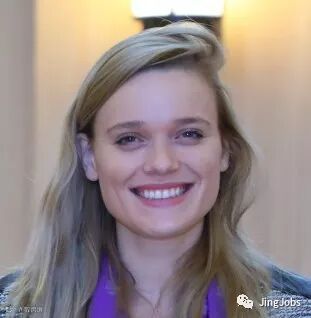
Yes, I’ll be joining the London office as a Junior Associate this fall, hoping to focus mainly on public sector and healthcare projects. “How” is always a tricky question, as there is of course no recipe for success or a super food you can eat or something. What I did learn during the preparation process is that your personality and ability to connect with the interviewer is just as important, if not more, as being able to correctly solve the problem sets and case studies they give you. To be honest, I always had this stereotypical image of consultants as being a bit smarmy and perhaps even arrogant, but nothing could be further away from the people I’ve met there: what they seem to look for are people who are genuine and passionate about solving problems, and excited to learn new things every day.

Stephanie

JingJobs

Can you tell us a bit about your leadership roles in the Beijing Women’s Network?
I initially joined BWN as a Co-Chair for the Professional Development Event series. After our President and Founder moved to the US, I stepped up to take over the central management of the Network, which was an incredible learning experience. I think I’m proudest of something that isn’t actually very sexy to talk about – the implementation of standard operating procedures and streamlining of the organizational infrastructure. Of course, none of these projects would have ever gotten done without the excellent Leadership Team we had at the time, who all dedicated their valuable spare time to BWN. This really showed me how important it is to surround yourself with motivated and pro-active people, who all support each other to get the job done.

Stephanie

JingJobs

How different was Yunnan from working here in Beijing?
I traveled there by myself when I was 18 (as mentioned above) after graduating secondary school. I have also worked in Yangzhou, Jiangsu, as a teacher. I definitely had a bit of a wake-up call when I first moved to Beijing in 2015: I had just finished my job in Nicaragua, where I was working for a social enterprise in Managua, the capital. In such a tropical country, I would literally sit in my hammock, working on my laptop whilst eating a mango or a giant avocado. Coming to Beijing in February, when it was freezing, polluted, and I had zero friends, was a shock to say the least. To be honest, it took me about three months to truly start enjoying life here and feeling settled in.
In comparison to Yangzhou, the main thing that stands out to me is that despite the weather and pollution being tougher here, life in general is much easier and more diverse – with the variety of restaurants, entertainment, learning and social life options, you are truly never bored or lacking for things to do. In Yangzhou, I remember there was basically one KTV that we went to, and foreigners were far more of an attraction that they are here.

Stephanie

JingJobs

It’s evident you’re an extremely accomplished person, do you have any time management tips for getting everything done?
Ha! Not sure if I am allowed to claim the label of “extremely accomplished”, but I can definitely share some time management tips. I really recommend the book “How to Have a Good Day” by Caroline Webb, a former McKinsey partner. Based on her recommendations and some things I’ve learn myself over the past years, I think I’ve made three main changes to my own time management.
Firstly, I start every day, after I wake up, with setting my intentions for the day and writing them down, instead of just getting up and starting the daily rush immediately. I find this really helps streamline my thoughts and decision making processes, and I feel much calmer and more in control throughout the day, instead of feeling like I am just jumping from deadline to deadline.
Secondly, learning to work better, not longer. In the past, if necessary, I would work long hours until late at night and things such as making a healthy meal for myself or exercising would come in last place. I now always make sure to take care of myself a bit better, even during busy periods, as I find I am able to remain motivated and energized much better.
Finally, learning to say “no” sometimes. If you are an active person who is excited to try out new things, you might find yourself wanting to say “yes” to every single project that comes your way, because you want to learn and there is this fear that this might be the only opportunity you will ever get. I think we sometimes feel this pressure to try learn all of our skills in the first few years of our careers, when we are first starting to climb the ladder, because otherwise how will we get anywhere?! But I’ve realised that learning is a lifelong commitment, and that as our career spans will probably be around 50 years long, it’s OK to take your time and space out your development.

Stephanie


JingJobs

What are some major differences between working in China as an expat and studying in China as an international student?
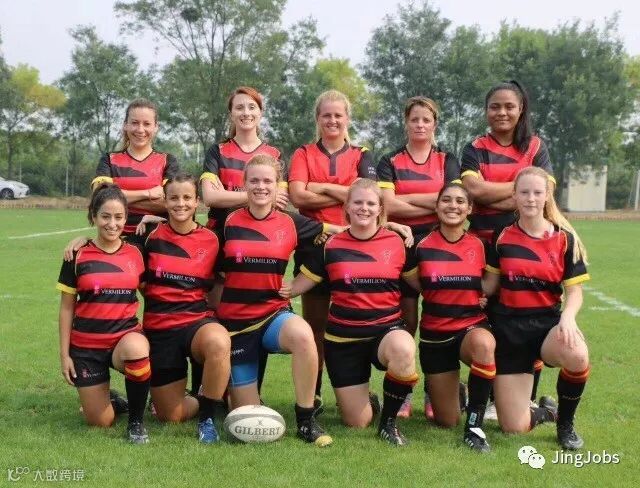
I think the location change has actually been more significant than I realised. Although I do enjoy being based in the college and exploring Haidian, an area I previously never ventured to, it does sometimes feel like my old friends just live in a different city, over an hour away! So it can be hard to stay in touch and continue with my old hobbies, such as playing rugby for the Beijing She-Devils. Otherwise, I’ve really enjoyed the opportunity to have a bit more freedom in terms of what I want write about for essays and what to research for my thesis.

Stephanie

JingJobs

How has your experience in China contributed to your career as well as your personal self?
I think experience in China is hugely beneficial for anyone. Any employer across the world is either already engaged with China in some way or other, or is considering how to get their foot in the door. Having the cultural understanding required to do business here and how to be the most effective version of yourself in a foreign environment is a huge plus for your career. As for my personal self, I have definitely changed a lot since 18 year-old Steph first set foot here. I think I have become very adaptable and OK in ambiguous situations, and learnt to be able to take a step back and not to impose this default mindset in which my rulebook is the only correct one.

Stephanie

JingJobs

If you could give 18 year old Stephanie career advice, what would you say?
Hmmm… I would say, it’s OK to slow down and focus on yourself a bit more, and not try to cram in a life-time’s worth of experiences into one year. I would also warn her that there are going to be some crap moments ahead filled with heartbreak and grief, but that these lows in retrospect will be great tools to gain some perspective and remain grounded. Finally, I would tell her to party less and read more!

Stephanie
Thank you so much for this opportunity to interview you, Stephanie! We really appreciate everything you had to offer us, we loved listening to your interview and once again thank you so much!


Stay tuned for the latest job updates and events