Report on the Professional Development Tendency of Foreign Talents During The Virus Outbreak

BY HELLOCAREER
As China's economy is globalized, more and more foreigners are working, studying, and living in China. Has the sudden outbreak of new coronavirus pneumonia affected their professional development mentality?
As a professional international talent recruitment provider, HelloCareer has conducted a random sampling survey of foreigners in China to understand their views on the current situation in order to provide employers and recruitment agencies with better understanding and more targeted services.
The survey was designed by the HelloCareer team, and was launched on its own platform and external platforms through multiple channels. From February 5th to February 10th, a total of 342 valid questionnaires were collected.
Let's look at the results!
Nationality
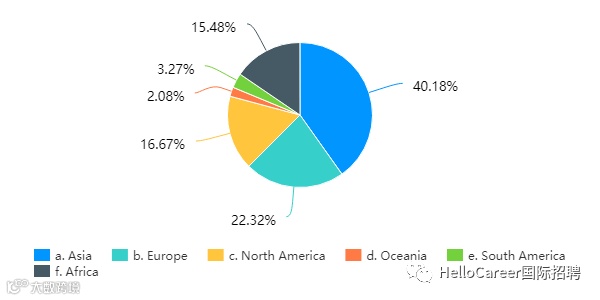
Among the foreign talents participating in the survey, due to geographical reasons, the proportion of participants from Asian countries is the largest, exceeding 40%, followed by approximately 22% from Europe, followed by North America and Africa, with 15.48% and 16.67% , respectively. It is roughly the same as the nationality distribution of foreigners in China.
Age
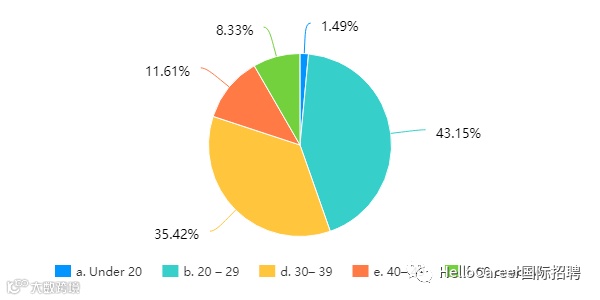
The vast majority of participants are in the age range of 20 to 39 years old, accounting for about 78% in total, and they also happen to be the backbone of the workforce.
Education
background
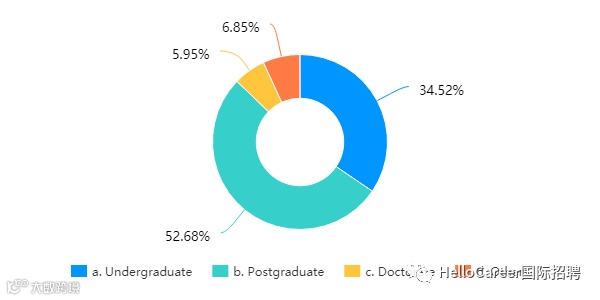
Postgraduates account for the most participants in our survey, totaling more than 53%; and then followed by Undergraduates of 35%; and fewer PhDs.
Reasons for
coming to China
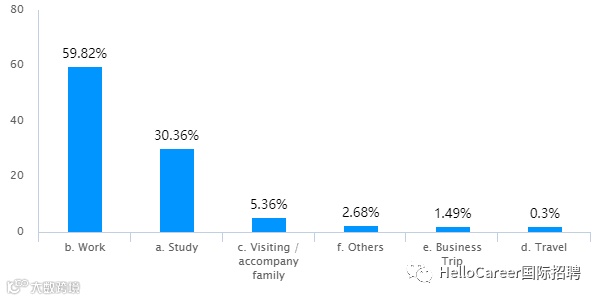
Nearly 60% of the respondents chose to come to China because of work, followed by studying, accounting for more than 30%. Other reasons together account for only about 10%.
Industries
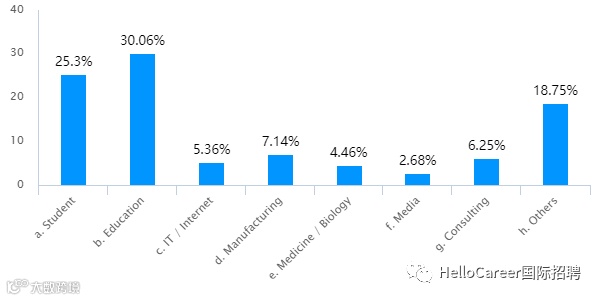
Among the foreign talents participating in the survey, the proportion of foreigners studying in China is currently about 25%. Except for international students, the largest number are practitioners in the education industry, accounting for 30%, while other industries are relatively scattere. And this generally conforms to the current industry / vocational distribution of foreign talents in China.
How aware and informed they are about the current epidemic
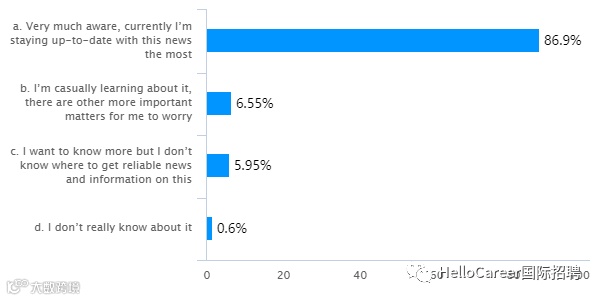
The majority of participants are very aware about the outbreak, nearly 87% of the respondents indicated that they would always pay attention to the changes in the epidemic. A small number also said they did not know where to get reliable information regarding the virus outbreak.
What are their plans for the current situation?
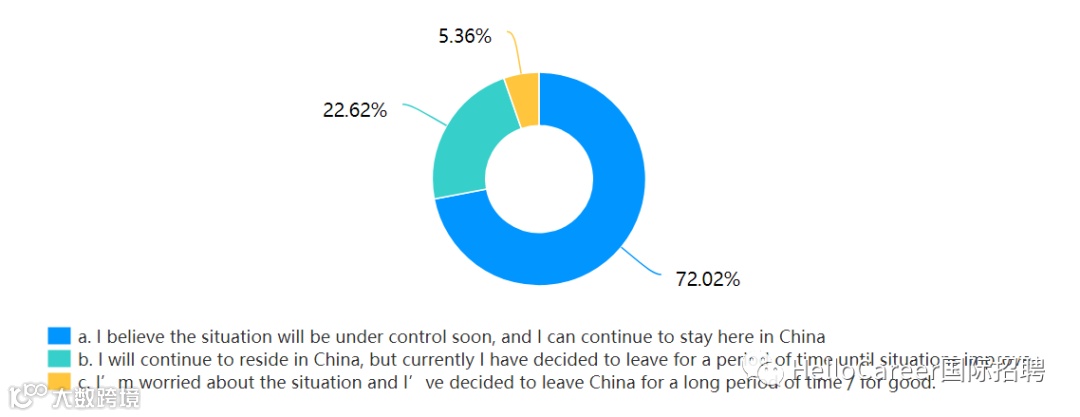
More than 70% of the interviewees believe that the epidemic situation could be brought under control soon and chooses to remain in China, while 20% of them said they would temporarily leave for a while and wait until the epidemic situations improve. Only a small proportion, 5%, of interviewees intend to leave China for a long period because of the epidemic.
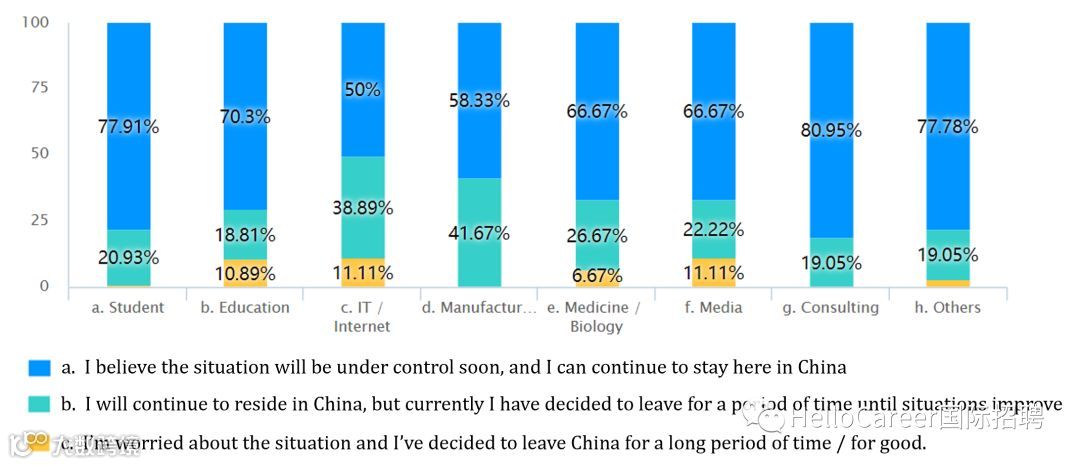
From the cross-analysis, it can be seen that there are relatively many foreigners who plan to leave temporarily (return to their own country and wait for the epidemic to pass). Among those who intend to leave China for a long time, in addition to the Internet industry, there are more education industries and media. International students in China have few plans to leave completely, which reason we assume to be related to their current studies.
What kind of help do foreigners need?
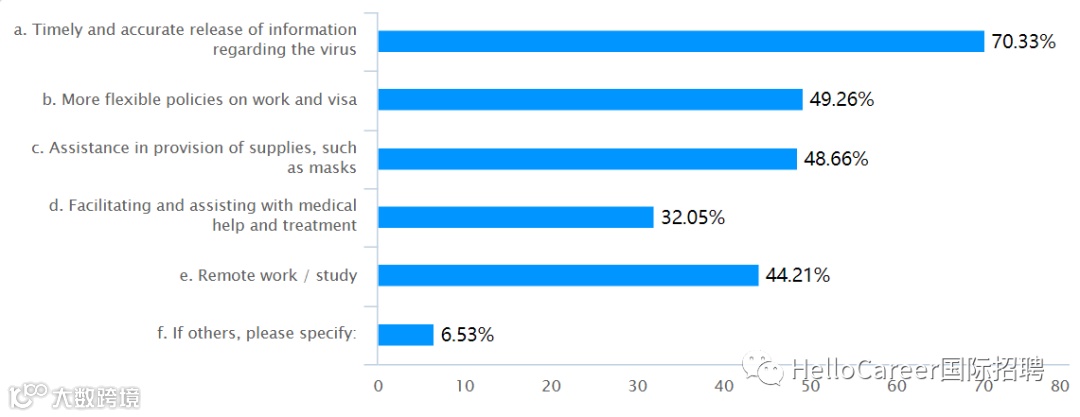
The timely and accurate release of epidemic information is what everyone most desires. In addition, they hope that relevant parties can help provide epidemic prevention materials. Besides that, more flexible employment and visa policies have a rate of almost 50%.
Are foreign talents that left China planning to return to China?
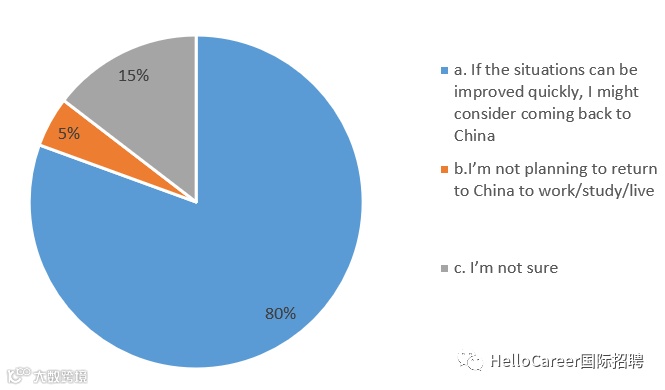
Our survey data shows that 80% of foreigners who have recently left China are still hoping to return to China to continue working, studying and living after the epidemic passes.
Are they to consider job opportunities in China in the current situation?
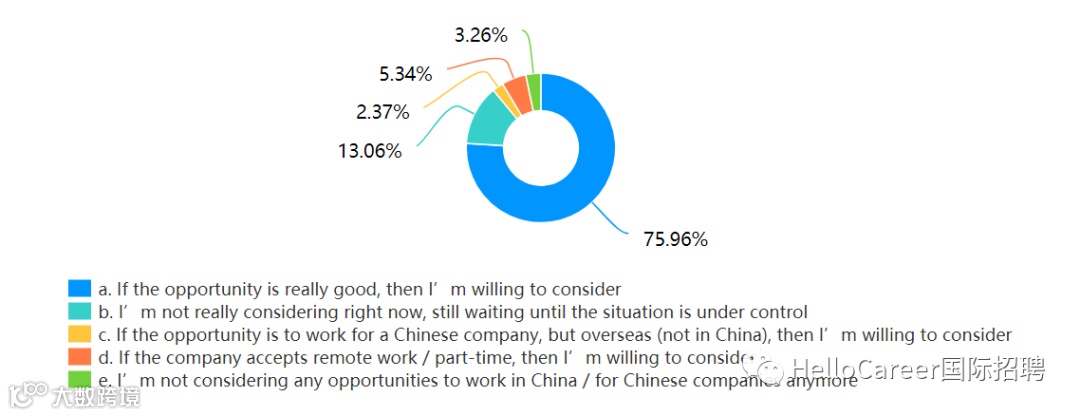
Nearly 76% of the respondents are willing to consider opportunities in China if the career opportunities provided by the company are very attractive. Only about 3.3% would not consider the opportunity to work in China again.
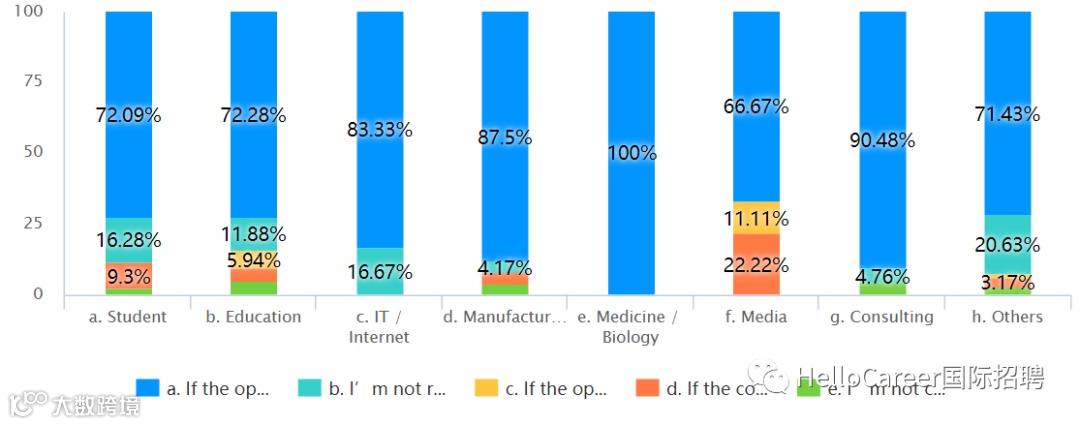
It is worth noting that although only a small number of foreign talents in the biomedical industry intend to temporarily leave China to avoid the epidemic, all of them believe that they still have a good opportunity to work in China. We think that it is likely that because of their knowledge background, not only that these people are more sensitive to the topics of infectious diseases, but they are also relatively objective and rational, and will not change their career plans because of fear. Compared with other industries, media practitioners prefer to spend the current stage remotely or part-time.
Conclusion
•The above categories of data demonstrate that although the epidemic has some impact on the career choices of foreign talents, it is generally temporary, and most of them are still willing to consider working and developing opportunities in China. The vast majority of foreigners who have left China are to temporarily avoid the current virus outbreak happening.
•At the same time, if employers can promptly provide reliable epidemic prevention and control information for foreign employees, provide certain anti-epidemic materials, and adopt more flexible employment policies, it will be more conducive to stabilizing the international talent team and reducing the turnover rate.
Suggestions
Interview method: adjust the interview method and adopt online interview methods such as telephone and video interview.
Recruitment cycle: adjust the expectation of recruitment and entry time, it is recommended that companies start recruitment process earlier as before.
On-boarding method: in order to reduce the loss of candidates and avoid affecting the work, it is recommended to consider the possibility of remote offices after on-boarding and formal employment after the epidemic situation stabilizes.
Target group: according to the HelloCareer survey and previous practical cases, compared with candidates who have not been to China or who have not had much contact with China, candidates who have studied and worked in China have relatively higher awareness and recognition of China. And the enrollment rate of these people will be much higher as well.
Other suggestions: for Chinese companies that are developing globally, consider the possibility of placing jobs overseas.

If you are interested in this report, please contact HelloCareer Marketing Team for the full version
Email: susanne.zeng@hellocareer.cn