



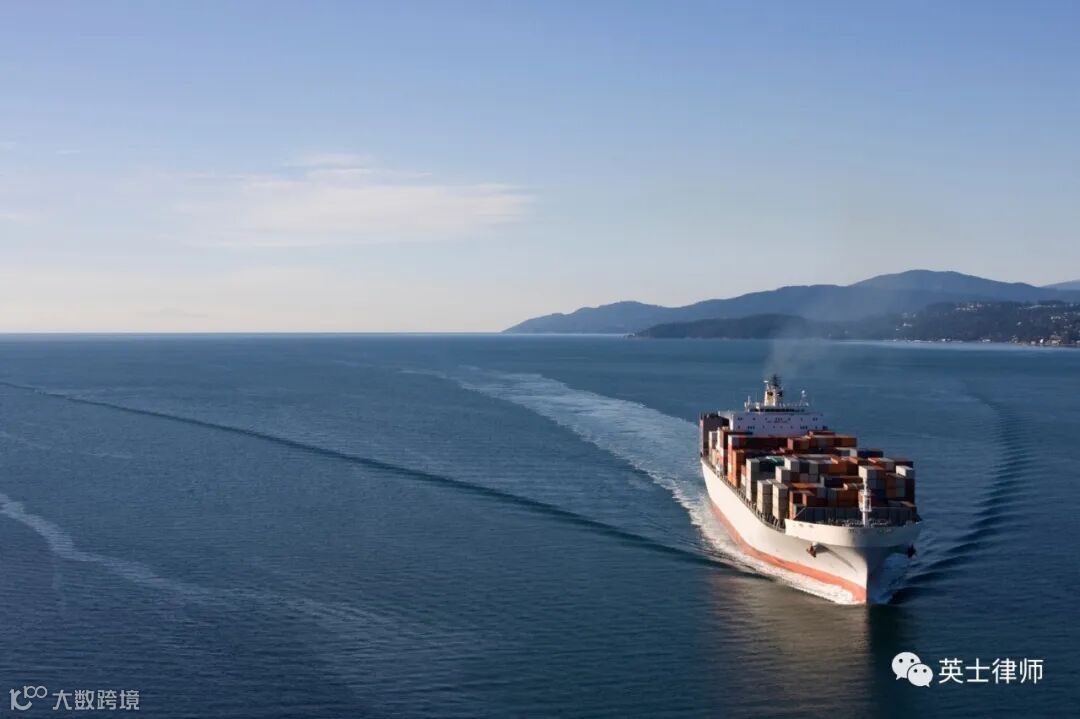
今年3月4日,英国上诉法院颁布了CMA CGM Libra一案的上诉判决,上诉庭的三位法官一致同意维持Teare法官在一审中的判决,认定该轮的航行计划有缺陷,使得船舶不适航,进而导致船东不能要求货方分摊共同海损。
涉案航次是从厦门前往香港,2010年的一份关于厦门港航道的航行通告中提到前往厦门的航道外水域有多处水深浅于海图标记水深,但是在涉案航次的航行计划(passage plan)和常用海图(working chart)上都没有提示该危险、也没有将航道外水深不可靠的区域标记成“no go area”。而在实际航行中,船长出于其他考虑偏离出了航道,最终导致船舶搁浅。基于对案件事实的审理和认定,一审中Teare法官认为这一有缺陷的航行计划导致船舶不适航,并进而判决货方可以拒绝分摊共损。
船东基于两点提出上诉:
一审法官错误地将一次性的航行计划制定中的过错等同于船舶不适航,且未能区分航行过失和不适航这两个不同方面的问题;
一审法官错误地将船长和船员这种以“航行者”身份所作的行为认定为以“承运人”身份所作的行为,并进而错误地认定承运人未能尽到谨慎义务使船舶适航。
上诉法院的三位法官并不认同船东方的主张。法官们认为船长和船员在开航前或开航时为航行所做的准备(即便是与航行相关的事务和决定)可以落入“船舶是否适航”的范畴,而且是否是“一次性”的行为还是“系统性”的过失并不是决定适航性的考量因素 - 两者都可能构成船舶不适航。法官们也不认同船东方提出的、所谓船长/船员是以“航行者”身份还是“承运人”身份所作行为的区别,问题的关键还是在于船舶适航性的传统标准 - 作为一个谨慎的船东,如果他知道所存在的缺陷,是否会在开航前要求该缺陷被改正?本案中,一审法官(结合事实认定)认为涉案的航行计划和常用海图没有充分标记和提示相关区域的水深危险,这一缺陷构成了船舶不适航,而这一判决也得到了上诉法院三位法官的认同。该案是否会被进一步上诉至最高法院,我们将拭目以待并持续关注。
若您有兴趣进一步了解该案详情,请看下文我们对该判决的深度解读。
Alize 1954 and CMA CGM SA v. Allianz Elementar Versicherungs AG & Others (CMA CGM Libra) [2020] EWCA Civ 293
In a unanimous judgment, a Court of Appeal panel of experienced shipping Lords Justice has upheld the decision of the Admiralty Judge, Teare J, in the CMA CGM Libra that a defective passage plan rendered the vessel unseaworthy and that the Owners’ claim for contribution in general average failed.
The background facts
The containership, CMA CGM Libra, grounded in May 2011 whilst leaving Xiamen, China, laden with cargo and bound for Hong Kong. Shortly after dropping the pilot, the Master navigated outside the dredged and buoyed fairway and the ship ran aground in water where the Admiralty chart indicated ample depth.
Following the grounding, general average (GA) was declared and her owners, CMA CGM, sought contributions from cargo interests towards a GA claim of some US$ 13 million (principally the salvage expenditure of approximately US$ 9.5m, which was funded by the Owners in the first instance).
Approximately 92% of cargo interests contributed in GA, whilst some 8% of cargo interests refused to pay. The Owners sued and the cargo interests defended the claim by arguing that the ship was unseaworthy, that the Owners had not exercised due diligence before and at the beginning of the voyage to make the ship seaworthy, and that the unseaworthiness resulted in the grounding. This, they said, was a breach of the Owners’ obligation under Article III, Rule 1 of the Hague/Hague-Visby Rules, which were incorporated in the contracts of carriage, and amounted to actionable fault within the meaning of the York-Antwerp Rules, such that no GA was due.
The Admiralty Court decision
The Court found in favour of the cargo interests. The Admiralty Judge, Teare J, held that the navigation of the ship was negligent and that the ship’s passage plan was defective. The passage plan consisted of both the Owners’ passage plan form and the working chart. On the chart was marked a course line which was within the fairway at all times. The chart did not specifically refer the navigator to the terms of a Notice to Mariners, issued in 2010, which said that “numerous depths less than the charted exist within and in the approaches to Xiamen”. The navigator was, therefore, not warned of the grave dangers of straying outside the fairway.
Whether this constituted a breach of the contract of carriage and, therefore, defeated the Owners’ claim in GA depended on whether the Owners had breached their obligations under Article III, Rule 1 of the Hague Rules which require that “the carrier shall be bound before and at the beginning of the voyage to exercise due diligence to make the ship seaworthy…”.
The Judge applied the well-established test of unseaworthiness from McFadden v. Blue Star Line [1905], namely whether a prudent owner would have required the defect, had he known of it, to be made good before sending his ship to sea. The Judge noted the adoption by the IMO in 1999 of the Guidelines on Passage Planning, which require berth-to-berth passage planning, including indications on charts of “all areas of danger”. With this in mind, the Judge concluded that it was “inconceivable that the prudent owner would allow the vessel to depart from Xiamen with a passage plan which was defective in the manner which I have found”. The Judge added that if a vessel carries a chart which the officers have failed to update, or a passage plan that is defective because it lacks a required warning of ‘no go’ areas, then those defects are capable of rendering the vessel unseaworthy at the beginning of the voyage. The Judge rejected the Owners’ argument that passage planning is an element of navigation, not of seaworthiness, and noted that the Owners’ obligation under Article III, Rule 1 of the Hague Rules is not subject to the ‘negligent navigation exception’ in Article IV, Rule 2(a). In other words, if there is a causative breach of Article III, Rule 1, the fact that a cause of the casualty is also negligent navigation will not protect the carrier from liability.
Teare J acknowledged that the duty to make the ship seaworthy is not absolute; it is a duty to exercise due diligence, i.e. not to be negligent. As the duty is non-delegable, the owners remain liable for the negligence of any parties who carry out the duty on their behalf – here the Master and Second Officer - who could have prepared a proper passage plan with reasonable care and skill, but did not do so.
The Judge concluded on the evidence that the defective passage plan was causative of the grounding as, had there been an explicit warning on the chart about the charted depths being unreliable, the Master would not have strayed outside the buoyed fairway. Therefore, the breach caused the loss and there was actionable fault, such that the cargo interests were not liable in GA.
The Court of Appeal decision
All three members of the Court of Appeal panel wrote separate judgments and endorsed the approach taken by the Admiralty Judge; indeed, Flaux LJ referred to Teare J’s “meticulous and pellucid judgment”.
The Owners’ grounds of appeal were that:
the Judge wrongly held that a one-off defective passage plan rendered the vessel unseaworthy for the purposes of Article III, Rule 1 and failed to distinguish between matters of navigation and aspects of unseaworthiness; and
the Judge wrongly held that the actions of the Master and crew which were carried out qua navigator could be treated as attempted performance by the carrier of its duty qua carrier to exercise due diligence to make the vessel seaworthy.
In relation to the first ground, the Owners argued that passage planning was a record of a navigational decision and so could not render a vessel unseaworthy. They said that, for a vessel to be unseaworthy, the defect would have to affect an ‘attribute’ of the ship (albeit not necessarily a physical attribute). The Owners said that their obligation was to have on board everything necessary for the crew to undertake passage planning, but that the use the crew made of it went to navigation (for which the Owners were excused from liability for any negligence on the part of the crew).
However, the Court of Appeal accepted the cargo interests’ argument that the Article III, Rule 1 obligation is an overriding obligation, not subject to the exceptions to liability in Article IV, Rule 2, and that acts of negligent navigation before the commencement of the voyage can render the vessel unseaworthy. The Court made clear that the relevant enquiry is one of timing: when did the error occur? If the error occurred prior to or at the beginning of the voyage, that is capable of rendering the vessel unseaworthy; if the error occurred during the voyage, the Owners may be able to rely on a relevant exception.
Flaux LJ said that “it is well-established that acts of the master and crew which, if committed during the course of the voyage, would attract the exception, do not do so if committed before or at the commencement of the voyage, thereby rendering the vessel unseaworthy. In such cases the overriding obligation under Article III rule 1 comes into play.” Likewise, Haddon-Cave LJ referred to the temporal line of the beginning of the voyage, which reflected the risk allocation balance struck when the Hague Rules were devised.
The Owners’ suggested distinction between mechanical acts of the crew, which might render the vessel unseaworthy, and acts of the crew requiring judgment and seamanship, which would not render the vessel unseaworthy, was rejected. Similarly, the Court held that it does not matter whether the defect is a one-off incident, or a systemic failing; both are capable of constituting unseaworthiness. Still further, the Owners’ attempt to distinguish between charts that are defective because they have not been updated (which, it is settled law, can constitute unseaworthiness) and charts that have not been updated with necessary warnings, as part of passage planning, was debunked as “unprincipled and wholly artificial”. Ultimately, the Court did not need to decide whether a defect must affect an ‘attribute’ of the vessel because the Court agreed with the Judge that a defective chart and a defective passage plan are both ‘attributes’ of the vessel.
In relation to the second ground of appeal, the Court rejected the Owners’ suggested distinction between acts of the crew in their capacity as carrier (for which the Owners are responsible) and acts of the crew in their capacity as navigators (for which the Owners are not responsible). The Owners argued that navigation was outside their “orbit of responsibility” and so there was no failure to exercise due diligence to make the vessel seaworthy. The Court disagreed, with Flaux LJ stating that “Once the Owners assumed responsibility for the cargo as carriers, all the acts of the master and crew in preparing the vessel for the voyage are performed qua carrier, even if they are acts of navigation before and at the commencement of the voyage. The Owners are responsible for all such acts as a consequence of the non-delegable duty under Article III rule 1.”
The Court of Appeal remarked that the Judge’s findings were the natural result of applying established principles of law to the facts of the case, even if this was the first case before the English Court where a defective passage plan rendered the vessel unseaworthy. Males LJ said that “ultimately…the judge’s factual findings mean that this is a straightforward case”.
Comment
It is clear from this case that errors, navigational or otherwise, made before and at the beginning of the voyage are capable of rendering a vessel unseaworthy. Once the timing has been established, it is then a question of applying the McFadden test to determine whether the defect constitutes unseaworthiness. If it does, the Owners will rarely be able to demonstrate due diligence, given the non-delegable duty.
Causation will be a key battle ground and will depend on the evidence in a particular case. However, the defect does not have to be the sole cause, merely an effective cause. In this case, the Judge had found that the defective passage plan was an effective cause of the grounding and it was not for the appellate court to reopen that factual finding.
Shipowners should continue to ensure, and record, compliance with proper systems and procedures, including passage planning, before and at the beginning of the voyage, as well as recording compliance with systems and procedures during the voyage. Charts should, of course, be kept fully up to date.
We expect to see cargo interests demanding early disclosure of passage plans in all similar cases. It will be interesting to see, in a future case, how electronic charts and automatic updates, including Notices to Mariners, affect the position.
The owners’ Article III, Rule 1 obligations vis-à-vis specific cargo are determined by reference to the contractual voyage (as set out in the contract of carriage, usually the bill of lading), with the obligation to make the vessel seaworthy arising at the commencement of that contractual voyage. Parties should, therefore, check carefully the contractual voyage agreed in the bill of lading. Where, as in the container trade, a ship is calling at multiple ports in rotation and a defect in a passage plan results in a casualty on a particular leg of the rotation, the owners may only be liable in respect of cargo loaded at the port preceding the casualty (i.e. where causative unseaworthiness occurred). By way of example, if a vessel loads at and departs safely from Port A, then calls at Port B where, on departure, she grounds due to defective passage planning, the owners could argue that there is no causative unseaworthiness at the time of the commencement of the voyage from Port A and that any later defect occurred after the beginning of the contractual voyage, such that the owners have an exception. Whether or not this argument would succeed would depend on whether the owners are obliged (and whether it is possible) on departure from Port A to have prepared a berth-to-berth passage plan for Port A and Port B and any other intended port call, or if it is sufficient to have a passage plan from Port A to Port B and appropriate documents and systems in place for the drafting of passage plans for subsequent ports.
It appears that the Owners of the CMA CGM Libra did not take this point (against the 8% of cargo that alleged actionable fault) and cargo loaded at earlier ports in the rotation did not have to contribute in GA, when arguably there was no actionable fault by the Owners in respect of that cargo. On the other hand, the Owners recovered GA from 92% of cargo interests without a fight, at least some of which they were apparently not entitled to.
It remains to be seen whether the Owners will seek leave to appeal to the Supreme Court.
如有任何疑问,请随时与本文作者或您熟悉的本所律师联系。
作者:

Christian Dwyer
全球海事业务主管,伦敦
christiandwyer@incegd.com

Charles O'Connor
资深律师,伦敦
charlesoconnor@incegd.com

关注英士微信公众号

英士亚洲办公室:
英士在全球拥有广泛的业务网络和多个办公室,欲了解详情,敬请访问我们的网站 www.incegd.com