
>>Slide for English version >>
自 2018 年以来,制定了科学减排目标的公司数量增长了 500%,但支持这些目标的企业融资每年仅增长 5%。投资者越来越强调企业将资本投入到气候承诺中,以支持净零碳排放目标,对于企业而言,现在是时候认真考虑将资金投入到气候行动中了。企业需要进行系统性改变,将资本用于支持气候行动,并通过现金流的变化来促进公司的气候转型。
投资者正在向企业表明这一点:现在是时候让企业将资本投入到其气候承诺中了。
更多的投资者正在寻找企业气候转型计划中的证据,这些计划概述了企业为实现净零碳排放所采取的措施,包括如何管理资本。《企业气候融资手册》的作者认为,成功转型需要 “企业行为的系统性改变,并通过现金流的变化加以促进”。
气候政策倡议组织(CPI)是一家非营利性分析和咨询组织,该组织去年出版了这本手册,作为可持续发展专业人士如何影响企业现金流和管理的实用指南,以帮助企业减少排放,实现他们的气候目标。
可持续发展专业人士上周在旧金山气候周活动中表示,与负责监督资本管理决策的财务领导人合作在这一过程中至关重要,可以权衡目标并获得认可。一位可持续发展主管说:“在《通货膨胀削减法案》迫使我找到他们并与之接触之前,我根本不知道我们的税务人员到底是谁。”他指的是乔-拜登(Joe Biden)总统为支持清洁能源转型而推出的标志性激励措施。
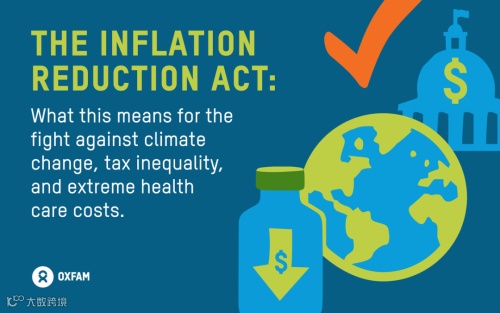
《通胀削减法》产生的多重影响
Oxfam
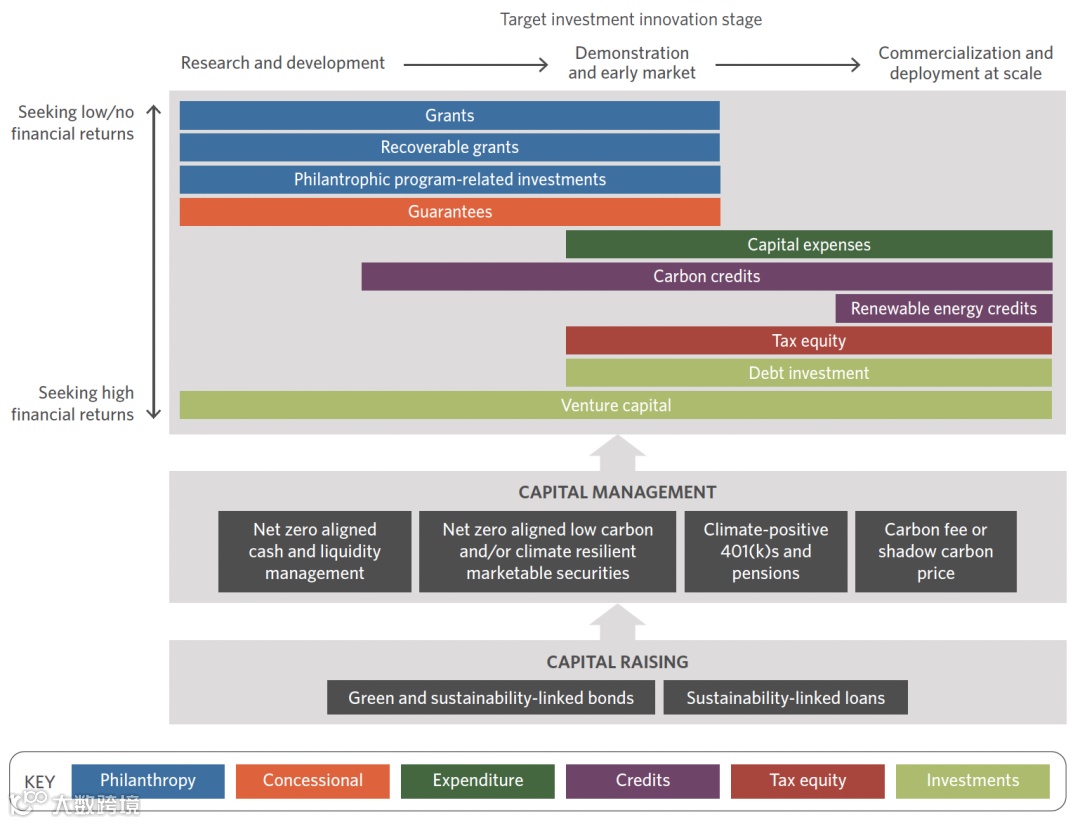
公司一般通过三种主要方式利用资本支持企业的气候承诺:
1. 部署——战略性地将财政资源分配给特定的业务目标,包括能源效率支出或购买碳信用额度;
2. 管理——利用可持续的 401(k)或与净零目标一致的现金管理等金融工具,减少或避免对高排放行业的投资;
3. 外部融资——利用绿色债券、与可持续发展相关的贷款和其他债务,为企业、项目或团队的减排或 ESG 目标提供资金。
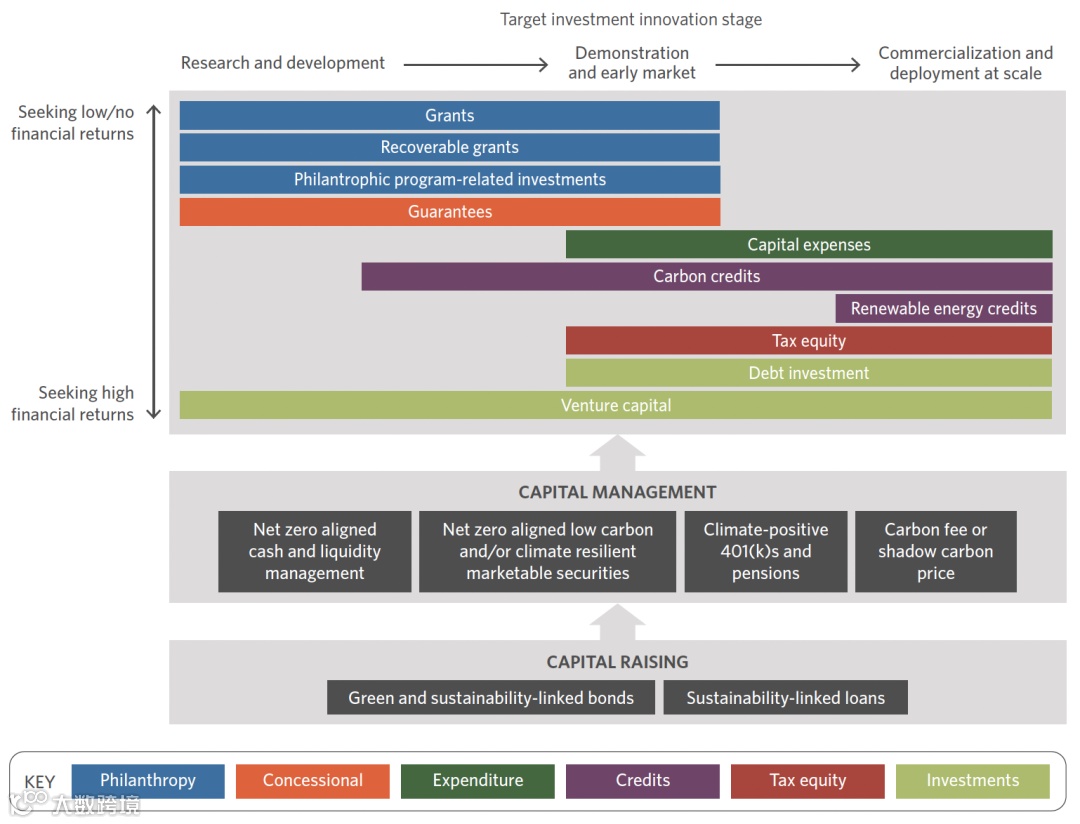
资料来源 《企业气候融资手册》 气候政策倡议组织
这三者都至关重要,但使用绿色债券以及与可持续发展相关的贷款和债券的做法,一直主导着企业气候融资话题。例如,绿色债券市场从 2016 年到 2021 年平均每年增长约 90%,并在 2023 年上半年达到 3510 亿美元的历史新高。
需要更加重视现金管理
根据 CPI 的分析,利用资本管理支持气候行动的公司要少得多。如果企业希望实现其气候目标,就必须改变这种状况。
1. 现金和流动资金管理与净零保持一致——在致力于降低排放或将能源投资从化石燃料转向清洁能源的银行管理公司资产。巴塔哥尼亚正在推行低碳现金管理战略,只与不再为煤炭、沥青砂和北极油气勘探提供资金的银行合作。该公司要求金融合作伙伴公布可持续发展目标和可再生能源贷款承诺。
2. 净零排放有价证券——将公司资金投资于股票、债券和基金,筛选出高排放行业和投资。这可能包括跟踪与巴黎接轨指数的基金,从而降低主要的实际风险和转型风险。还可以增加投资组合中具有可靠碳减排目标的公司的权重。
3. 考虑气候和 ESG 因素的 401(k)计划和养老金——为员工提供包括401(k)计划和养老金在内的投资选择,筛选其对气候变化或其他 ESG 指标的潜在影响。德勤为其 35,000 名养老金计划成员推出了默认选项,根据 ESG 标准对投资进行评估。Carbon Collective 公司最近推出了首个针对退休计划的不含化石燃料的目标日期基金系列。目标日期基金在结构上旨在使投资者在特定日期前获得最大回报,通常是以未来的退休日期为目标日期。
4. 内部碳定价——向业务部门收取与其产生的温室气体排放量相关的内部 “价格”,使公司能够为减排措施筹集资金,并激励整个组织的团队寻找减排方法。Autodesk对其范围 1、2 和 3 的排放量实行每公吨 20 美元的内部碳价格。收费所得将投资于可再生能源项目以及经认证的碳抵消和清除信用额度。这种定价方式将排放责任纳入整个公司的财务决策中。
通过启动诸如此类的战略,公司可以在弥合气候融资鸿沟方面发挥作用——据估计,每年的气候融资额为 8-9 万亿美元。

现金管理
©pixabay
EFC环一 | 专注可持续发展的全球化科技服务公司
核心业务 | ESG与法规合规 安全与应急管理 环境与可持续发展 星河学园
EFC环一可持续发展实验室
一个创新型实验室,专注于可持续发展各项议题的服务创新、产业链创新、产品创新。成员来自金融、可持续发展、工商管理、环境科学、机械工程等不同的专业,拥有的资质包括CESGA认证ESG分析师、B Consultants 中国共益咨询师、TRUE Advisor 废弃物零填埋认证顾问、CISI英国特许证券协会ESG证、CFA ESG 特许金融分析师协会ESG投资证书。
<< 左滑查看中文 <<
The number of companies with science-based emissions reduction goals grew 500 percent since 2018, but corporate finance supporting those goals is only increasing 5 percent annually.Investors are increasingly emphasizing that companies allocate capital towards climate commitments to support net-zero carbon emissions targets. For businesses, it is now time to seriously consider investing funds into climate action. Companies need to undergo systemic changes, directing capital towards supporting climate action and promoting the company's climate transition through changes in cash flow.
Investors are making it clear to companies: It’s time for them to put their capital behind their climate commitments.
More are looking for evidence in corporate climate transition plans, which outline steps a company is taking to reach net zero, including how it’s managing capital. Transitioning successfully will require "systemic changes in corporate behavior, facilitated by changes in cash flows," according to the authors of the "Corporate Climate Finance Playbook."
Climate Policy Initiative (CPI), an analysis and advisory nonprofit, published the playbook last year as a practical guide for how sustainability professionals can influence corporate cash flow and management, with a view to helping their business reduce emissions and reach their climate goals.
Sustainability professionals stated during last week's Climate Week event in San Francisco that collaborating with financial leaders, who oversee capital management decisions, is crucial in this process for balancing objectives and gaining recognition. One sustainability director commented, "Before the Inflation Reduction Act forced me to find and engage with them, I had no idea who our tax people even were." He was referring to the landmark incentives introduced by President Joe Biden to support the transition to clean energy.
Multiple impacts from the Inflation Reduction Act
Oxfam
Corporations generally use capital to support corporate climate commitments in three main ways:
1. Deployment —— strategically allocating financial resources to specific business objectives, including expenditures on energy efficiency or purchasing carbon credits;
2. Management —— using financial instruments such as sustainable 401(k)s or cash management aligned with net-zero goals to decrease or avoid investments in high-emitting industries;
3. External funding —— using green bonds, sustainability-linked loans and other debt to fund emissions reductions or ESG goals for a business, project or team.
The Corporate Climate Finance Playbook
Climate Policy Initiative
All three are crucial, but the practice of using green bonds and sustainability-linked loans and bonds has dominated the corporate climate finance conversation. The green bond market, for example, saw average growth of about 90 percent per year from 2016 to 2021, and reached a record high of $351 billion in the first half of 2023.
More focus on cash management needed
Far fewer companies use capital management to support climate initiatives, according to the CPI analysis. That must change if companies hope to reach their climate targets, and the playbook suggests a number of strategies, along with examples.
1. Cash and liquidity management aligned with net zero —— Managing company assets with banks committed to lower emissions or that are shifting investments in energy away from fossil fuels and toward clean energy. Patagonia is pursuing a low-carbon cash management strategy by only working with banks that no longer finance coal, tar sands and Arctic oil and gas exploration. The company requires financial partners to publish sustainability goals and renewable energy lending commitments.
2. Net zero-aligned marketable securities —— Investing a company's money in stocks, bonds and funds that screen out high-emissions industries and investments. That might include funds that track a Paris-aligned index, which reduces exposure to major physical and transition risks. It could also involve increasing a portfolio weighting toward companies with credible carbon reduction targets.
3. 401(k) plans and pensions that consider climate and ESG factors —— Offering employee investment options including 401(k)s and pensions screened for their potential impact on climate change or other ESG metrics. Deloitte introduced a default option for its 35,000 pension plan members that evaluates investments based on ESG criteria. Carbon Collective recently introduced what it bills as the first fossil fuel-free target-date fund series for retirement plans. Target date funds are structured to maximize an investor's returns by a specific date, most often targeting a future retirement date.
4. Internal carbon pricing —— Charging business divisions an internal "price" related to the greenhouse gas emissions they produce allows companies to raise funds for reduction measures, and it motivates teams across an organization to look for ways to reduce emissions. Autodesk applies an internal carbon price of $20 per metric ton on its Scope 1, 2 and 3 emissions. Proceeds from the fee are invested in renewable energy projects and certified carbon offsets and removal credits. This type of pricing embeds emissions accountability into financial decision-making across the company.
By activating strategies such as these, companies can play a role in bridging the climate finance divide — estimated at $8 to $9 trillion annually.

Cash management
©pixabay
EFC | A globally-focused technology services company dedicated to sustainable development
The Core Business | ESG and Regulatory Compliance, Safety and Emergency management, Environment and Sustainable Development, Galaxy Academy
EFC Circular Economy Sustainable Development Laboratory
An innovative laboratory dedicated to service innovation, industry chain innovation, and product innovation on various issues related to sustainable development. Members come from different professions including finance, sustainable development, business administration, environmental science, and mechanical engineering. They hold qualifications such as CESGA-certified ESG analysts, B Consultants China Public Welfare Consultants, TRUE Advisor Waste Zero Landfill Certification Consultants, CISI UK Chartered Institute for Securities & Investment ESG Certificate, and CFA ESG Chartered Financial Analyst Society ESG Investment Certificate.