环境:SpringBoot2.7.12
前言
在Spring MVC框架中,HandlerMapping是用于将HTTP请求映射到处理器的方法的组件。当一个请求到达时,HandlerMapping会根据请求的URL和其他属性来确定哪个处理器方法应该处理该请求。在Spring MVC中,我们可以自定义HandlerMapping来满足特定的匹配需求。其中一个方法是使用getCustomMethodCondition()方法来自定义匹配条件。
本文将详细介绍如何使用getCustomMethodCondition()方法来自定义HandlerMapping的匹配条件。通过阅读本文,您将了解如何扩展HandlerMapping的默认行为,并使用自定义条件来匹配请求和处理器方法。
需求:我们希望根据请求header中的x-token值来匹配具体的接口。所有的接口都必须使用了自定义的注解标注。
1. 自定义请求匹配
在SpringMVC中可以通过自定义RequestMappingHandlerMapping#getCustomMethodCondition来实现此功能。
自定义请求匹配通过实现RequestCondition接口自定义规则
系统默认提供了以下RequestCondition实现
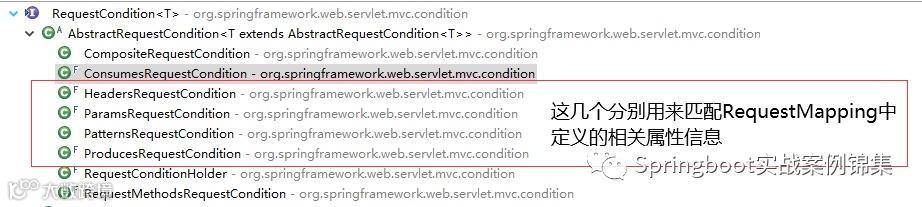
2. 自定义匹配条件
public class CustomRequestCondition implements RequestCondition<CustomRequestCondition> {private static final String X_TOKEN_NAME = "x-token" ;private Method method ;public CustomRequestCondition(Method method) {this.method = method ;}// 当接口上有多个匹配规则时,进行合并操作public CustomRequestCondition combine(CustomRequestCondition other) {return new CustomRequestCondition(other.method) ;}// 核心方法:根据匹配的条件进行判断是否匹配,如果匹配则返回当前的对象,不匹配则返回nullpublic CustomRequestCondition getMatchingCondition(HttpServletRequest request) {AKF akf = method.getAnnotation(AKF.class) ;return akf != null ? buildToken(request, akf) : null ;}// 当有多个都满足条件的时候,进行比较具体使用哪个public int compareTo(CustomRequestCondition other, HttpServletRequest request) {return 0 ;}// 判断请求header中的信息与注解中配置的信息是否一致private CustomRequestCondition buildToken(HttpServletRequest request, AKF akf) {String xToken = request.getHeader(X_TOKEN_NAME) ;if (xToken == null || xToken.length() == 0) {return null ;}return xToken.equals(akf.value()) ? this : null ;}}
3. 配置自定义HandlerMapping
public class CustomMethodConditionRequestHandlerMapping extends RequestMappingHandlerMapping {protected RequestCondition<?> getCustomMethodCondition(Method method) {return new CustomRequestCondition(method) ;}}
配置自定义的HandlerMapping
public class CustomEndpointConfig implements WebMvcRegistrations {public RequestMappingHandlerMapping getRequestMappingHandlerMapping() {return new CustomMethodConditionRequestHandlerMapping() ;}}
通过实现WebMvcRegistrations中的getRequestMappingHandlerMapping方法覆盖系统默认的RequestMappingHandlerMapping配置实现。当然这种方式你可能失去了某些功能。这里我们可以参考默认实现来完善自定义的实现。
4. 测试接口
public class CustomMethodConditionController {public Object index() {return "custom method condition success" ;}public Object x() {return "x method invoke" ;}public Object x1() {return "x1 method invoke" ;}public Object x2() {return "x2 method invoke" ;}}
上面的接口与通常的开发配置是一致的,只是有些有接口使用了@AKF注解。这些接口中,没有@AKF注解或者没有设置@AKF值的,都不能访问,只有设置值了,且请求中携带了x-token并匹配上值了才会访问到接口。
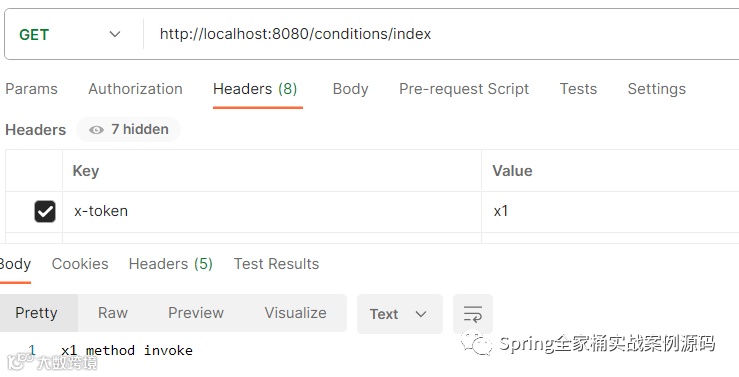
当访问其它没有@AKF注解的接口,返回404。
5. 原理
根据请求查找HandlerMethod
public abstract class AbstractHandlerMethodMapping<T> extends AbstractHandlerMapping {protected HandlerMethod getHandlerInternal(HttpServletRequest request) throws Exception {String lookupPath = initLookupPath(request);try {// 根据请求查找匹配d饿HandlerMethodHandlerMethod handlerMethod = lookupHandlerMethod(lookupPath, request);return (handlerMethod != null ? handlerMethod.createWithResolvedBean() : null);}}protected HandlerMethod lookupHandlerMethod(String lookupPath, HttpServletRequest request) throws Exception {List<Match> matches = new ArrayList<>();// 根据请求的uri,获取相应的RequestMappingInfo(该对象对应的Controller中的每一个接口)List<T> directPathMatches = this.mappingRegistry.getMappingsByDirectPath(lookupPath);if (directPathMatches != null) {// 根据请求找到了相应的RequestMappingInfo,则进行匹配执行相应的条件addMatchingMappings(directPathMatches, matches, request);}// ...}private void addMatchingMappings(Collection<T> mappings, List<Match> matches, HttpServletRequest request) {for (T mapping : mappings) {// 执行相应的条件进行匹配,比如:你在@RequestMapping中配置了header,params等相应的值T match = getMatchingMapping(mapping, request);if (match != null) {matches.add(new Match(match, this.mappingRegistry.getRegistrations().get(mapping)));}}}}public abstract class RequestMappingInfoHandlerMapping extends AbstractHandlerMethodMapping<RequestMappingInfo> {protected RequestMappingInfo getMatchingMapping(RequestMappingInfo info, HttpServletRequest request) {return info.getMatchingCondition(request);}}// RequestMappingInfopublic final class RequestMappingInfo {// 该方法中就会根据请求request对象,判断是否当前对象符合条件public RequestMappingInfo getMatchingCondition(HttpServletRequest request) {RequestMethodsRequestCondition methods = this.methodsCondition.getMatchingCondition(request);if (methods == null) {return null;}ParamsRequestCondition params = this.paramsCondition.getMatchingCondition(request);if (params == null) {return null;}HeadersRequestCondition headers = this.headersCondition.getMatchingCondition(request);if (headers == null) {return null;}// ...// 我们配置了自定义的,这里就会执行我们自定义的条件(必须有@AKF注解)RequestConditionHolder custom = this.customConditionHolder.getMatchingCondition(request);if (custom == null) {// 返回null 则表示当前的RequestMappingInfo没有匹配。// 最终如果都是返回的null,则最终返回客户端将是404return null;}return new RequestMappingInfo(this.name, pathPatterns, patterns,methods, params, headers, consumes, produces, custom, this.options);}}
在本文中,介绍了如何自定义RequestMappingHandlerMapping。通过自定义getCustomMethodCondition()方法,我们可以根据特定的需求扩展HandlerMapping的行为,并使用自定义条件来匹配请求和处理器方法。通过这种方式,我们可以更好地控制请求的处理逻辑。
完毕!!!