


Moisture and Mold Prevention and Control Tips
Moisture Control is the Key toMold Control
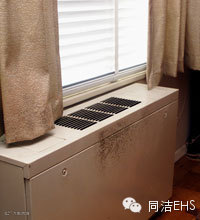
Mold growing on the surface of a unit ventilator. Click on the image for a larger version.

Condensation on the inside of a windowpane.
When water leaks or spills occur indoors - ACT QUICKLY. If wet or damp materials or areas are dried 24-48 hours after a leak or spill happens, in most cases mold will not grow.
Clean and repair roof gutters regularly.
Make sure the ground slopes away from the building foundation, so that water does not enter or collect around the foundation.
Keep air conditioning drip pans clean and the drain lines unobstructed and flowing properly.
Keep indoor humidity low. If possible, keep indoor humidity below 60 percent (ideally between 30 and 50 percent) relative humidity. Relative humidity can be measured with a moisture or humidity meter, a small, inexpensive ($10-$50) instrument available at many hardware stores.
If you see condensation or moisture collecting on windows, walls or pipes ACT QUICKLY to dry the wet surface and reduce the moisture/water source. Condensation can be a sign of high humidity.
Actions that will help to reduce humidity
Vent appliances that produce moisture, such as clothes dryers, stoves, and kerosene heaters to the outside where possible. (Combustion appliances such as stoves and kerosene heaters produce water vapor and will increase the humidity unless vented to the outside.)
Use air conditioners and/or de-humidifiers when needed.
Run the bathroom fan or open the window when showering. Use exhaust fans or open windows whenever cooking, running the dishwasher or dishwashing, etc.
Actions that will help prevent condensation
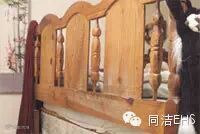
Mold growing on a wooden headboard in a room with high humidity. Click on the image for a larger version.
Reduce the humidity.
Increase ventilation or air movement by opening doors and/or windows, when practical. Use fans as needed.
Cover cold surfaces, such as cold water pipes, with insulation.
Increase air temperature.