Date:
Jan 31, 2024,15:00-16:00
topic:
Systems Biology of Yeast Metabolism
Host :
Prof chenli Liu
Speaker:
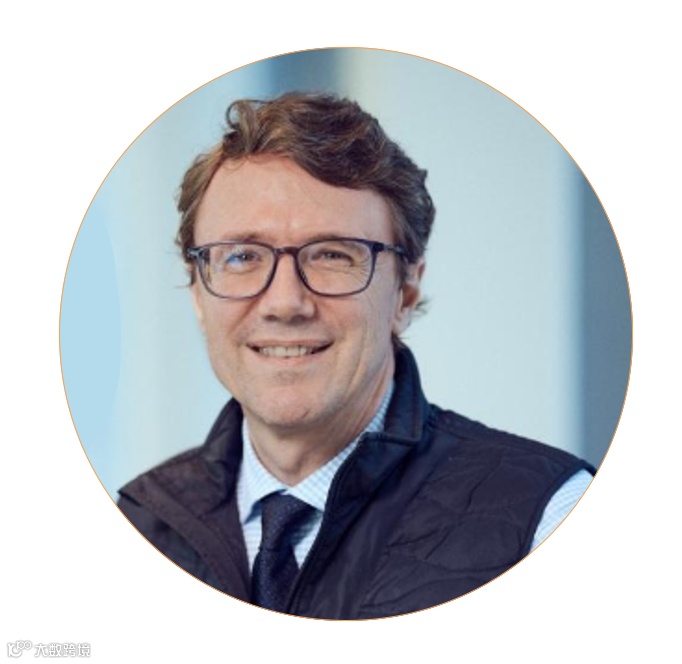
As the CEO of Bll,Jens Nielsen builds strong international relations and ensures a clear workingdirection for the Bll team.
Jens is a professor at the Chalmers University of Technology and an adjunctprofessor at DTU and Copenhagen University,with a vast amount of life-science research experience.
He is an internationally respected scientist who has published more than 850 scientific articles that havebeen cited more than 110,000 times and with a current H-index of 155.
He has received numerousawards,including the Novozymes Prize,the ENI Prize,the Eric and Sheila Samson Prime Ministers Prizefor Innovation in Alternative Fuels for Transportation,
Nature Award for Mentoring,the Emil Chr.HansenGold Medal,
and the Gold Medal from the Royal Swedish Academy of Engineering Sciences.
In 2019 hewas honored as Knight,Ridder af Dannebrog(Order of Dannebrog),by Her Majesty The Queen ofDenmark,for his meritorious service and contribution to science.
Jens Nielsen has been elected into several academies,including the Royal Swedish Academy of Sciences,the Royal Danish Academy of Science and Letters,the National Academy of Sciences (USA),the NationalAcademy of Engineering (USA),the National Academy of Medicine (USA)and the Chinese Academy ofEngineering.
Jens Nielsen has several years of entrepreneurial expertise as the founder of biotechcompanies such as Fluxome A/S,MycoTeQ A/S,MetaboGen AB,Melt&Marble AB,Elypta AB,andChrysea Inc.
Abstract:
Metabolic Engineering relies on a thorough understanding of how the many different metabolicreactions in the cell to be engineered interacts.
Genome-scale metabolic models offers a very strongtool for performing quantitative analysis of how the many different reactions in the metabolic networkinteracts,and through the addition of kinetic and proteome constraints to these models their predictivestrength has significantly improved.
However,these models can also be used for integrative analysis ofquantitative data,e.g.proteomics and metabolomics data.
In the lecture there will be presentedprogress on how kinetic and proteome constraints can improve the predictive strength of genome-scalemetabolic models for use in metabolic engineering.
Examples will be given of both identification ofnovel metabolic engineering designs and of using these models for gaining novel insight into thefunctioning of metabolism.
直播通道:


 iSynBio造物