

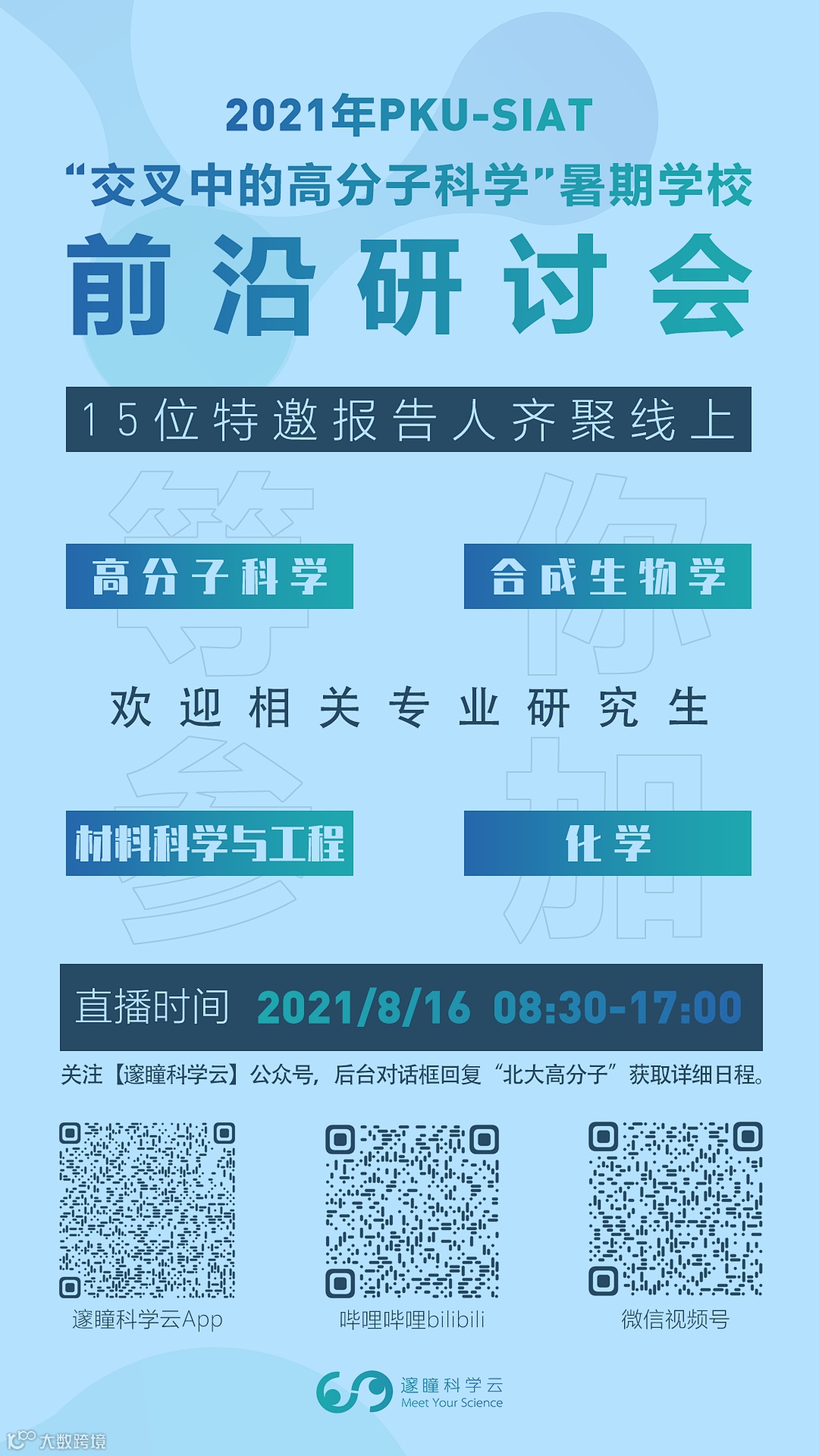
2021年PKU-SIAT“交叉中的高分子科学”暑期学校之前沿研讨会将于2021年8月16日08:30-17:00举行,本次报告会由北京大学软物质科学与工程中心、北京大学化学与分子工程学院、教育部高分子物理与化学重点实验室和中国科学院深圳先进技术研究院深圳合成生物学创新研究院联合主办,期间授权邃瞳科学云进行直播。

背景介绍
科学的交叉产生了无尽的前沿。2021年是高分子科学第二个百年的开端。在上一个百年,高分子科学建立了链式分子结构的认知范式,在分子生物学和合成高分子两个截然不同的方向成就了伟大的功勋。在这一个百年,高分子科学又将做出什么样的贡献?为了探讨“交叉中的高分子科学”,北京大学软物质科学与工程中心、北京大学化学与分子工程学院、教育部高分子化学与物理重点实验室联合中国科学院深圳先进技术研究院深圳合成生物学创新研究院推出2021年北京大学“交叉中的高分子科学”暑期学校。
本次暑期学校致力于探讨高分子科学与合成生物学交叉新兴的“材料合成生物学”,是针对具有一定高分子科学和生物化学基础的本科生和研究生开设的一门专业基础选修课,其内容涵盖材料合成生物学中所涉及的若干具体知识准备和技术储备,包括材料合成生物学概论、高分子物理基础、高分子组装基础、高分子力学性质表征、针对微生物或动物细胞的基因回路设计与编辑、计算机辅助的蛋白质设计实践、生物大分子定向进化技术等等。课程取材上力求既包括材料合成生物学这一新兴学科的前沿,又涵盖所涉及的相关本征领域的最基础的知识和技术,以期帮助学生们了解学科的全貌,并初步掌握相关的基础知识准备,为促进学科交叉、团队合作、激活新思路新方向打下坚实的基础。
本次暑期学校的线上前沿研讨会将对公众开放,共有15位特邀报告人,包括北京大学的陈尔强教授、清华大学的陈国强教授、杭州师范大学的刘俊秋教授、华东师范大学的叶海峰教授、华南理工大学的陈庭坚教授,南京大学的曹毅教授、南开大学的张振杰教授、上海交通大学的刘尽尧教授、夏小霞教授和邱惠斌教授、天津大学的仰大勇教授、西湖大学的卢培龙教授、中国科学院深圳先进技术研究院的钟超研究员、娄春波研究员和戴卓君研究员。热忱欢迎高分子科学、合成生物学、材料科学与工程、化学等相关专业研究生参加!

报告日程
Session I
Prof. Wen-Bin Zhang
08:30-08:55
Lecture 1 Prof. Junqiu Liu
Protein Assembly: A New Platform to Develop Biomimetic System
08:55-09:20
Lecture 2 Prof. Tingjian Chen
Harnessing Unnatural Nucleic Acids for the Expansion of Central Dogma
09:20-09:45
Lecture 3 Prof. Xiaoxia Xia
Designer membraneless organelles in living bacteria
09:45-10:10
Lecture 4 Prof. Peilong Lu
Computational design of transmembrane proteins
Session II
Prof. Chao Zhong
10:25-10:50
Lecture 5 Prof. Er-Qiang Chen
Direct Visualization of Chain Folding and Growth of Lamellae of a Dynamic Helical Poly(phenylacetylene)
10:50-11:15
Lecture 6 Prof. Yi Cao
生物高分子材料力学:从微观到宏观
11:15-11:40
Lecture 7 Prof. Huibin Qiu
Functional Polymer Nanoarrays
11:40-12:05
Lecture 8 Prof. Zhenjie Zhang
智能晶态聚合物的可控合成和功能开发
Session III
Prof. Wen-Bin Zhang
13:30-13:55
Lecture 9 Prof. Chao Zhong
Living Materials Programmed by Life
13:55-14:20
Lecture 10 Prof. Dayong Yang
DNA生物功能材料:组装与应用
14:20-14:45
Lecture 11 Prof. Jinyao Liu
Coated bacteria and their applications in enhanced therapy
14:45-15:10
Lecture 12 Prof. Zhuojun Dai
Versatile biomanufacturing through cell-material feedback
Session IV
Prof. Chao Zhong
15:30-15:55
Lecture 13 Prof. Haifeng Ye
REDMAP:新一代光遗传学工具的开发与应用
15:55-16:20
Lecture 14 Prof. Chunbo Lou
De novo Design and optimization orthogonal and modular cell-cell communication systems
16:20-16:45
Lecture 15 Prof. Guoqiang Chen
Next generation industrial biotechnology for PHA production
16:45-17:00
Closing Remarks Prof. Wen-Bin Zhang

报告详情
Lecture 1
Protein Assembly: A New Platform to Develop Biomimetic System
讲座摘要
Sophisticated protein self-assemblies have attracted great scientific interests in recent few decades due to their various potential applications. The design and control of proteins into hierarchical nanostructures via self-assembly strategies offers unique advantages in understanding the mechanism of naturally occurring protein assemblies and in creating various functional biomaterials with advanced properties.Protein self-assembly into exquisite, complicated yet high-ordered architectures represents the supreme wisdom of nature. However, precisely manipulating protein self-assembling behaviors in vitro is a great challenge. By taking advantage of supramolecular strategies such as the metal ion chelating interactions, host-guest interaction and non-specific protein-protein interactions, accuracy control of the orientation of protein self-assembly has been achieved. The designed nanostructures have been used as biomimetic scaffolds for developing biomimetic enzymes, light harvesting system and muscle mimics.
讲座嘉宾
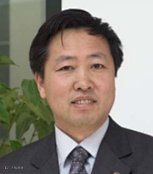
Junqiu Liu received his Ph.D in macromolecular chemistry from the State Key Laboratory of Supramolecular Structure and Materials, College of Chemistry, Jilin University in 1999 under the supervision of Professor Jiacong Shen. Following his doctoral studies, he was a Humboldt Fellow and a Postdoctoral Fellow with Professor Günter Wulff at the Institute of Organic and Macromolecular Chemistry, Heinrich-Heine University, Germany. In 2003 he joined the faculty of the State Key Laboratory of Supramolecular Structure and Materials in Jilin University as a full professor of chemistry. In 2020 he joined Hangzhou Normal University. His main research interests include supramolecular chemistry, biomimetic chemistry, and bio-nanomaterials.
Lecture 2
Harnessing Unnatural Nucleic Acids for the Expansion of Central Dogma
讲座摘要
DNA and RNA laid the material foundation of storage, transfer and retrieval of genetic information literally in all life form. However, there is no reason to limit the range of genetic materials to only natural DNA and RNA, especially when chemical synthesis has already provided us various building blocks for constructing unnatural nucleic acids. Efficient unnatural nucleic acid polymerases are necessities for utilizing unnatural nucleic acids as genetic materials. In order to rapidly engineer DNA polymerases for broader substrate repertoire, we have developed a polymerase evolution platform based on phage display technology and high-throughput screening. Using this platform, we successfully carried out directed evolution of Stoffel fragment for the efficient synthesis and amplification of unnatural nucleic acids. With the best SF mutants, we have carried out SELEX for various unnatural aptamers, designed a method called PCT for rapid production of RNA molecules, and constructed novel biomaterials composed of unnatural nucleic acids. In the end of the talk, the applications of unnatural base pairs in the development of aptamer-drug conjugates and semi-synthetic life will also be discussed.
讲座嘉宾
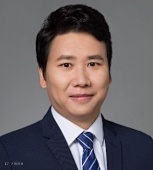
Prof. Tingjian Chen got his bachelor degree from Department of Chemical Engineering, Tsinghua University in Beijing in 2006. He did his PhD study in Department of Chemical Engineering, Tsinghua University in Beijing, and worked on protein evolution, engineering xylose utilization and cellular tolerance of bacterial strains for biofuel production. After got his PhD degree in 2011, he joined Department of Chemistry, The Scripps Research Institute in La Jolla, California, the United States, for his postdoctoral research, and worked on polymerase engineering for the synthesis and amplification of unnatural nucleic acids, evolution and applications of unnatural nucleic acids, and construction of semi-synthetic life based on unnatural nucleic acids. In 2018, he joined School of Biology and Biological Engineering, South China University of Technology in Guangzhou, China, to be a professor, and started his lab of synthetic biology based on unnatural nucleic acids. His current research interests mainly include: 1) Synthetic biology and chemical biology of unnatural nucleic acids and artificial life; 2) Polymerase engineering for better synthesis and amplification of unnatural nucleic acids; 3) Development and optimization of technologies related with evolved polymerases, including cheap RNA production; 4) SELEX for discovery of aptamers and aptamer-drug conjugates composed of unnatural nucleic acids; 5) Development of novel biomaterials based on unnatural nucleic acids; 6) Introduction of unnatural nucleic acids into living cells for the production of semi-synthetic life and expansion of central dogma.
Lecture 3
Designer membraneless organelles in living bacteria
讲座摘要
Membraneless organelles, a new type of cellular compartments, are formed by liquid-liquid phase separation of proteins and/or nucleic acids in eukaryotes. These organelles play crucial roles in cell physiology and pathology, and thus give rise to a fundamental mechanism for organizing the intracellular milieu. However, such cellular compartments have yet to be discovered or created synthetically in prokaryotes. In this talk, I will introduce the formation of liquid protein condensates within the living cells of prokaryotic Escherichia coli upon heterologous overexpression of intrinsically disordered proteins such as spider silk and resilin. In vitro reconstitution under conditions that mimic intracellular physiologically crowding environments of E. coli revealed that the condensates are formed via liquid-liquid phase separation. Functionalization of these condensates was further achieved via fusion and targeted colocalization of fluorescent or catalytic cargo proteins to the compartments. The ability to form and functionalize membraneless compartments may serve as a versatile tool to develop artificial organelles with on-demand functions in prokaryotes for applications in synthetic biology. The research work delivered may also inspire the exploration of natural membraneless compartments in E. coli and other prokaryotes.
讲座嘉宾
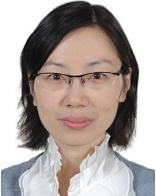
Dr. Xiaoxia Xia is currently a professor in Department of Bioengineering at Shanghai Jiao Tong University (SJTU). She earned her Ph.D. in Chemical and Biomolecular Engineering at KAIST in 2009. After three and a half years’ postdoctoral training at KAIST and Tufts University, she joined SJTU in 2012. Her current research focuses on artificial biomacromolecules and functional materials created with synthetic biology. She has co-authored more than 50 peer-reviewed papers in the international journals including Nature Chemical Biology and PNAS. She was awarded Eastern Scholar Professorship in 2012 and 2017, and Pujiang Talent Award in 2013. She is also serving as an editorial board member for ACS Biomaterials Science & Engineering, Biotechnology Journal, and Metabolic Engineering Communications.
Lecture 4
Computational design of transmembrane proteins
讲座摘要
The computational design of transmembrane proteins with more than one membrane-spanning region remained a major challenge. Here, we present the design of transmembrane homodimers and tetramers that adopt the target oligomerization state in detergent solution. Crystal structures of the designed dimer and tetramer—a rocket-shaped structure with a wide cytoplasmic base that funnels into eight transmembrane helices—are very close to the design models. More interestingly, we have successfully designed two hexameric and octameric transmembrane protein pores formed by two concentric rings of ɑ-helices. Patch clamp electrophysiology experiments show that a hexameric 12-helix transmembrane pore expressed in insect cells allows passage of ions across the membrane with selectivity for potassium over sodium. An octameric 16-helix transmembrane pore, but not the hexameric pore, allows passage of biotinylated Alexa Fluor 488 when incorporated into liposomes using in vitro protein synthesis. A cryo-EM structure of the octameric transmembrane pore fused to helical repeat domains closely matches the design model. The ability to produce structurally well-defined transmembrane channels opens the door to the creation of designer pores and other functional transmembrane proteins for a wide variety of applications.
讲座嘉宾
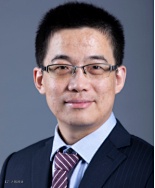
Dr. Peilong Lu received his bachelor’s degree in Biological Science in 2009, from University of Science and Technology of China (USTC). He got his doctoral degree at Tsinghua University in 2014, trained in Prof. Yigong Shi’s lab. In 2015, he joined Prof. David Baker’s lab at University of Washington for postdoctoral training. In 2019, he joined School of Life Sciences at Westlake University as a principal investigator. His lab mainly focuses on computationally design of new generations of functional multi-pass transmembrane proteins, and design of protein therapeutics.
Lecture 5
Direct Visualization of Chain Folding and Growth of Lamellae of a Dynamic Helical Poly(phenylacetylene)
讲座摘要
Chain folding is a fundamental mechanism in self-assembly of bio- and non-biological polymers. In crystalline polymers, chain folding leads to lamellar crystals that are extremely important to the ultimate properties. Understanding chain folding at the molecular level remains a great challenge. Recently, we found that a dynamic helical cis-poly(phenylacetylene) bearing a bulky side group (P1), which is a side-chain liquid crystalline polymer, can also form folded chain lamellae in the hexagonal columnar phase. Our atomic force microscopy (AFM) experiments on P1 thin films directly visualized the adjacent and nonadjacent folds at the liquid crystal-amorphous interface. While the helical segments of P1 with a diameter of 2.2 nm closely pack in the hexagonal lattice, the disorder strands that connect the helices could compose the folds. Furthermore, we monitored the lamellar growth from the amorphous state using AFM. We demonstrate experimentally for the first time that the lamellar growth may obey the kinetics of Ostwald ripening, in contrast to the expected nucleation- or diffusion-controlled growth. It is also found that with the initial lamellar thickness close to the persistence length of P1, the lamellae show simultaneous lateral extension and thickening.
讲座嘉宾
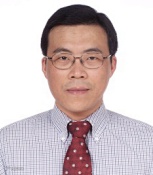
Prof. Er-Qiang Chen received his B.S. (1988) and M.S. (1991) degree from Fudan University in Shanghai, China. In 1994, he went to the University of Akron in USA and got his Ph.D. degree in 1998. He spent the period 1998-2000 as postdoctoral researcher at the University of Akron and Polymer Division, National Institute of Standards and Technology (NIST). Afterwards, he joined Peking University in 2000. He had served as the director of the Key Laboratory of Polymer Chemistry and Physics of Ministry of Education at Peking University for ten years (2009 – 2019), an associated editor (2010 – 2017) and an editor (2018) of Polymer (Elservier). He received the award of National Science Fund for Distinguished Young Scholar (NNSFC) in 2000. His research focuses on phase transitions and structures of polymers including crystallization, liquid crystalline behavior, and polymer self-assembly. He is also interested in the relationship between structures and properties of polymer materials.
Lecture 6
生物高分子材料力学:从微观到宏观
讲座摘要
在自然界中生物材料展现出丰富的力学特性,如血管的高延展性、肌肉的高弹性、蜘蛛丝的高韧性等等。组成这些材料的弹性蛋白是承受力的主要结构单元,其力学性质决定了整体材料的力学性质。同时,弹性蛋白的构象变化还介导着细胞间以及细胞与细胞外基质间的力信号的传递。随着单分子操控技术尤其是基于原子力显微镜的单分子力谱技术的发展,在单分子层面上研究天然和合成高分子的力学特性成为可能。许多弹性蛋白的力学性能与结构之间的关系得以揭示。高分子链的力化学响应机制得到进一步理解。通过自下而上的方法,我们进一步实现对蛋白宏观力学特性的理性设计。受蛋白质力学构造的启发,我们提出了通过金属配位键和力学动态化学键来调控生物高分子材料力学特性的思路。我们还提出了通过无结构高分子为渗透相,多聚蛋白为交联点的特殊网络设计,获得具有低滞后和抗疲劳断裂性能的水凝胶材料。这些都为实现生物高分子材料力学特性的理性设计和调控奠定了基础。
讲座嘉宾
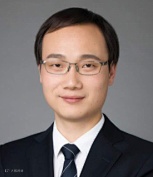
Prof. Yi Cao received his bachelor’s degree in 2001 and Master’s degree (Supervisor: Prof. Xiqun Jiang) in 2004 from Nanjing University. He then obtained his Ph.D. in 2009 from the University of British Columbia (Supervisor: Prof. Hongbin Li). After a one-year postdoc at the same place, he started his independent career at the Department of Physics, Nanjing University as a full professor. His work was recognized by several awards including the 2014 IUPAP Young Scientist Prize in Biological Physics, the “2018 Young Innovator Award in Nanobiotechnology” by Nano Research, and the 2019 Young Scientist Award from the Biomedical Polymer Materials Division of the Chinese Society for Biomaterials.
Lecture 7
Functional Polymer Nanoarrays
讲座摘要
The fabrication of tailored micro/nanostructures on surfaces can introduce unique physical and chemical properties into various material systems. It is highly important to develop relevant surface functionalization methodologies, which ideally should be facile, efficient, universal, and flexible. Recently, we have demonstrated a distinctive approach to functionalize various material surfaces with polymer nanoarrays. This involves the immobilization of cylindrical micelle seeds that formed by the self-assembly of various crystalline-coil block copolymers on material surfaces and the subsequent in situ epitaxial crystallization of further added polymer unimers through living crystallization-driven self-assembly, and the growth of densely packed micellar brushes on the surface. Depending on desired seed immobilization methods, the micellar brushes can be grown on the surfaces of a variety of materials, both macroscopic and microscopic. It is ready to tune the size, density, chemical constitution, and topologies of the micellar brushes. Additionally, a diverse array of functional species can be mounted on the micellar brushes through post-functionalization, favoring the applications in a wide arrange of fields, including separation, catalysis, energy, and biomedical. This talk aims to introduce our most recent progress on this intriguing system.
讲座嘉宾
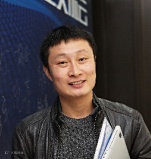
Prof. Huibin Qiu received his Ph.D. in Applied Chemistry from Shanghai Jiao Tong University in 2010. He conducted his postdoctoral work on macromolecule self-assembly in Prof. Ian Manners’ group at University of Bristol from 2011 to 2015 as a Marie Curie Research Fellow. He established his independent research group at ShanghaiTech University in 2015 and then moved to Shanghai Jiao Tong University in 2018. His current research interest focuses on the fabrication of functional materials via hierarchical self-assembly of small molecules, block copolymers and colloids.
Lecture 8
智能晶态聚合物的可控合成和功能开发
讲座摘要
智能材料是继第四代功能材料,在航空航天、储能、医学等领域具有重大科学意义和应用前景,是我国着力发展的战略新领域。目前,智能材料主要集中在聚合物体系,但结构/种类与功能相对单一、结构有序性较差,难以实现基于结构设计的高效组装与集成,制约其发展和应用。因此,通过理性设计突破现有响应性聚合物体系的局限性,提升结构有序性并拓展其应用具有重要意义。张振杰课题组聚焦晶态聚合物的理性设计与可控合成及其在智能响应领域的应用,实现了智能材料的有序构筑与组装策略创新,并阐明了新的响应机理/机制。提出了“模块化有序构筑”的合成思想,实现了晶态聚合物的可控合成;进一步提出“晶态人工肌肉”新概念,通过引入柔性聚合物进行有序组装与集成,合成了一系列高性能的智能晶态聚合物体系,解决了其缺少柔韧性和加工成型的挑战,创新应用于仿生机器人、能源转化、智能动态监测等领域。
讲座嘉宾
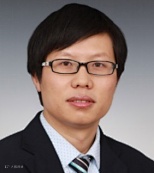
张振杰于2006年和2009年在南开大学化学学院获本科和硕士学位(导师:程鹏教授), 2014年获美国南佛罗里达大学化学博士学位(导师:Michael J. Zaworotko教授),2014-2016年在美国加州大学圣地亚哥分校从事博士后研究(导师:Seth M. Cohen教授),2016年7月加入南开大学任研究员,博士生导师。共发表论文96篇,近五年以通讯作者发表论文37篇(影响因子10以上论文24篇),包括Angew. Chem. Int. Ed.(10篇)、J. Am. Chem. Soc.(4篇)、Nat. Commun.(1篇)、ACS Cent. Sci.(2篇)、ACS Catal.(2篇)、CCS Chem.(1篇)、Chem. Soc. Rev.(1篇)等;获批或申请中国发明专利26件,PCT2件和美国专利2件。形成了富有特色的“智能晶态聚合物”研究方向,研究成果受到国内外学者的关注和认可,被知名科学媒体和国际期刊多次评述报道。入选国家级青年人才项目、天津市杰青,获中国化学会首届菁青化学新锐奖、美国化学会DIC Young Investigator Award、国家优秀自费留学生奖等,并担任美国化学会Crystal Growth&Design杂志编辑。
Lecture 9
Living Materials Programmed by Life
讲座摘要
自然界中很多生物材料体系—例如骨骼组织和细菌生物被膜—能够生长、自修复并适应环境,具有人工合成材料所不具有的独特“活体”属性。如何效仿自然创建可编程、功能可调的“活”材料一直是材料合成生物学领域中的重要挑战。在本次报告中,报告人首先将就课题组利用合成生物技术创建基于细菌生物被膜(大肠杆菌或枯草芽孢杆菌生物被膜)活体功能材料方面的工作做一简要介绍。具体例子包括:(1)可编程、可3D打印的枯草芽孢杆菌生物被膜活体材料;(2)具有环境响应和自修复功能的细菌活体胶水;(3)基于光诱导生物被膜和生物仿生矿化创建的活体梯度复合材料。此外,报告人还将讨论材料合成生物学交叉领域新的研究机遇和挑战。课题组的前期研究为创建环境耐受性、环境响应性和有机-无机复合活体材料提供了范式研究,并为未来从头理性设计智能活体材料打下坚实的基础。
讲座嘉宾
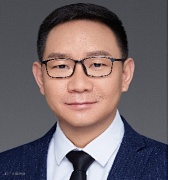
钟超研究员2020年3月至今在中科院深圳先进技术研究院合成生物所,担任所长助理和材料合成生物学中心主任。入职前,他于2014.7~2020.2月在上海科技大学任研究员、博士生导师,担任上科大物质学院材料和物理生物部主任,并于2019年12月晋升为上科大物质学院第一批常聘教授(Tenured Professor)。钟超博士本科毕业于天津大学材料科学专业,2009年获得美国康奈尔大学博士学位,曾先后在美国华盛顿大学(西雅图分校)材料系(2009.8~2011.12)和美国麻省理工学院合成生物学中心从事博士后工作(2012.1~2014.6)。钟超博士的主要研究领域是材料合成生物学新兴领域,主要方向是利用合成生物学技术开发活体功能材料和蛋白水下粘合材料,发表40多篇学术论文,包括发表在Nature Reviews Materials, Nature Nanotechnology, Nature Chemical Biology等杂志内的一作或通讯论文。钟超博士目前担任Current Research in Chemical Biology, Materials Today Bio,Materials Futures 期刊编委以及Chinese Chemical Letters (CCL)期刊的青年编委,中国生物工程学会合成生物学专委会委员、国内《合成生物学》新期刊编委及国家新兴产业百人会会员等社会职务。
Lecture 10
DNA生物功能材料:组装与应用
讲座摘要
DNA是蕴含“精准化学”且具有生物活性的生命大分子,是化学与材料、生命和医学之间的桥梁。我们合成了基于DNA的动态材料,用于强化药物递送和疾病治疗,近期主要研究进展包括:1)发展了胞内动态组装策略,合成类细胞器DNA结构,研究类细胞器的生物学干预效应;2)发展了DNA动态网络构建策略,合成DNA软体水凝胶网络,实现干细胞高效捕获和无损递送;3)发展了高分子纳米框架中DNA时空可编程级联杂交策略,合成DNA交联高分子纳米框架,强化siRNA精准递送和肿瘤基因治疗。
讲座嘉宾
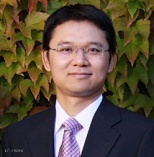
仰大勇 博士,天津大学化工学院教授。华中科技大学本科、硕士,国家纳米科学中心博士,美国康奈尔大学、荷兰奈梅亨大学博士后。研究团队以生物大分子DNA为研究主线,聚焦DNA生物功能材料化学组装与智能制造,并用于生命分析和疾病治疗。近期以通讯作者在Chem. Rev.、J. Am. Chem. Soc.、Angew. Chem.、Nat. Commun.、Nat. Protoc.、Prog. Polym. Sci.、Nano Today、Biomaterials和Nano Lett.等杂志发表学术论文50多篇。
Lecture 11
Coated bacteria and their applications in enhanced therapy
讲座摘要
The gut microbiota has been demonstrated to be an important regulator in human health. Disorders in the gut ecosystem have been implicated in various diseases, such as inflammatory bowel disease, diabetes, Alzheimer’s disease, and even cancers. Although fecal microbiota transplantation has demonstrated effective to positively modulate the gut microbiome, the implementation has been largely restricted by invasive operation and indeterminate composition, which inevitably result in low patient compliance and safety issues. Oral delivery of probiotic species to the gut microflora is an alternative to address these limitations, unfortunately, environmental complexity and a continuous flow within the gastrointestinal tract result in low oral bioavailability and limited intestinal colonization. Surface modification of bacteria, which includes chemical conjugation and physical encapsulation, has been utilized to introduce exogenous functions that are naturally unachievable. Recently, my group has wrapped bacteria with various entire coatings to increase bacterial survival and colonization in vivo following administration. In this presentation, I’d love to share the methodologies we have developed for engineering functional coatings and also discuss the applications of these coated bacteria for enhanced treatment.
讲座嘉宾
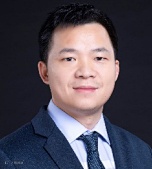
Prof. Jinyao Liu is Professor and Assistant to the Dean of Institute of Molecular Medicine, Shanghai Jiao Tong University, China. After received his PhD at Shanghai Jiao Tong University in Materials Science and Engineering under the supervision of Prof. Deyue Yan in 2013, Jinyao joined Prof. Ashutosh Chilkoti’ group in the Department of Biomedical Engineering at Duke University (04. 2013-08. 2015) and Prof. Robert Langer’s laboratory in the Koch Institute for Integrative Cancer Research at MIT (09. 2015-03. 2018) as a postdoc associate. His current research interests include oral delivery, bacterial-based bioagents, hydrogels and nanomedicine. He has published more than 50 peer-reviewed publications and is named
Lecture 12
Versatile biomanufacturing through cell-material feedback
讲座摘要
A key focus of synthetic biology is to utilize modular biological building blocks to assemble the cell-based circuits. Scientists have programmed the living organisms using these circuits to attain multiple delicate and well-defined functions. With the integration of tools or technologies from other disciplines, these rewired cells can achieve even more complex tasks. In this talk, we will present our recent work in versatile biomanufacturing of biologics and functional material fabrication by integrating the engineered cells and polymer physics and chemistry. By exploiting cell-material feedback, we are able to design a concise platform to achieve versatile production, analysis, and purification of diverse proteins and protein complexes, and also assembly of functional living materials. Our work demonstrates the use of the feedback between living cells and materials to engineer a modular and flexible platform with sophisticated yet well-defined programmed functions.
讲座嘉宾
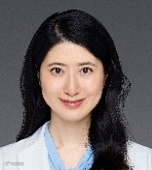
Dr. Zhuojun Dai is currently an Associate Professor at the Institute of Synthetic Biology, Shenzhen Institutes of Advanced Technology, Chinese Academy of Sciences. She received her Bachelor degree from Zhejiang University. She obtained PhD degree from The Chinese University of Hong Kong under the supervision of Prof Chi Wu, where she investigated the polymer chain dynamics, interactions between the polycations and polyanions and cell-material interactions from the view of polymer physics and chemistry. Then, she undertook postdoctoral training at Duke University in Prof Lingchong You's lab, where she integrated the stimulus-sensitive materials with synthetic gene circuit to build a versatile manufacturing platform. Since Sep, 2018, she started her lab in iSynBio, focusing on developing method in engineered microbial consortia assembly and living functional material fabrication.
Lecture 13
REDMAP:新一代光遗传学工具的开发与应用
讲座摘要
光遗传学技术的发展赋予我们在时间和空间上精确控制生物活动过程的能力。然而,当前的真核光遗传学系统面临控制模块大或复杂、光照时间长、激活速度慢、效率低等问题。本报告主要介绍一种基于植物光感受器PhyA 的红光/远红光控制的小型化的新型光控开关 REDMAP系统。该REDMAP控制系统具有多种优势和应用潜力。包括:内源性MAPK细胞信号通路的活性控制;REDMAP 介导的 CRISPR-dCas9 (REDMAPcas) 系统在小鼠中调控表观遗传重塑;在小鼠中实现AAV递送REDMAP介导长期高效转基因表达;REDMAP介导胰岛素表达控制血糖稳态。因此,REDMAP是一种紧凑而灵敏光遗传学工具,可应用于基础生物学和潜在的可控生物治疗。
讲座嘉宾
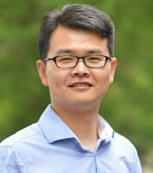
叶海峰,华东师范大学二级教授、博士生导师、生命科学学院副院长、国家重点研发计划首席科学家、国家第五批万人计划科技创新领军人才入选者、国家优青、青千。任教育部科技委交叉科学与未来技术专门委员会委员,中国生物工程学会理事。2007–2013 年于瑞士苏黎世联邦理工学院 (ETH Zurich)从事博士和博士后研究工作。2013年被授予 ETH Zurich 最高荣誉奖章。主要从事医学合成生物学研究方向,研究内容包括智能细胞药物设计构建、光遗传学工具开发、精准可控的肿瘤免疫治疗、药物工程菌设计改造等。相关研究成果以第一或通讯作者身份发表在 Science、Sci Transl Med (2篇封面)、Sci Adv (2篇)、Nat Biotech、Nat Biomed Eng、Nat Commu (2篇)、Proc Natl Acad Sci USA (3篇) 等期刊。申请发明专利 12 项,授权4项。目前已承担国家级、省部级科研项目10余项,其中包括国家重点研发计划1项,国家自然科学基金项目5项,上海市科委合成生物学重大、重点专项各1项等。担任中国生物工程学会合成生物学专业委员会委员、中国生物工程学会青年工作委员会副主任、中国医药生物技术协会合成生物技术分会委员。
Lecture 14
De novo Design and optimization orthogonal and modular cell-cell communication systems
讲座摘要
Cell-cell communications are essential for individual cells to acquire multicellular behaviors such as division of labor, coordination to adapt environment and development into tissues or organs. They are widespread in both prokaryotic and eukaryotic systems and encompass quite diverse molecules to implement the signaling functions. One well known example is bacterial quorum sensing system which can coordinate the whole population to control the formation of biofilm, as well as the expression of bioluminescence and virulence factors. Meanwhile, more other types of intercellular communication systems exist in multi-cellular organism to differentiate various cell fate during embryo development or to coordinate different immune responses. The huge repertoire of diverse signals thus offers great potential to be engineered as intercellular regulation toolbox. Here, we present the design of ten modular and orthogonal cell-cell communication systems, six of which are first designed with diverse signaling-molecule structure. All of their signals are synthesized from cellular central carbon metabolic pathways, and are freely diffusible cross the
讲座嘉宾
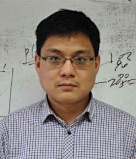
Dr. Chunbo Lou is an Investigator of Shenzhen Institute of Advanced Technology, CAS. He obtained his Ph.D. in biophysics from Peking University in 2009 supervised by Prof Qi Ouyang, and started his postdoctoral research with Prof. Chris Voigt at UCSF and MIT. He joined Institute of Microbiology, CAS from 2013, and moved to Shenzhen from 2019. He has developed insulator and other fundamental design principles for genetic programming, and designed a binary-counter and complex logic-gate circuit. His lab is currently developing high-quality regulatory parts for mammalian genetic circuit, and predictably design complex spatial-temporal control circuits for vaccine engineering, tissue engineering and precise expression in engineering stem cell and cancer cells. He have published more than 30 peer-reviewed papers on scientific journals, including Nature, Nature Biotechnology, Nature Communications, Nucleic Acids Research, PNAS, Molecular Systems Biology and ACS Synthetic Biology.
Lecture 15
Next generation industrial biotechnology (NGIB) for PHA production
讲座摘要
Polyhydroxyalkanotes (PHA) are a family of environmentally friendly biomaterials synthesized by various bacteria. The diversity of PHA reflected by structures and properties has resulted in various applications, making them a promising alternative of petroleum-based plastics, yet their industrialization is challenged owning to the high production cost and instable product quality. Recently the “Next Generation Industrial Biotechnology” (NGIB) has been developed, namely, a long-lasting, open and continuous, energy-saving fermentation process under artificial intelligent control using extremophilic bacteria grown on low-cost mixed substrates and less freshwater, as demonstrated successfully by halophilic Halomonas spp. NGIB overcomes the disadvantages of the current industrial biotechnology (CIB) to reduce the bioproduction cost and process complexity, leading to successful industrial production of PHA.
讲座嘉宾
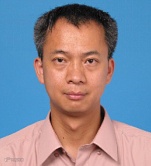
Prof. George Guo-Qiang Chen received his BSc and PhD from South China University of Technology in 1985 and Graz University of Technology (Austria) in 1989, respectively. He also conducted research in 1990-1994 as a postdoc at University of Nottingham in UK and University of Alberta in Canada, respectively. He has been focusing his research on microbial materials polyhydroxyalkanoates (PHA) metabolic engineering, synthetic biology and PHA biomaterial application since 1986. After joining Tsinghua University in 1994, he has been actively promoting the microbial Bio- and Material Industries in China. Professor Chen has more than 35 years of R&D experiences on microbial physiology, microbial PHA production and applications, has published over 370 international peer reviewed papers with over 20,500 citations (H-Index 69) as reported in Web of Science. With over 40 issued patents and 50 pending patents, Prof. Chen’s technologies have been provided to several companies that succeeded in mass production of microbial polyhydroxyalkanoates (PHA). He has received many awards for his contributions to the microbial manufacturing fields. Beginning from 2015, he becomes the Funding Director of the Center for Synthetic and Systems Biology in Tsinghua University. From 2015-2024, he serves as chair Professor of Synthetic Biology, The University of Manchester/UK.

“邃瞳科学云”直播服务

“邃瞳科学云"平台正在收集、整理各类学术会议信息,欢迎学会、期刊、会议组织方择优在邃瞳平台上进行线上直播,希望藉此帮助广大科研人员跨越时空的限制,实现自由、畅通地交流互动。欢迎老师同学们提供会议信息(会有礼品赠送),学会、期刊、会议组织方商谈合作,均请联系翟女士:18612651915(微信同)。

扫描二维码下载
邃瞳科学云APP