



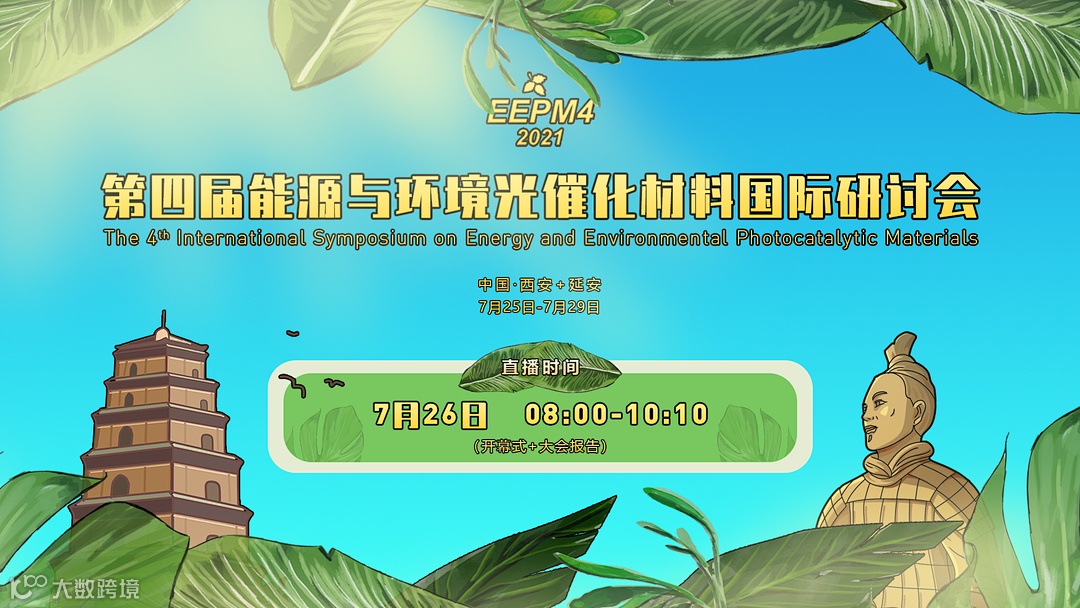
第四届能源与环境光催化材料国际学术研讨会(EEPM4)拟定于2021年7月25-29日在西安建国饭店及延安大学举行。本次会议由陕西科技大学、中国地质大学(武汉)、延安大学、盐城工学院、长沙学院和陕西省无机材料绿色制备与功能化重点实验室联合主办,北京泊菲莱科技有限公司协办,期间授权邃瞳科学云进行直播。
EEPM4是一个致力于营造跨学科、无国界、形式丰富的纯学术交流讨论会。会议涉及光收集太阳能转换和存储、环境修复、光催化和光电催化反应的清洁技术和可持续化学工艺等领域的基础研究和应用研究。会议形式包括全体会议、主题演讲、邀请讲座、口头和快速演示、海报会议和商业展览。


直播日程安排

7 月 26 日 08:00-08:30
开幕式

7 月 26 日 08:30-08:50
Ga-doped and Pt-loaded Porous TiO2-SiO2 for Photocatalytic Nonoxidative Coupling of Methane
Jinlong Zhang

Methane is a promising energy source with huge reserves and is considered as one of the alternatives to nonrenewable petroleum resources, since it can be converted to valuable hydrocarbon feedstocks and hydrogen through appropriate reactions. Nonoxidative coupling of methane (NOCM) has proven to be a promising approach to methane conversion for C2 products and hydrogen.1-3 However, a high activation temperature is required to trigger this reaction owing to the tremendous thermodynamic barrier, which often causes coke deactivation of the catalyst and low selectivity.4 Therefore, there is an urgent demand to develop new strategies for NOCM under mild conditions.
Herein, a Ga-doped TiO2-SiO2 microarray with a hierarchical macro-mesoporous structure (HGTS) is developed for NOCM.5 Pt nanoclusters, as a commonly used cocatalyst for the photocatalytic hydrogen evolution reaction, are further deposited (Pt/HGTS) to explore their effect on NOCM. A high CH4 conversion rate of 3.48 µmolg-1h-1 for the selective production of C2H6 is achieved at room temperature. Moreover, a steady H2 yield of 36 µmolg-1 within 32 h is attained and is accompanied by a high CH4 conversion percentage of 28% without loss of structural stability. The influence of Ga on the chemical state of a surface oxygen vacancy (Vo) and deposited Pt is investigated through a combination of experimental analysis and first-principles density functional theory calculations. Ga substitutes for the five-coordinated Ti next to Vo, which tends to stabilize the single-electron trapped Vo and reduce the electrons transfer from Vo to the adsorbed Pt, resulting in the formation of a higher amount of cationic Pt. The cationic Pt and electron-enriched metallic Pt form a cationic-anionic active pair, which is more efficient for the dissociation of C-H bonds. The presence of too much cationic Pt results in more C2+ product with a decrease in the CH4 conversion rate due to the reduced charge-carrier separation efficiency.
➤References:
向下滑动查看更多
[1] X. Guo, G. Fang, G. Li, H. Ma, H. Fan, L. Yu, C. Ma, X. Wu, D. Deng, M. Wei, D. Tan, R. Si, S. Zhang, J. Li, L. Sun, Z. Tang X., Pan, X. Bao, Science, 2014, 344, 616.
[2] H. Yoshida, N. Matsushita, Y. Kato, T. Hattori, Phys. Chem. Chem. Phys., 2002, 4, 2459.
[3] L. Yuliati, T. Hamajima, T. Hattori, H. Yoshida, J. Phys. Chem. C, 2008, 112, 7223.
[4] V. R. Choudhary, A. K. Kinage, T. V. Choudhary, Science, 1997, 275, 1286.
[5] S. Wu, X. Tan, L. Wang, J. Zhang, J. Am. Chem. Soc., 2019, 141, 6592.


7 月 26 日 08:50-09:10
Design of Nanostructured Plasmonic Catalysts
Hiromi YAMASHITA

This lecture describes the design of nanostructured plasmonic catalysts, such as nanoparticles and nanosheet morphologies, that strongly absorb visible light over a wide range of the solar spectrum due to localized surface plasmon resonance (LSPR) and application to enhanced hydrogen evolution. A new method for the synthesis of Ag nanoparticles, with color dependent on the particle size and morphology, combined microwave heating and the use of mesoporous silica materials. Further combination with Pd nanoparticles significantly enhanced the catalytic activities for hydrogen production from ammonia borane (NH3BH3) compared with the inherent Ag catalysts under both dark and visible-light irradiation conditions. We also describe the synergistic catalysis activities of plasmonic Au(core)-Pd(shell) nanoparticles supported on amine-functionalized metal−organic frameworks (MOFs) for boosting room-temperature hydrogen production from formic acid (HCOOH) under visible light irradiation. Our search for plasmonic materials based on earth abundant elements found that reduced molybdenum oxide (HxMoO3-y) nanosheet with oxygen defects and doped hydrogen displayed intense absorption in a wide range from the visible to the near-infrared region. This unique plasmonic HxMoO3-y nanosheet can enhance dehydrogenation from ammonia borane under visible light irradiation.
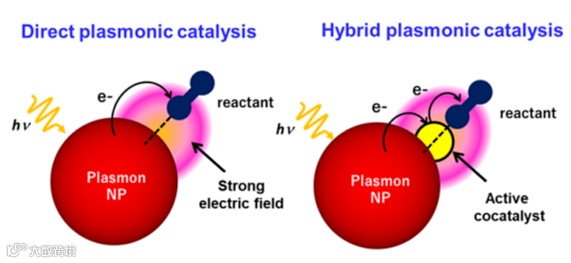
Figure 1. Design of nanostructured plasmonic catalysts.
➤References:
向下滑动查看更多
[1] S. Masuda, H. Yamashita, et al., Chemical Sci., 2020, 11, 4194-4203.
[2] K. Mori, H. Yamashita, et al., Nature Comm., 2019, 10, 4094-4104..
[3] Y. Isaka, H. Yamashita, et al., Angew. Chem. Int. Ed., 2019, 58, 5402-5406.
[4] Y. Kuwahara, H. Yamashita, et al., J. Am. Chem. Soc., 2018, 140, 9203-9210.
[5] K. Mori, H. Yamashita, et al., J. Am. Chem. Soc., 2018, 140, 8902-8909.
[6] H. Yamashita, K. Mori, et al., Chem. Soc. Rev., 2018, 47, 8072-8096.
[7] M. Wen, H. Yamashita, et al., ACS Energy Lett., 2017, 2, 1-7.
[8] H. Cheng, H. Yamashita, et al., J. Am. Chem. Soc., 2016, 138, 9316-9324.
[9] H. Cheng, H. Yamashita, et al., Angew. Chem. Int. Ed., 2014, 53, 2910-2914.
[10] K. Fuku, H. Yamashita, et al., Angew. Chem. Int. Ed., 2013, 52, 7446-7450.


7 月 26 日 09:10-09:30
Water splitting using particulate photocatalysts
Kazunari Domen

Overall water splitting using particulate photocatalysts has been attracting attention as a means of large-scale renewable solar hydrogen production [1]. The author’s group has studied various semiconductor oxides, (oxy)nitrides, and (oxy)chalcogenides as photocatalysts. The apparent quantum yield of overall water splitting using the SrTiO3 photocatalyst has been improved to 95% in the near-ultraviolet region by refining the photocatalyst and cocatalyst preparation (Fig. 1) [2]. This quantum efficiency is the highest ever reported, indicating that particulate photocatalysts can drive the uphill overall water splitting reaction as efficiently as the photon-to-chemical conversion process in photosynthesis. In addition, the author's group has also been developing panel reactors for large-scale applications [3]. A solar hydrogen production system with a light-receiving area of 100 m2 was recently built, and its performance and system characteristics are under investigation.
For practical solar energy harvesting, it is essential to develop photocatalysts that are active under visible light irradiation. Ta3N5 and Y2Ti2O5S2 photocatalysts are active in overall water splitting via one-step excitation under visible light irradiation [4,5]. Particulate photocatalyst sheets efficiently split water into hydrogen and oxygen via two-step excitation, referred to as Z-scheme, regardless of size. In particular, a photocatalyst sheet consisting of La- and Rh-codoped SrTiO3 and Mo-doped BiVO4 splits water into hydrogen and oxygen via the Z-scheme, showing a solar-to-hydrogen energy conversion efficiency exceeding 1.0% [6,7]. Some other (oxy)chalcogenides and (oxy)nitrides with long absorption edge wavelengths can also be applied to Z-schematic photocatalyst sheets.
In my talk, the latest progress in the development of photocatalytic materials and their reaction systems will be presented.
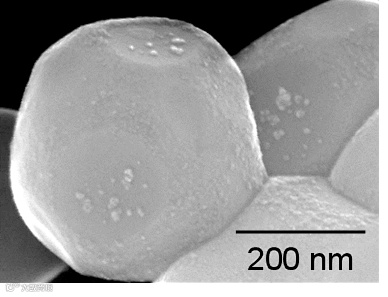
Figure 1. A scanning electron microscope image of an Al-doped SrTiO3 photocatalyst loaded with cocatalysts site-selectively.
➤References:
向下滑动查看更多
[1] Hisatomi et al., Nat. Catal., 2019, 2, 387.
[2] Takata et al., Nature, 2020, 581, 411.
[3] Goto et al., Joule, 2018, 2, 509.
[4] Wang et al., Nat. Catal., 2018, 1, 756.
[5] Wang et al., Nat. Mater., 2019, 18, 827.
[6] Wang et al., Nat. Mater., 2016, 15, 611.
[7] Wang et al., J. Am. Chem. Soc., 2017, 139, 1675.


Photoelectrochemical Synthesis of H2O2 Using Water and Dioxygen Only
Wonyong Choi

Hydrogen peroxide (H2O2) is a versatile chemical oxidant and the current industrial production process of H2O2 is energy-intense and environmentally unsustainable. Herein, we present a couple of successful photoelectrochemical (PEC)-based systems to demonstrate the clean and sustainable production of H2O2. PEC system is an eco-friendly synthesis method that uses sunlight, water and dioxygen only without using chemicals such as H2 gas. In the first study [1], an efficient solar-to-H2O2 conversion through a PEC cell that maximizes the utilization of solar energy by having double side generation of H2O2 on both photoanode and cathode is demonstrated. This work was accomplished by preparing (i) efficient BiVO4 (BVO) photoanodes modified with molybdenum (Mo) as a dopant, (ii) surface-treatment with phosphate (P) on as-synthesized photoanodes, and (iii) single-walled carbon nanotube (CNT) electrodes anchored with anthraquinone (AQ-CNT), a reversible H2O2-evolving catalyst that has been widely used in the H2O2 production industry. The introduction of Mo into BVO and surface phosphate treatment on BVO (P-Mo-BVO) enabled highly durable PEC reactions over 100 h (90% photocurrent remained). The utilization of AQ on the cathode made the H2O2 production by oxygen reduction highly selective and suppressed competing H2 production completely. This dual electrodes system also successfully demonstrated H2O2 production under an external bias-free condition with a net H2O2 production rate of 0.16 μmol min−1 cm−2 and FE value of ~43% and ~100% for photoanodic and cathodic production, respectively. In the second study [2], we develop a new PEC-based system to produce pure aqueous H2O2 solution free from electrolytes. The proposed system is based on a three-compartment-stack cell, which consists of RuOx-loaded TiO2 nanorod photoanode, AQ-anchored cathode, and solid polymer electrolyte (SPE). The SPE in a middle cell that is located between the photoanode and the cathode facilitates the selective transports of H+ and HO2- ions that are generated from water oxidation and oxygen reduction on the photoanode and the cathode, respectively, to produce pure (electrolyte-free) H2O2 solution. The combined system enabled continuous H2O2 production over 100 h even under a bias‐free (0.0 V of cell voltage) condition with producing ~80 mM (electrolyte‐free) and the Faradaic efficiency of ~90%, which is the highest concentration of pure H2O2 obtained using PEC systems.
➤References:
向下滑动查看更多
[1] T. H. Jeon, H. Kim, H.-i. Kim, W. Choi, Energy Environ. Sci. 2020, 13, 1730-1742
[2] T. H. Jeon, B. Kim, C. Kim, C. Xia, H. Wang, P.J.J. Alvarez, W. Choi, Energy Environ. Sci. 2021, 14, 3110-3119


7 月 26 日 09:50-10:10
Solar Chemistry for Energy and Foods: Efficient utilization of sunlight for the integration of the photocatalysis of semiconductors to produce H2 from water and an artificial light-type plant factory to produce vegetables for global consumption
Masakazu Anpo

Depletion of energy and food as well as environmental pollution on a global scale are the most serious and urgent issues facing mankind. It is vital to design novel energy production and conversion systems that utilize natural energy and allow sustainable development without environmental destruction or pollution. The splitting of H2O to produce H2 as well as the related reactions using visible light-responsive photocatalysts under sunlight irradiation has been intensively investigated to address these issues. In the past half century, research on various photocatalytic systems have been carried out.1,2) However, to achieve higher and applicable efficiency in the H2 production from H2O, more innovative breakthroughs in the design of new types of photocatalytic reaction systems have been strongly desired.1-8)
To address such issues, organic polymer semiconducting material, graphitic carbon nitride (g-C3N4) have been extensively investigated since the first report of Wang, et al.3) While visible light-responsive TiO2 thin film material1,2) has been investigated as promising visible light-responsive photocatalysts. In this presentation, I will introduce the current development of g-C3N42-7) as well as TiO2 thin film photocatalyts1,2), focusing on their design, construction and optimization as well as their applications to an efficient H2 production from H2O under effective utilization of sunlight. Especially, the efficient H2 production from H2O involving waste biomass by the combination of photocatalytic reaction system (artificial photosynthesis) and plant factory using artificial light of LEDs (natural photosynthesis) will be one of the most important and promising approaches in the production of clean energy as well as safe and reliable foods for the 21st Century and beyond.1, 2,9)
➤References:
向下滑动查看更多
[1] J. Schneider, M. Anpo, and D. W. Bahnemann, et al., Chem. Rev., 114, 9919 (2014).
[2] B. Wang, M. Anpo, X. Wang, Adv. Inorg. Chem., 72, 49 (2018) and references therein.
[3] X. Wang, K. Maeda, K. Domen, M. Antonietti, et al., Nat. Mater., 8, 76 (2009).
[4] H. Ou, P. Yang, L. Lin, M. Anpo, X. Wang, Angew. Chem. Int. Ed., 56, 10905 (2017).
[5] W. Ren, J. Cheng, H. Ou, C. Huang, M. Anpo, X. Wang, J. Catal., 389, 636 (2020).
[6] Q. Li, M. Anpo, X. Wang, Res. Chem. Intermed., 46, 4325 (2020).
[7] B. Wang, M. Anpo, J. Lin, C. Yang, Y. Zhang, X. Wang, Catal. Today, 324, 73 (2019).
[8] M. Y.. Qi, Y. H. Li, M. Anpo, Z. R. Tang, Y. J. Xu, ACS Catalysis, 10, 14327 (2020).
[9] “Plant Factory Using Artificial Light” (Elsevier), Eds. M. Anpo, H. Fukuda, T. Wada (2018).



直播链接

扫码进入邃瞳科学云APP观看直播

https://user.scisight.cn/watch-live/67/6ecc7f116acf415b8a63bb9f265b0ee9

扫码进入邃瞳科学云B站观看直播

https://live.bilibili.com/22307516

扫码进入邃瞳科学云视频号观看直播

视频号内搜索“邃瞳科学云”观看
敬请准时观看
更多会议详情请点击下方“阅读原文”查看


扫描二维码下载
邃瞳科学云APP