



Impact of Tariff Imposition on PDH Industry
On April 4, with the approval of the State Council, the Customs Tariff Commission of the State Council decided to impose a 25% tariff on 14 categories of products, including 106 products such as soybeans, automobiles, and chemical products from the U.S. The implementation date will be determined based on the implementation of U.S. government's Customs Tariff Commission and then announced by the Customs Tariff Commission of the State Council.
On April 4, with the approval of the State Council, the Customs Tariff Commission of the State Council decided to impose a 25% tariff on 106 products such as soybeans, automobiles, and chemical products from the U.S. The implementation date will be determined based on the implementation of U.S. government's Customs Tariff Commission. The above news highly attracted the attention of market participants. Propylene is not included in the tariff increasing lists, but propane and acrylonitrile are included, which are the major feedstock and downstream product of propylene respectively. In particular, the emerging production technology of propane dehydrogenation (PDH) developed rapidly in recent years, and the feedstock for the PDH production is propane. Thus, the imposition of tariff is focused by propylene and propane market players.
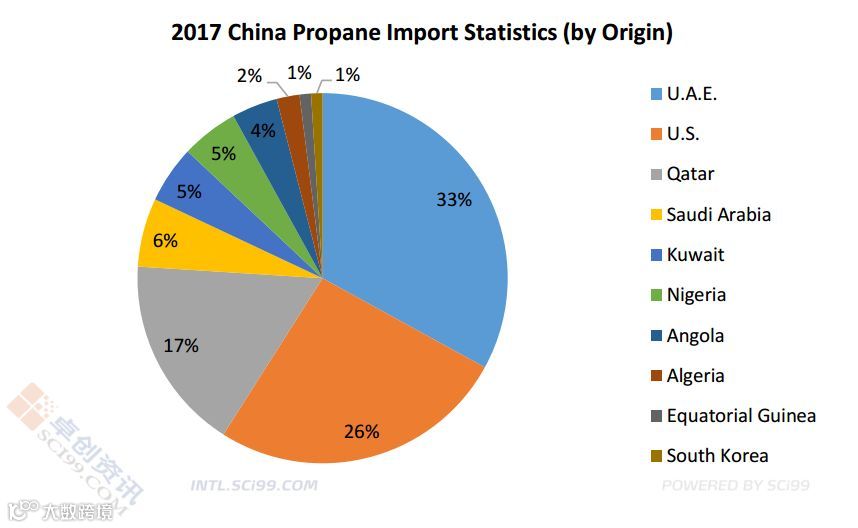
China’s propane import volume reached 13,352.3kt in 2017, and the major origins were the Middle East and the U.S. Therein, the propane import volume from the U.S. was 3,375kt, occupying 25% of the total. Accordingly, the U.S. propane market has a large impact on China’s propane market.
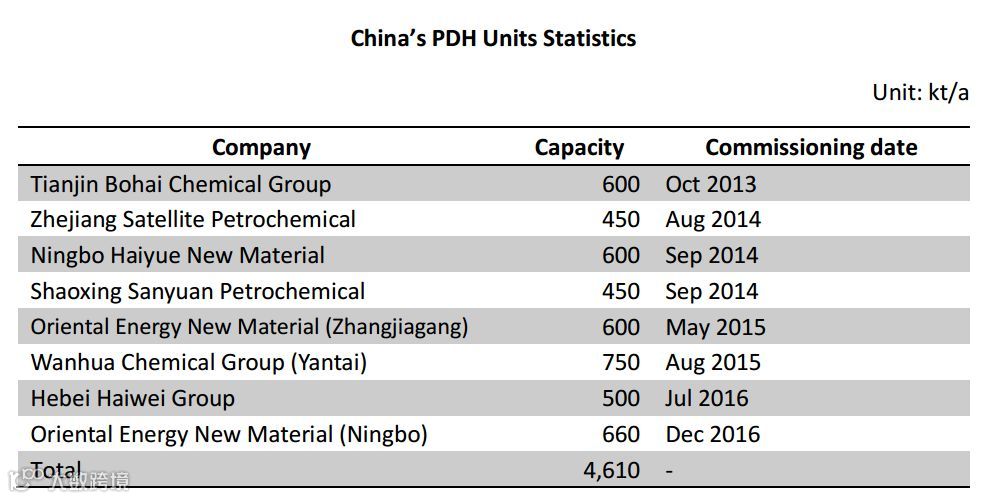
According to SCI’s statistics, there are 8 PDH units in China, and the total capacity reaches 4,610kt/a. China’s PDH units consumed nearly 4,300kt of propane in 2017, taking up 32% of the total propane import volume and larger than the propane import volume from the U.S.
In addition, the PDH production technology has a high requirement for the index of propane. The domestic propane belongs to a by-product of refining oil, thus, the purity and impurity content of propane cannot meet the requirement of PDH production technology. However, the foreign propane has high purity and is inexpensive, which can meet that requirement. Therefore, China’s PDH plants need to import propane to maintain normal production. It can be seen that imported propane is particularly important for domestic PDH plants and directly determines its cost.
At present, this event is expected to have a greater impact on the PDH plant. Will it have a significant impact on the entire propylene market? SCI believes that the event will only impact the propylene market slightly. On the one hand, domestic propylene is still mainly produced from oil. The capacity of PDH units occupied 15% of the total propylene capacity. On the other hand, for propylene producers, even if propane prices increase, it is hard for PDH plants to change their operating rates. Actually, if they shut down the units and then restart them, they will suffer higher costs. Besides, PDH plants have their auto-matched downstream units or have a long-term contract with downstream users, so they need to maintain normal propylene supply. In conclusion, the production cost of PDH production technology is supposed to rise, which will further weigh on the whole industrial chain. But it will be hard for propylene price level to change a lot. Participants should continue to focus on the impact of the event on propylene market.

For more information please contact us at
overseas.sales@sci99.com
overseas.info@sci99.com
+86-533-6296499

If you want to see more, please click here!